SEOUL, South Korea (AP) — North Korean leader Kim Jong Un said an elevated U.S. security partnership with South Korea and Japan poses a grave threat to his country and vowed to further bolster his nuclear weapons program, state media reported Sunday.
Kim has previously made similar warnings, but his latest statement implies again that the North Korean leader won’t likely embrace President Donald Trump’s overture to meet him and revive diplomacy anytime soon.
In a speech marking the 77th founding anniversary of the Korean People’s Army on Saturday, Kim said the U.S.-Japan-South Korea trilateral security partnership established under a U.S. plot to form a NATO-like regional military bloc is inviting military imbalance on the Korean Peninsula and “raising a grave challenge to the security environment of our state,” according to the official Korean Central News Agency.
“Referring to a series of new plans for rapidly bolstering all deterrence including nuclear forces, he clarified once again the unshakable policy of more highly developing the nuclear forces,” KCNA said.
Amid stalled diplomacy with the U.S. and South Korea in recent years, Kim has focused on enlarging and modernizing his arsenal of nuclear weapons. In response, the United States and South Korea have expanded their bilateral military exercises and trilateral training involving Japan. North Korea has lashed out at those drills, calling them rehearsals to invade the country.
Since his Jan. 20 inauguration, Trump has said he would reach out to Kim again as he boasted of his high-stakes summit with him during his first term.
During a joint news conference with Japanese Prime Minister Shigeru Ishiba on Friday, Trump said that “We will have relations with North Korea, with Kim Jong Un. I got along with him very well, as you know. I think I stopped the war."
During a Fox News interview broadcast on Jan. 23, Trump called Kim “a smart guy” and “not a religious zealot.” Asked whether he will reach out to Kim again, Trump replied, “I will, yeah.”
Trump met Kim three times in 2018-19 to discuss how to end North Korea’s nuclear program in what was the first-ever summitry between the leaders of the U.S. and North Korea. The high-stakes diplomacy eventually collapsed because Trump rejected Kim’s offer to dismantle his main nuclear complex, a partial denuclearization step, in return for broad sanctions relief.
North Korea hasn’t directly responded to Trump's recent overture, as it continues weapons testing activities and hostile rhetoric against the U.S. Many experts say Kim is now preoccupied with his dispatch of troops to Russia to support its war efforts against Ukraine. They say Kim would still eventually consider returning to diplomacy with Trump if he determines he would fail to maintain the current solid cooperation with Russia after the war ends.
In his Saturday speech, Kim reaffirmed that North Korea “will invariably support and encourage the just cause of the Russian army and people to defend their sovereignty, security and territorial integrity.” Kim accused the U.S. of being behind “the war machine which is stirring up the tragic situation of Ukraine.”
In South Korea, some worry that Trump might abandon the international community’s long-running goal of achieving a complete denuclearization of North Korea to produce a diplomatic achievement.
But a joint statement issued by Trump and Ishiba after their summit stated the two leaders reaffirmed “their resolute commitment to the complete denuclearization of the DPRK,” the acronym of North Korea’s official name, the Democratic People’s Republic of Korea. The statement said the U.S. and Japan also affirmed the importance of the Japan-U.S.-South Korean trilateral partnership in responding to North Korea.

FILE - A soldier stands at a North Korean military guard post flying a national flag, seen from Paju, South Korea, June 26, 2024. (AP Photo/Lee Jin-man, File)
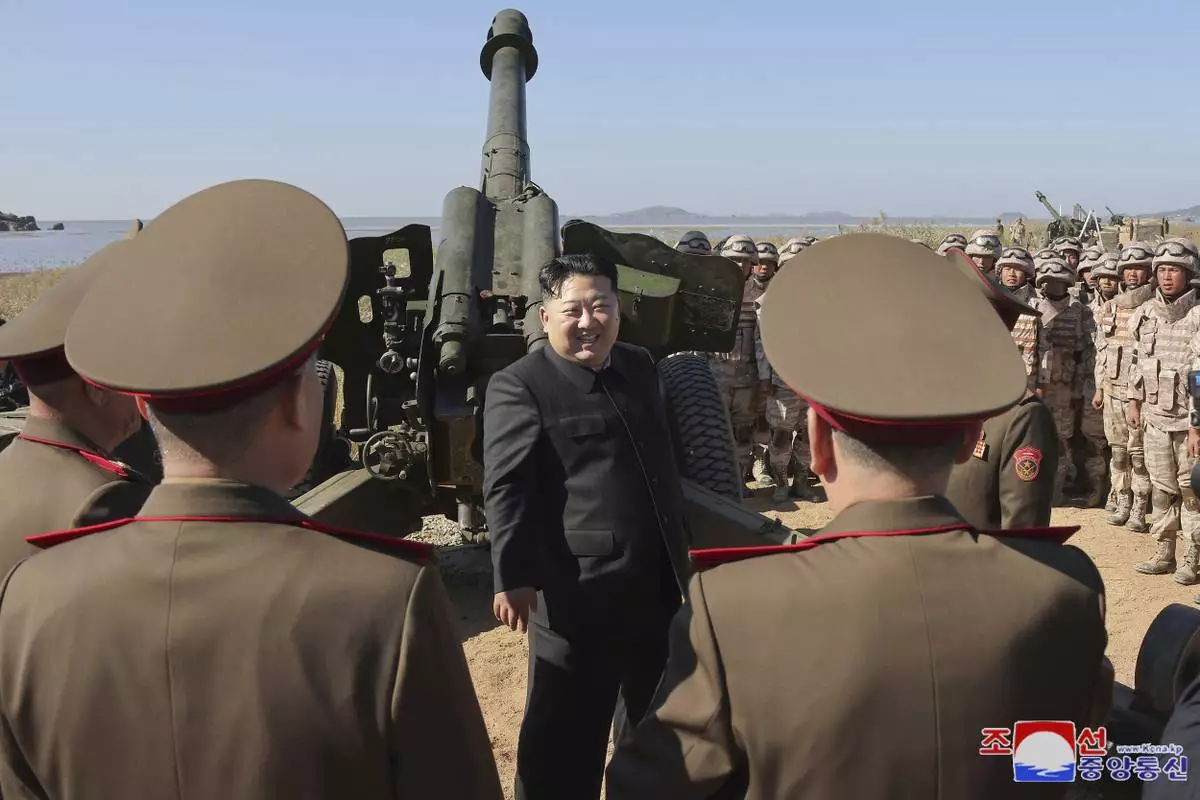
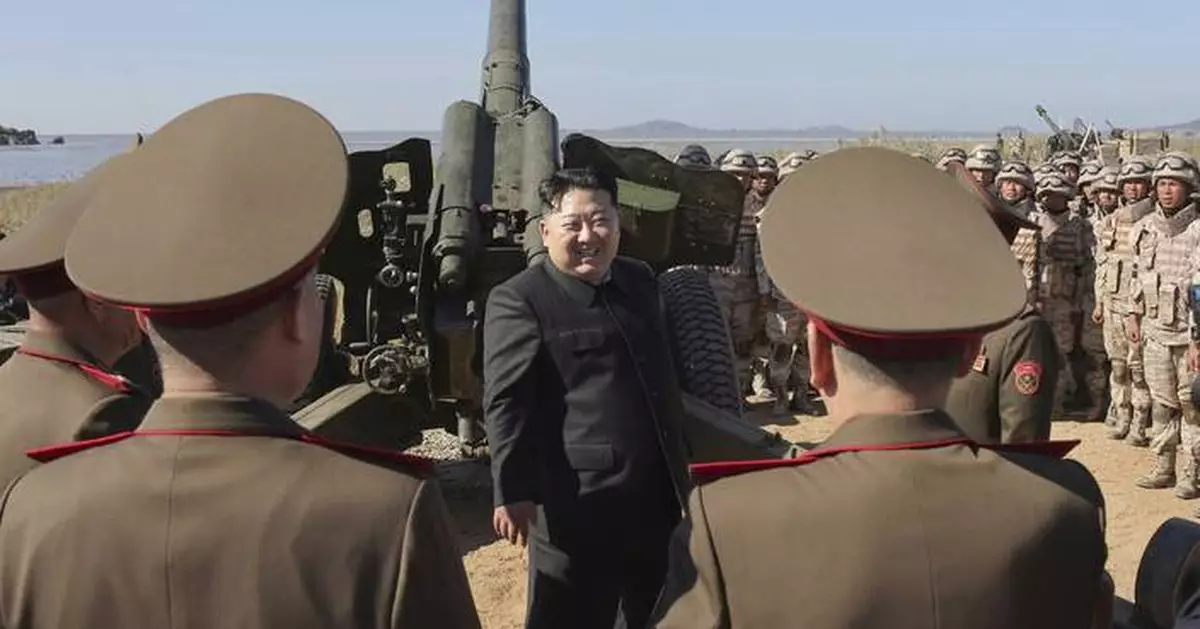
FILE - In this undated photo provided Oct. 6, 2024, by the North Korean government, its leader Kim Jong Un, center, visits an artillery exercise at an undisclosed place in North Korea. Independent journalists were not given access to cover the event depicted in this image distributed by the North Korean government. The content of this image is as provided and cannot be independently verified. Korean language watermark on image as provided by source reads: "KCNA" which is the abbreviation for Korean Central News Agency. (Korean Central News Agency/Korea News Service via AP, File)
NEW YORK (AP) — Up until this week, Wall Street has generally benefited from the Trump administration’s policies and has been supportive of the president. That relationship has suddenly soured.
When President Donald Trump signed the One Big Beautiful Bill into law in July, it pushed another significant round of tax cuts and also cut the budget of the Consumer Financial Protection Bureau, at times the banking industry's nemesis, by nearly half. Trump’s bank regulators have also been pushing a deregulatory agenda that both banks and large corporations have embraced.
But now the president has proposed a one-year, 10% cap on the interest rate on credit cards, a lucrative business for many financial institutions, and his Department of Justice has launched an investigation into Federal Reserve Chair Jerome Powell that many say threatens the institution that is supposed to set interest rates free of political interference.
Bank CEOs warned the White House on Tuesday that Trump’s actions will do more harm than good to the American economy. But in response, Trump did not back down on his proposals or attacks on the Fed.
BNY Chief Executive Officer Robin Vince told reporters that going after the Fed’s independence “doesn’t seem, to us, to be accomplishing the administration’s primary objectives for things like affordability, reducing the cost of borrowing, reducing the cost of mortgages, reducing the cost of everyday living for Americans.”
“Let’s not shake the foundation of the bond market and potentially do something that could cause interest rates to actually get pushed up, because somehow there’s lack of confidence in the Fed’s independence,” Vince added.
The Federal Reserve’s independence is sacrosanct among the big banks. While banks may have wanted Powell and other Fed policymakers to move interest rates one way or another more quickly, they have generally understood why Powell has done what he's done.
“I don’t agree with everything the Fed has done. I do have enormous respect for Jay Powell, the man,” JPMorgan Chase CEO Jamie Dimon told reporters Tuesday.
Dimon's message did not seem to resonate with President Trump, who told journalists that Dimon is wrong in saying it’s not a great idea to chip away at the Federal Reserve’s independence by going after Chair Jerome Powell.
“Yeah, I think it’s fine what I’m doing,” Trump said Tuesday in response to a reporter’s question at Joint Base Andrews after returning from a day trip to Michigan. He called Powell “a bad Fed person” who has “done a bad job.”
Along with the attacks on the Fed, President Trump is going after the credit card industry. With “affordability” likely to be a key issue in this year’s midterm elections, Trump wants to lower costs for consumers and says he wants a 10% cap on credit card interest rates in place by Jan. 20. Whether he hopes to accomplish this by bullying the credit card industry into just capping interest rates voluntarily, or through some sort of executive action, is unclear.
The average interest rate on credit cards is between 19.65% and 21.5%, according to the Federal Reserve and other industry tracking sources. A cap of 10% would likely cost banks roughly $100 billion in lost revenue per year, researchers at Vanderbilt University found. Shares of credit card companies like American Express, JPMorgan, Citigroup, Capital One and others fell sharply Monday as investors worried about the potential hit to profits these banks may face if an interest rate cap were implemented.
In a call with reporters, JPMorgan’s Chief Financial Officer Jeffrey Barnum indicated the industry was willing to fight with all resources at its disposal to stop the Trump administration from capping those rates. JPMorgan is one of the nation's biggest credit card companies, with its customers collectively holding $239.4 billion in balances with the bank, and having major co-brand partnerships with companies such as United Airlines and Amazon. JPMorgan also recently acquired the Apple Card credit card portfolio from Goldman Sachs.
“Our belief is that actions like this will have the exact opposite consequence to what the administration wants in terms of helping consumers,” Barnum said. “Instead of lowering the price of credit, it will simply reduce the supply of credit, and that will be bad for everyone: consumers, the broader economy, and yes, for us, also.”
Even the major airline and hotel partners who partner with banks to issue their cards were also not pleased with the White House's push to cap interest rates.
“I think one of the big issues and challenges with (a potential cap) is the fact that it would actually restrict the lower end consumer from having access to any credit, not just what the interest rate they’re paying, which would upend the whole credit card industry,” said Ed Bastion, CEO of Delta Air Lines, to analysts on Tuesday. Delta has a major partnership with American Express, and its co-brand credit card brings in billions of dollars in revenue for Delta.
Trump seemed to double down on his attacks on the credit card industry overnight. In a post on his social media platform Truth Social, he said he endorsed a bill introduced by Sen. Roger Marshall, R-Kansas, that would likely cut into the revenue banks earn from merchants whenever they accept a credit card at point-of-sale.
“Everyone should support great Republican Senator Roger Marshall’s Credit Card Competition Act, in order to stop the out of control Swipe Fee ripoff,” Trump wrote.
Trump told reporters Tuesday that he was not going to back down the credit card interest rate issue.
“We should have lower rates. Jamie Dimon probably wants higher rates. Maybe he makes more money that way,” Trump said.
The comments from Wall Street are coming as the major banks report their quarterly results. JPMorgan, the nation’s largest consumer and investment bank, and The Bank of New York Mellon Corp., one of the world’s largest custodial banks, both reported their results Tuesday with Citigroup, Bank of America, Wells Fargo and others to report later this week.
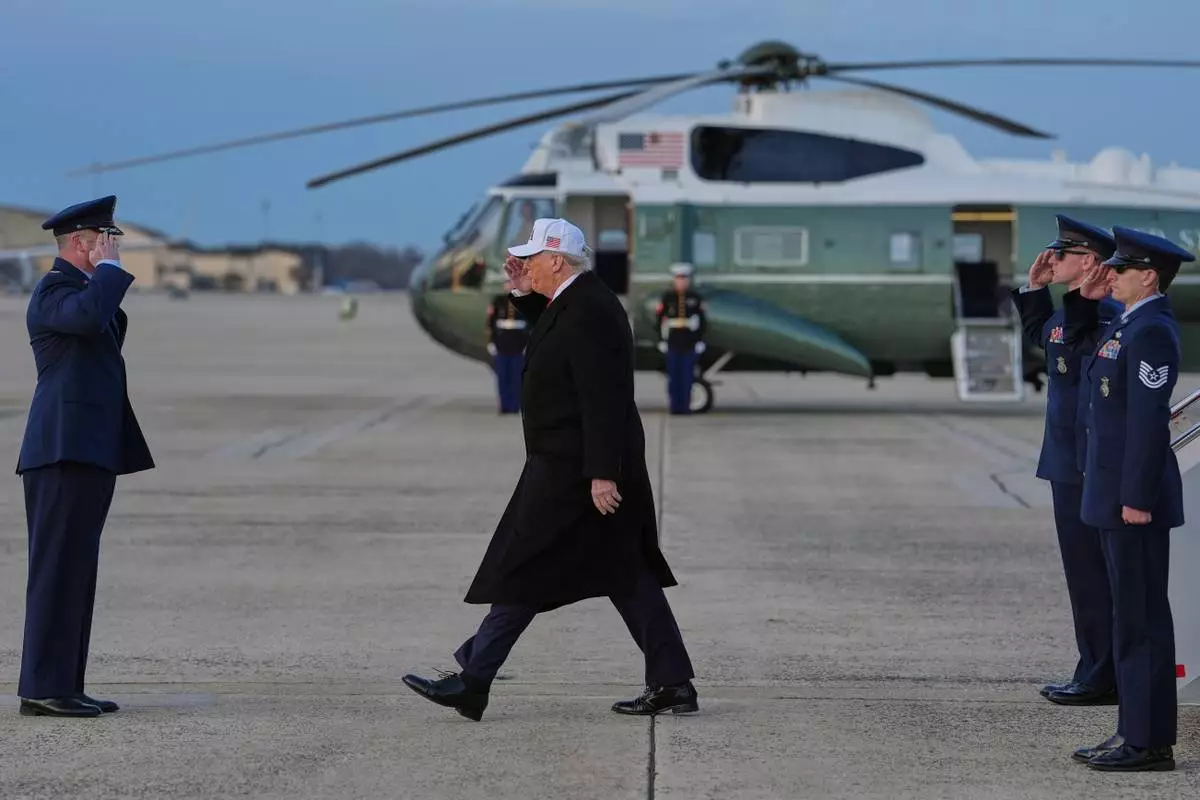
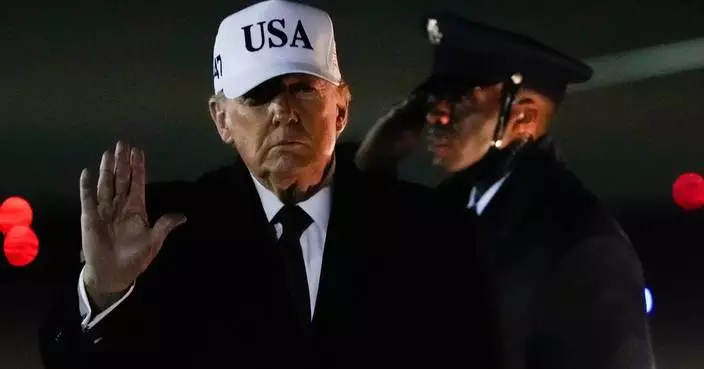
President Donald Trump arrives at Joint Base Andrews, Tuesday, Jan. 13, 2026, in Joint Base Andrews, Md. (AP Photo/Evan Vucci)
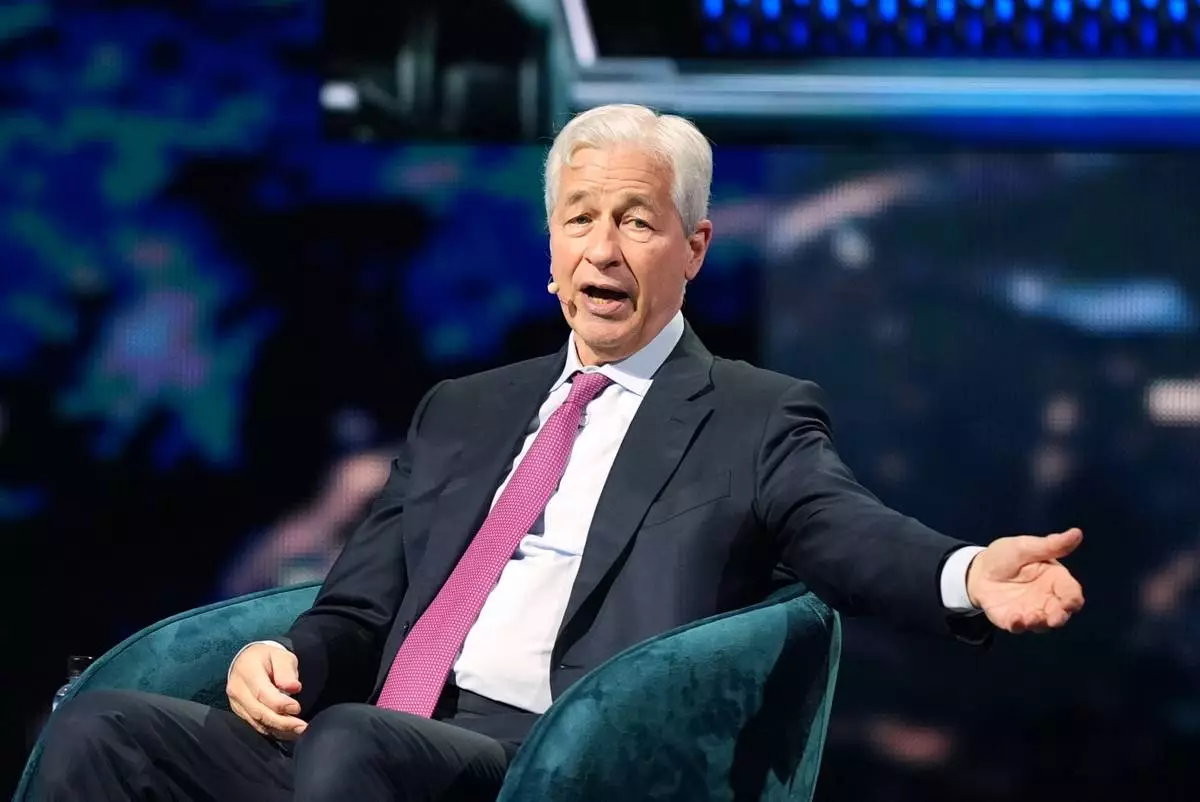
FILE - Jamie Dimon, CEO of JPMorgan Chase, speaks at the America Business Forum, Thursday, Nov. 6, 2025, in Miami. (AP Photo/Rebecca Blackwell, file)