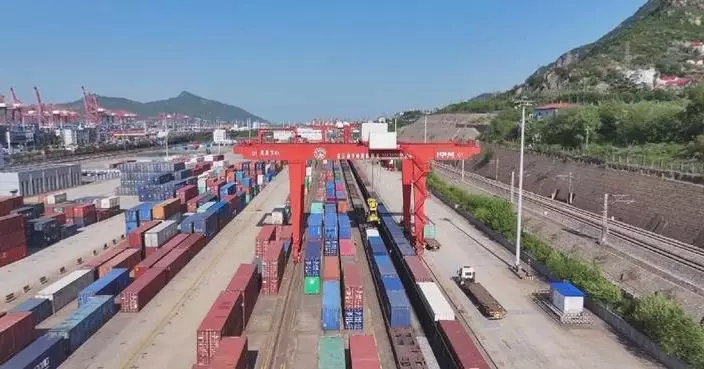
Amidst robust international trade, Tianjin Port, China's largest comprehensive northern port, is optimizing operations and embracing innovation to enhance efficiency and expand global connectivity.
A new sea route from Tianjin Port to the Middle East became operational recently. Vehicles made in China can be shipped to the Persian Gulf via the new line.
Jin Hao, the dispatch director at the Global Ro-Ro Terminal of the port, is responsible for monitoring the loading progress when there are new shipping missions.
Given the significant impact of weather conditions on maritime logistics, the terminal and port must pay particular attention to wind levels and promptly adjust their workforce to expedite operations. Failure to depart before the port closes due to high winds can result in delays of several days for the shipment of goods.
"We can add another loading line, which increases the efficiency by about 100 vehicles per hour. For port dispatching, time represents cost and service capability. For our clients, it means saving money," Jin said.
Boosted by the Belt and Road Initiative and measures to enhance integrated development of the Beijing-Tianjin-Hebei region, Tianjin Port's number of routes and export volume have both increased. It now connects with over 500 ports in more than 180 countries and regions worldwide, according to Jin.
"The workload per ship has increased, and so has the number of new routes. I hope that as soon as the ships arrive, the vehicles can be loaded and the ships can depart immediately, demonstrating the high level of service our port provides. I am tired, but very satisfied," Jin said.
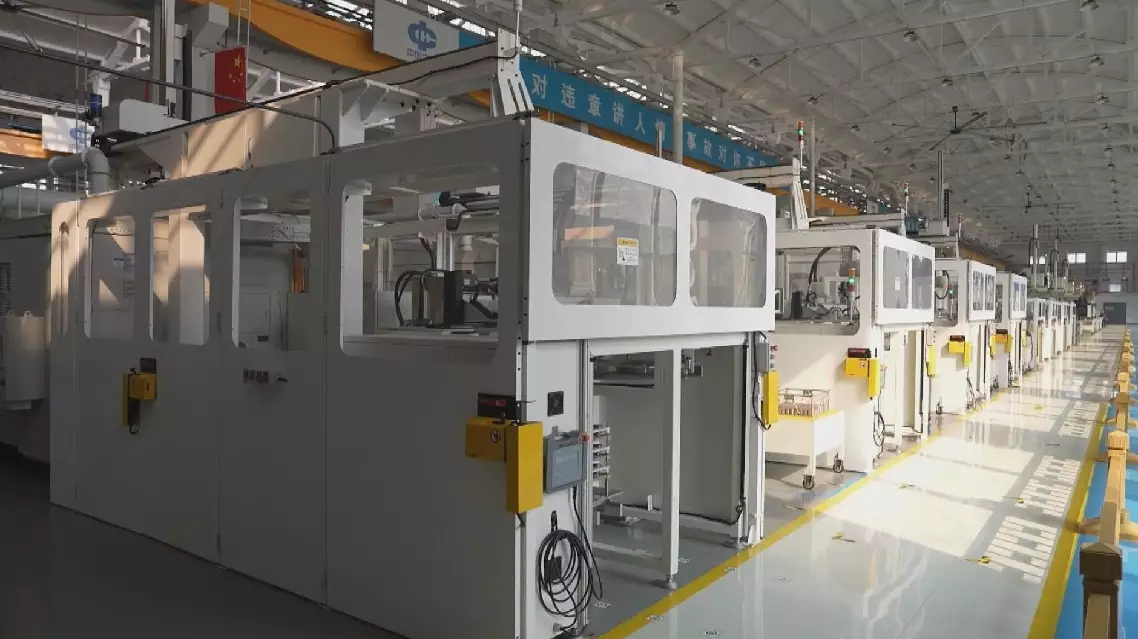
Meanwhile, at the port's smart terminal, its dispatch center has been working to improve operational efficiency through scientific research. The software optimization at the smart terminal was considered the top priority.
Feng Miao, the operation manager at Tianjin Port's Second Container Terminal Company, explained that they had identified a decrease in the efficiency of their lifting equipment.
According to the manager, an extra two meters in distance translates to about 0.2 seconds in time. For a large container ship that needs to load nearly 10,000 containers, the additional half an hour can significantly impact operational efficiency.
Feng and his colleagues quickly resolved the 0.2-second issue by improving algorithms and optimizing workflows. Feng noted that during the development of the smart zero-carbon terminal, more than 10 efficiency-related challenges had been successfully optimized.
"Now, our system automatically compiles all the instructions. With just a click to activate, our unmanned equipment starts up, automatically receiving and executing commands, making full use of every second. This is the improvement brought by the new quality productive forces," Feng said.
With national policies supporting the development of comprehensive freight hubs, Tianjin Port has established a big data management center this year and released a zero-carbon port area construction plan. It will introduce new digital equipment, further enhancing the port's intelligence and greenness.
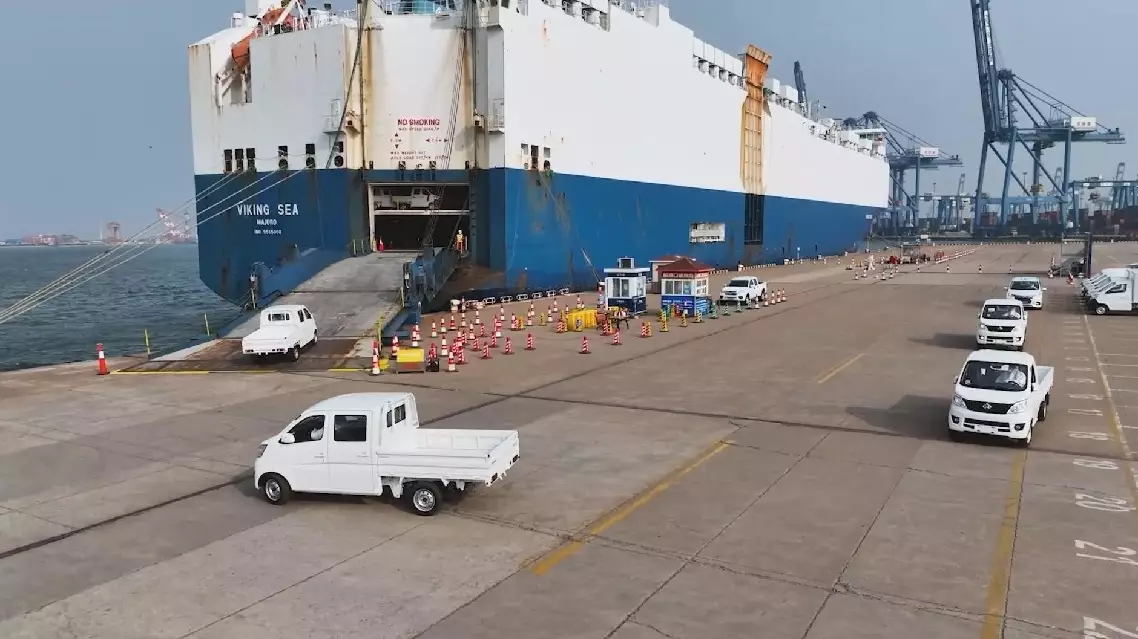
Tianjin Port optimizes operations to enhance efficiency