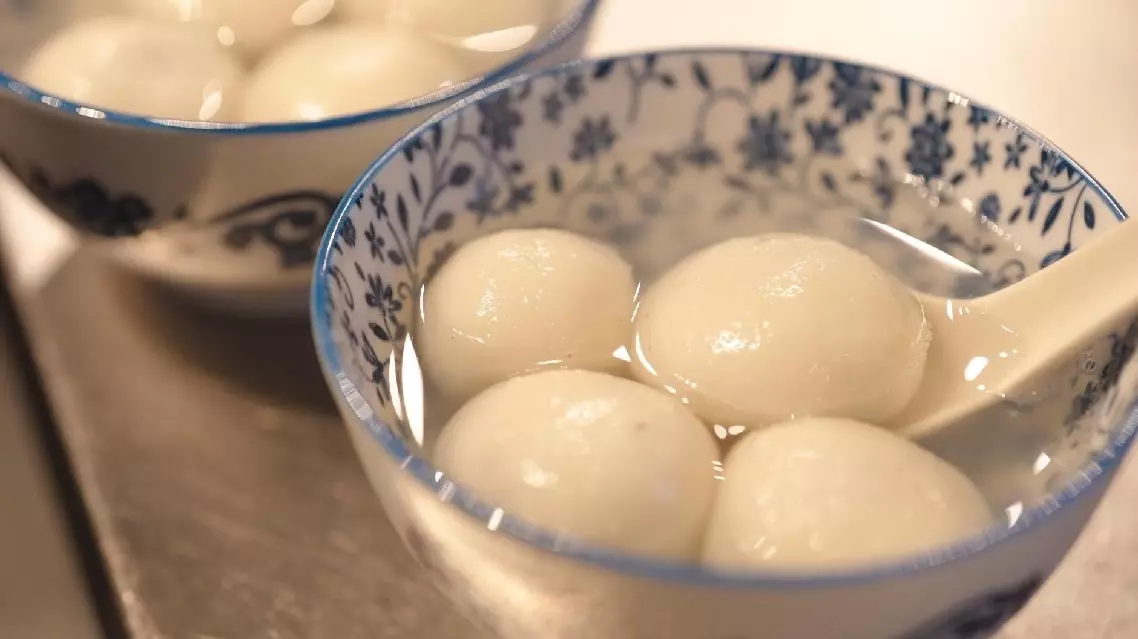
As the Chinese people wrap up the Spring Festival celebrations with the Lantern Festival, a big part of this holiday celebration is eating "yuanxiao" or "tangyuan," a traditional Chinese dessert made of glutinous rice balls.
The Lantern Festival, celebrated on the 15th day of the first lunar month, takes place on Feb 12 this year.
In southern China, people prefer hand-rolled "tangyuan," while in the north, they enjoy "yuanxiao." The traditional method to make "yuanxiao" involves repeated shaking to coat the sweet filling with dry glutinous rice flour.
"First, we dip the sweet filling in water. After that, we shake the basket, so the filling is tightly coated with dry glutinous rice flour. This process is repeated four more times, resulting in slightly fluffy 'yuanxiao,'" said Yu Bojun, a craft inheritor from the century-old pastry brand Daoxiangcun in Beijing.
Despite that most "yuanxiao" are machine-made today, it remains popular. For Chinese people, eating "yuanxiao" or "tangyuan" during the Lantern Festival remains a way to celebrate family reunion, community, and cultural heritage.
"I bought 1.25 kilograms of 'yuanxiao' today. They're for the whole family. Yuanxiao is a must-have for the festival," said a resident.
"I bought one kilogram of 'yuanxiao' today. I've made multiple purchases in the past few days. This time, I got all four available flavors," said another.
Traditionally served in a warm broth, this snack has also seen modern twists in recent years, such as a baked version.
Jinfang Snack has been serving residents in Beijing since 1926. Among its many snacks, the sticky rice balls have been a beloved local staple for decades.
"We sell around 175 tons of sticky rice balls each year. Our yuanxiao are easy to cook, and have a lot of fillings. Each rice ball is filled with nuts and an assortment of generous fillings. They are made fresh daily," said Qiu Yunhe, manager of Jinfang Snack.
This traditional dessert comes in different styles across the country. Sophia Du, an instructor and nutritionist at a Beijing-based cooking studio, the Hutong, shared more about the regional variations of this treat.
"So in northern China, we call it 'yuanxiao.' Usually you have a filling ready. Then you have the dried sticky rice powder. Then you put the filling into the powder then you roll it. And the other one is 'tangyuan.' Normally you have a dough that is mixed with water, like the sticky rice flour with water, you make a sticky rice dough, and then you put the filling inside, you make a circular ball, and you boil them," said Du.
Like many holiday foods, these traditional treats carry deep symbolic meaning. Their round shape represents completeness and family unity, while their sweet fillings symbolize the promise of a joyful and prosperous year ahead.
Chinese people celebrate Lantern Festival with traditional dessert