NEW YORK (AP) — R. Kelly’s racketeering and sex trafficking convictions, along with a 30-year prison sentence, were upheld Wednesday by a federal appeals court that concluded the singer exploited his fame for over a quarter century to sexually abuse girls and young women.
The 2nd U.S. Circuit Court of Appeals in Manhattan ruled Wednesday after hearing arguments last March.
The Grammy-winning, multiplatinum-selling R&B songwriter was convicted in 2021 in Brooklyn federal court of multiple charges, including racketeering and sex trafficking.
Attorney Jennifer Bonjean, representing R. Kelly, said in a statement that she believed the Supreme Court will agree to hear an appeal. She called the 2nd Circuit ruling “unprecedented," saying it gives prosecutors limitless discretion to apply the racketeering law “to situations absurdly remote” from the statute's intent.
Last year, the high court declined to hear an appeal of a 20-year sentence Kelly received after he was convicted in 2022 of child sex charges including charges of producing images of child sexual abuse in Chicago.
The 2nd Circuit rejected Kelly's arguments that the trial evidence was inadequate, the constitutionality of some state laws used against him were questionable, four jurors were biased, the trial judge made some improper rulings and a racketeering charge more commonly used in organized crime cases was improper.
“Enabled by a constellation of managers, assistants, and other staff for over twenty-five years, Kelly exploited his fame to lure girls and young women into his grasp,” the appeals court said, noting members of his entourage helped introduce him to underage girls.
“Evidence at trial showed that he would isolate them from friends and family, control nearly every aspect of their lives, and abuse them verbally, physically, and sexually,” the three-judge panel said.
The appeals court said it was “neither arbitrary nor irrational” that several accusers were permitted to testify at trial that Kelly gave them herpes without disclosing he had an STD, and it was not unduly prejudicial or cumulative that seven witnesses who were not yet adults when Kelly began to abuse them were allowed to testify.
“None of the testimony was more inflammatory than the charged acts,” the appeals court said.
The 2nd Circuit also said it was not unfairly prejudicial for the trial judge to let jurors view graphic videos. The videos, the appeals court said, “were properly admitted to show the means and methods of the enterprise, including the level of control and dominance Kelly had over his victims.”
Bonjean, in her statement on R. Kelly's behalf, also cited a partial dissent in which one 2nd Circuit judge, Richard J. Sullivan, concurred with what he described as the majority's “excellent opinion,” but dissented in part over a restitution award given one victim for a lifetime supply of a suppressive regime of herpes medication. The award was based on the cost of the brand-name drug when a generic drug is available.
“This was not restitution. This was an effort by the government to unfairly enrich government witnesses for their testimony,” Bonjean said.
Kelly, born Robert Sylvester Kelly, is known for work including the 1996 hit “I Believe I Can Fly” and the cult classic “Trapped in the Closet,” a multipart tale of sexual betrayal and intrigue.
Kelly sold millions of albums and remained in demand even after allegations about his abuse of young girls began circulating publicly in the 1990s. He was acquitted of child sexual abuse image charges in Chicago in 2008, but a second trial in Chicago in 2022 ended with his conviction on charges of producing images of child sexual abuse and enticing girls for sex.
Widespread outrage over Kelly’s sexual misconduct did not emerge until the #MeToo reckoning, reaching a crescendo after the release of the documentary “Surviving R. Kelly.”
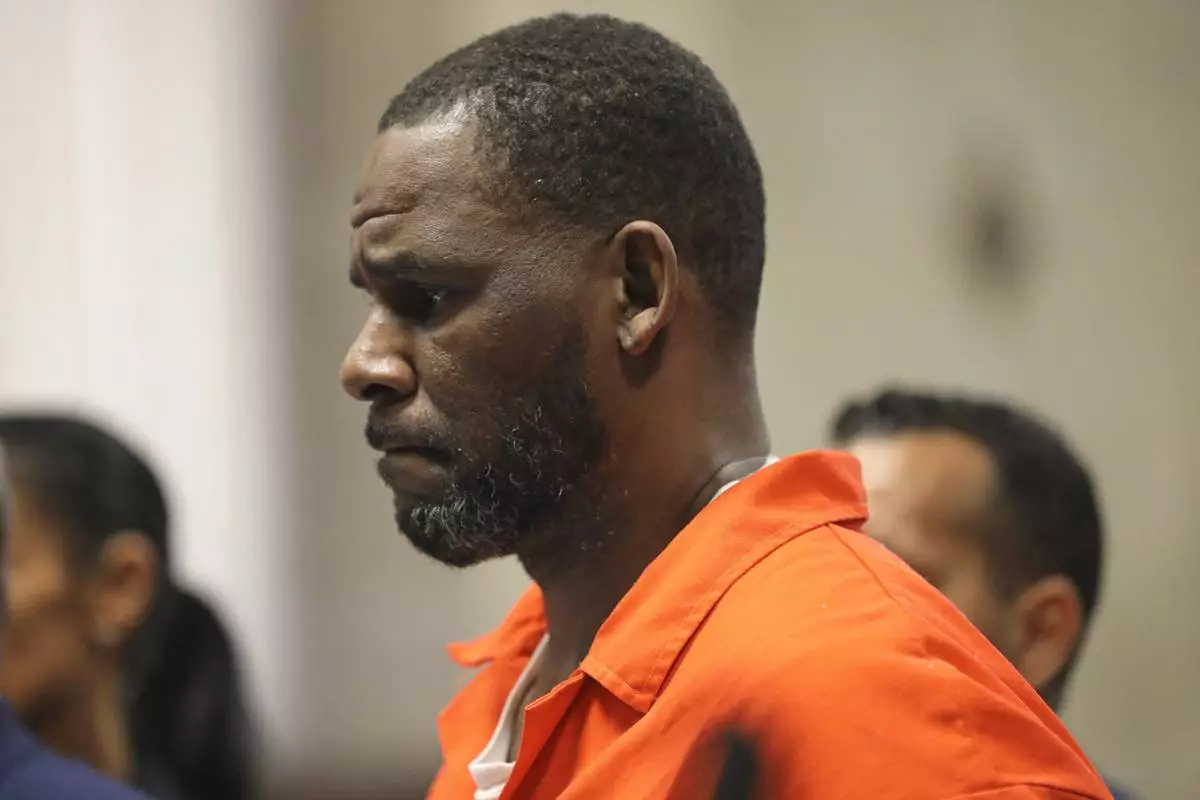
FILE - In this Sept. 17, 2019 file photo, R. Kelly appears during a hearing at the Leighton Criminal Courthouse in Chicago. (Antonio Perez/Chicago Tribune via AP, Pool, File)