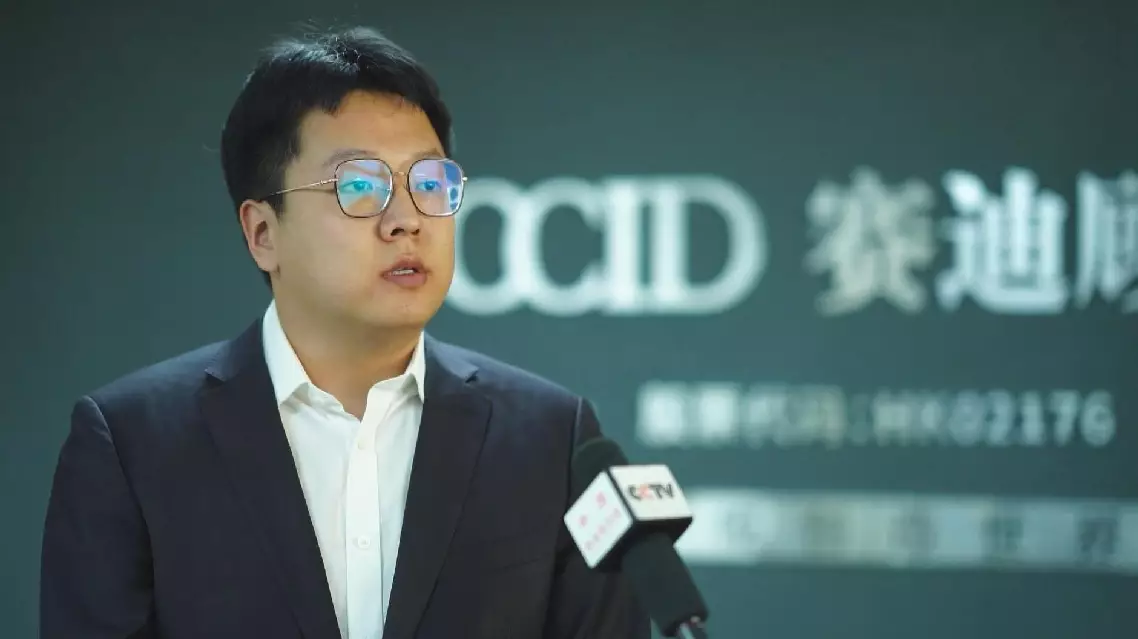
Chinese artificial intelligence (AI) application DeepSeek is cost-effective with a less reliance on high-end computing equipment and sources, while bringing new opportunities for the development of China's homegrown chips, said an analyst from CCID Consulting, a leading research, consulting and IT outsourcing service provider.
The analyst, Bai Runxuan, working at CCID Consulting's center for AI and big data research, compared DeepSeek to a super intelligent brain, saying that the cost-effectiveness is its biggest advantage in comparison with other AI models.
"The cost reduction of big models has a great impact on the entire industry. The demand for chips will change. DeepSeek's efficient algorithm reduces the dependence on high-end GPUs, and traditional chip manufacturers such as NVIDIA may face some market pressure. But at the same time, domestic chips have ushered in new opportunities in customized scenarios," said Bai.
The lowered costs for big model training for DeepSeek, especially in chips and data centers, are expected to enable cloud service providers to spare some computing power to promote the green and efficient transformation of the industry, according to Bai. "In the future, cloud service providers will put more computing power to edge nodes to support low-latency real-time AI applications, such as autonomous driving and industrial robots. Service models will also be innovated, shifting from 'resource leasing' to 'AI capabilities as a service.' For example, operators may provide value-added services such as pre-trained model fine-tuning and industry knowledge base integration," he said.
DeepSeek is a Chinese AI company founded in 2023. In January this year, the company released its latest model, DeepSeek-R1, which has attracted significant attention for its advanced reasoning capabilities.
The model is said to have achieved performance comparable to leading AI systems, such as OpenAI's ChatGPT, but at a fraction of the development cost.
Now the number of DeepSeek users has surpassed 30 million.
DeepSeek cost-effective, brings new opportunities for homegrown chips: analyst
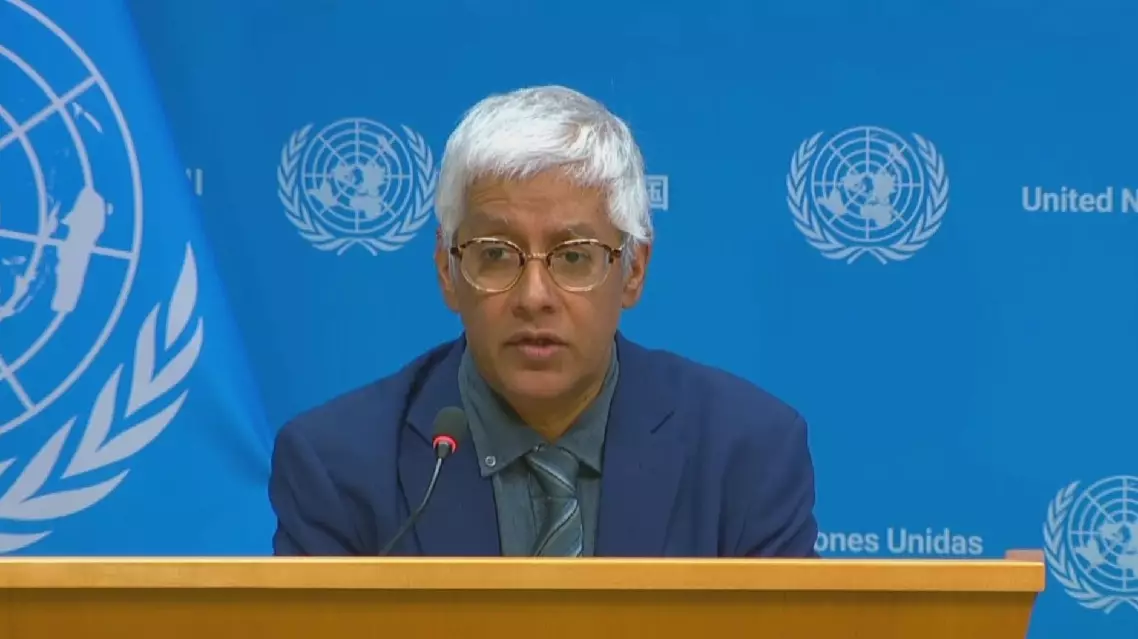
The United Nations (UN) is opposed to anything that "could constitute extrajudicial execution" and urged all relevant parties to avoid further escalation of the Middle East conflict, said Farhan Haq, deputy spokesman for UN Secretary-General Antonio Guterres at a press conference in New York City on Wednesday.
Haq was responding to a media query about the killing of Ali Larijani, secretary of Iran's Supreme National Security Council, and Iran's Intelligence Minister Esmail Khatib, in Israeli attacks earlier this week.
The assassinations of Khatib and Iran's top security official Larijani were confirmed by the Iranian government on Wednesday and Tuesday, respectively.
Haq also briefed the press about Guterres' ongoing visit to Brussels, during which the Secretary-General will hold meetings with European Union (EU) leaders on UN-EU ties and global hotspot issues, such as the conflict in the Middle East and the Ukraine crisis.
"The Secretary-General arrived in Brussels earlier this morning for a series of meetings, including with European Union officials. He met earlier this afternoon with Maxime Prevot, Deputy Prime Minister and Minister of Foreign Affairs, European Affairs and Development Cooperation of Belgium. The Secretary-General then began his meetings with European Union officials, starting with Roberta Metsola, the president of the European Parliament. The Secretary-General and the president discussed the partnership between the United Nations and the European Union. They also discussed a number of crises around the world, including the situation in the Middle East and the ongoing war in Ukraine," said Haq.
"The Secretary-General will travel to the seat of the European Commission for discussions with Ursula von der Leyen, President of the European Commission. And later, the Secretary-General will meet with Antonio Costa, President of the European Council, and also have a working dinner with Mr. Costa," he said.
On the killing of a string of senior Iranian officials, Haq expressed the UN's opposition to illegal military strikes and repeated its call for a de-escalation of the conflict in the Middle East.
"First of all, as a point of principle, the United Nations is opposed to anything that could constitute extrajudicial execution, and that's true in all such cases, But beyond that, we do not believe that there is a military solution to this problem and we reiterate our call to Israel, to the United States, to Iran, and to any other parties to avoid any further escalation of this conflict," he said.
UN opposes 'extrajudicial execution', urges de-escalation of Middle East conflict: deputy spokesman