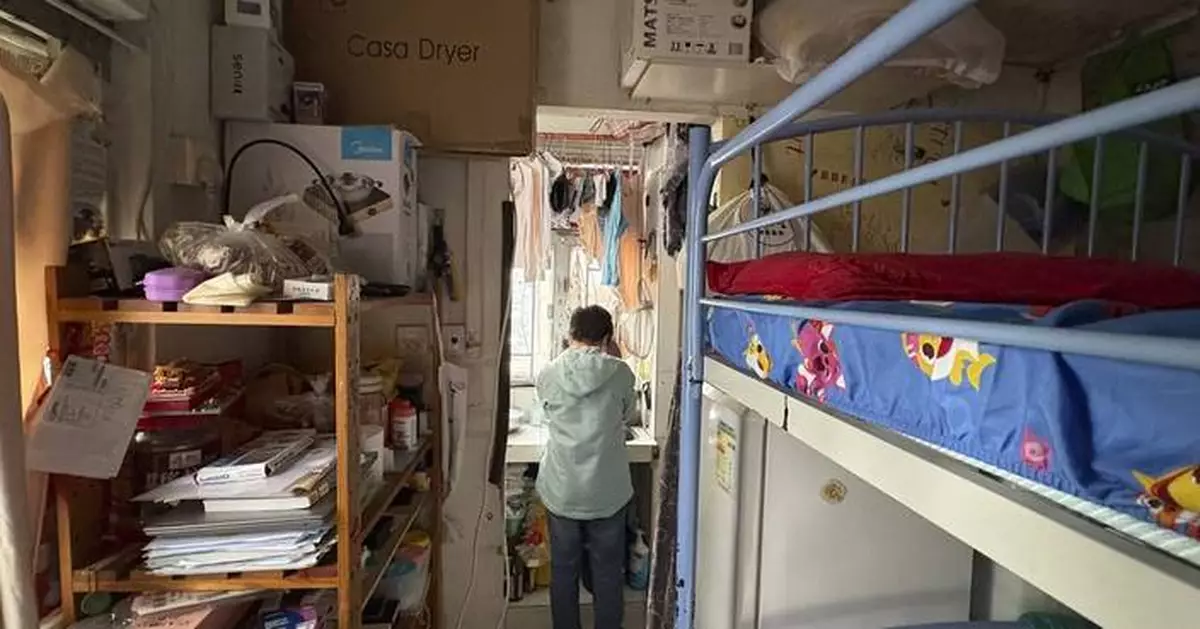
HONG KONG (AP) — Jimmy Au’s world shrinks to about the size of a parking space whenever she gets home.
Her cramped Hong Kong home is one of four units carved out of what was once a single apartment. Most of the space is occupied by the bunk bed she shares with her husband and son, and their sleep is often disrupted by neighbors returning late or heading out early. Au’s son often gets bruises bumping into things. Privacy is limited, with only a curtain separating the bathroom from the kitchen.
Click to Gallery
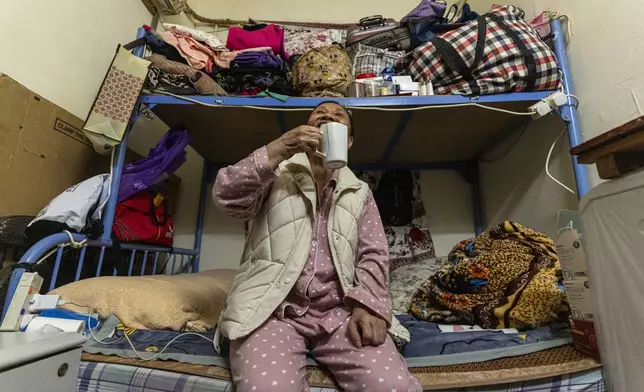
Resident Tsang Mei Qin sits at her subdivided flat in Sham Shui Po district of Hong Kong, on Feb. 6, 2025. (AP Photo/Chan Long Hei)
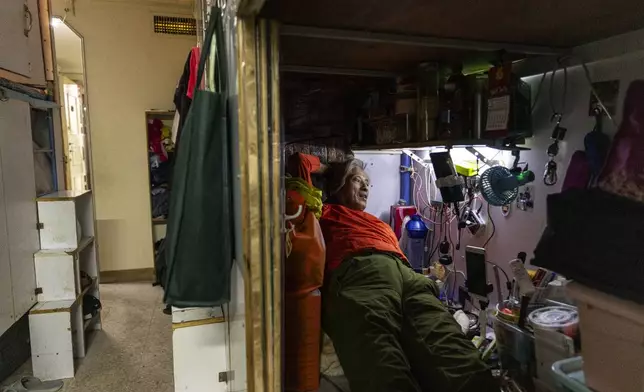
A resident rests in his bed space in Sham Shui Po district of Hong Kong, on Feb. 6, 2025. (AP Photo/Chan Long Hei)
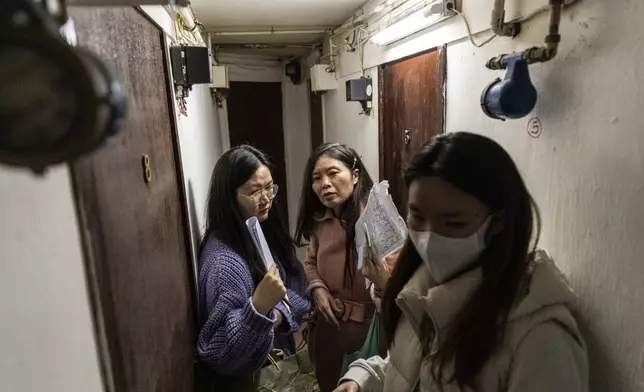
Sze Lai-shan, the deputy director of the Society for Community Organization, center, and her colleagues visit residents in the subdivided flat in Sham Shui Po district of Hong Kong, on Feb. 6, 2025. (AP Photo/Chan Long Hei)
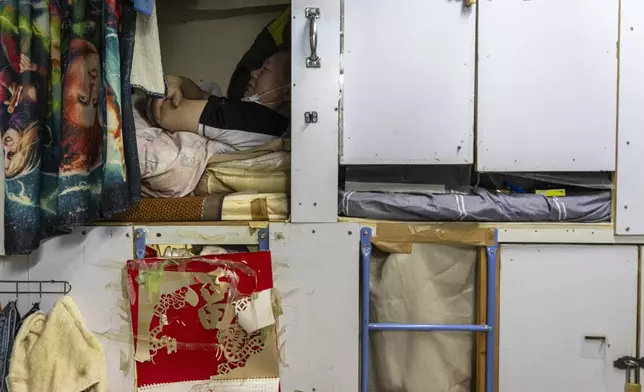
A resident rests in his bed space in Sham Shui Po district of Hong Kong, on Feb. 6, 2025. (AP Photo/Chan Long Hei)
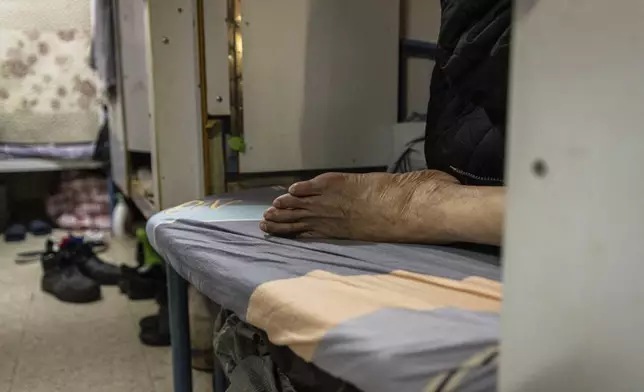
A resident rests in his bed space in Sham Shui Po district of Hong Kong, on Feb. 6, 2025. (AP Photo/Chan Long Hei)
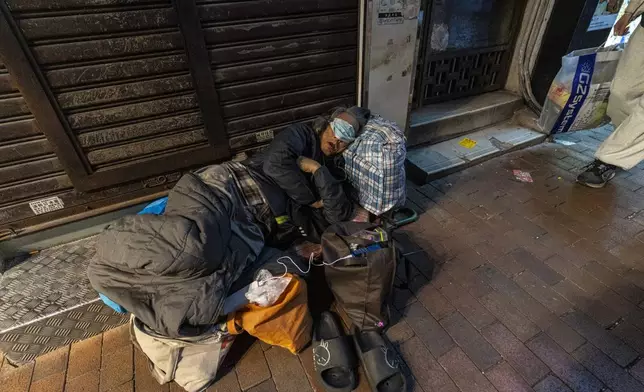
A homeless person sleeps on a street in Sham Shui Po district of Hong Kong, on Feb. 6, 2025. (AP Photo/Chan Long Hei)
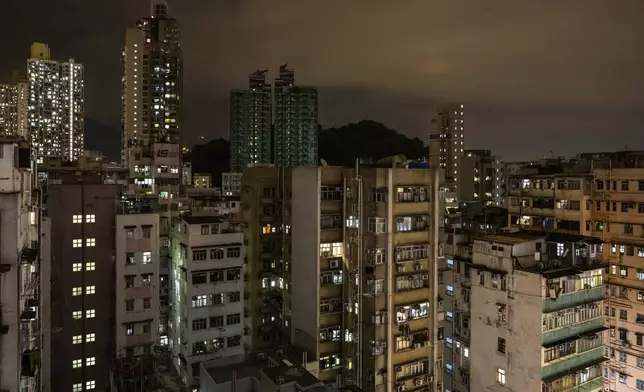
A general view of the residential area in Sham Shui Po district of Hong Kong, on Feb. 6, 2025. (AP Photo/Chan Long Hei)
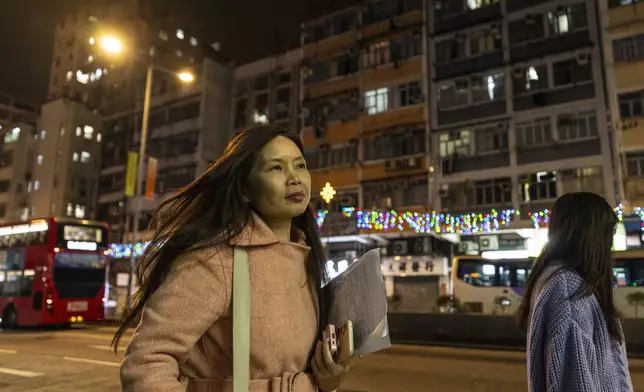
Sze Lai-shan, the deputy director of the Society for Community Organization, walks on her way to visit residents in the subdivided flat in Sham Shui Po district of Hong Kong, on Feb. 6, 2025. (AP Photo/Chan Long Hei)
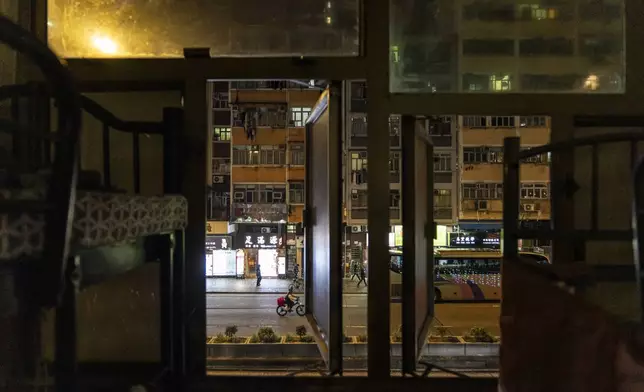
Residential buildings are seen through a window of a bed space in Sham Shui Po district of Hong Kong, on Feb. 6, 2025. (AP Photo/Chan Long Hei)
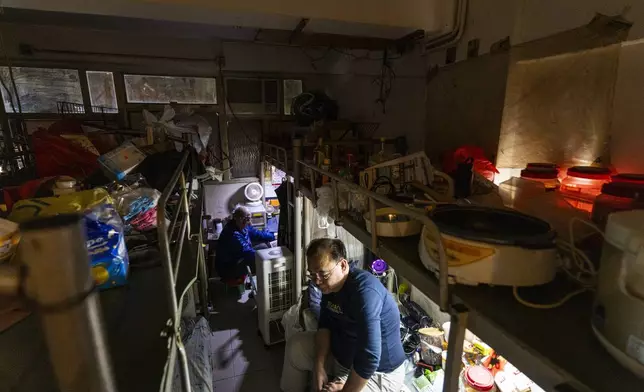
Resident Law Chung-yu sits in his bed space in Sham Shui Po district of Hong Kong, on Feb. 6, 2025. (AP Photo/Chan Long Hei)
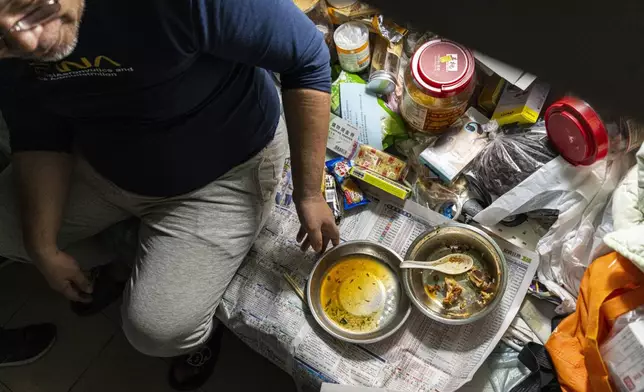
Resident Law Chung-yu has dinner in his bed space in Sham Shui Po district of Hong Kong, on Feb. 6, 2025. (AP Photo/Chan Long Hei)
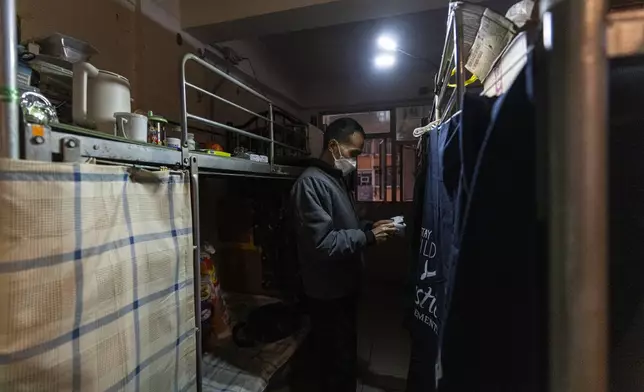
Resident Chung Shing-sun stands near his bed space in Sham Shui Po district of Hong Kong, on Feb. 6, 2025. (AP Photo/Chan Long Hei)
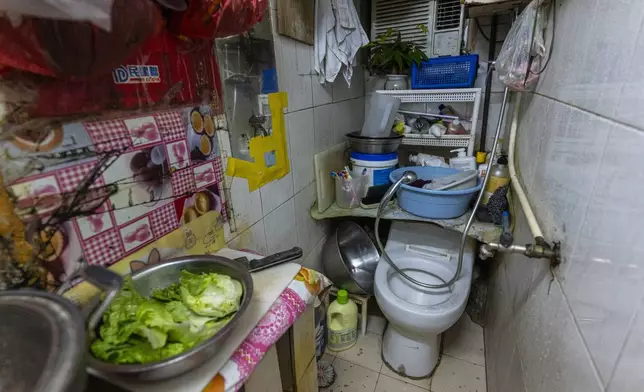
A toilet and kitchen are located in the same area of a subdivided flat in Sham Shui Po district of Hong Kong, on Feb. 6, 2025. (AP Photo/Chan Long Hei)
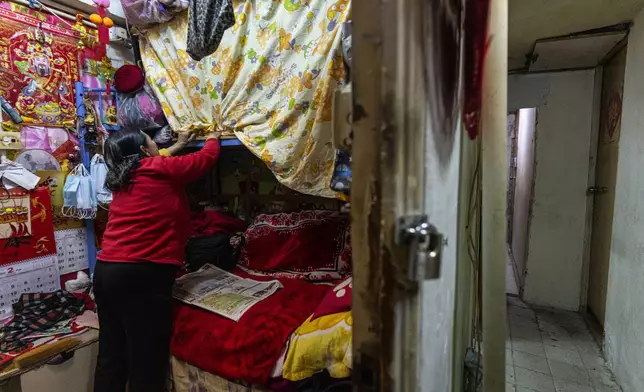
A resident adjusts the curtains over a bed at her subdivided flat in Sham Shui Po district of Hong Kong, on Feb. 6, 2025. (AP Photo/Chan Long Hei)
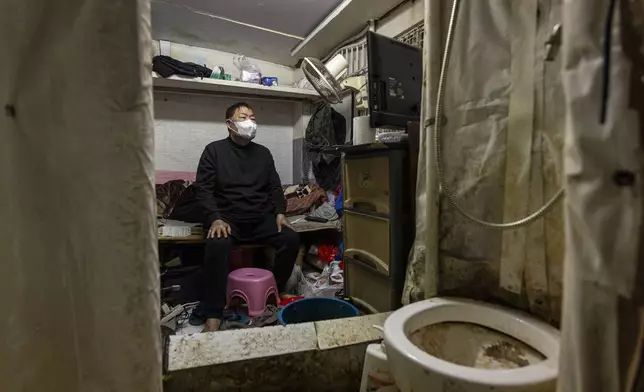
A resident who gave his name as Chiu watches television at his subdivided flat in Sham Shui Po district of Hong Kong, on Feb. 6, 2025. (AP Photo/Chan Long Hei)
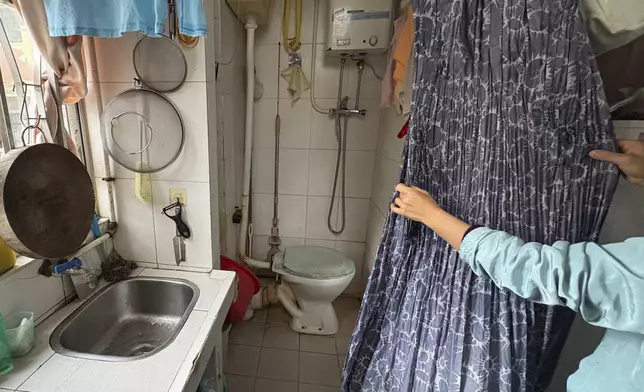
Housewife Jimmy Au pulls back a curtain to reveal her toilet at home in a residential area of Prince Edward district in Hong Kong, on Jan. 21, 2025. (AP Photo/Kanis Leung)
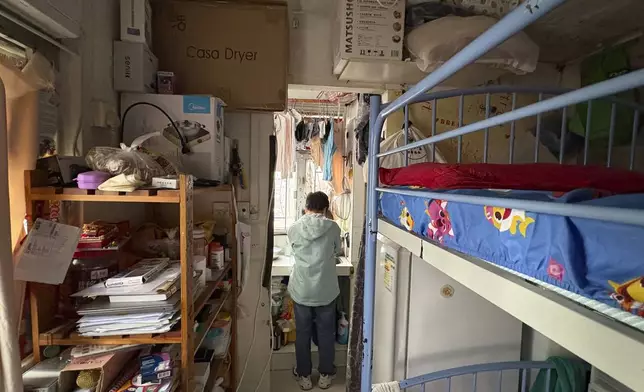
Housewife Jimmy Au stands in her kitchen at home in a residential area of Prince Edward district in Hong Kong on Jan. 21, 2025. (AP Photo/Kanis Leung)
But what troubles Au most about her home is that she might lose it. Hong Kong's government is planning to crack down on what it calls inadequate housing in subdivided apartments, mandating a minimum size and other baseline standards for homes like Au's. A public consultation period ended on Monday, and the government is aiming to pass the rules into law this year.
The proposed rules leave many low-income residents like Au uncertain about their future in one of the world’s most expensive housing markets.
Au, a homemaker who moved from mainland China nine years ago, said her family pays about $460 a month in rent, about half of the income her husband makes from irregular renovation jobs.
“I’m afraid the rent will get so high we can’t afford it,” Au said, sitting on the bed's lower bunk, surrounded by clothes, a fan and plastic storage drawers.
Housing is a sensitive issue in Hong Kong, one of the world's least affordable cities. Some 7.5 million people live in a small territory that's mostly made up of steep slopes. Just 7%, or 80 square kilometers (30 square miles), of the city's total land is residential. The average price of an apartment of less than 40 square meters (430 square feet) last December ranged from about $13,800 to $16,800 per square meter, depending on the district.
Beijing, which sees the city’s housing problems as a driver of the 2019 anti-government protests, wants the city to phase out subdivided units by 2049. The government is also boosting the public housing supply, aiming to provide 189,000 flats over the next five years.
But some 220,000 people rely on subdivided units, including migrants, workers, students and young professionals.
Most subdivided homes are not far from the standards, the government said, but an estimated 33,000 units would need major renovations to meet them.
The proposed rules would mandate a minimum size of at least eight square meters (86 square feet), a bar the government says it meant to leave room for low-priced housing. Every unit will also need to have a window, a toilet exclusively for the occupants' use, and a door to separate the toilet from other parts of the home, among other criteria.
Landlords will have a grace period to renovate. After that, violations could lead to up to three years' imprisonment and a maximum fine of about $38,500.
Security guard Fafa Ching has lived in multiple subdivided flats for over a decade. Her current unit costs about $490 per month and lacks even a bathroom sink, forcing her to collect water from the showerhead with a basin to wash her face. Her home will need renovation to meet proposed requirements for fire safety and separate electricity and water meters.
Ching worries that upgraded homes will be too expensive for her.
The government has said if necessary, it will offer assistance such as helping affected tenants to find other private accommodation or directly providing temporary shelter. A top official told the city’s public broadcaster that transitional housing apartments are ready and assured that large-scale enforcement will happen only when proper resettlement arrangements are available.
Chan Siu-ming, a professor at the City University of Hong Kong’s social and behavioral sciences department, welcomed the government’s taking steps to set minimum standards, but said its resettlement plans are inadequate.
Chan said the impact could be wider than officials expect, and the city’s supply of public and transitional housing may not meet needs. Low-income residents may also need help shouldering the cost of moving house, he said.
As of last September, the average waiting time for a public flat is five and a half years, but it can take even longer than that. Ching said she's waited for eight years.
In an emailed response to questions from The Associated Press, the government said it does not expect significant surges in rent as demand will drop with the increasing public housing supply. It reiterated that the rules will be implemented gradually to avoid causing panic.
Chan added that some single people may be forced into even smaller dormitory-like “bed spaces,” which are not covered by the proposed rules. Bed spaces are widely considered to be Hong Kong's worst form of housing — partitioned areas in which residents get barely enough space to fit a single bed and some belongings. They are currently regulated under another law, the government said.
Sze Lai-shan, the deputy director of the Society for Community Organization, a non-government organization, said some people have already been asked to move out of subdivided homes as landlords anticipate the policy.
She suggested the government start registering substandard flats before the legislation comes into force to assess the residents’ needs and consider expanding the eligibility for transitional housing. She also hoped the policy would eventually cover those living in tiny bed spaces.
“It’s difficult to explain to people that Hong Kong has two sets of housing standards,” she said.
In Sham Shui Po, one of the city’s poorest districts, bed space resident Law Chung Yu said he doubts that landlords will be able to comply with the rules.
Law, who can’t work due to a health problem and rents one layer of a bunk bed, pays around $280 in monthly rent for the bed space, about 30% of what he gets from the government subsidies he lives on. He shares a bathroom with neighbors in an apartment infested by lice.
“It’s basically an armchair strategy, I don’t see it having much impact in reality,” he said.
Au's never measured her unit, and isn’t sure if her unit meets the minimum size. But with her neighboring units falling short of the minimum size requirement, she knows her home would probably be gone too. She hopes the government will help resettle affected households into places that cost the same as their current rent.
Her landlord hasn’t discussed the issue with her yet. For now, all she can do is wait.
“I’m taking it day by day. It’d be worse if I think about it so much I develop mental problems,” she said.
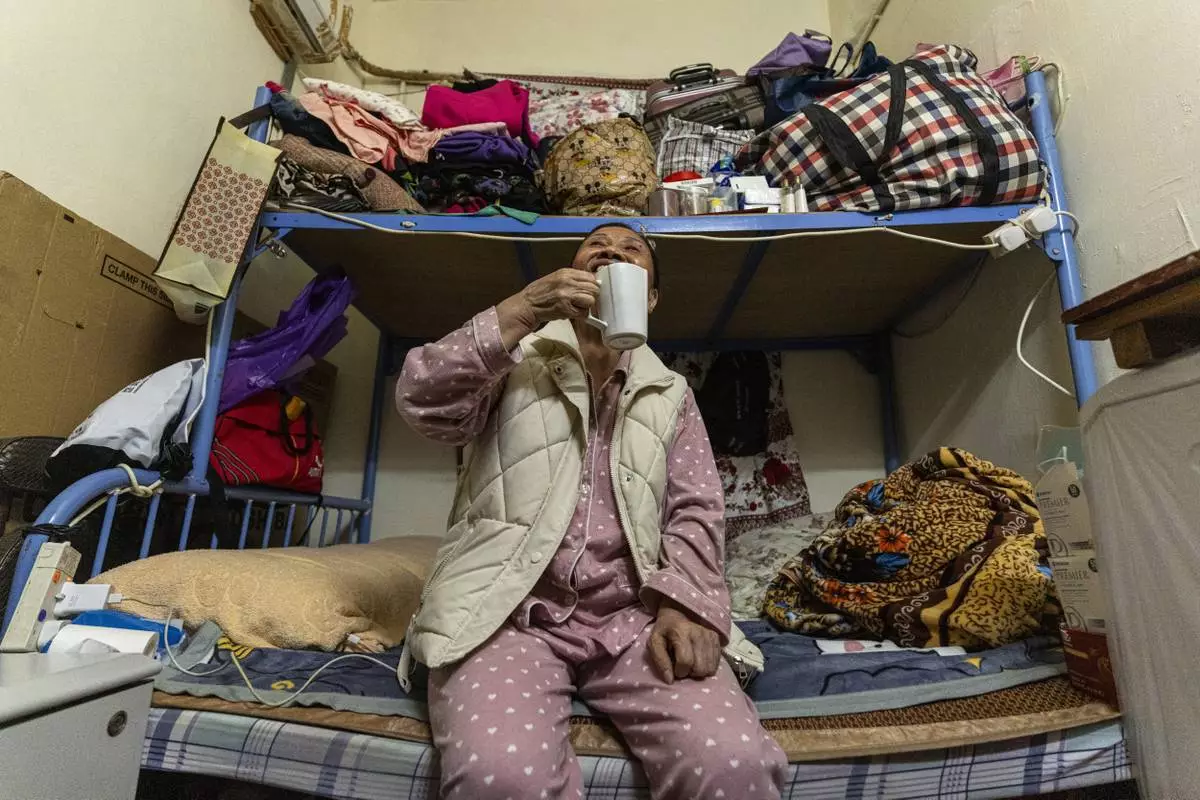
Resident Tsang Mei Qin sits at her subdivided flat in Sham Shui Po district of Hong Kong, on Feb. 6, 2025. (AP Photo/Chan Long Hei)
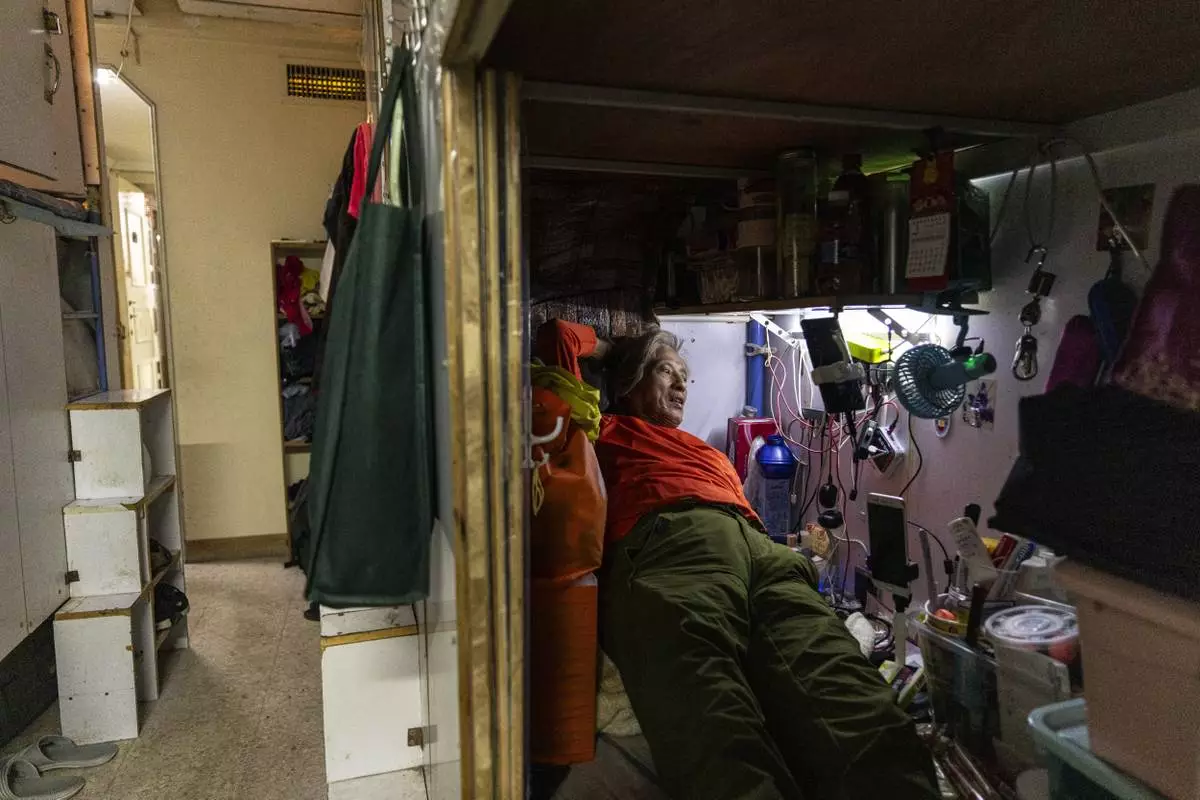
A resident rests in his bed space in Sham Shui Po district of Hong Kong, on Feb. 6, 2025. (AP Photo/Chan Long Hei)
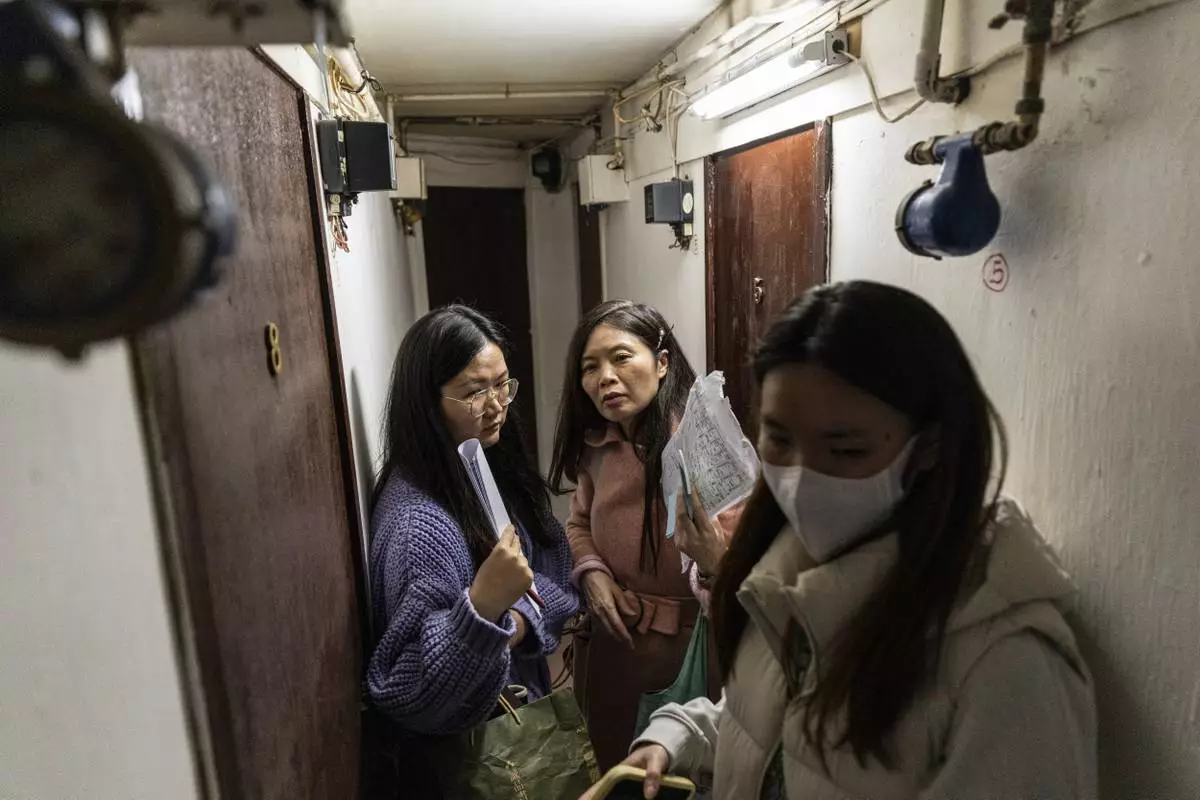
Sze Lai-shan, the deputy director of the Society for Community Organization, center, and her colleagues visit residents in the subdivided flat in Sham Shui Po district of Hong Kong, on Feb. 6, 2025. (AP Photo/Chan Long Hei)
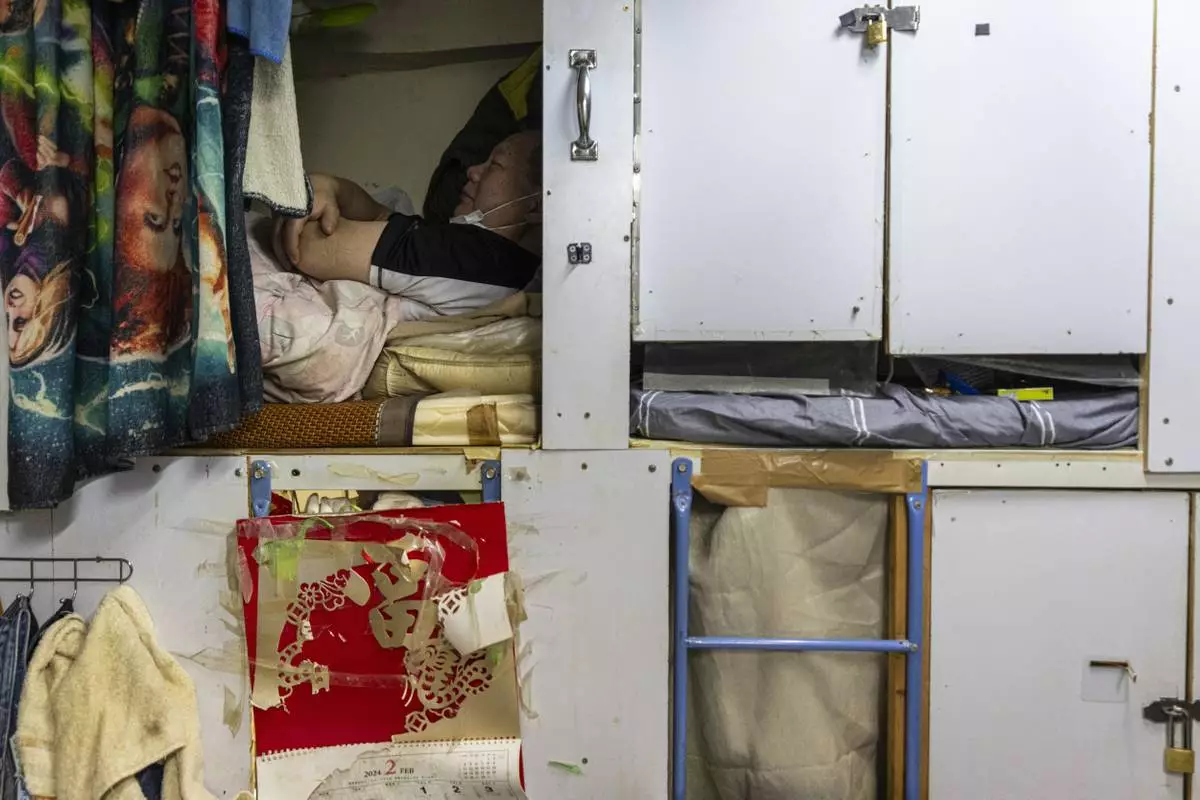
A resident rests in his bed space in Sham Shui Po district of Hong Kong, on Feb. 6, 2025. (AP Photo/Chan Long Hei)
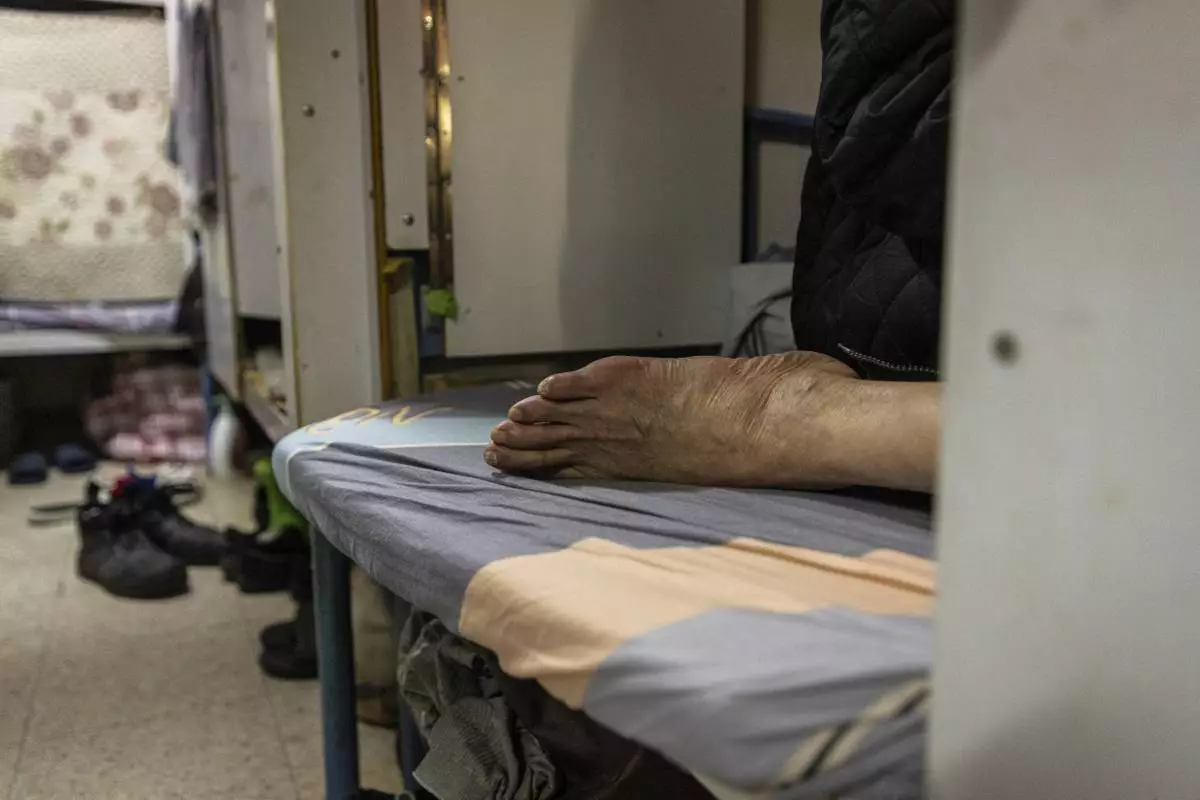
A resident rests in his bed space in Sham Shui Po district of Hong Kong, on Feb. 6, 2025. (AP Photo/Chan Long Hei)
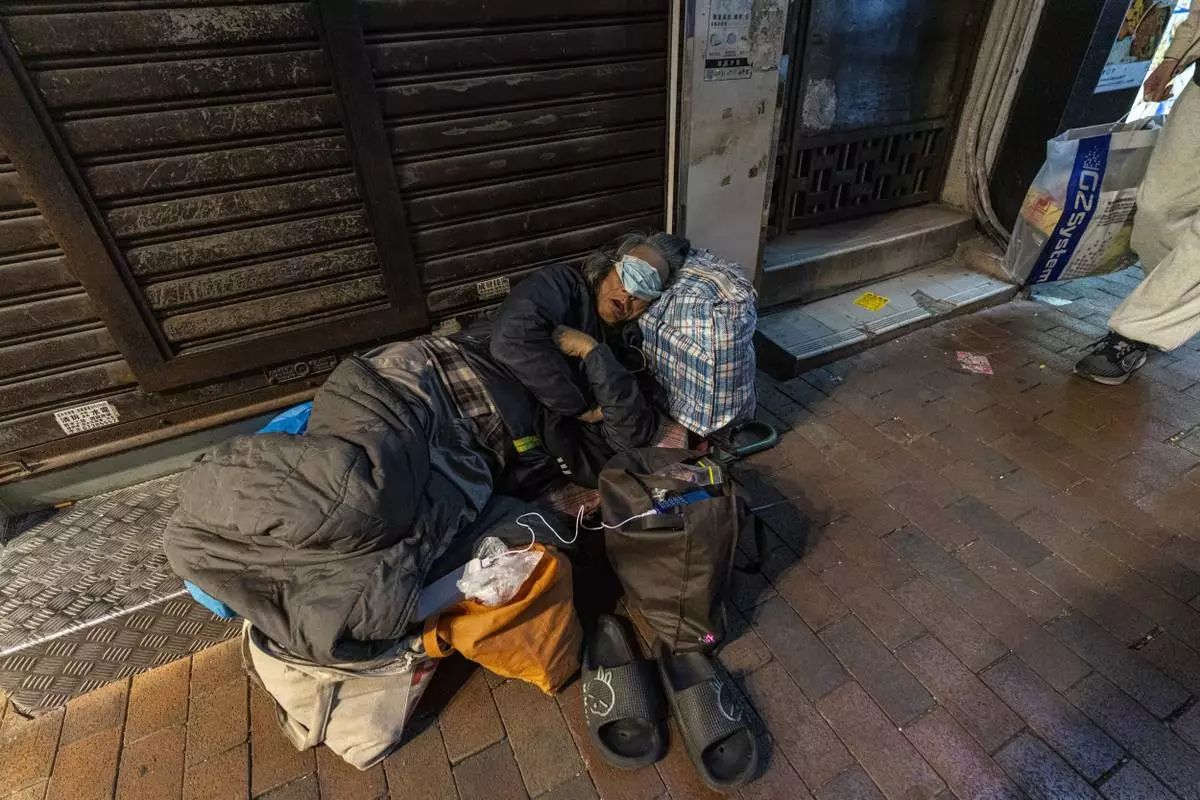
A homeless person sleeps on a street in Sham Shui Po district of Hong Kong, on Feb. 6, 2025. (AP Photo/Chan Long Hei)
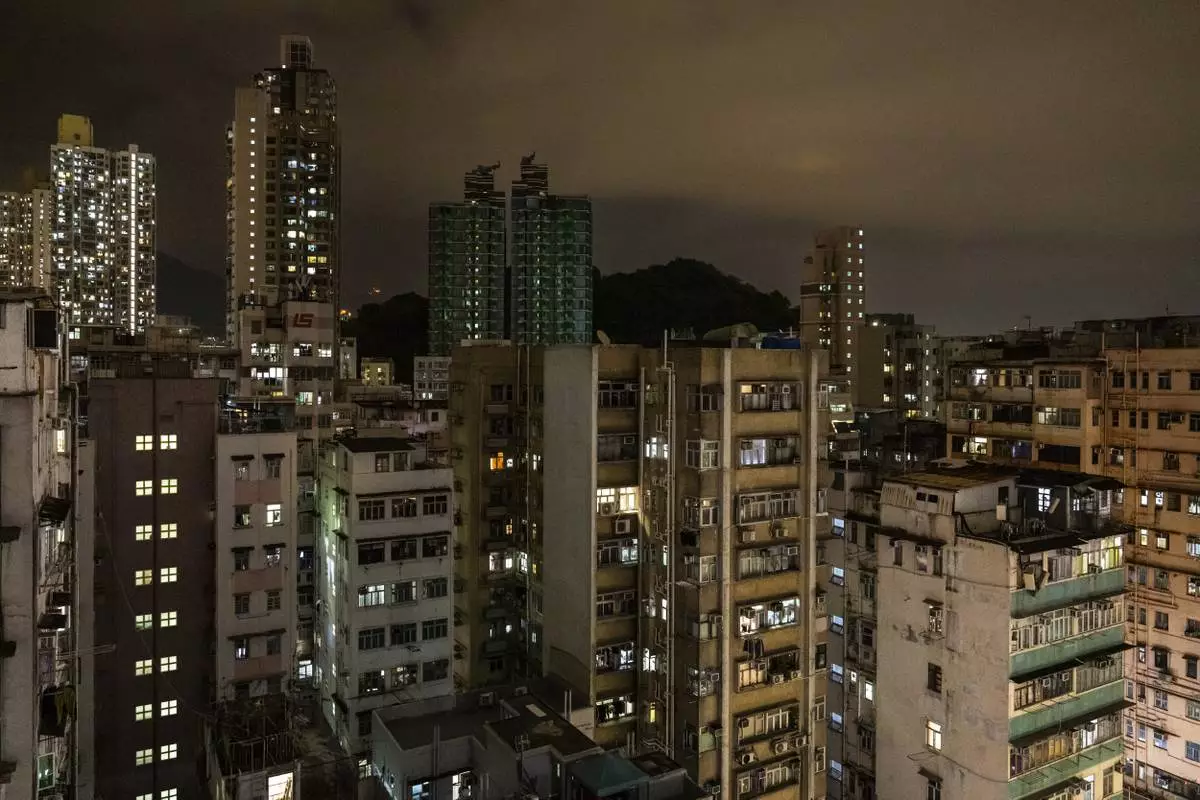
A general view of the residential area in Sham Shui Po district of Hong Kong, on Feb. 6, 2025. (AP Photo/Chan Long Hei)
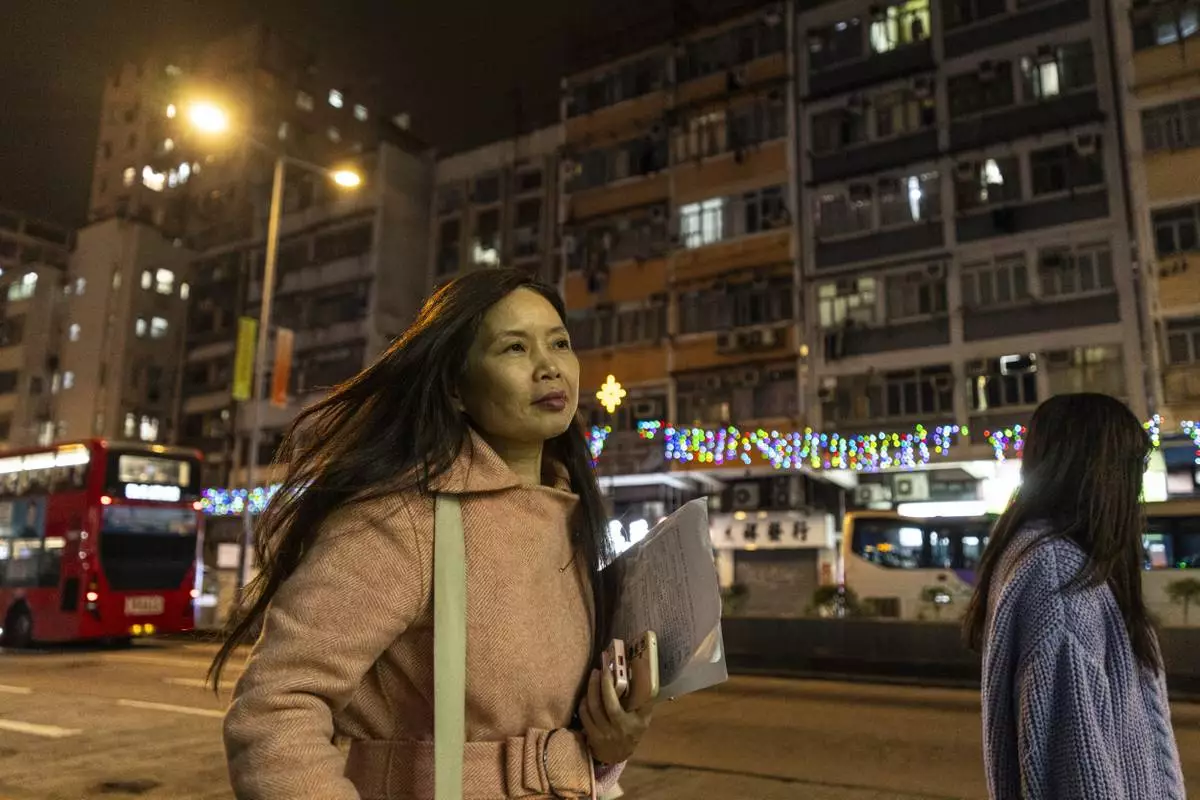
Sze Lai-shan, the deputy director of the Society for Community Organization, walks on her way to visit residents in the subdivided flat in Sham Shui Po district of Hong Kong, on Feb. 6, 2025. (AP Photo/Chan Long Hei)
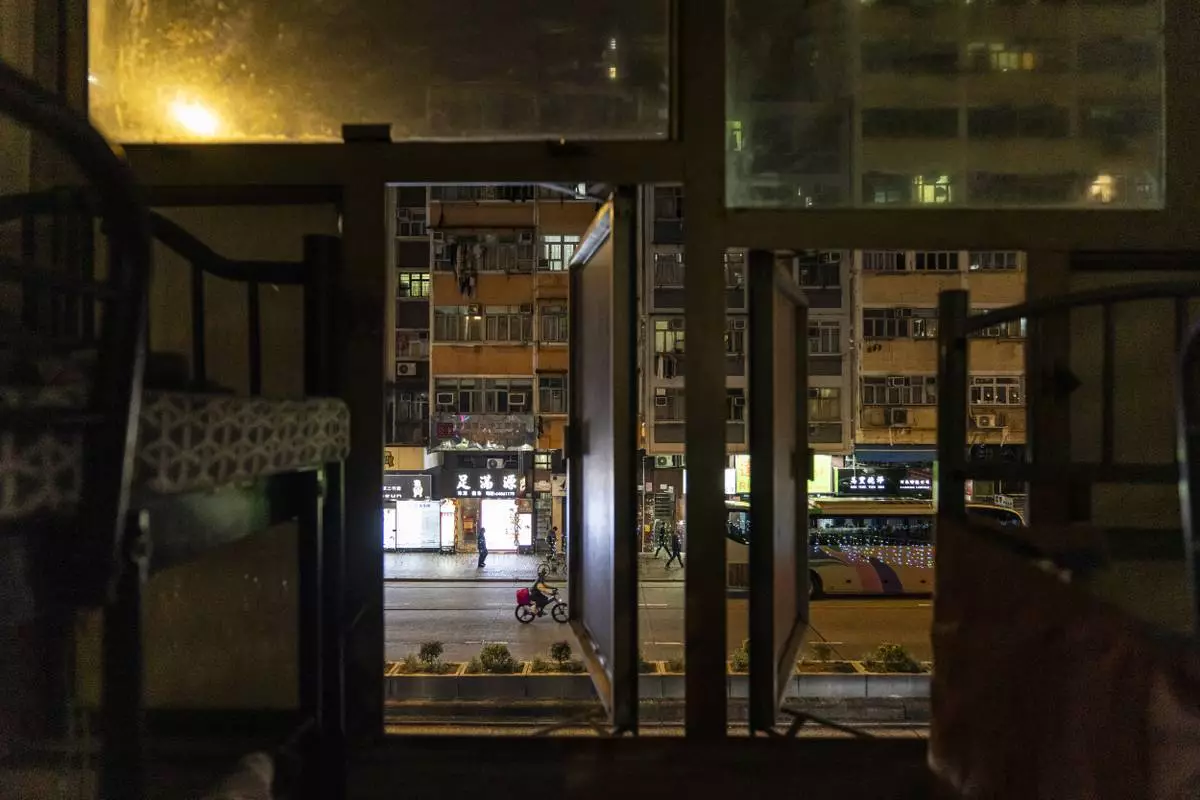
Residential buildings are seen through a window of a bed space in Sham Shui Po district of Hong Kong, on Feb. 6, 2025. (AP Photo/Chan Long Hei)
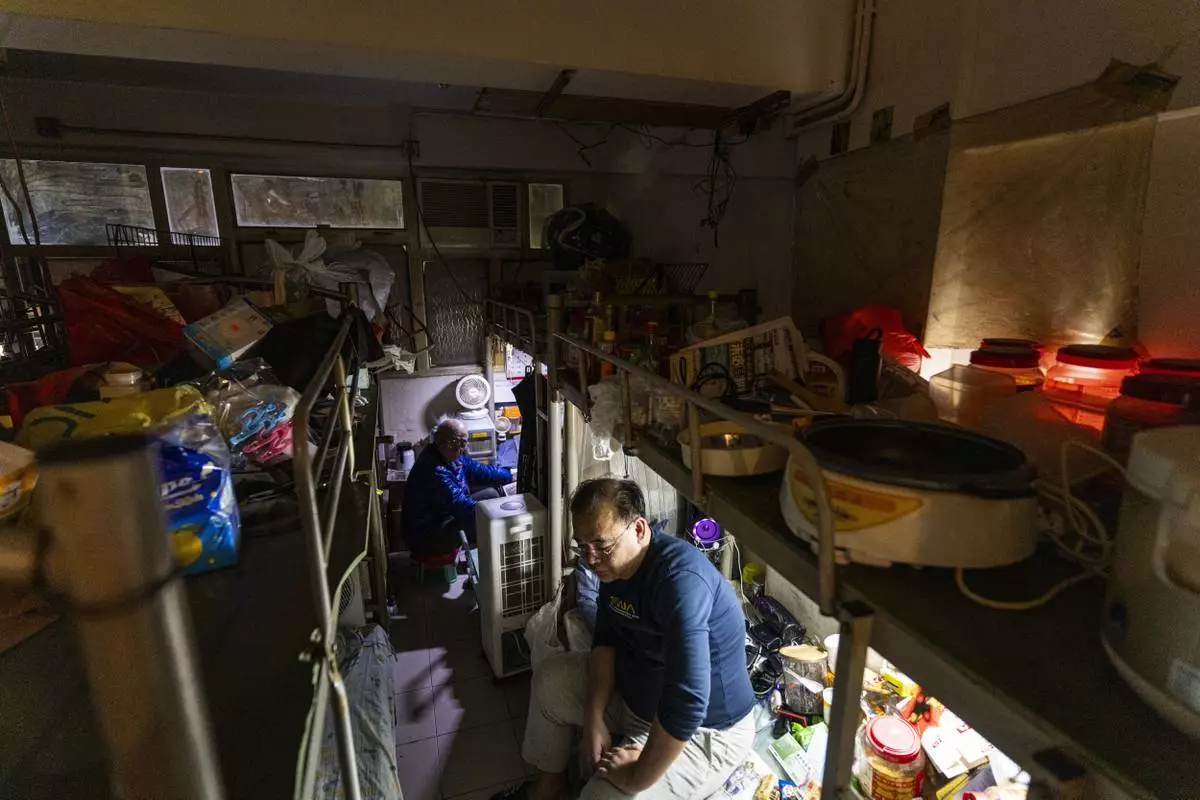
Resident Law Chung-yu sits in his bed space in Sham Shui Po district of Hong Kong, on Feb. 6, 2025. (AP Photo/Chan Long Hei)
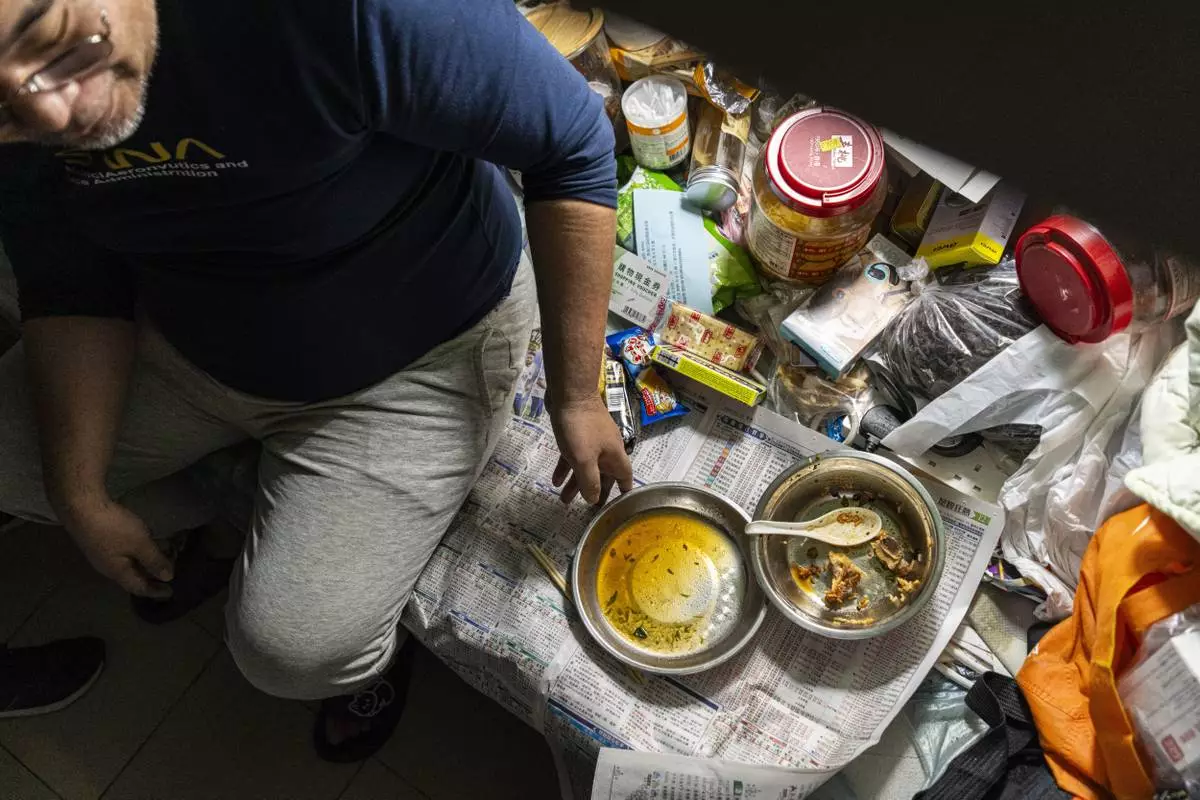
Resident Law Chung-yu has dinner in his bed space in Sham Shui Po district of Hong Kong, on Feb. 6, 2025. (AP Photo/Chan Long Hei)
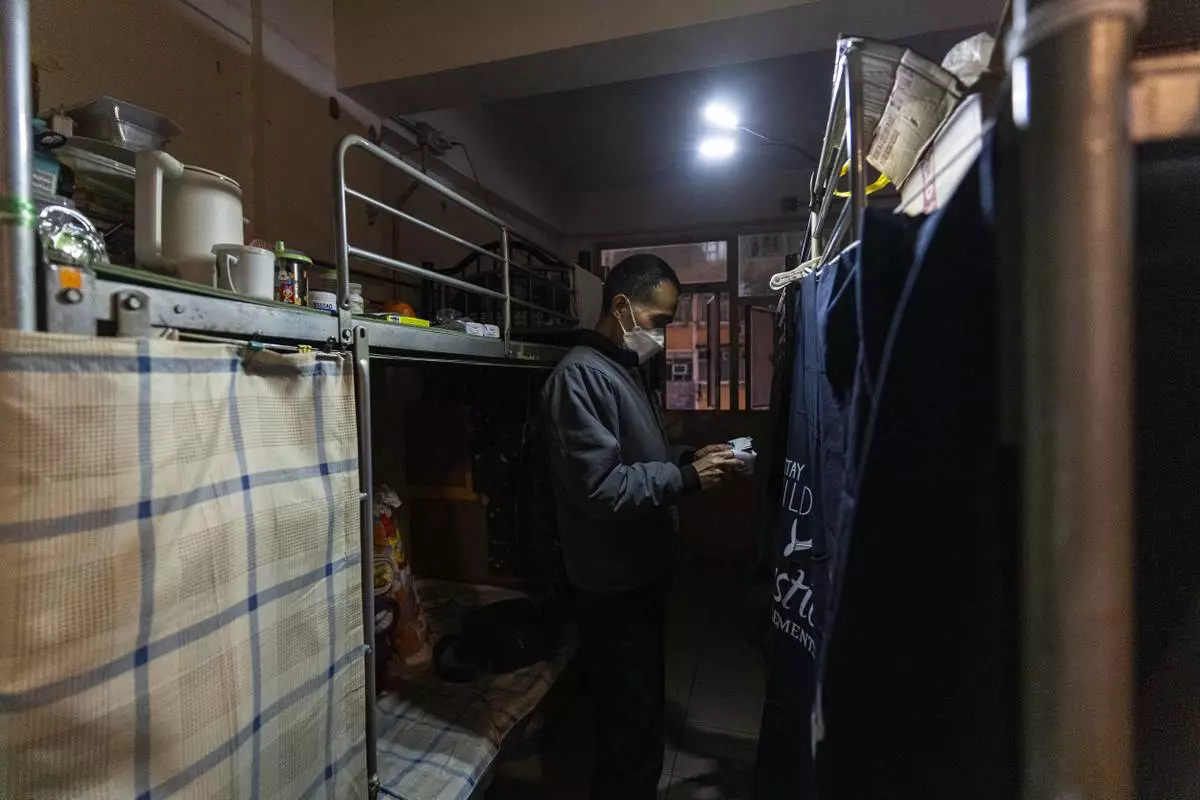
Resident Chung Shing-sun stands near his bed space in Sham Shui Po district of Hong Kong, on Feb. 6, 2025. (AP Photo/Chan Long Hei)
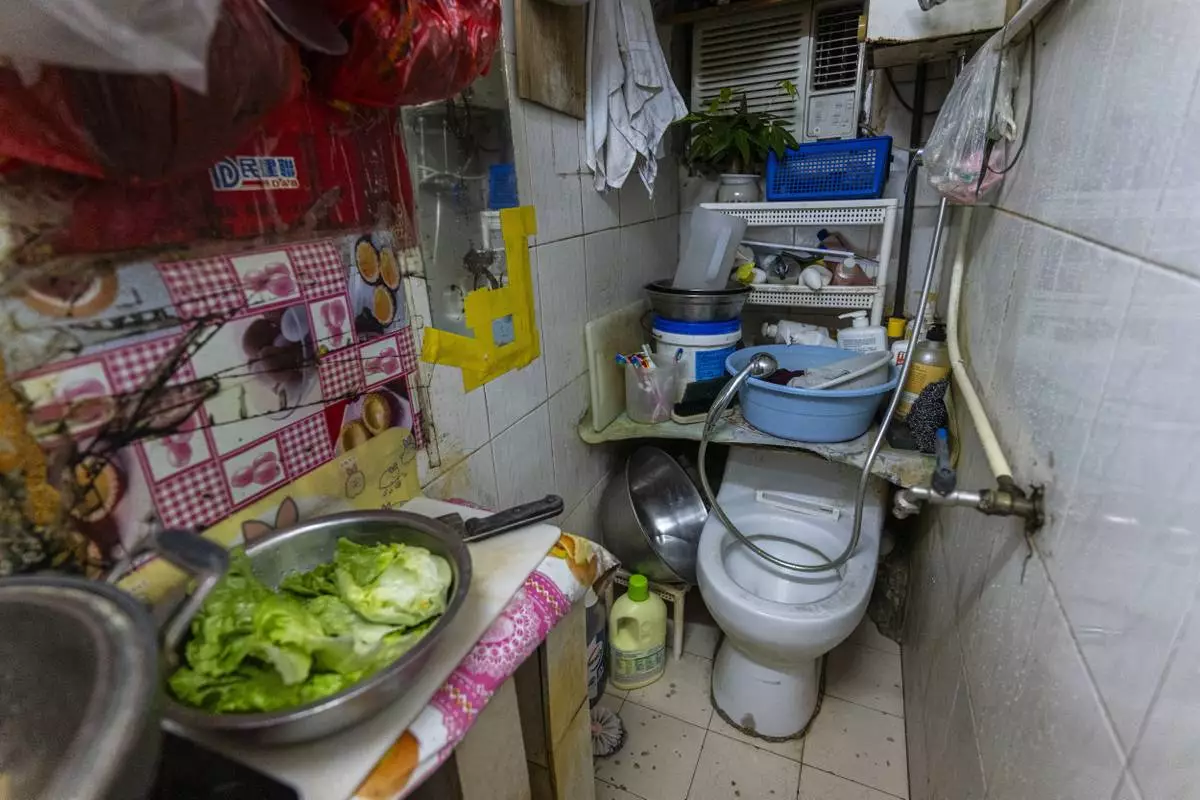
A toilet and kitchen are located in the same area of a subdivided flat in Sham Shui Po district of Hong Kong, on Feb. 6, 2025. (AP Photo/Chan Long Hei)
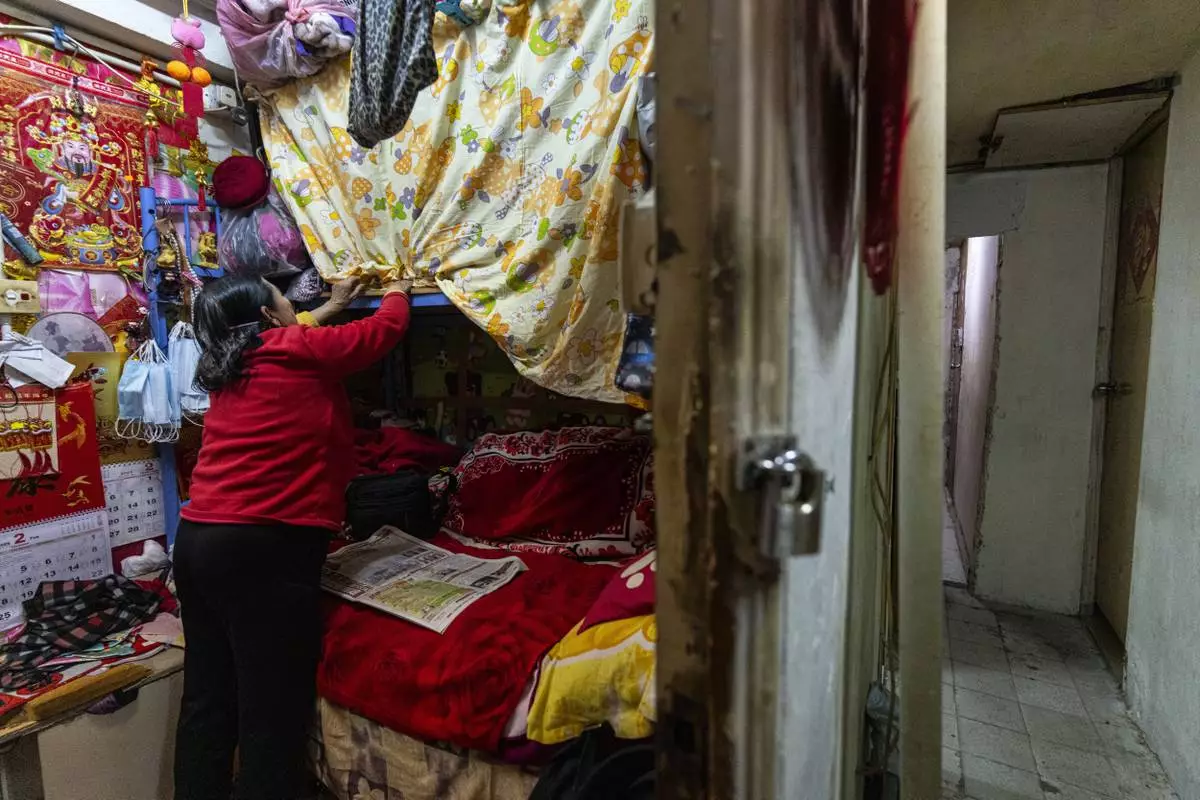
A resident adjusts the curtains over a bed at her subdivided flat in Sham Shui Po district of Hong Kong, on Feb. 6, 2025. (AP Photo/Chan Long Hei)
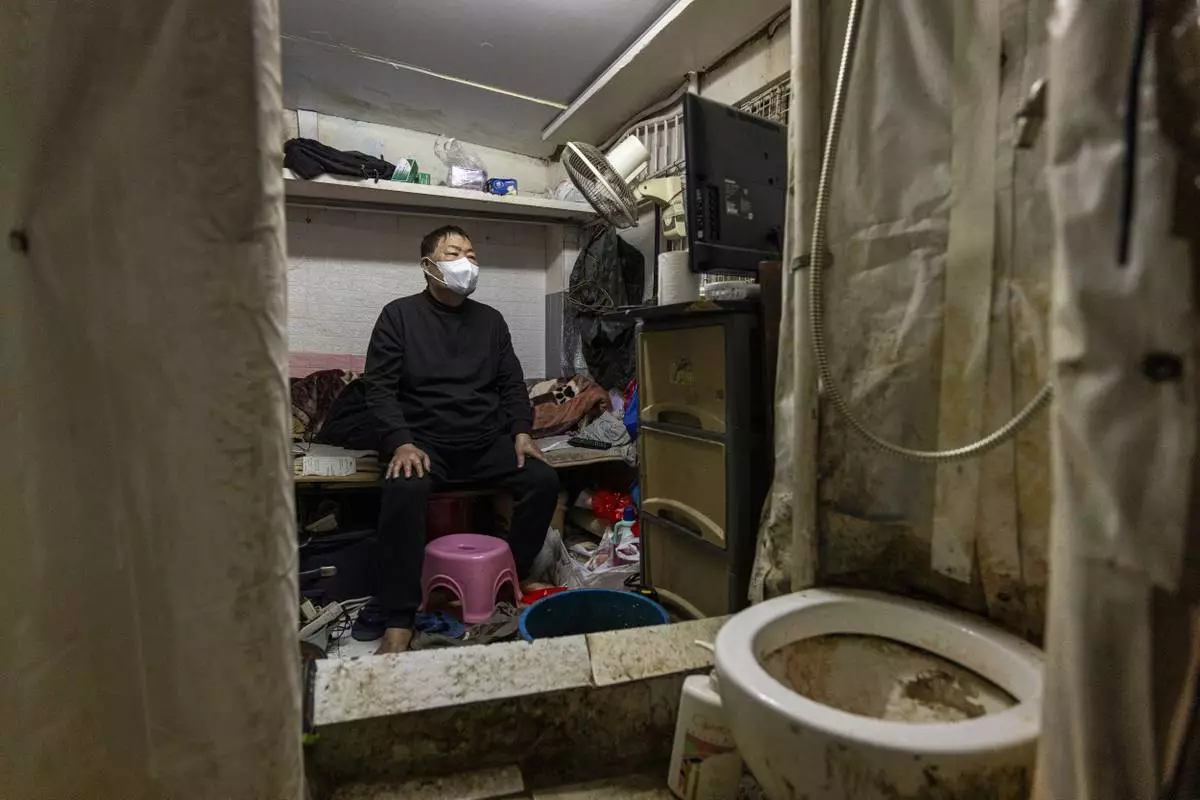
A resident who gave his name as Chiu watches television at his subdivided flat in Sham Shui Po district of Hong Kong, on Feb. 6, 2025. (AP Photo/Chan Long Hei)
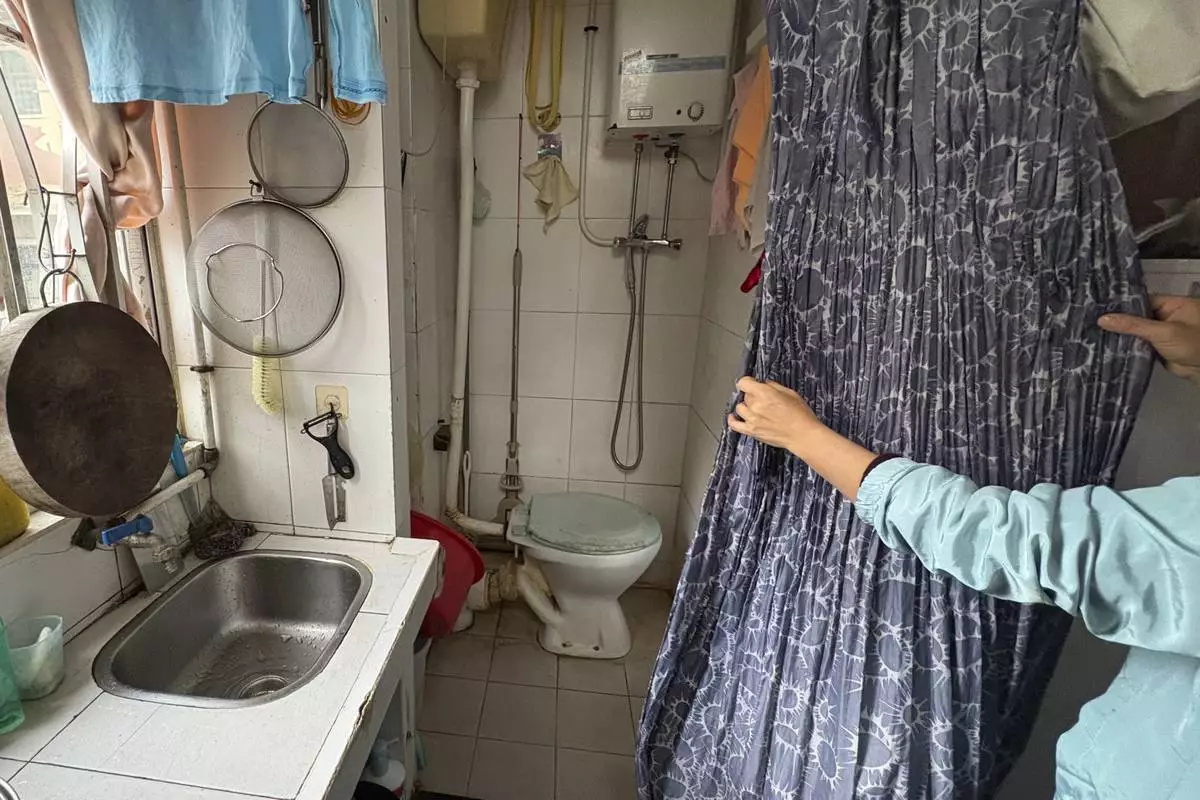
Housewife Jimmy Au pulls back a curtain to reveal her toilet at home in a residential area of Prince Edward district in Hong Kong, on Jan. 21, 2025. (AP Photo/Kanis Leung)
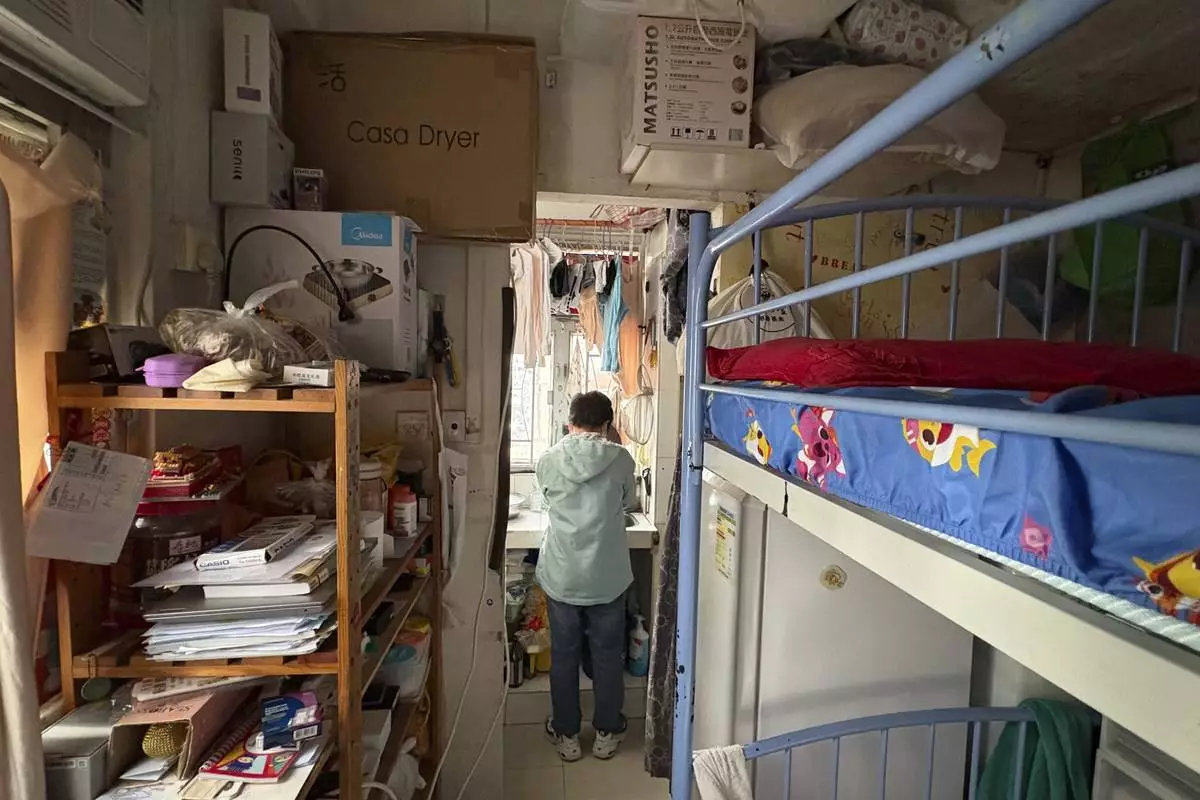
Housewife Jimmy Au stands in her kitchen at home in a residential area of Prince Edward district in Hong Kong on Jan. 21, 2025. (AP Photo/Kanis Leung)