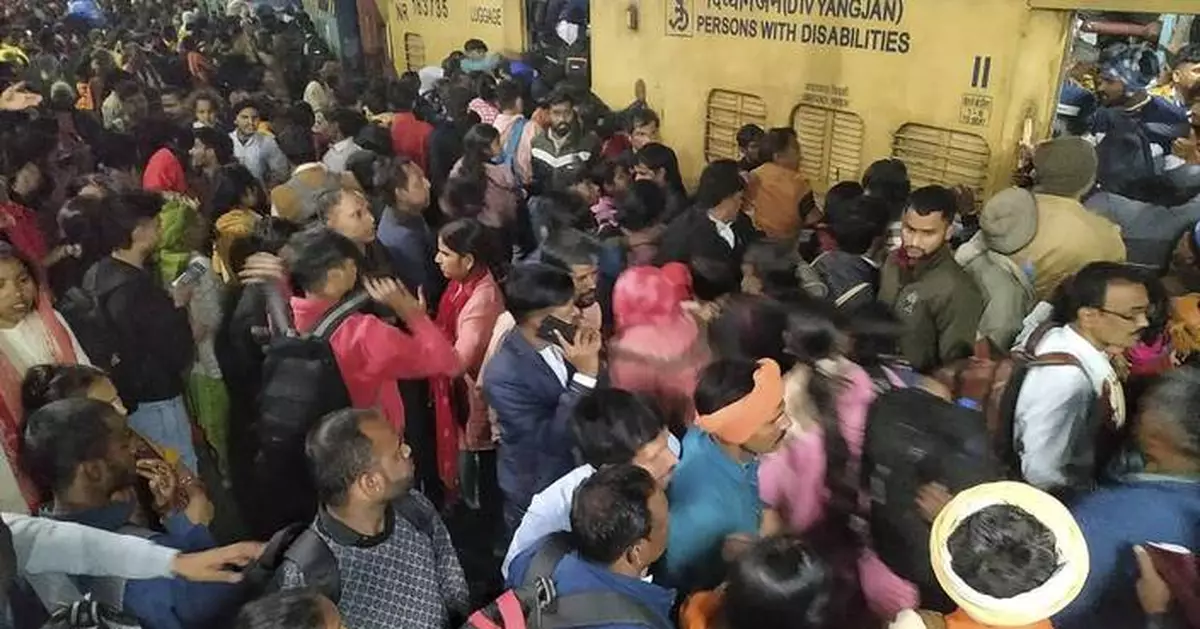
NEW DELHI (AP) — At least 18 people, including 14 women, were killed in a stampede at a railway station in India’s capital of New Delhi, the Press Trust of India news agency reported Sunday.
Many of the victims were Hindu pilgrims who were traveling to the Maha Kumbh festival in Prayagraj in northern India, according to Delhi’s caretaker chief minister, Atishi, who uses only one name.
The stampede happened late Saturday while thousands of people were gathered at the New Delhi railway station waiting to board a train. The incident occurred after some passengers slipped and fell on others while coming down from a footbridge that connects train platforms, authorities said.
Sheela Devi, who was at Lok Nayak Jai Prakash Narain Hospital in New Delhi to collect her daughter-in-law's body, said an announcement about a change of train platforms created confusion among the passengers that led to the stampede.
“The crowd went out of control and no one could control it,” said Nikhil Kumar, a shopkeeper who witnessed the crowd surge.
Prime Minister Narendra Modi said that he was “distressed by the stampede.”
“My thoughts are with all those who have lost their loved ones. I pray that the injured have a speedy recovery. The authorities are assisting all those who have been affected by this stampede,” he said on the social platform X.
Railway Minister Ashwini Vaishnaw said that an investigation has been ordered to find what led to the stampede.
At least 30 people were killed in a stampede at the six-week festival last month after tens of millions of Hindus gathered to take a dip in sacred river waters.
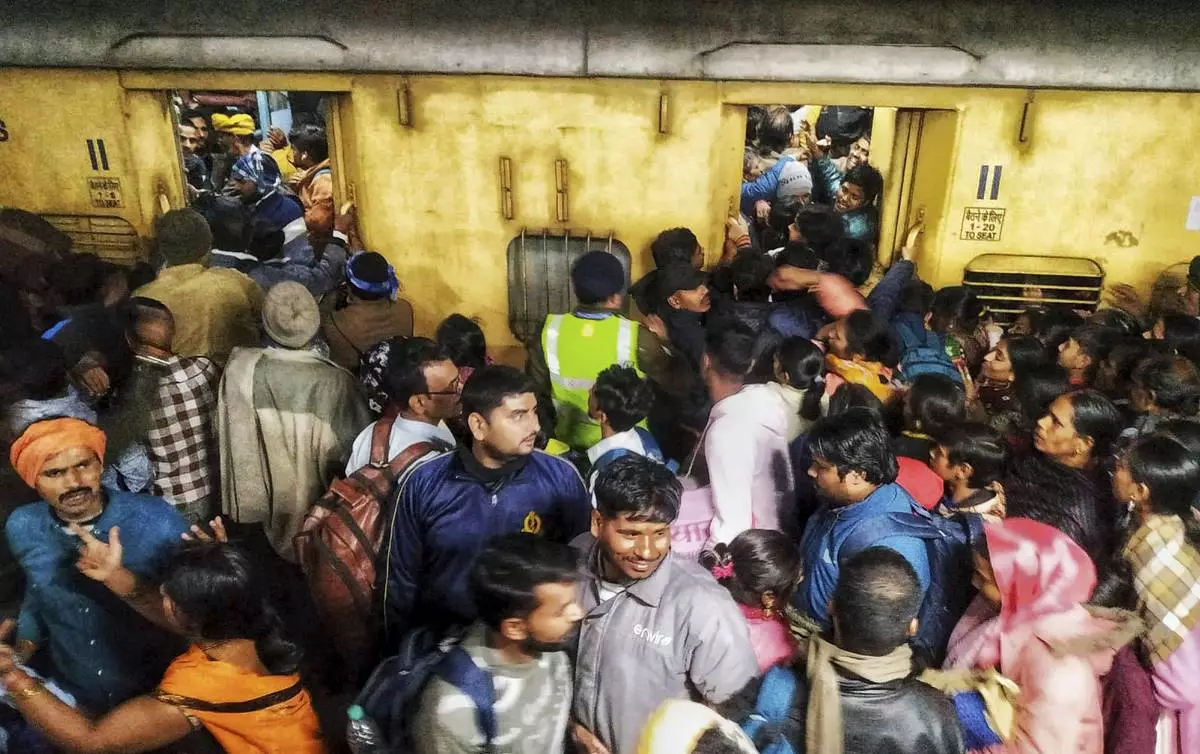
Passengers jostle with each other to board a train at the New Delhi Railway station, in New Delhi, India, Thursday, Feb.15, 2025. (AP Photo)
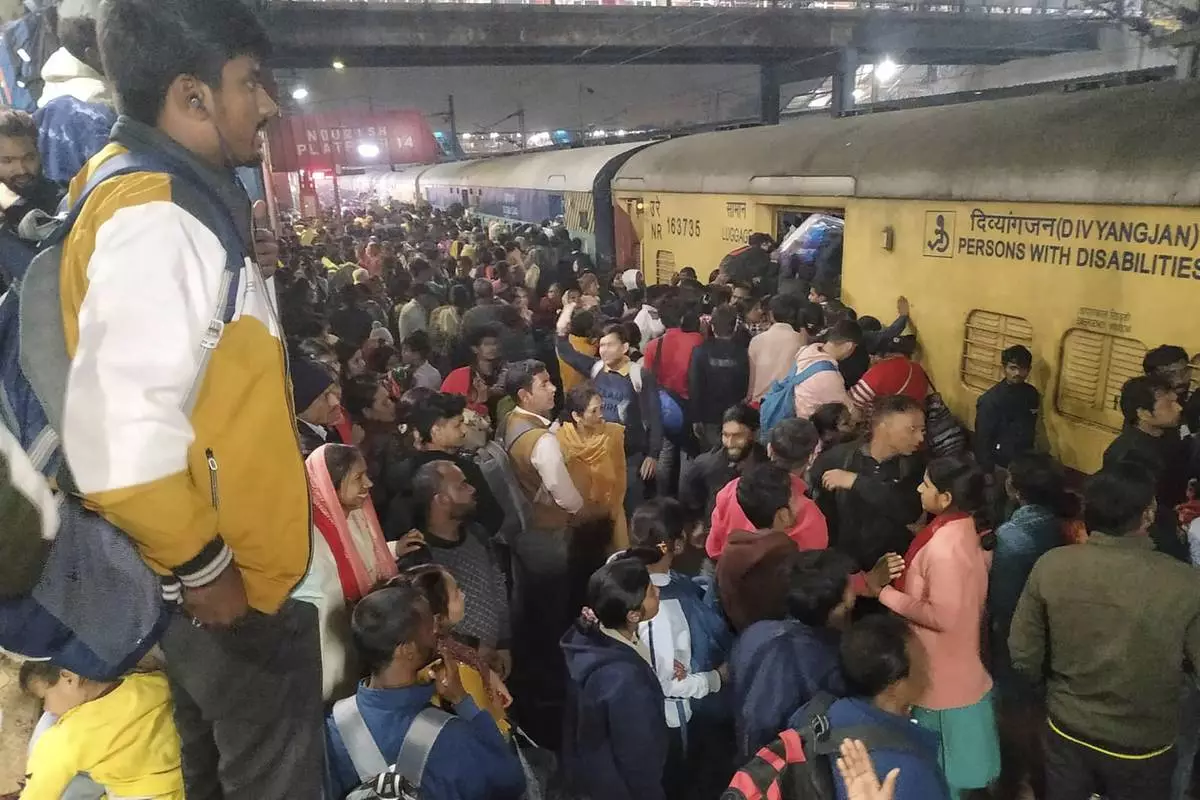
Passengers jostle with each other to board a train at the New Delhi Railway station, in New Delhi, India, Thursday, Feb.15, 2025. (AP Photo)
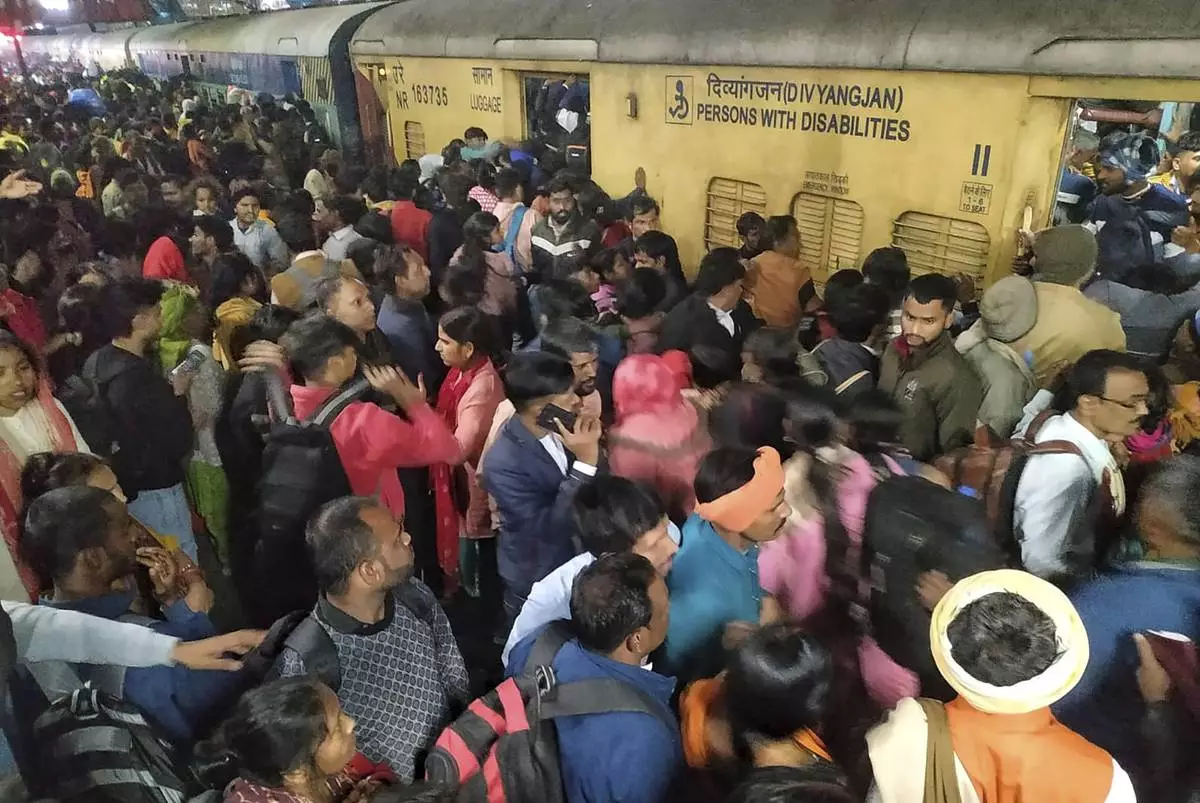
Passengers jostle with each other to board a train at the New Delhi Railway station, in New Delhi, India, Thursday, Feb.15, 2025. (AP Photo)
DENVER (AP) — A Frontier Airlines plane hit and killed a pedestrian on the runway of the Denver International Airport during takeoff, airport authorities said, sparking an engine fire and forcing passengers to evacuate.
The plane, on route from Denver to Los Angeles International Airport, “reported striking a pedestrian during takeoff at DEN at approximately 11:19 p.m. on Friday," the airport's official X account wrote.
A spokesperson for the airport said the pedestrian, who jumped a perimeter fence, has died. They said the unidentified person was hit two minutes after entering the airport. The person is not believed to be an airport employee.
“We're stopping on the runway,” the pilot tells the control tower according to the site ATC.com. “We just hit somebody. We have an engine fire.”
The pilot tells the air traffic controller they have “231 souls” on board and that an “individual was walking across the runway.”
The air traffic controller responds that they are “rolling the trucks now" before the pilot tells the tower they “have smoke in the aircraft. We are going to evacuate on the runway.”
Frontier Airlines said in a statement flight 4345 was the one involved in the collision and that “smoke was reported in the cabin and the pilots aborted takeoff.” It was not clear whether the smoke was linked to the crash with the pedestrian.
“The Airbus A321 was carrying 224 passengers and seven crew members,” the airline said. “We are investigating this incident and gathering more information in coordination with the airport and other safety authorities.”
Passengers were then evacuated via slides and the emergency crew bused them to the terminal. The airport spokesperson said 12 passengers suffered minor injuries and five were taken to local hospitals.
Denver Airport said the National Transportation Safety Board had been notified and that runway 17L, where the incident took place, will remain closed while an investigation is conducted. It is expected to open later today.
The pedestrian death came a day after a Delta Air Lines employee was killed while on the job at the Orlando International Airport. In a statement, the airline said the employee was killed Thursday night without providing details of the incident nor the name of the employee.
“We are focused on extending our full support to family and taking care of our Orlando team during this difficult time,” the airline said. "We are working with local authorities as a full investigation gets underway to determine what occurred.”
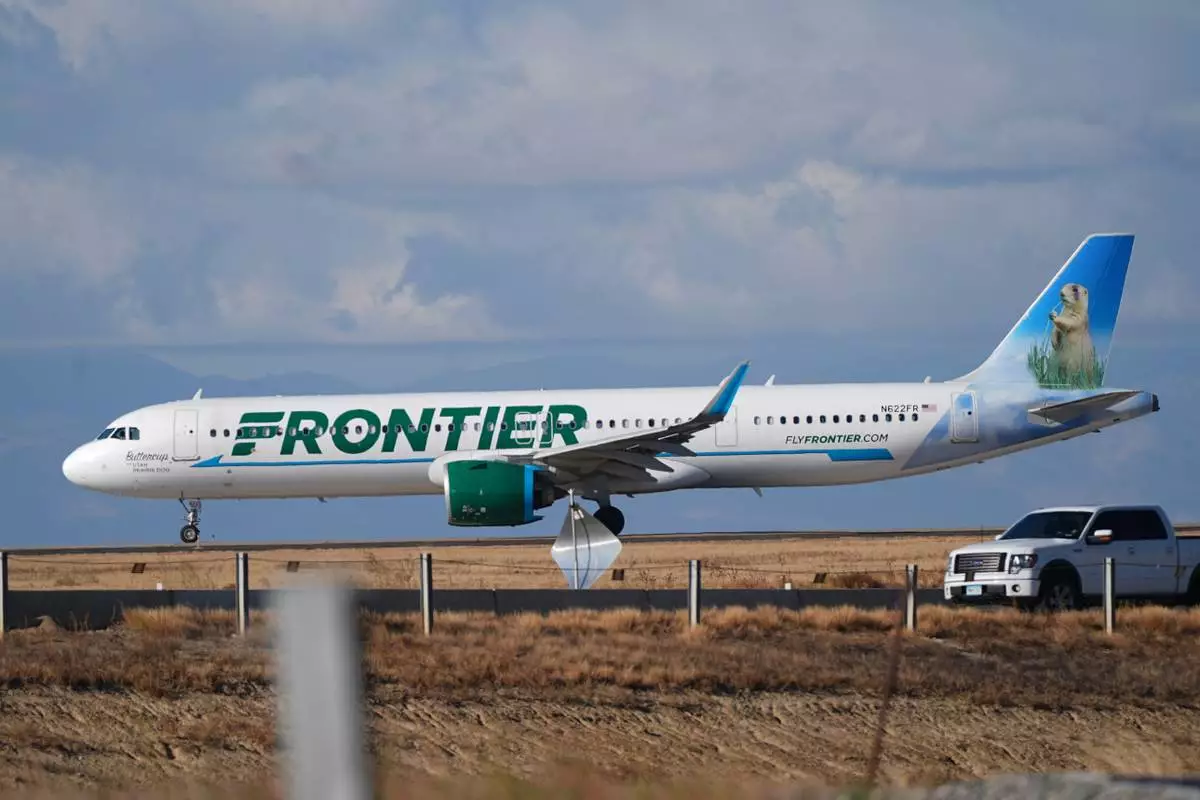
FILE - A Frontier Airlines jetliner taxis down a runway for take off from Denver International airport on Nov. 25, 2025, in Denver. (AP Photo/David Zalubowski, File)