The humanitarian situation in the eastern Democratic Republic of Congo (DRC) continues to deteriorate following the seizure of Kavumu Airport in South Kivu province by the March 23 Movement (M23) armed group on Friday.
Kavumu Airport, located about 30 km from Bukavu, the provincial capital, serves as a crucial hub for humanitarian and military flights. According to local sources, Congolese forces withdrew key equipment before the airport fell to the M23.
The latest offensive follows the group's claim on Jan 26 that it had captured Goma, the capital of North Kivu Province. Since the beginning of the week, the M23 has taken control of several towns in South Kivu, sparking panic among residents in Bukavu.
Sources in South Kivu reported that some DRC soldiers and their allies have retreated, with others moving toward the road to Uvira. Civil society groups, in a letter published Wednesday, urged authorities to avoid combat in Bukavu to prevent civilian casualties.
International humanitarian workers are sounding the alarm over the severe restrictions on transportation routes for humanitarian aid. The critical road linking Goma and Bukavu has been cut off, while Goma Airport remains closed, limiting access for delivering essential supplies.
Mercy Muthee Laker, head of the International Federation of Red Cross and Red Crescent Societies' Country Cluster Delegation for the DRC, the Republic of the Congo, Rwanda and Burundi, emphasized the gravity of the situation.
"The big hindrance at the moment is the access into Goma. As I mentioned, the airport is not yet opened. So it's difficult to bring in stocks. Many organization lost their stocks to looting and have not been able to replenish," she said.
Most of the looted stocks had been destined for the most vulnerable people, she added. According to United Nations data, the ongoing conflict in eastern Congo has resulted in over 3,000 deaths and nearly 2,880 injuries since January 26. The number of internally displaced persons continues to rise, as medical infrastructure in conflict zones has been severely damaged, leading to overcrowded hospitals and increased risks of infectious diseases such as cholera, malaria, and measles.
Local doctor Fabrice described the overwhelming challenges faced by medical staff.
"In just seven days, we treated 477 injured individuals. Our first challenge was that hospital staff worked continuously, some for up to 72 hours straight, to better serve the wounded. Our second challenge is that our supplies, including medications, have run out. We have received a massive influx of patients, but we are critically low on resources and can only use what we have to care for the injured," he said. The United Nations Office for the Coordination of Humanitarian Affairs has reported that the ongoing conflict in eastern Congo has forced many people to flee Goma and surrounding displacement sites, seeking refuge in safer areas.
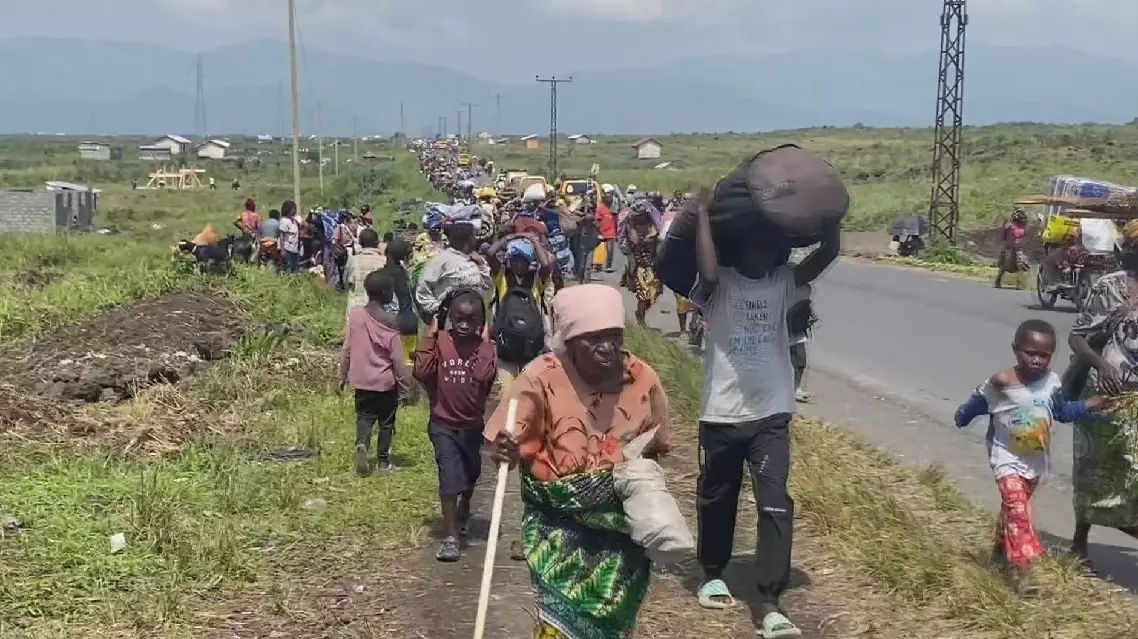
Over 110,000 internally displaced persons have been compelled to leave these sites.
A local resident poignantly recounted their personal tragedy.
"Since the beginning of 2024, seven people from my family have been killed. In the latest conflict, my father went missing, and my mother was killed. We call on the international community to increase attention to our plight and help us return home," he said.
The security situation in the eastern DRC has deteriorated with the resurgence of the M23, which Kinshasa and United Nations reports accuse Rwanda of backing. Since late 2021, the M23 has intensified its attacks, capturing key strategic locations, including the commercial hub of Bunagana on the Ugandan border and the mining town of Rubaya, known for its coltan deposits.
The conflict is deeply rooted in the aftermath of the 1994 Rwandan genocide and ongoing ethnic tensions, particularly between the Tutsi and Hutu communities. The DRC accuses Rwanda of supporting the M23, while Rwanda alleges that the Congolese army has allied with the Democratic Forces for the Liberation of Rwanda, a rebel group accused of participating in the genocide against the Tutsi.
The escalating crisis has led to mass displacement, increased instability, and heightened diplomatic tensions between the DRC and Rwanda. In response, DRC President Felix Tshisekedi is seeking international backing at the Munich Security Conference, held from Feb 14 to 16 in Germany.
Regional diplomatic efforts and military initiatives are underway to curb the M23's advance and restore stability in the conflict-ridden Great Lakes region.
Humanitarian crisis worsens in DR Congo as M23 seizes strategic airport
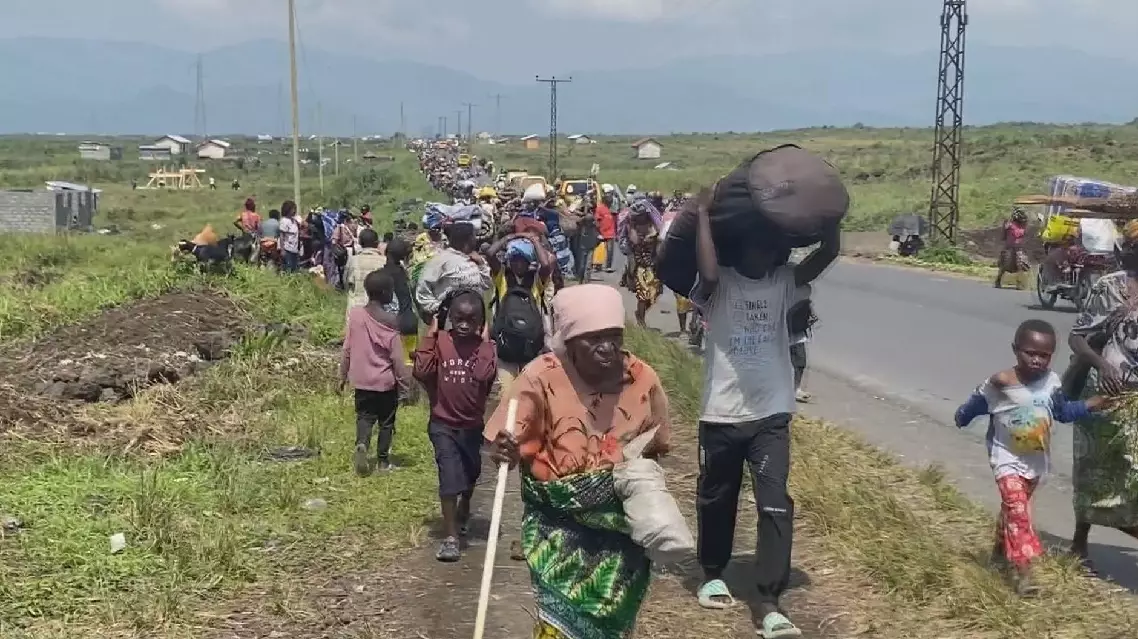
Humanitarian crisis worsens in DR Congo as M23 seizes strategic airport
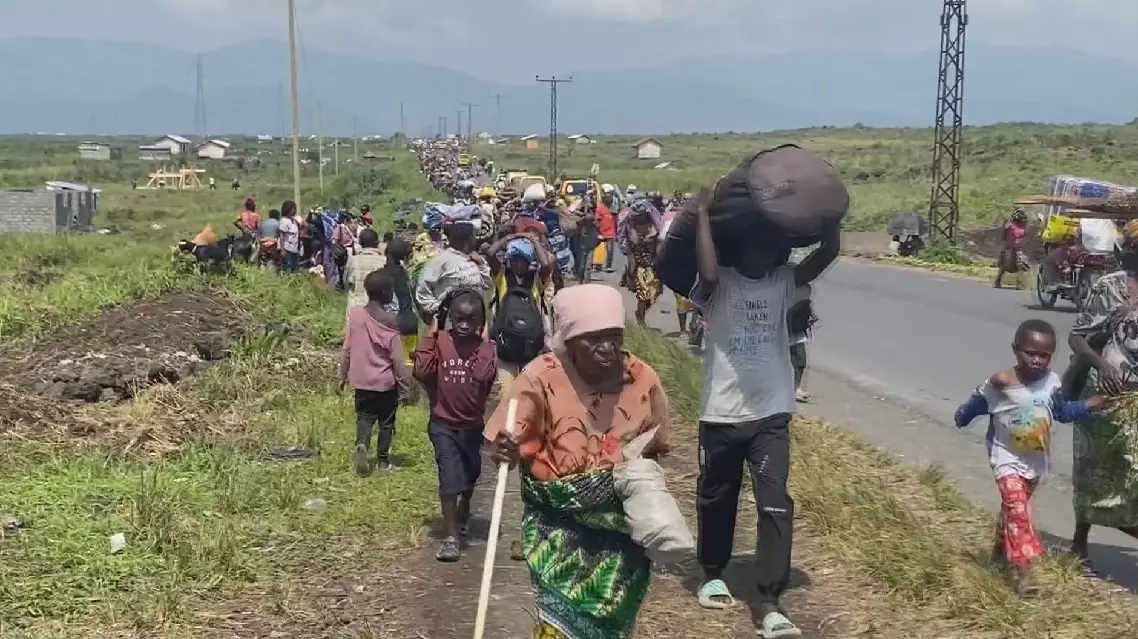
Humanitarian crisis worsens in DR Congo as M23 seizes strategic airport