Skip to Content Facebook Feature Image

Common development of electric vehicles depends on openness, innovation: BYD chairman

China

China

China

Common development of electric vehicles depends on openness, innovation: BYD chairman

2025-02-19 01:39 Last Updated At:07:27

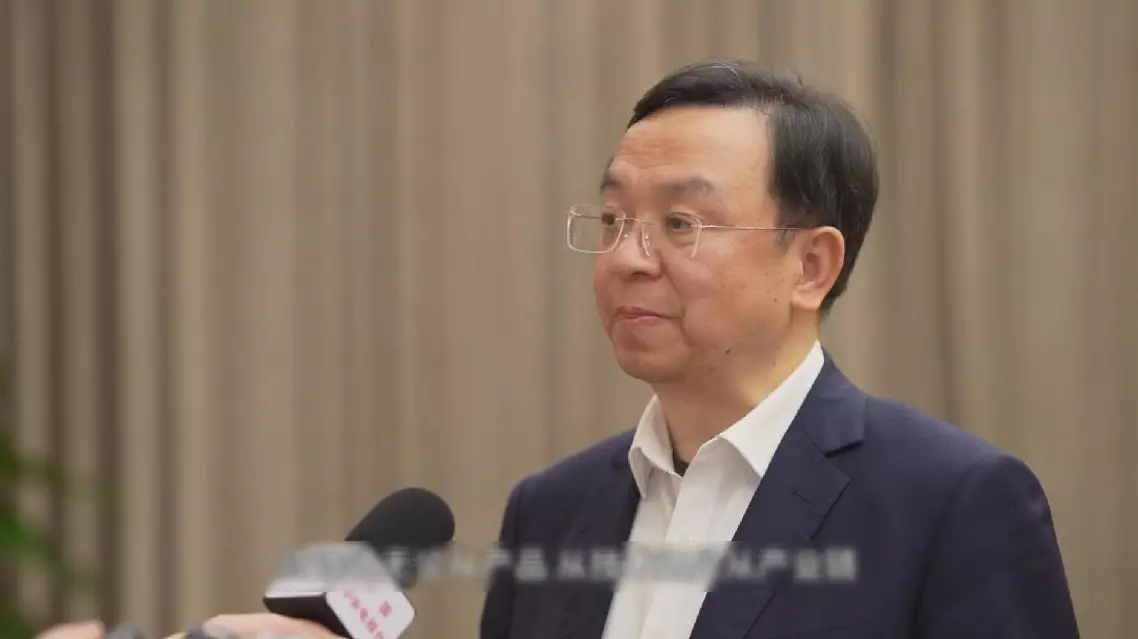
Wang Chuanfu, chairman of China's leading electric vehicle (EV) maker BYD, said on Monday that the common development of the EV industry depends on openness and innovation, following a symposium headed by Chinese President Xi Jinping, who is general secretary of the Communist Party of China (CPC) Central Committee.

Xi, who is also chairman of China's Central Military Commission, delivered an important speech at the symposium following consultations with private entrepreneurs.

Wang, who attended and spoke at the meeting, said he has greater faith in the private economy sector after listening to Xi's speech, and said development will accelerate if everyone has confidence and ambition.

"In 2014, 10 years ago, the general secretary said that if China wants to move from a big automobile country to an automobile powerhouse, new energy vehicles are the only way forward. And 10 years later, you can see the radical changes in the sector. BYD has truly experienced the far-sightedness of the CPC Central Committee over the past 10 years. At the symposium, the general secretary put forward many requirements on how to implement various policies. I believe that we must learn from the requirements and instructions of the general secretary. If we have confidence, we can run the enterprise better and better," he said.

Wang said China's new energy vehicles are taking a leading role across the world thanks to the openness and innovation of the companies involved and the hard work of their employees.

"China's new energy vehicle technology is about three to five years ahead in terms of products, technology and industrial chain. Only through openness and innovation can the world see the good products and achieve common development. We don't have any other skills, we just rely on technological innovation. If we say what our assets are, I think my biggest asset is the team of engineers. We have 110,000 engineers, which is my biggest asset at BYD. Behind each of our technologies is innovation, behind each of our technologies is green development, and behind each of our technologies is the hard work of 110,000 engineers," said Wang.
Common development of electric vehicles depends on openness, innovation: BYD chairman
Common development of electric vehicles depends on openness, innovation: BYD chairman


Common development of electric vehicles depends on openness, innovation: BYD chairman
Common development of electric vehicles depends on openness, innovation: BYD chairman

U.S. stocks closed mixed on Monday as a sharp sell-off in semiconductor equities dragged down the technology sector, while investors digested new U.S. economic sanctions announced against Iran and fresh trade tariff warnings targeting Canada.

The Dow Jones Industrial Average rose 140.15 points, or 0.26 percent, to 53,417.16. The S and P 500 sank 21.51 points, or 0.28 percent, to 7,652.86. The Nasdaq Composite Index shed 200.264 points, or 0.77 percent, to 25,980.19.

Eight of the 11 primary S and P 500 sectors ended in the green, with consumer staples and financials leading the gainers by going up 1.76 percent and 1.24 percent, respectively. Meanwhile, technology and energy led the laggards by losing 1.59 percent and 0.76 percent, respectively.

The tech sector's pullback stemmed from broad weakness across chipmakers. Memory and semiconductor shares came under heavy pressure following weekend reports that graphics processor leader Nvidia plans to implement price hikes across select AI server configurations. SanDisk, Western Digital, SK Hynix, Micron Technology and Seagate Technology all finished lower.

Geopolitical developments dominated macroeconomic headlines as U.S. Treasury Secretary Scott Bessent on Monday threatened Iran with "an economic D-Day," announcing a wave of new sanctions aimed at further isolating the country.

On the trade front, U.S. President Donald Trump escalated trade frictions with Canada, announcing intentions to raise tariffs on Canadian cars, automotive parts and steel to 50 percent effective Jan. 1, 2027. The announcement weighed on domestic automotive equities, pulling shares of General Motors and Ford lower.

In corporate earnings disclosures, U.S.-listed shares of Chinese e-commerce firm PDD and electric vehicle maker XPeng declined 1.48 percent and 8.53 percent, respectively, following their latest quarterly financial reports.

Market attention is now converging on two critical catalysts later this week: Nvidia's highly anticipated second-quarter earnings release on Wednesday, expected to serve as a vital referendum on the ongoing AI investment cycle, and Federal Reserve Chair Kevin Warsh's scheduled address at the central bank's annual Jackson Hole Economic Policy Symposium.

U.S. stocks close mixed as chip stocks sink

U.S. stocks close mixed as chip stocks sink

Recommended Articles