Skip to Content Facebook Feature Image

Unitree founder expects major development of humanoid robot in 2025

China

China

China

Unitree founder expects major development of humanoid robot in 2025

2025-02-19 11:49 Last Updated At:19:57

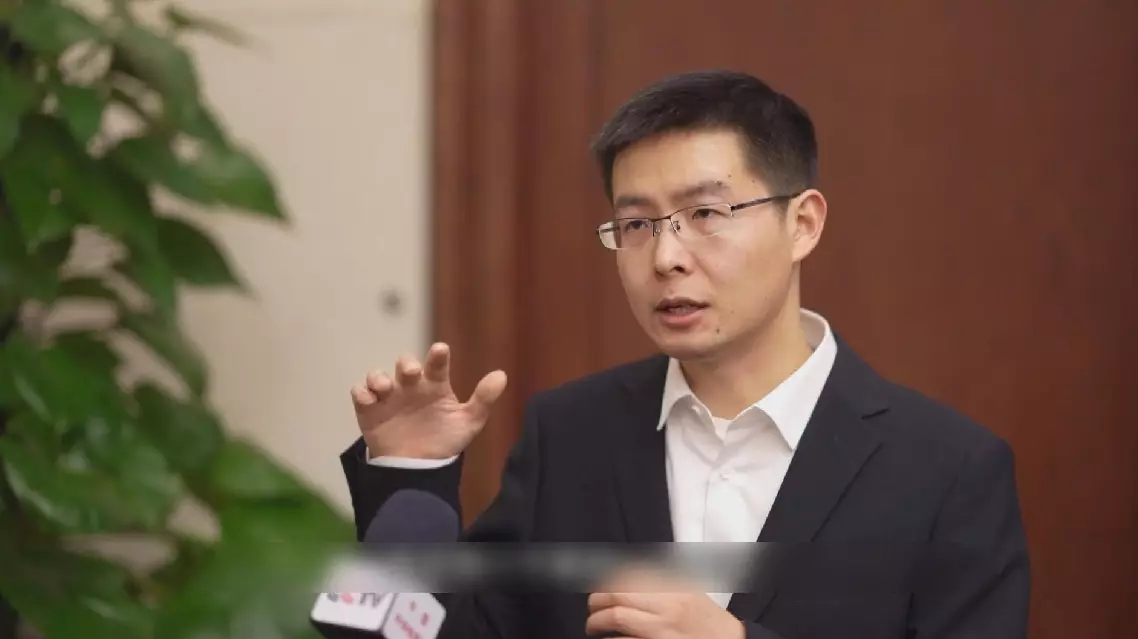
Wang Xingxing, founder and CEO of leading Chinese robotics firm Unitree, has expressed the belief that humanoid robots will see a significant development in 2025.

Speaking to reporters after attending Monday's symposium on private enterprises at which Chinese President Xi Jinping delivered an important speech, Wang said he expects the development of AI-powered humanoid robots to reach a new level by the end of this year.

"AI-powered robots are evolving very fast every day, faster than I expected, and giving me big surprises every day. We need to get the AI model of the robot right, and when it's right, it's just a matter of training it with better AI computing power, which has greatly accelerated technological progress in this area," said Wang.

Wang's company drew attention this year during the CMG Spring Festival Gala, where its robots, equipped with advanced speech recognition and emotional AI, performed a folk dance in cooperation with human dancers.

More software upgrades have been completed in the past 20 days since the gala, according to the entrepreneur.

"There were people helping the robots to leave the stage during the Spring Festival Gala, which was just to add to the fun and more interaction between robots and human dancers. Of course we just recently completed another software algorithm upgrade to the humanoid robot to make it dance more smoothly. The robots can now dance better than most people," said Wang.

Wang expects humanoid robots to enter the service industry very soon, but said it will take longer for them to become part of people's daily lives due to higher safety requirements.

"I personally believe that by the end of this year, the development of AI-powered humanoid robots will reach a new level. If things go well, I think we will see their application in the service industry or some industrial sectors next year or the year after. But the progress for humanoid robots for home might be a little slower because the higher safety requirements ask for more mature technology," said Wang.

He also expressed his excitement to join the symposium, saying he was inspired and encouraged by President Xi.

"It was a great honor for me, but of course there was also a lot of pressure, because I believe we should continue to work hard. All the entrepreneurs were inspired by General Secretary Xi, and everyone was in high spirits and had high morale," said Wang.
Unitree founder expects major development of humanoid robot in 2025
Unitree founder expects major development of humanoid robot in 2025

Unitree founder expects major development of humanoid robot in 2025
Unitree founder expects major development of humanoid robot in 2025
Candlelight memorials were held across China on Saturday to honor the victims of the Nanjing Massacre during Japan's aggression against China in 1937.

The Nanjing Massacre took place when Japanese troops captured the then-Chinese capital on Dec. 13, 1937. Over the course of six weeks, they proceeded to kill approximately 300,000 Chinese civilians and unarmed soldiers in one of the most barbaric episodes of WWII.

Saturday marks the 12th National Memorial Day for Nanjing Massacre Victims.

In Nanjing, now the capital of east China's Jiangsu Province, a candlelight memorial and international peace rally was held on Saturday night, joined by around 200 participants from China and across the world.

As night fell over the city, people from different walks of life gathered at the square of the Memorial Hall of the Victims in Nanjing Massacre by Japanese Invaders to pay tribute to those killed.

Participants included representatives of inheritors of the historical memory of the Nanjing Massacre, descendants of international friends who aided China during the war, and young students. Dressed in plain attire, they took part in the solemn commemorative event.

Five representatives from various sectors passed along illuminated bouquets of Zijin grass, known as February orchid in Nanjing and radish flower in Japan, jointly forming a light display spelling out the word "Peace." Candles were also arranged into the shape of a dove, symbolizing the shared hope for lasting peace.

"This history is deeply cruel and painful, but we must remember it. Only by remembering history can we truly cherish the peace we enjoy today. When I grow up, I hope to work together with others to safeguard peace," said Yue Cen, a student from Nanjing Foreign Language School's Xianlin Campus.

A similar candlelight memorial was also held in Shenyang, the capital of northeast China's Liaoning province, where the September 18 Incident in 1931 marked the start of Japan's 14-year invasion of China.

More than 200 representatives from various sectors gathered at the 9.18 Historical Museum to pay tribute, lighting candles in memory of the Nanjing Massacre victims.

"On the National Memorial Day, the nation remembers its suffering. It reminds us to cherish the peace that was won at the cost of lives. I will study harder, strengthen my abilities, and contribute my youth to national rejuvenation," said Li Shuhang, a student from Shenyang University.

Candlelight memorials held in China for Nanjing Massacre victims

Candlelight memorials held in China for Nanjing Massacre victims

Recommended Articles