Six prominent private entrepreneurs in China on Monday vowed to revitalize their businesses to better serve the country's 1.4 billion people and strengthen China's global position in the fourth industrial revolution.
Their remarks followed an important speech by President Xi Jinping, also general secretary of the Communist Party of China Central Committee, at a symposium on private enterprises, where he urged efforts to promote the healthy and high-quality development of the country's private sector.
Huawei's Ren Zhengfei, BYD's Wang Chuanfu, New Hope's Liu Yonghao, Will Semiconductor's Yu Renrong, Unitree Robotics' Wang Xingxing, and Xiaomi's Lei Jun put forward their opinions and advice on the development of the private sector of the economy.
Some of the representatives of private entrepreneurs were interviewed after the symposium, and shared their thoughts on innovation, globalization, market confidence, and the push for enhanced competitiveness amid growing challenges.
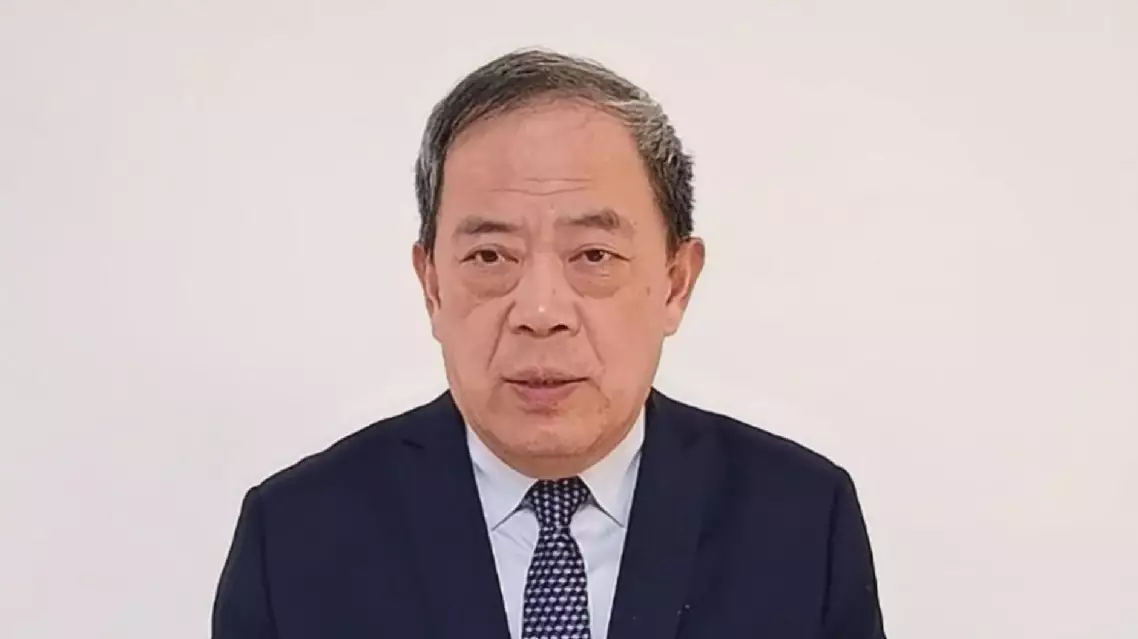
Qi Xiangdong, chairman of Qi-Anxin Group, a leading Chinese cybersecurity company, pointed to China's vast consumer market and its industrial foundation as key advantages.
"General Secretary gave us private entrepreneurs encouragement at the symposium. He emphasized our vast market of 1.4 billion people and a strong industrial manufacturing base, which have helped nurture generations of technological innovation talents," he said.
Qi-Anxin Group released its large-scale model QAX-GPT last year, expecting it to assist in the development of security products, detection of threats and areas of vulnerability, and analysis of internet-related crimes.
"The national development pattern, its needs, and its immense resilience encourage private enterprises to be grounded and focused on doing what they should do," said Liu Yonghao, chairman of China's agricultural conglomerate New Hope Group.
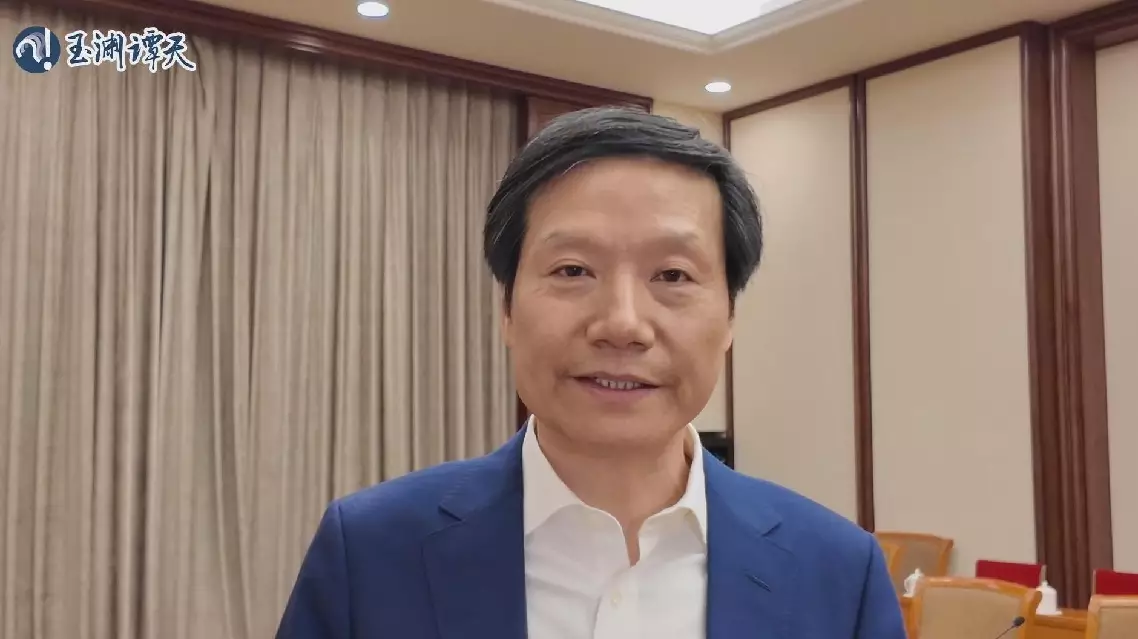
Lei Jun, chairman of Xiaomi, expressed confidence in the growing unity among Chinese businesses in the face of external pressures.
"The entire Chinese business ecosystem, when facing external pressure, may become more united. Looking globally, we need to improve the global influence of Chinese products," Lei said.
Wang Chuanfu, chairman of China's largest EV maker BYD, emphasized that innovation is key to long-term success.
"Good products cannot be protected just by protection. Intelligent products make consumers praise them endlessly. Only by motivating ourselves can we overcome all sorts of difficulties," he said.
BYD sold about 1.768 million all-electric cars in 2024, up about 12 percent year over year.
Gao Yuejing, chairwoman of Sunresin, and Peng Fan, chairman of KOCEL, both spoke about navigating specialized fields and embracing new challenges.
"In many specialized fields, we have already entered uncharted or even deep water areas. At the same time, we are facing more new challenges," Gao said.
"China's advantage, I believe, lies in this new round of technological revolution. In terms of digital technology and artificial intelligence, we are in the first echelon," Peng said.
Sunresin is a leading Chinese company specializing in the research, development, and production of adsorption and separation materials, particularly ion exchange resins, which are widely used in industries such as water treatment, pharmaceuticals, food and beverage, and hydrometallurgy.
KOCEL is a leading manufacturer of high-quality industrial equipment based in northwest China's Ningxia Hui Autonomous Region.
China's leading entrepreneurs vow to enhance economic private sector to address global challenges