Skip to Content Facebook Feature Image

Ancient deity, pet and endangered species. Why is axolotl Mexico's most beloved amphibian?

ENT

Ancient deity, pet and endangered species. Why is axolotl Mexico's most beloved amphibian?
ENT

ENT

Ancient deity, pet and endangered species. Why is axolotl Mexico's most beloved amphibian?

2025-02-20 21:08 Last Updated At:21:41

MEXICO CITY (AP) — Legend has it the axolotl was not always an amphibian. Long before it became Mexico’s most beloved salamander and efforts to prevent its extinction flourished, it was a sneaky god.

“It’s an interesting little animal,” said Yanet Cruz, head of the Chinampaxóchitl Museum in Mexico City.

More Images
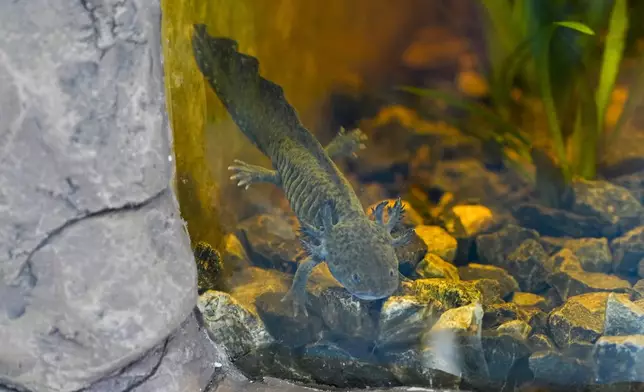
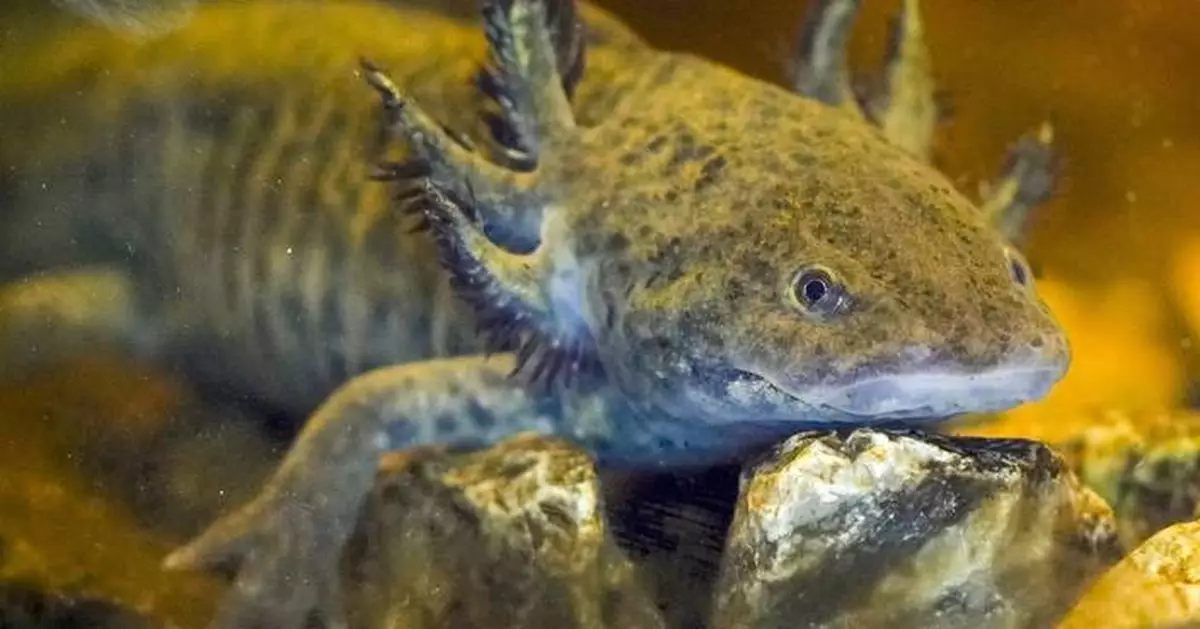
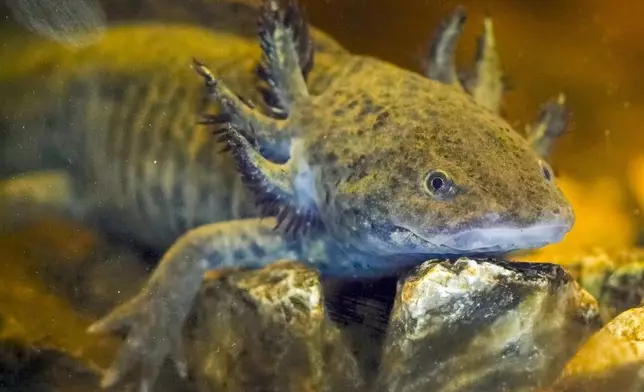
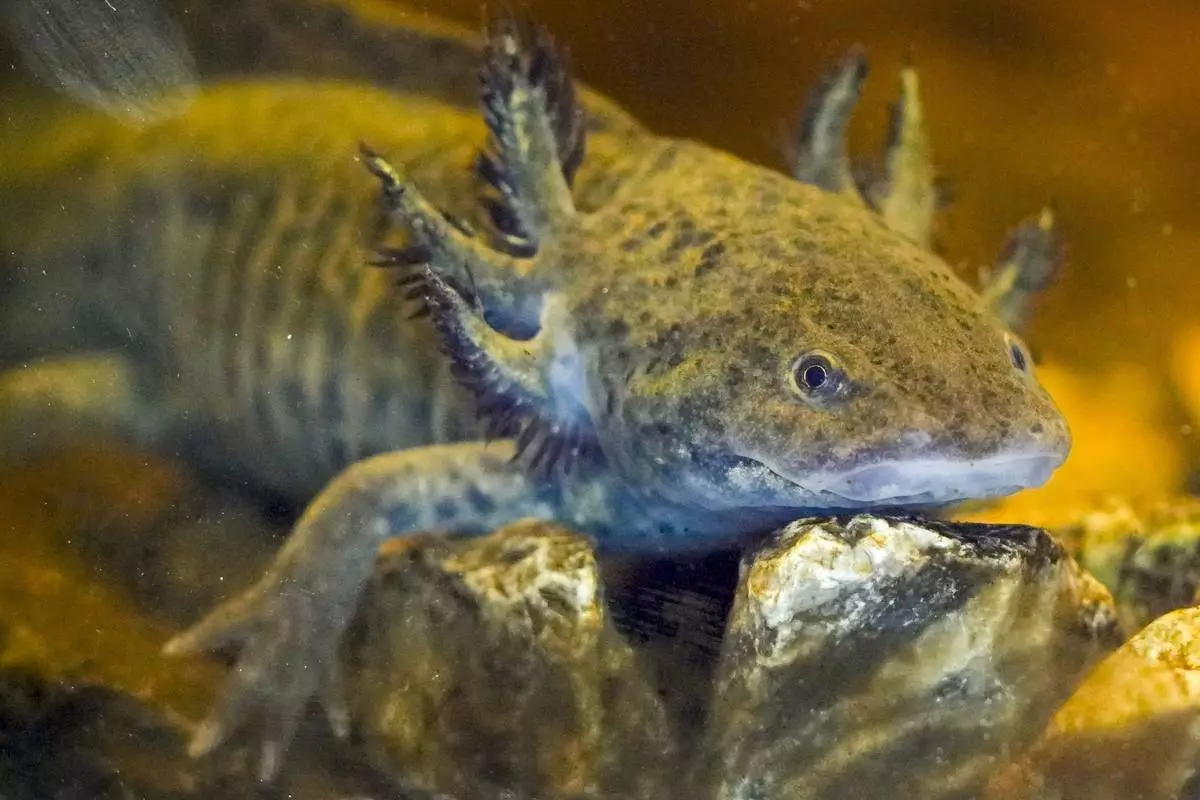
An axolotl swims around in an aquarium at a museum in Xochimilco Ecological Park, in Mexico City, Tuesday, Feb. 11, 2025. (AP Photo/Marco Ugarte)
An axolotl swims around in an aquarium at a museum in Xochimilco Ecological Park, in Mexico City, Tuesday, Feb. 11, 2025. (AP Photo/Marco Ugarte)

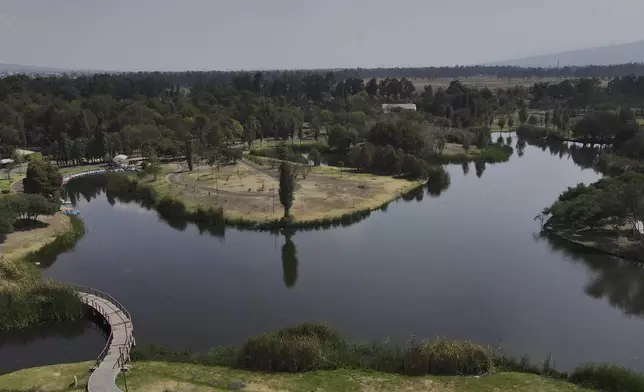
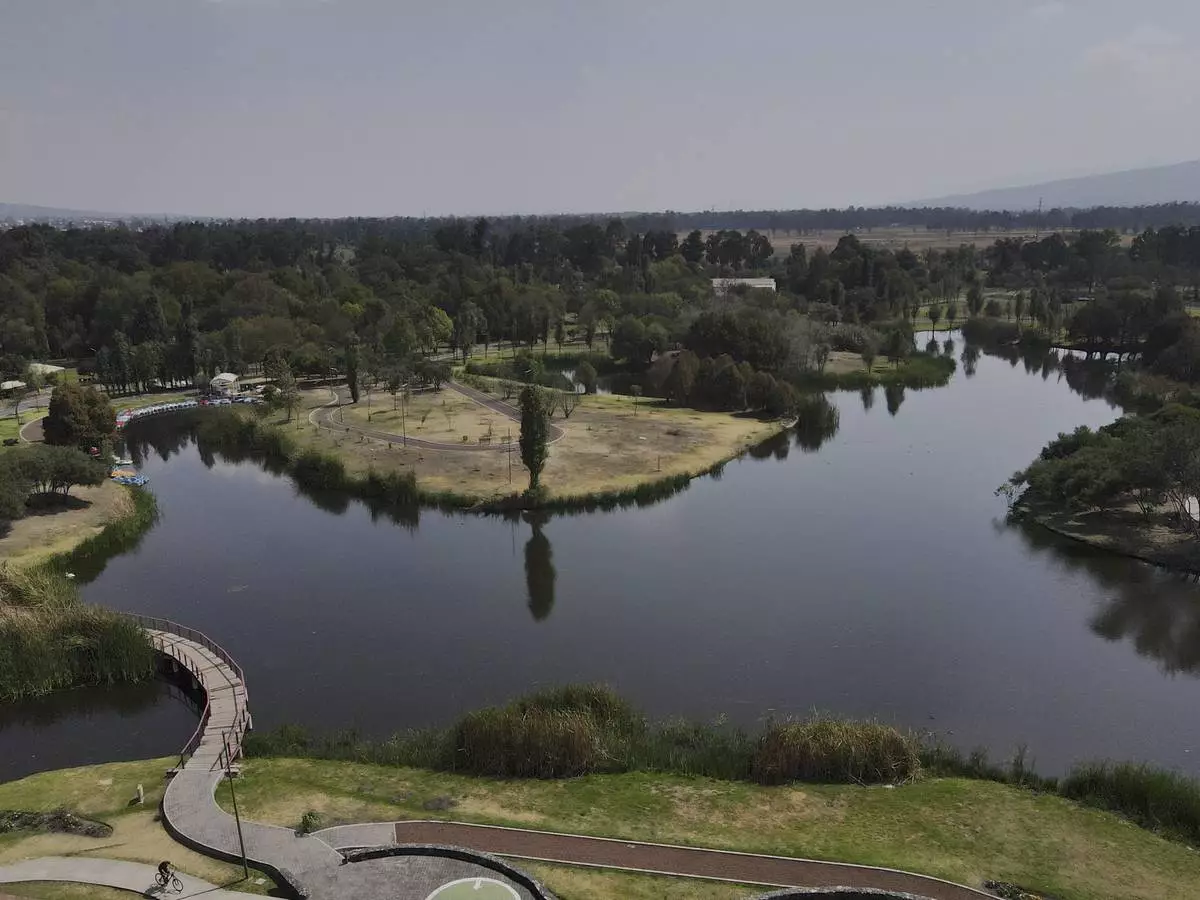
Trees surround a lake at Xochimilco Ecological Park, in Mexico City, Tuesday, Feb. 11, 2025. (AP Photo/Marco Ugarte)
Trees surround a lake at Xochimilco Ecological Park, in Mexico City, Tuesday, Feb. 11, 2025. (AP Photo/Marco Ugarte)

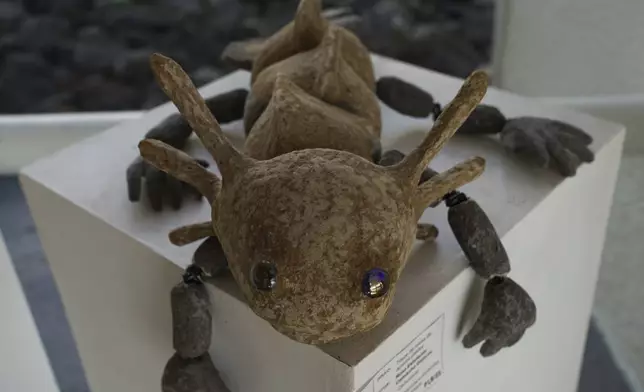
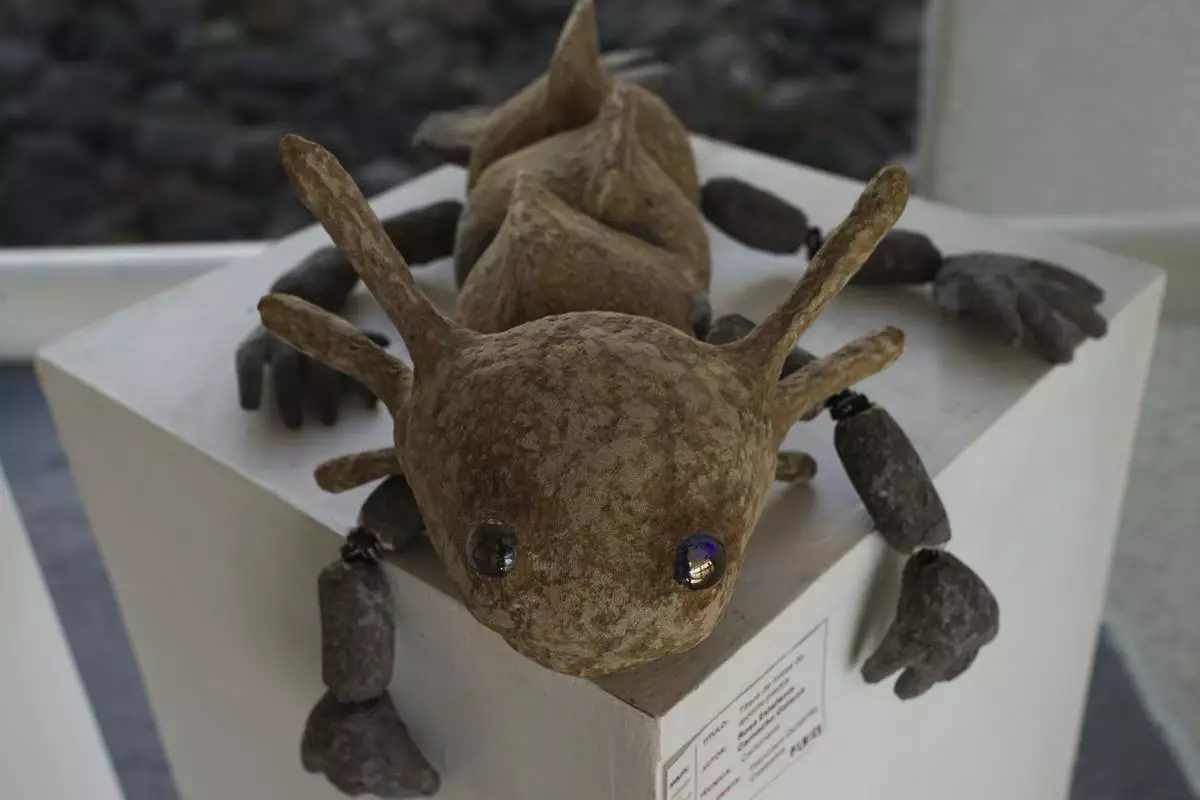
A figure of an axolotl sits on display at a museum in Xochimilco Ecological Park, in Mexico City, Tuesday, Feb. 11, 2025. (AP Photo/Marco Ugarte)
A figure of an axolotl sits on display at a museum in Xochimilco Ecological Park, in Mexico City, Tuesday, Feb. 11, 2025. (AP Photo/Marco Ugarte)

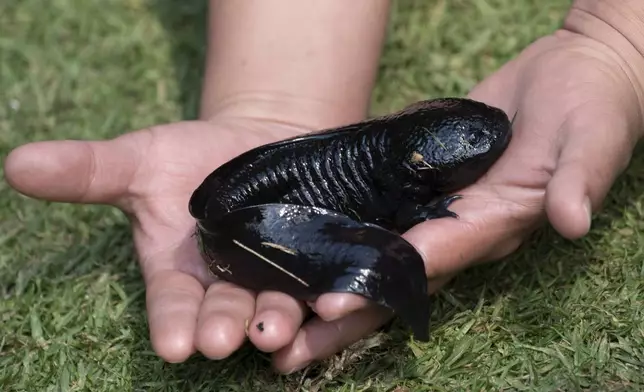
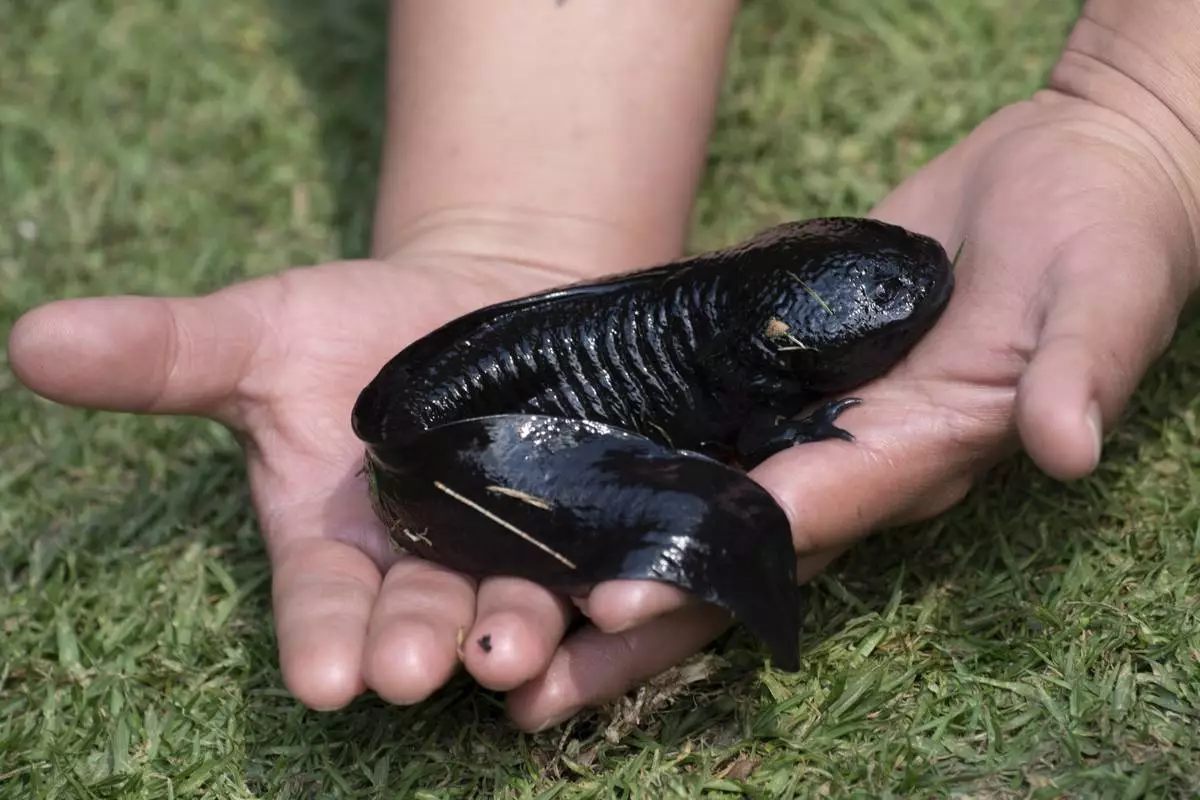
A woman holds an axolotl during a media presentation in Xochimilco, a borough of Mexico City, Wednesday, Feb. 16, 2022. (AP Photo/Marco Ugarte)
A woman holds an axolotl during a media presentation in Xochimilco, a borough of Mexico City, Wednesday, Feb. 16, 2022. (AP Photo/Marco Ugarte)

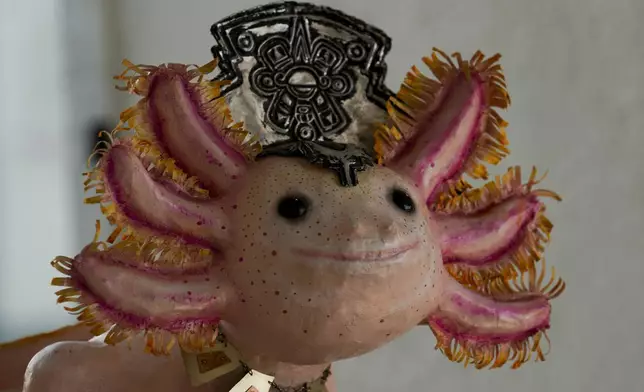
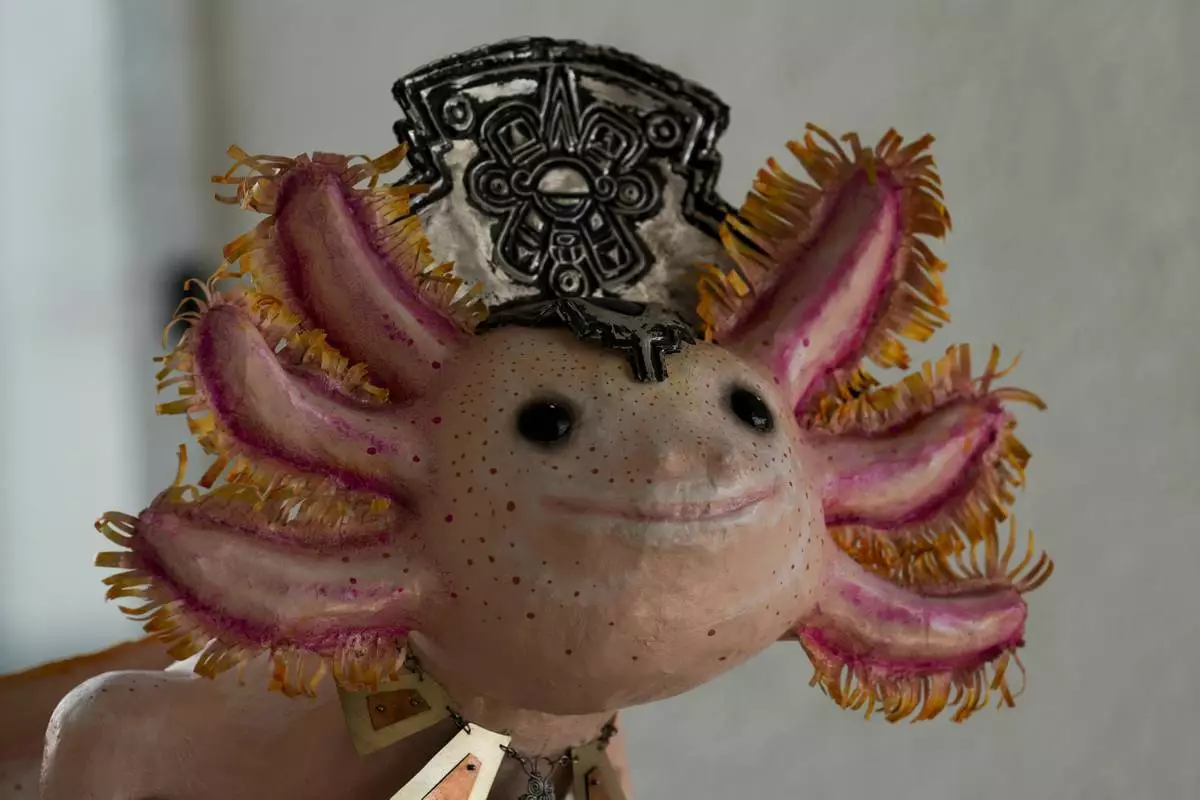
A figure of an axolotl sits on display at a museum in Xochimilco Ecological Park, in Mexico City, Tuesday, Feb. 11, 2025. (AP Photo/Marco Ugarte)
A figure of an axolotl sits on display at a museum in Xochimilco Ecological Park, in Mexico City, Tuesday, Feb. 11, 2025. (AP Photo/Marco Ugarte)

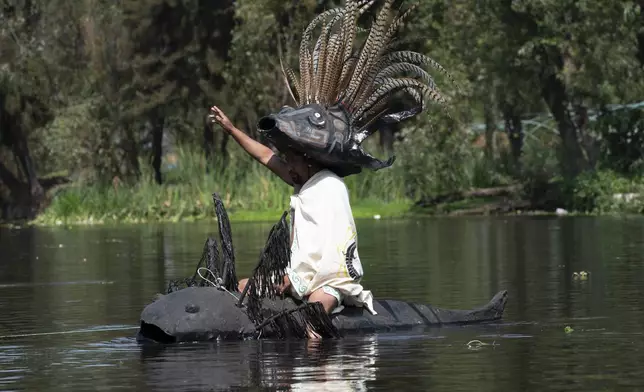
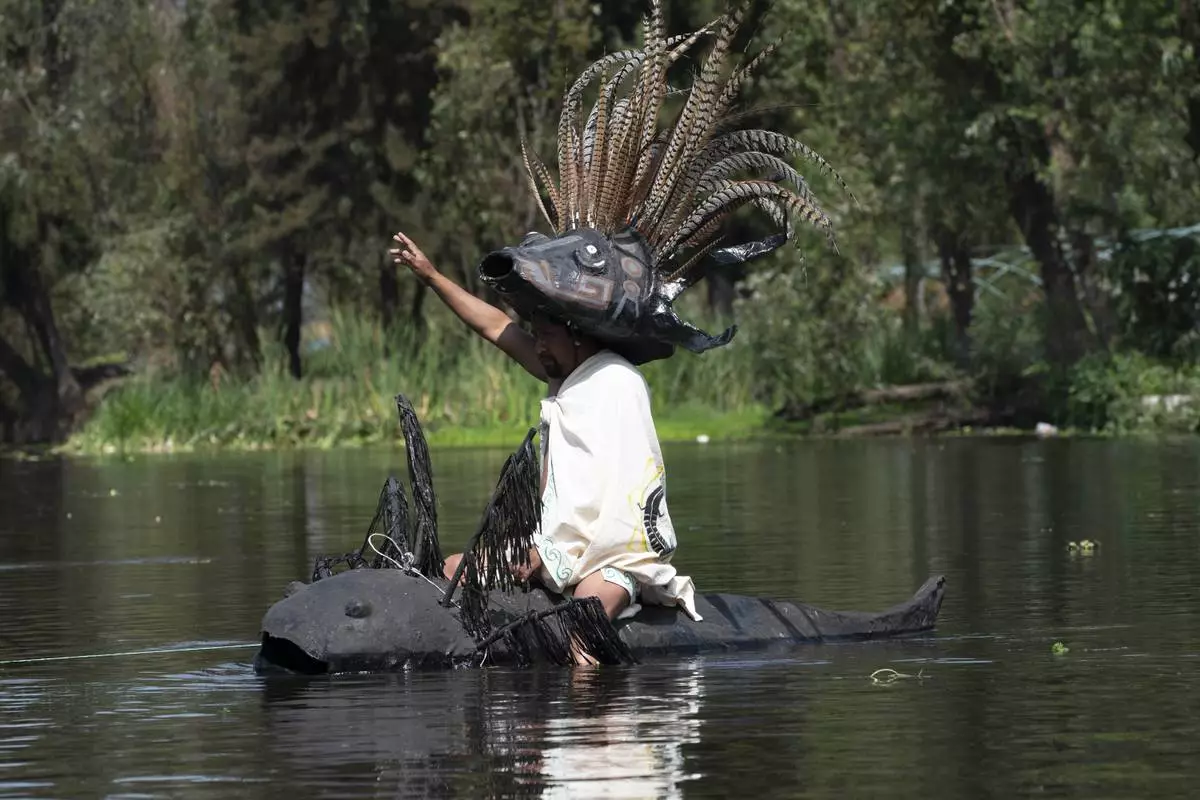
FILE - Manuel Rodriguez sits atop a canoe shaped like an axolotl during its symbolic release in the canals of Xochimilco, a borough of Mexico City, Feb. 16, 2022. (AP Photo/Marco Ugarte, File)
FILE - Manuel Rodriguez sits atop a canoe shaped like an axolotl during its symbolic release in the canals of Xochimilco, a borough of Mexico City, Feb. 16, 2022. (AP Photo/Marco Ugarte, File)

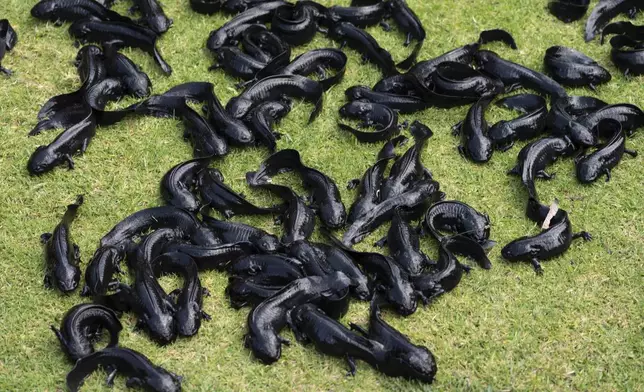
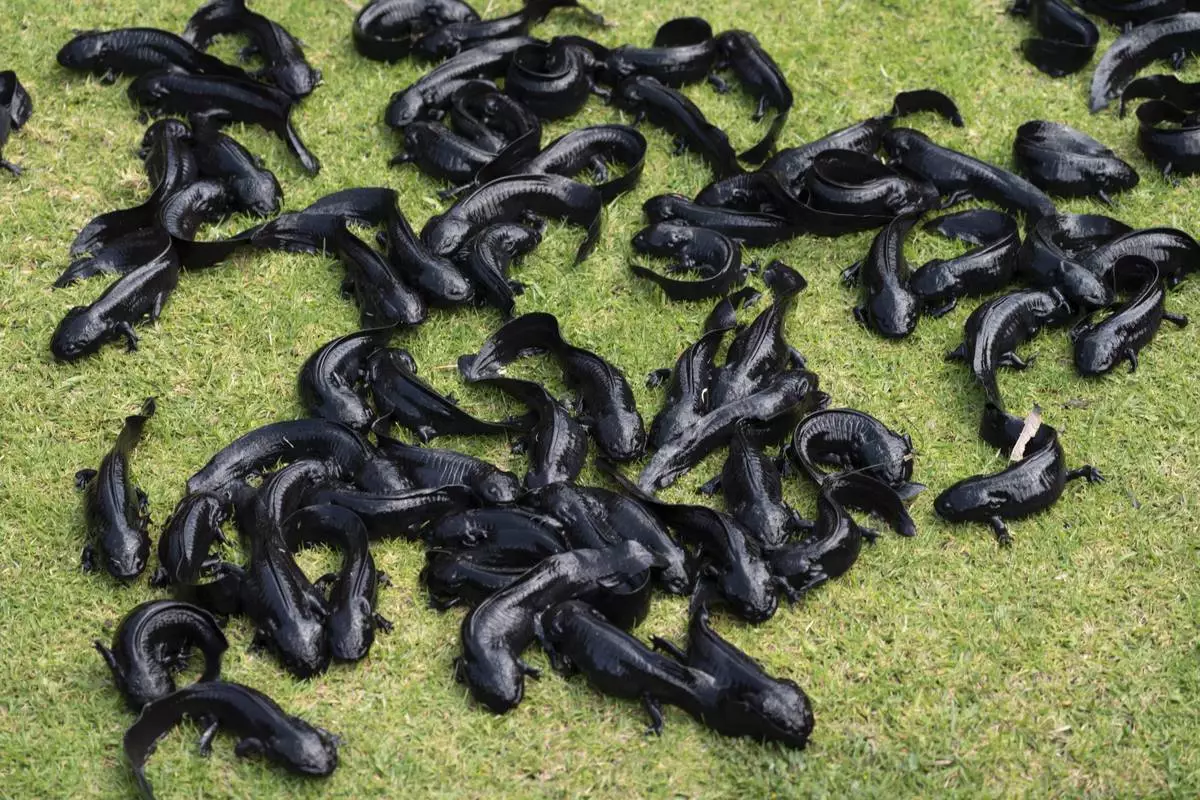
Axolotls scurry around during a media presentation before their release into the canals of Xochimilco, a borough of Mexico City, Wednesday, Feb. 16, 2022. (AP Photo/Marco Ugarte)
Axolotls scurry around during a media presentation before their release into the canals of Xochimilco, a borough of Mexico City, Wednesday, Feb. 16, 2022. (AP Photo/Marco Ugarte)

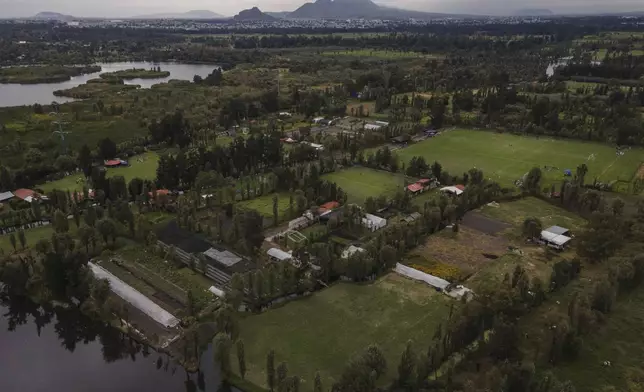
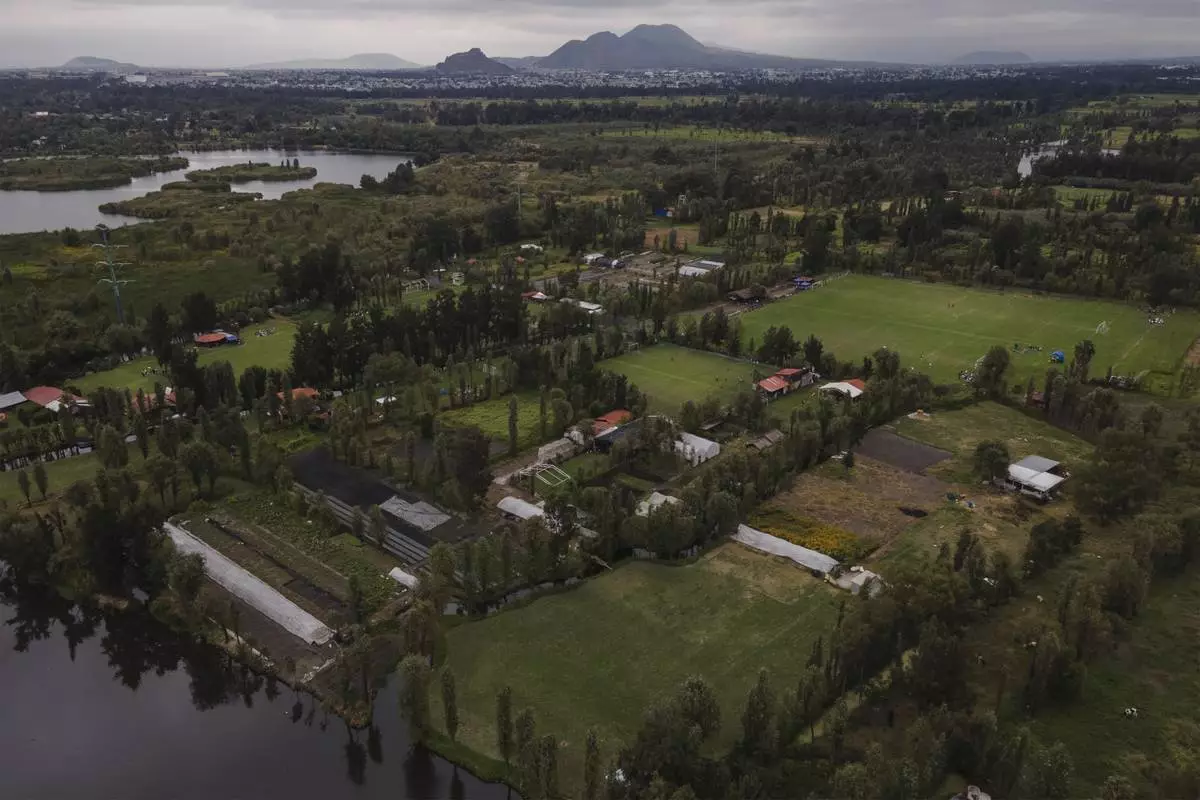
FILE - Ancestral floating gardens are visible next to new soccer fields on Xochimilco Lake in Mexico City, Oct. 20, 2024. (AP Photo/Felix Marquez, File)
FILE - Ancestral floating gardens are visible next to new soccer fields on Xochimilco Lake in Mexico City, Oct. 20, 2024. (AP Photo/Felix Marquez, File)

An axolotl swims around in an aquarium at a museum in Xochimilco Ecological Park, in Mexico City, Tuesday, Feb. 11, 2025. (AP Photo/Marco Ugarte)

An axolotl swims around in an aquarium at a museum in Xochimilco Ecological Park, in Mexico City, Tuesday, Feb. 11, 2025. (AP Photo/Marco Ugarte)

Its exhibitions focus on axolotl and chinampas, the pre-Hispanic agricultural systems resembling floating gardens that still function in Xochimilco, a neighborhood on Mexico City's outskirts famed for its canals.

“Despite there being many varieties, the axolotl from the area is a symbol of identity for the native people,” said Cruz, who participated in activities hosted at the museum to celebrate “Axolotl Day” in early February.

While there are no official estimates of the current axolotl population, the species Ambystoma mexicanum — endemic of central Mexico— has been catalogued as “critically endangered” by the IUCN Red List of Threatened Species since 2019. And though biologists, historians and officials have led efforts to save the species and its habitat from extinction, a parallel, unexpected preservation phenomenon has emerged.

Axolotl attracted international attention after Minecraft added them to its game in 2021 and Mexicans went crazy about them that same year, following the Central Bank's initiative to print it on the 50-peso bill. “That’s when the ‘axolotlmania’ thrived,” Cruz said.

All over Mexico, the peculiar, dragon-like amphibian can be spotted in murals, crafts and socks. Selected bakeries have caused a sensation with its axolotl-like bites. Even a local brewery — “Ajolote” in Spanish — took its name from the salamander to honor Mexican traditions.

Before the Spaniards conquered Mexico-Tenochtitlan in the 16th century, axolotl may not have had archeological representations as did Tláloc — god of rain in the Aztec worldview — or Coyolxauhqui — its lunar goddess — but it did appear in ancient Mesoamerican documents.

In the Nahua myth of the Fifth Sun, pre-Hispanic god Nanahuatzin threw himself into a fire, reemerged as the sun and commanded fellow gods to replicate his sacrifice to bring movement to the world. All complied but Xólotl, a deity associated with the evening star, who fled.

“He was hunted down and killed,” said Arturo Montero, archeologist of the National Commission of Protected Natural Areas. “And from his death came a creature: axolotl.”

According to Montero, the myth implies that, after a god’s passing, its essence gets imprisoned in a mundane creature, subject to the cycles of life and death. Axolotl then carries within itself the Xolotl deity, and when the animal dies and its divine substance transits to the underworld, it later resurfaces to the earth and a new axolotl is born.

“Axolotl is the twin of maize, agave and water,” Montero said.

Current fascination toward axolotl and its rise to sacred status in pre-Hispanic times is hardly a coincidence. It was most likely sparked by its exceptional biological features, Montero said.

Through the glass of a fish tank, where academic institutions preserve them and hatcheries put them up for sale, axolotl are hard to spot. Their skin is usually dark to mimic stones — though an albino, pinkish variety can be bred — and they can stay still for hours, buried in the muddy ground of their natural habitats or barely moving at the bottom of their tanks in captivity.

Aside from their lungs, they breathe through their gills and skin, which allows them to adapt to its aquatic environment. And they can regenerate parts of its heart, spinal cord and brain.

“This species is quite peculiar,” said biologist Arturo Vergara, who supervises axolotl preservation efforts in various institutions and cares after specimens for sale at a hatchery in Mexico City.

Depending on the species, color and size, Axolotl’s prices at Ambystomania — where Vergara works — start at 200 pesos ($10 US). Specimens are available for sale when they reach four inches in length and are easy pets to look after, Vergara said.

“While they regularly have a 15-years life span (in captivity), we’ve had animals that have lived up to 20,” he added. “They are very long-lived, though in their natural habitat they probably wouldn’t last more than three or four years.”

The species on display at the museum — one of 17 known varieties in Mexico — is endemic to lakes and canals that are currently polluted. A healthy population of axolotl would likely struggle to feed or reproduce.

“Just imagine the bottom of a canal in areas like Xochimilco, Tlahuac, Chalco, where there’s an enormous quantity of microbes,” Vergara said.

Under ideal conditions, an axolotl could heal itself from snake or heron biting and survive the dry season buried in the mud. But a proper aquatic environment is needed for that to happen.

“Efforts to preserve axolotl go hand in hand with preserving the chinampas,” Cruz said at the museum, next to a display featuring salamander-shaped dolls. “We work closely with the community to convince them that this is an important space.”

Chinampas are not only where axolotl lay its eggs, but areas where pre-Hispanic communities grew maize, chili, beans and zucchini, and some of Xochimilco’s current population grow vegetables despite environmental threats.

“Many chinampas are dry and don’t produce food anymore,” Cruz said. “And where some chinampas used to be, one can now see soccer camps.”

For her, like for Vergara, preserving axolotl is not an end, but a means for saving the place where the amphibian came to be.

“This great system (chinampas) is all that’s left from the lake city of Mexico-Tenochtitlan, so I always tell our visitors that Xochimilco is a living archeological zone,” Cruz said. “If we, as citizens, don’t take care of what’s ours, it will be lost.”

Associated Press religion coverage receives support through the AP’s collaboration with The Conversation US, with funding from Lilly Endowment Inc. The AP is solely responsible for this content.
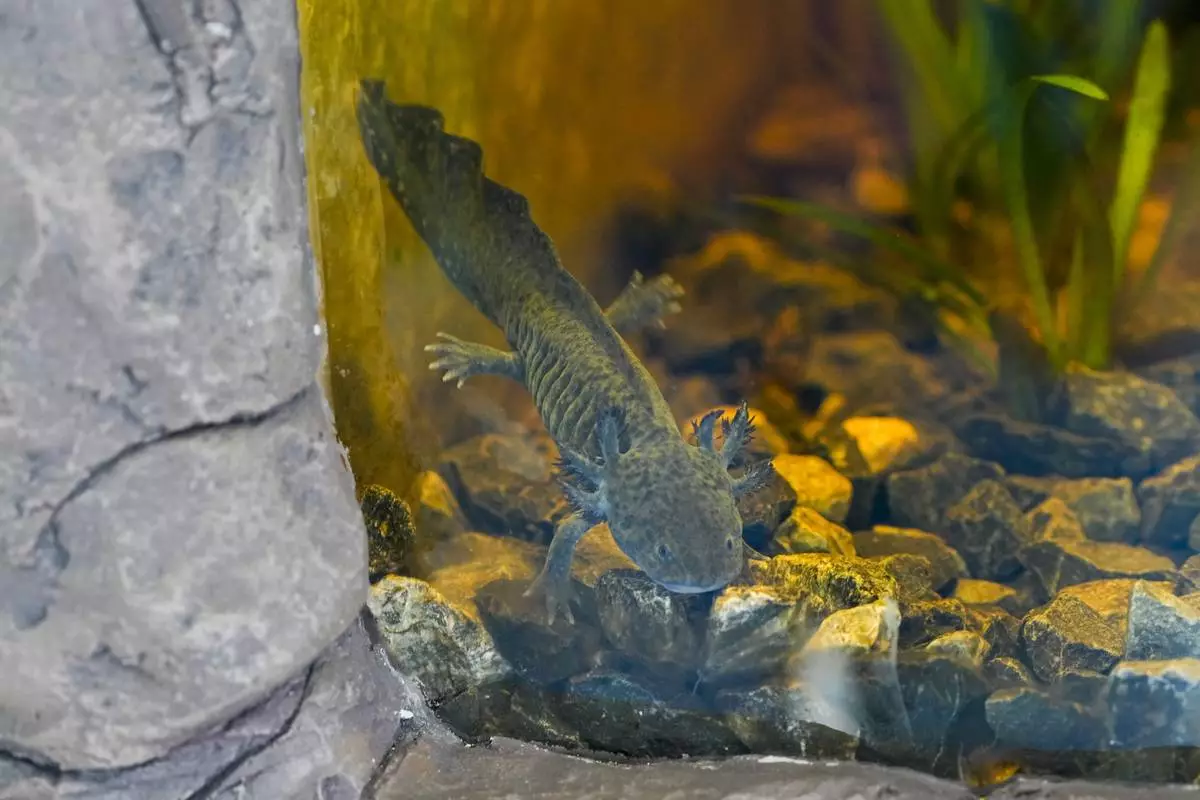
An axolotl swims around in an aquarium at a museum in Xochimilco Ecological Park, in Mexico City, Tuesday, Feb. 11, 2025. (AP Photo/Marco Ugarte)
An axolotl swims around in an aquarium at a museum in Xochimilco Ecological Park, in Mexico City, Tuesday, Feb. 11, 2025. (AP Photo/Marco Ugarte)

Trees surround a lake at Xochimilco Ecological Park, in Mexico City, Tuesday, Feb. 11, 2025. (AP Photo/Marco Ugarte)
Trees surround a lake at Xochimilco Ecological Park, in Mexico City, Tuesday, Feb. 11, 2025. (AP Photo/Marco Ugarte)

A figure of an axolotl sits on display at a museum in Xochimilco Ecological Park, in Mexico City, Tuesday, Feb. 11, 2025. (AP Photo/Marco Ugarte)
A figure of an axolotl sits on display at a museum in Xochimilco Ecological Park, in Mexico City, Tuesday, Feb. 11, 2025. (AP Photo/Marco Ugarte)

A woman holds an axolotl during a media presentation in Xochimilco, a borough of Mexico City, Wednesday, Feb. 16, 2022. (AP Photo/Marco Ugarte)
A woman holds an axolotl during a media presentation in Xochimilco, a borough of Mexico City, Wednesday, Feb. 16, 2022. (AP Photo/Marco Ugarte)

A figure of an axolotl sits on display at a museum in Xochimilco Ecological Park, in Mexico City, Tuesday, Feb. 11, 2025. (AP Photo/Marco Ugarte)
A figure of an axolotl sits on display at a museum in Xochimilco Ecological Park, in Mexico City, Tuesday, Feb. 11, 2025. (AP Photo/Marco Ugarte)

FILE - Manuel Rodriguez sits atop a canoe shaped like an axolotl during its symbolic release in the canals of Xochimilco, a borough of Mexico City, Feb. 16, 2022. (AP Photo/Marco Ugarte, File)
FILE - Manuel Rodriguez sits atop a canoe shaped like an axolotl during its symbolic release in the canals of Xochimilco, a borough of Mexico City, Feb. 16, 2022. (AP Photo/Marco Ugarte, File)

Axolotls scurry around during a media presentation before their release into the canals of Xochimilco, a borough of Mexico City, Wednesday, Feb. 16, 2022. (AP Photo/Marco Ugarte)
Axolotls scurry around during a media presentation before their release into the canals of Xochimilco, a borough of Mexico City, Wednesday, Feb. 16, 2022. (AP Photo/Marco Ugarte)

FILE - Ancestral floating gardens are visible next to new soccer fields on Xochimilco Lake in Mexico City, Oct. 20, 2024. (AP Photo/Felix Marquez, File)
FILE - Ancestral floating gardens are visible next to new soccer fields on Xochimilco Lake in Mexico City, Oct. 20, 2024. (AP Photo/Felix Marquez, File)

An axolotl swims around in an aquarium at a museum in Xochimilco Ecological Park, in Mexico City, Tuesday, Feb. 11, 2025. (AP Photo/Marco Ugarte)
An axolotl swims around in an aquarium at a museum in Xochimilco Ecological Park, in Mexico City, Tuesday, Feb. 11, 2025. (AP Photo/Marco Ugarte)
MADRID (AP) — Venezuelans living in Spain are watching the events unfold back home with a mix of awe, joy and fear.

Some 600,000 Venezuelans live in Spain, home to the largest population anywhere outside the Americas. Many fled political persecution and violence but also the country’s collapsing economy.

A majority live in the capital, Madrid, working in hospitals, restaurants, cafes, nursing homes and elsewhere. While some Venezuelan migrants have established deep roots and lives in the Iberian nation, others have just arrived.

Here is what three of them had to say about the future of Venezuela since U.S. forces deposed Nicolás Maduro.

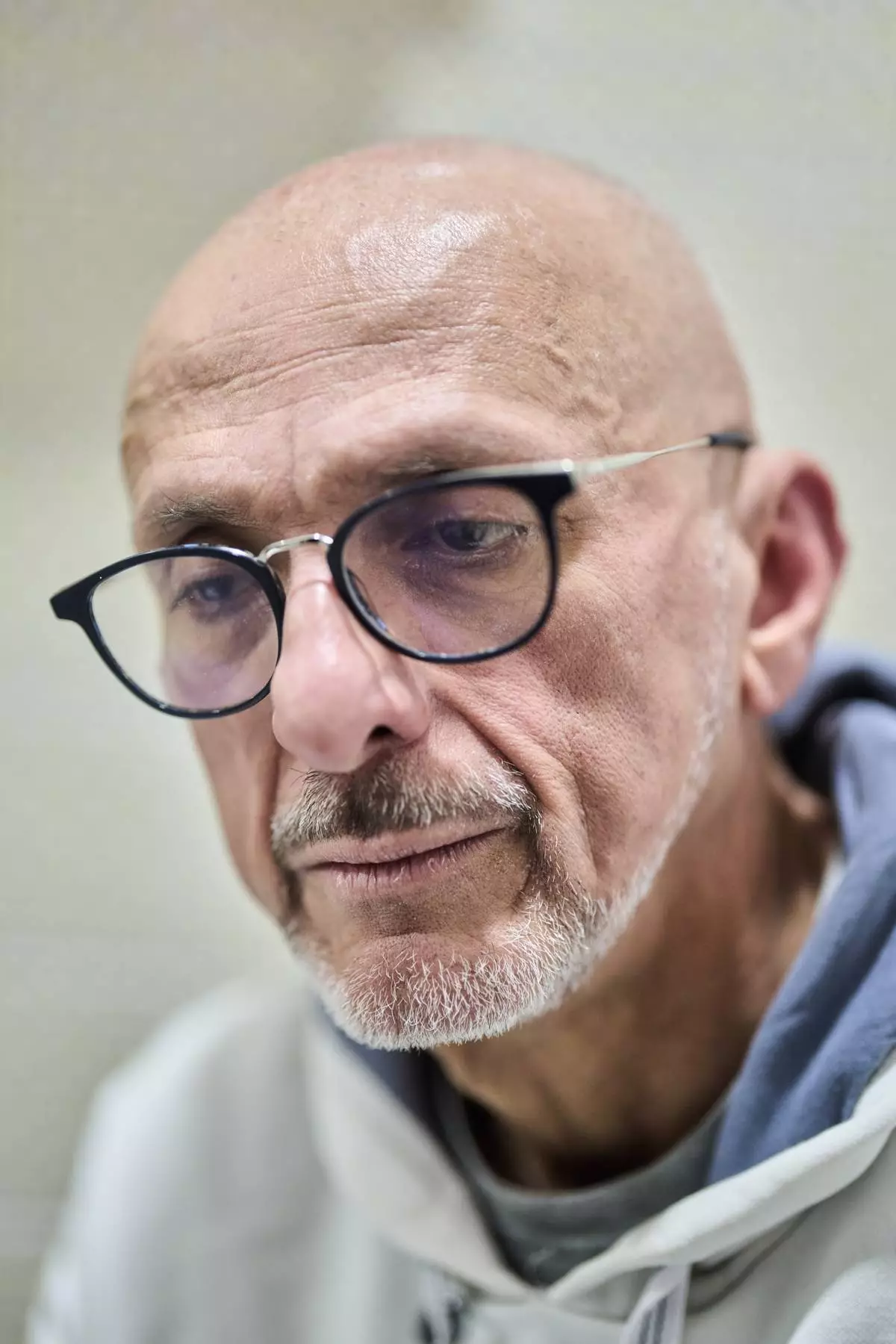
David Vallenilla woke up to text messages from a cousin on Jan. 3 informing him “that they invaded Venezuela.” The 65-year-old from Caracas lives alone in a tidy apartment in the south of Madrid with two Daschunds and a handful of birds. He was in disbelief.

“In that moment, I wanted certainty,” Vallenilla said, “certainty about what they were telling me.”

In June 2017, Vallenilla’s son, a 22-year-old nursing student in Caracas named David José, was shot point-blank by a Venezuelan soldier after taking part in a protest near a military air base in the capital. He later died from his injuries. Video footage of the incident was widely publicized, turning his son’s death into an emblematic case of the Maduro government’s repression against protesters that year.

After demanding answers for his son’s death, Vallenilla, too, started receiving threats and decided two years later to move to Spain with the help of a nongovernmental organization.

On the day of Maduro’s capture, Vallenilla said his phone was flooded with messages about his son.

“Many told me, ‘Now David will be resting in peace. David must be happy in heaven,’” he said. “But don't think it was easy: I spent the whole day crying.”

Vallenilla is watching the events in Venezuela unfold with skepticism but also hope. He fears more violence, but says he has hope the Trump administration can effect the change that Venezuelans like his son tried to obtain through elections, popular protests and international institutions.

“Nothing will bring back my son. But the fact that some justice has begun to be served for those responsible helps me see a light at the end of the tunnel. Besides, I also hope for a free Venezuela.”

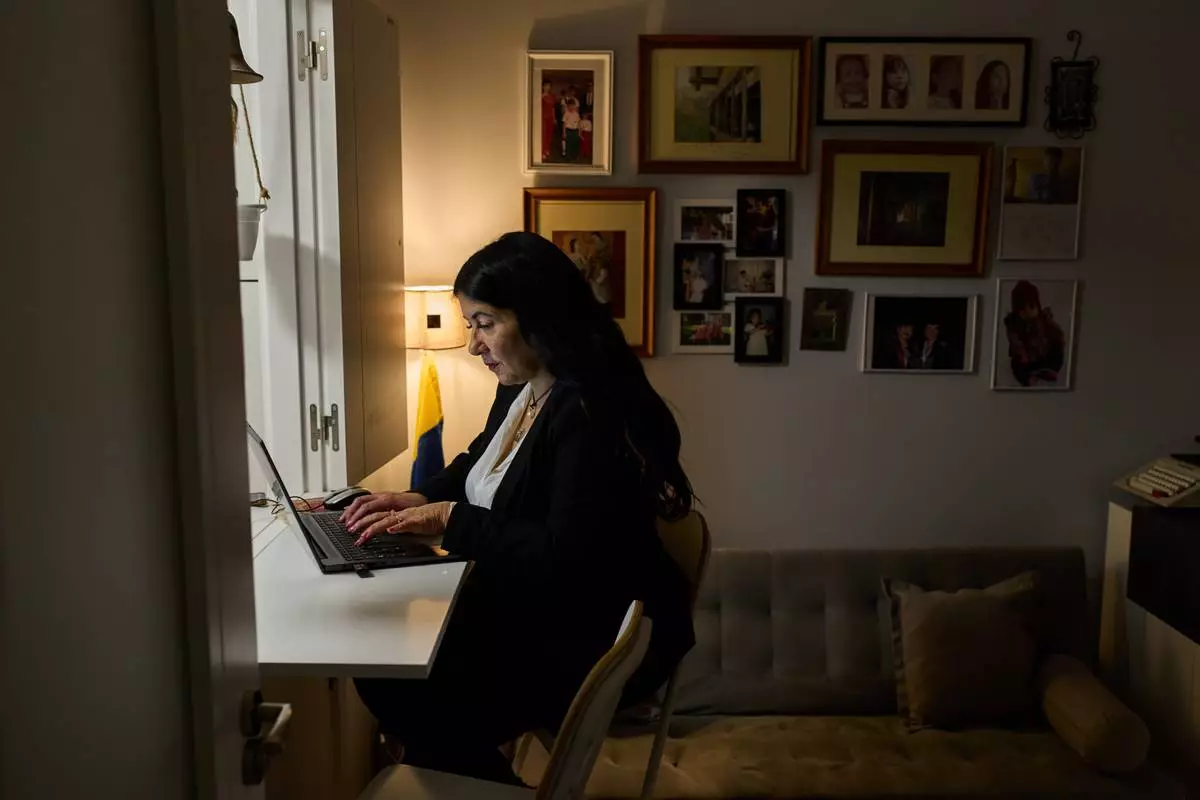
Journalist Carleth Morales first came to Madrid a quarter-century ago when Hugo Chávez was reelected as Venezuela's president in 2000 under a new constitution.

The 54-year-old wanted to study and return home, taking a break of sorts in Madrid as she sensed a political and economic environment that was growing more and more challenging.

“I left with the intention of getting more qualified, of studying, and of returning because I understood that the country was going through a process of adaptation between what we had known before and, well, Chávez and his new policies," Morales said. "But I had no idea that we were going to reach the point we did.”

In 2015, Morales founded an organization of Venezuelan journalists in Spain, which today has hundreds of members.

The morning U.S. forces captured Maduro, Morales said she woke up to a barrage of missed calls from friends and family in Venezuela.

“Of course, we hope to recover a democratic country, a free country, a country where human rights are respected,” Morales said. “But it’s difficult to think that as a Venezuelan when we’ve lived through so many things and suffered so much.”

Morales sees it as unlikely that she would return home, having spent more than two decades in Spain, but she said she hopes her daughters can one day view Venezuela as a viable option.

“I once heard a colleague say, ‘I work for Venezuela so that my children will see it as a life opportunity.’ And I adopted that phrase as my own. So perhaps in a few years it won’t be me who enjoys a democratic Venezuela, but my daughters.”

For two weeks, Verónica Noya has waited for her phone to ring with the news that her husband and brother have been freed.

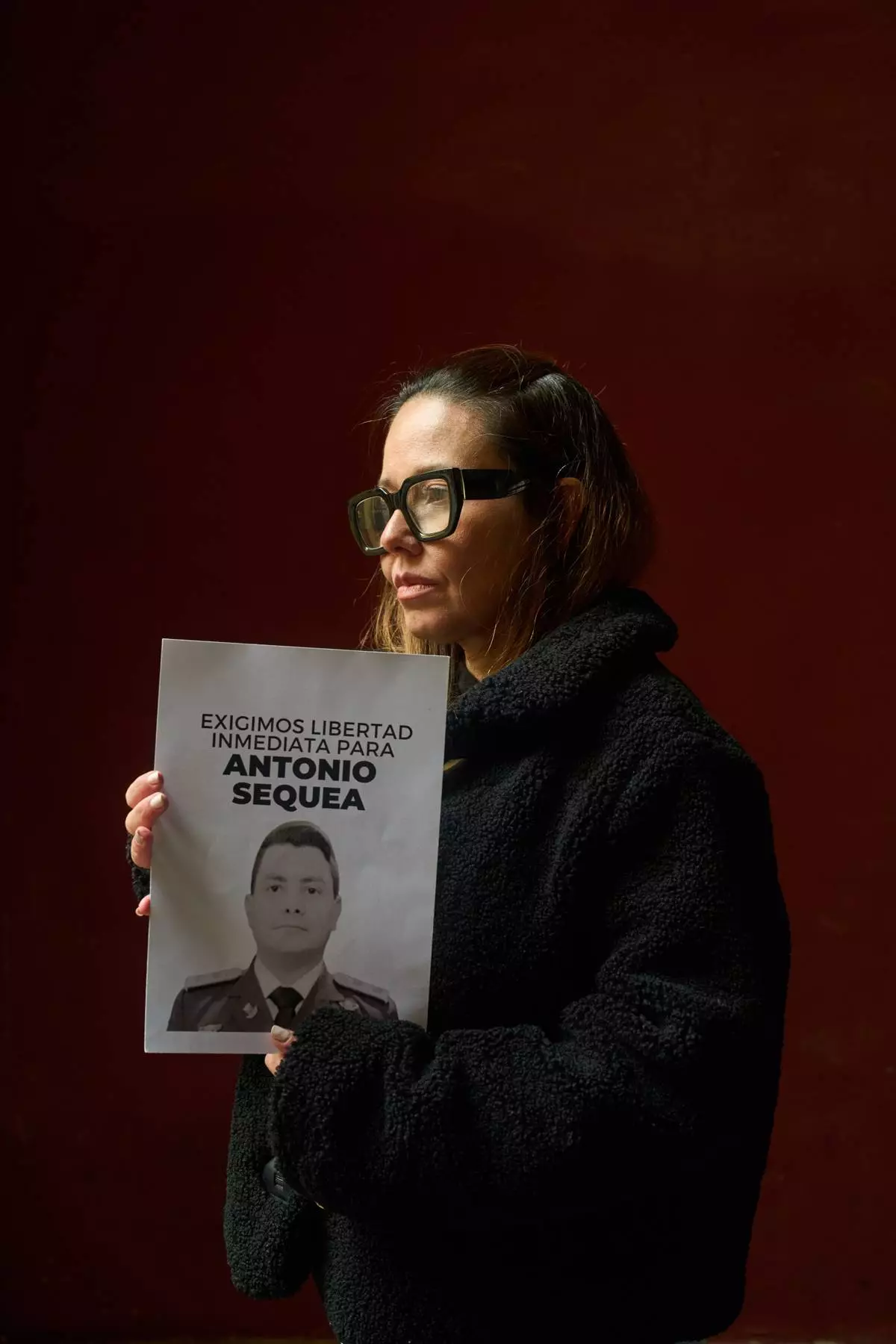
Noya’s husband, Venezuelan army Capt. Antonio Sequea, was imprisoned in 2020 after having taken part in a military incursion to oust Maduro. She said he remains in solitary confinement in the El Rodeo prison in Caracas. For 20 months, Noya has been unable to communicate with him or her brother, who was also arrested for taking part in the same plot.

“That’s when my nightmare began,” Noya said.

Venezuelan authorities have said hundreds of political prisoners have been released since Maduro's capture, while rights groups have said the real number is a fraction of that. Noya has waited in agony to hear anything about her four relatives, including her husband's mother, who remain imprisoned.

Meanwhile, she has struggled with what to tell her children when they ask about their father's whereabouts. They left Venezuela scrambling and decided to come to Spain because family roots in the country meant that Noya already had a Spanish passport.

Still, she hopes to return to her country.

“I’m Venezuelan above all else,” Noya said. “And I dream of seeing a newly democratic country."

Venezuelan journalist Caleth Morales works in her apartment's kitchen in Madrid, Wednesday, Jan. 14, 2026. (AP Photo/Bernat Armangue)

Venezuelan journalist Caleth Morales works in her apartment's kitchen in Madrid, Wednesday, Jan. 14, 2026. (AP Photo/Bernat Armangue)

David Vallenilla, father of the late David José Vallenilla Luis, sits in his apartment's kitchen in Madrid, Tuesday, Jan. 13, 2026. (AP Photo/Bernat Armangue)

David Vallenilla, father of the late David José Vallenilla Luis, sits in his apartment's kitchen in Madrid, Tuesday, Jan. 13, 2026. (AP Photo/Bernat Armangue)

Veronica Noya holds a picture of her husband Antonio Sequea in Madrid, Thursday, Jan. 15, 2026. (AP Photo/Bernat Armangue)

Veronica Noya holds a picture of her husband Antonio Sequea in Madrid, Thursday, Jan. 15, 2026. (AP Photo/Bernat Armangue)

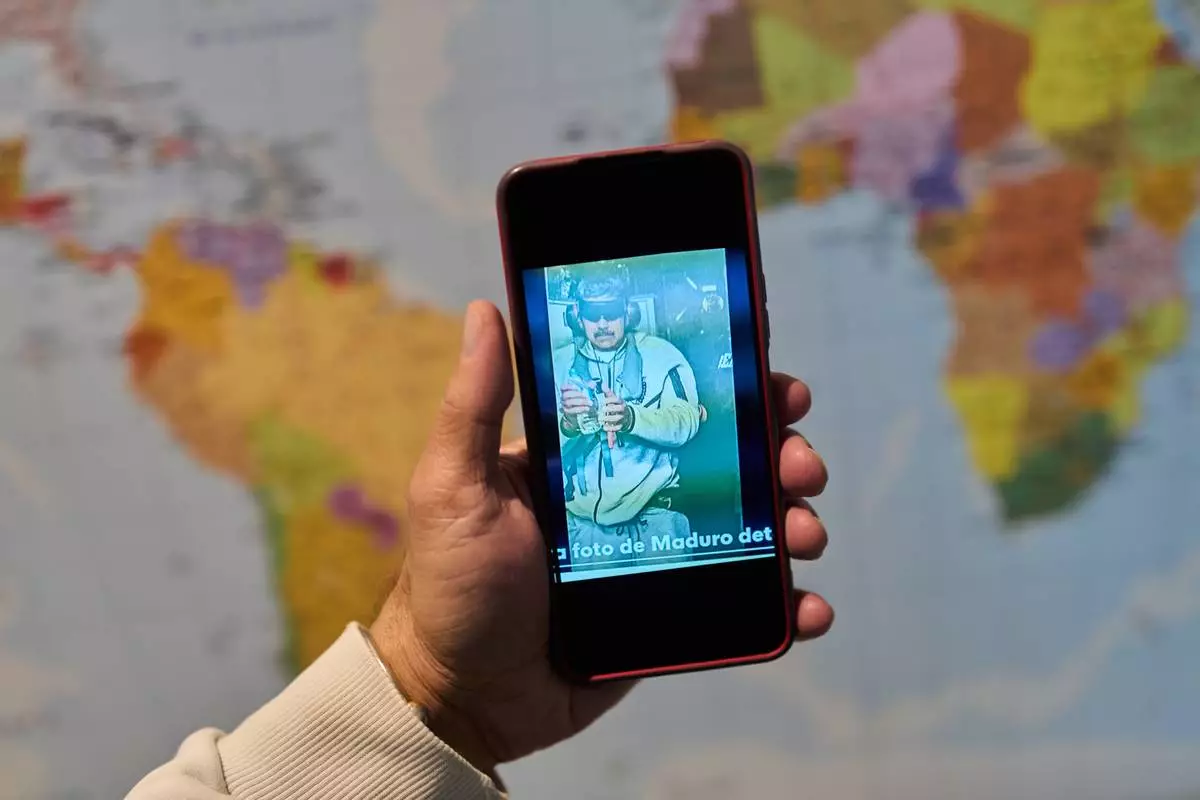
David Vallenilla holds a picture of deposed President Nicolas Maduro, blindfolded and handcuffed, during an interview with The Associated Press at his home in Madrid, Tuesday, Jan. 13, 2026. (AP Photo/Bernat Armangue)

David Vallenilla holds a picture of deposed President Nicolas Maduro, blindfolded and handcuffed, during an interview with The Associated Press at his home in Madrid, Tuesday, Jan. 13, 2026. (AP Photo/Bernat Armangue)

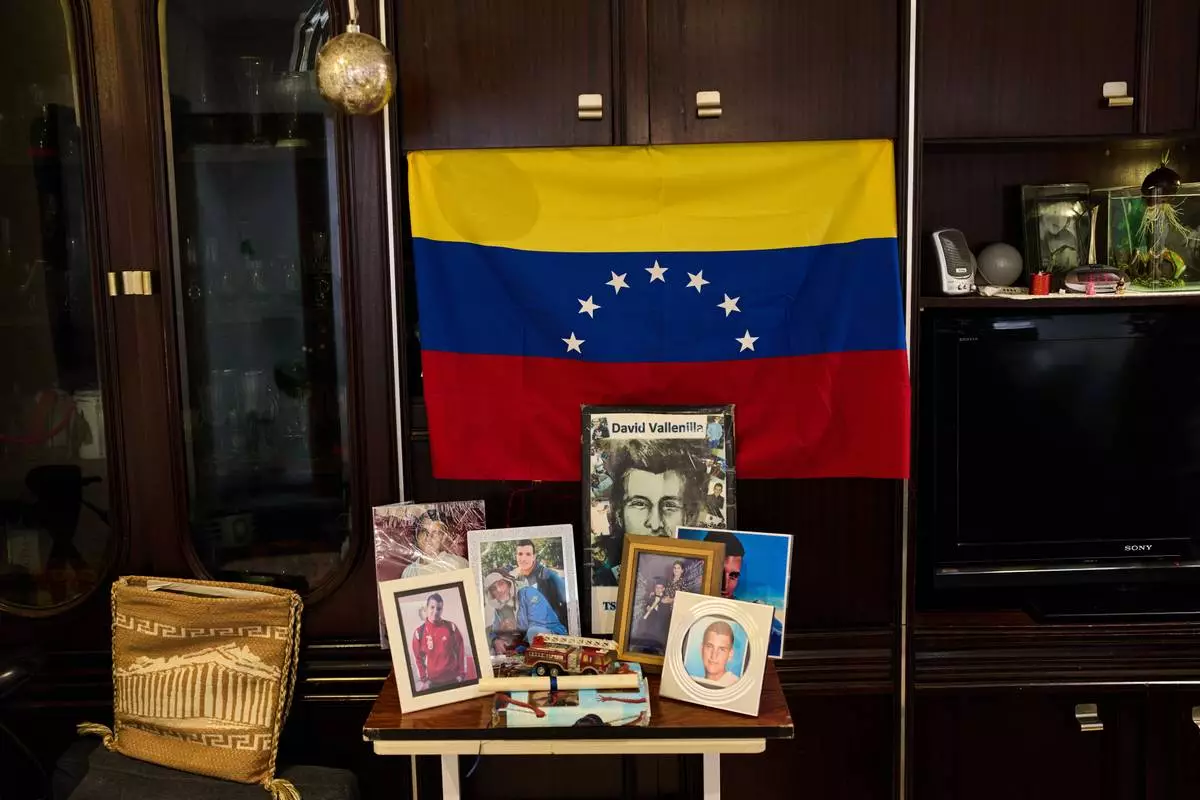
Pictures of the late David José Vallenilla Luis are placed in the living room of his father, David José Vallenilla, in Madrid, Tuesday, Jan. 13, 2026. (AP Photo/Bernat Armangue)

Pictures of the late David José Vallenilla Luis are placed in the living room of his father, David José Vallenilla, in Madrid, Tuesday, Jan. 13, 2026. (AP Photo/Bernat Armangue)

Recommended Articles