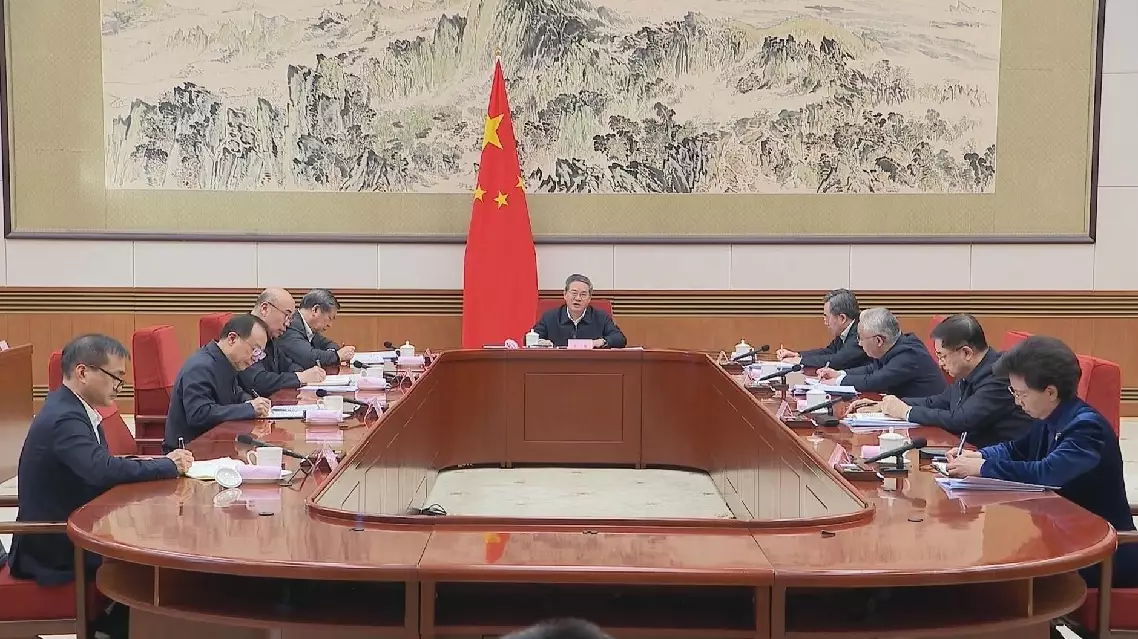
Chinese Premier Li Qiang urged policy makers on Thursday to come up with more targeted measures to stimulate consumption and improve people's livelihood.
Chairing a study session of the State Council held in Beijing, Li stressed shifting the focus of economic policies more on improving people's livelihood and promoting consumption, taking stronger and more precise measures to boost consumption and continuously enhance its fundamental role in economic development.
Liu Yuanchun, president of the Shanghai University of Finance and Economics, gave a presentation at the study session. Vice Premiers Ding Xuexiang and He Lifeng, as well as State Councilor Shen Yiqin, delivered speeches. After listening to the speeches, Li pointed out that internal circulation and domestic demand dominance are unique advantages of a major economy. Boosting consumption is not only a key lever to expand domestic demand and stabilize growth in the short term, but also a significant measure to transform the development model in the long term. It is essential to place greater emphasis on consumption, rely more on boosting consumption to expand domestic demand, smooth economic circulation, and drive economic growth.
Li asked for more efforts to vigorously promote service consumption and comprehensively enhance the supply levels in education, healthcare, culture, sports, tourism, elderly care, and domestic services.
He called for incentives to boost sales of sci-tech devices, especially those with artificial intelligence functions. Li also asked policy makers to direct more resources toward sectors with strong leverage and driving effects, and further widen market access to businesses that offer high-end products.
State Council study session focuses on livelihood, consumption
The death toll from ongoing Israeli attacks on Lebanon has risen to 634, including 91 children and 47 women, while 1,586 people have been wounded, Lebanese Health Minister Rakan Nasreddine said at a televised press briefing on Wednesday.
According to Nasreddine, the ongoing hostilities have also severely affected the health sector. He reported 22 attacks on medical facilities and services, including incidents targeting Red Cross ambulances.
The minister added that 15 health workers have been killed and 45 others wounded since the escalation began.
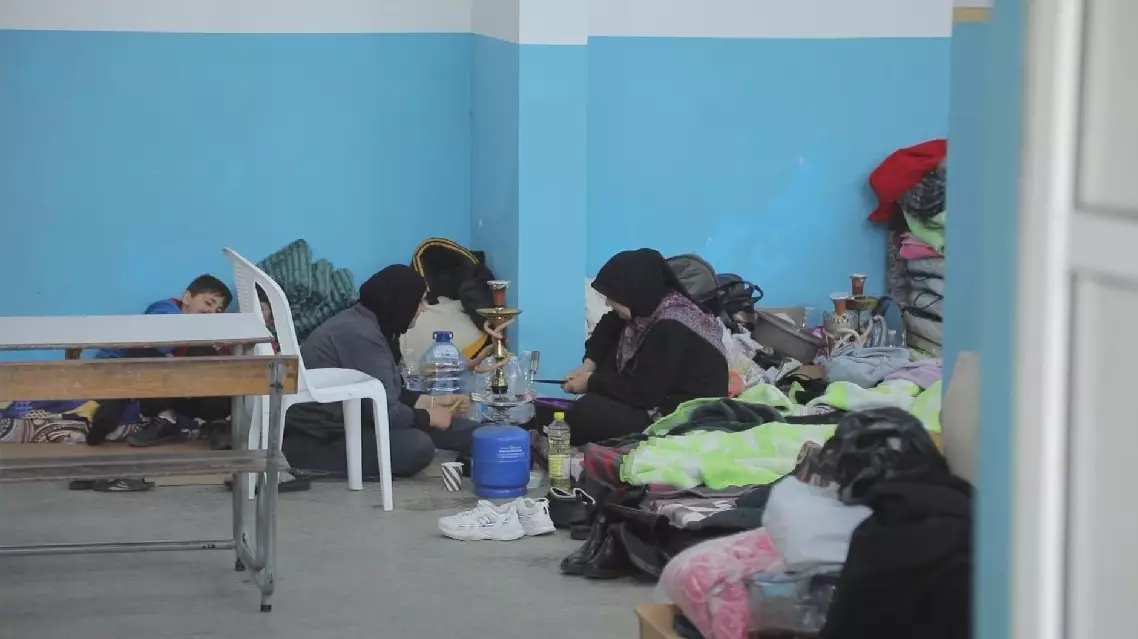
Meanwhile, the conflict has displaced 816,000 Lebanese, according to figures announced by Minister of Social Affairs Haneen Sayed at the same press briefing.
Sayed said that 816,000 people have registered on the ministry's relief platform as displaced. Of them, about 126,000 people are currently sheltering in 589 designated centers across the country.
Sayed added that the government is working on the ground to guide displaced families to available centers and arrange transportation to ensure they reach safe locations.
At least 17 people were injured in Israeli airstrikes targeting multiple areas in Beirut's southern suburbs, Lebanon's Health Ministry reported Wednesday.
In retaliation, Hezbollah started the "Al-Asf Al-Ma'koul" operations, launching rockets intensively toward northern Israel, according to Lebanon's National News Agency.
The group said it launched rocket salvos at multiple Israeli military sites, including the Northern Command headquarters at the Dado base, the Ein Zeitim base, and targets near Safed, Kiryat Shmona, Nahariyya, Haifa, and Lake Tiberias.
Meanwhile, the Israeli military said it began a "large-scale attack wave of strikes" on Beirut's southern suburb on Wednesday night in response to Hezbollah's rocket launches.
On March 2, Hezbollah announced the launch of rockets from Lebanon toward Israel for the first time since a ceasefire was declared on Nov 27, 2024.
Meanwhile, the Israeli army launched what it described as an "offensive military campaign" against Hezbollah, carrying out intense airstrikes on multiple Lebanese areas and border ground incursions.
Death toll from Israeli attacks in Lebanon rises to 634