PARIS (AP) — France is about to hold its largest-ever child sex abuse trial. While just one man is in the dock — a former surgeon accused of raping or sexual abusing 299 people, mostly child patients — activists hope the trial empowers other victims and helps expose other abusers long protected by societal taboos.
Central to the trial are defendant Joël Le Scouarnec’s chillingly detailed notebooks, which he used to document decades of sexual violence.
Le Scouarnec, now 74, will face hundreds of victims during a four-month trial starting Monday in Vannes, in the Brittany region of northwestern France. He doesn't deny the charges, though he says he doesn't remember everything.
Some survivors have no memory of the assaults, having been unconscious at the time to undergo surgery at Le Scouarnec's hands.
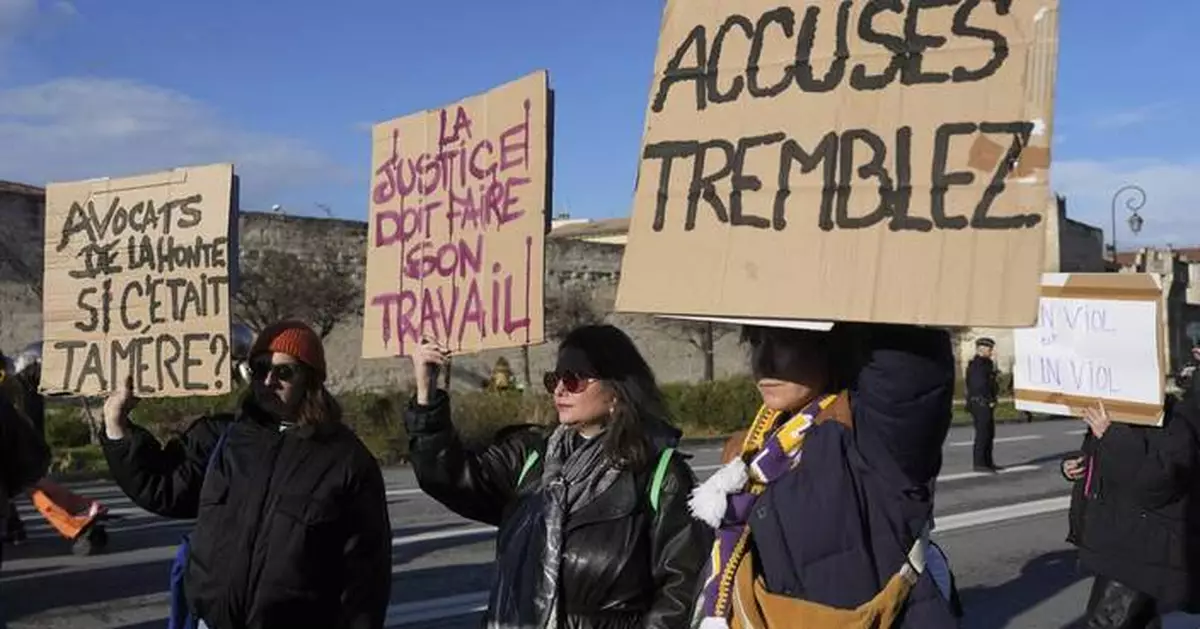
The trial comes as activists are pushing to lift taboos surrounding sexual abuse. That was highlighted recently during the trial that made Gisèle Pélicot, who was drugged and raped by her now ex-husband and dozens of others, France’s symbol of fight against sexual violence.
Child protection and women’s rights groups and medical community associations see the trial as an opportunity to reaffirm that shame must change sides.
“It should also mark a new step towards a justice system that listens and protects victims and firmly convicts aggressors,'' they said in a statement.
Le Scouarnec faces up to 20 years in prison for rape, sexual assault and indecent acts committed with violence or surprise.
The case began in 2017 when a 6-year-old neighbor denounced Le Scouarnec, who had touched her over the fence separating their properties.
A subsequent search of his home uncovered more than 300,000 photos, 650 pedopornographic, zoophilic and scatological video files, as well as notebooks where he described himself as a pedophile and detailed his actions, according to investigation documents.
In 2020, Le Scouarnec was sentenced to 15 years in prison for the rape and sexual assault of four children, including two nieces and a young patient.
Le Scouarnec has admitted child abuse dating back to 1985-1986, according to investigation documents. Some cases couldn't be prosecuted, because the statute of limitations had expired.
The Vannes trial will examine rapes and other abuses committed from 1989 to 2014 on 158 men and 141 women who were age 11 on average at the time.
The doctor sexually abused both boys and girls when they were alone in their hospital rooms, according to the investigation documents. His strategy was to disguise sexual violence as a medical act, targeting young patients who were less likely to recall what had happened.
“I didn’t really remember the operation. I remembered the postoperation, a surgeon who was quite mean,” one of the victims, Amélie Lévêque, recalled of her time in the hospital at the age of 9 in 1991. “I cried a lot, but I didn’t think something like that had happened to me during this operation.”
Years later, she described feeling overwhelmed when she learned that her name appeared in Le Scouarnec’s notebooks.
“That was the beginning of the answers to a lifetime of questions, and then it was the beginning of the descent into hell as I left the lawyer’s office,” she said. “I felt like I had lost control of everything. I wasn’t crazy, but now I had to face the truth of what had happened."
She also described the emotional toll of the revelation.
“I fell into a deep depression ... My family tried to help, but I felt completely alone,” she said.
The Associated Press doesn't name people who say they were sexually assaulted unless they consent to being identified or decide to tell their stories publicly.
Le Scouarnec's lawyer, Thibaut Kurzawa, told Sud-Ouest newspaper that his client would “answer the judges' questions” as he decided “to face up to reality.”
The case could have come to light much earlier. Le Scouarnec had already been convicted in 2005 for possessing and importing child pornography and sentenced to four months of suspended prison time.
Despite this, he was appointed as a hospital practitioner the next year. Because of processing delays, the criminal record check requested by the Health Ministry at the time didn't include any mention of his past offenses.
Even after being informed of his conviction, health authorities and hospital management didn't pursue disciplinary action.
Some child protection groups joined the proceedings as civil parties. The lawyer for L’Enfant Bleu association, Jean-Christophe Boyer, said that one key purpose is “to do something, perhaps modify the legal framework ... to prevent this kind of situation from happening again.”
The Independent Commission on Incest and Sexual Violence against Children urged a “major cultural change.”
“Child abuse careers are built, not by monsters, but by all witnesses' successive silences,” it said in a statement. “It is each witness' duty to take action, and especially each professional in a position of responsibility in a health, administrative or judicial institution.”
Thomas Adamson contributed to this report.
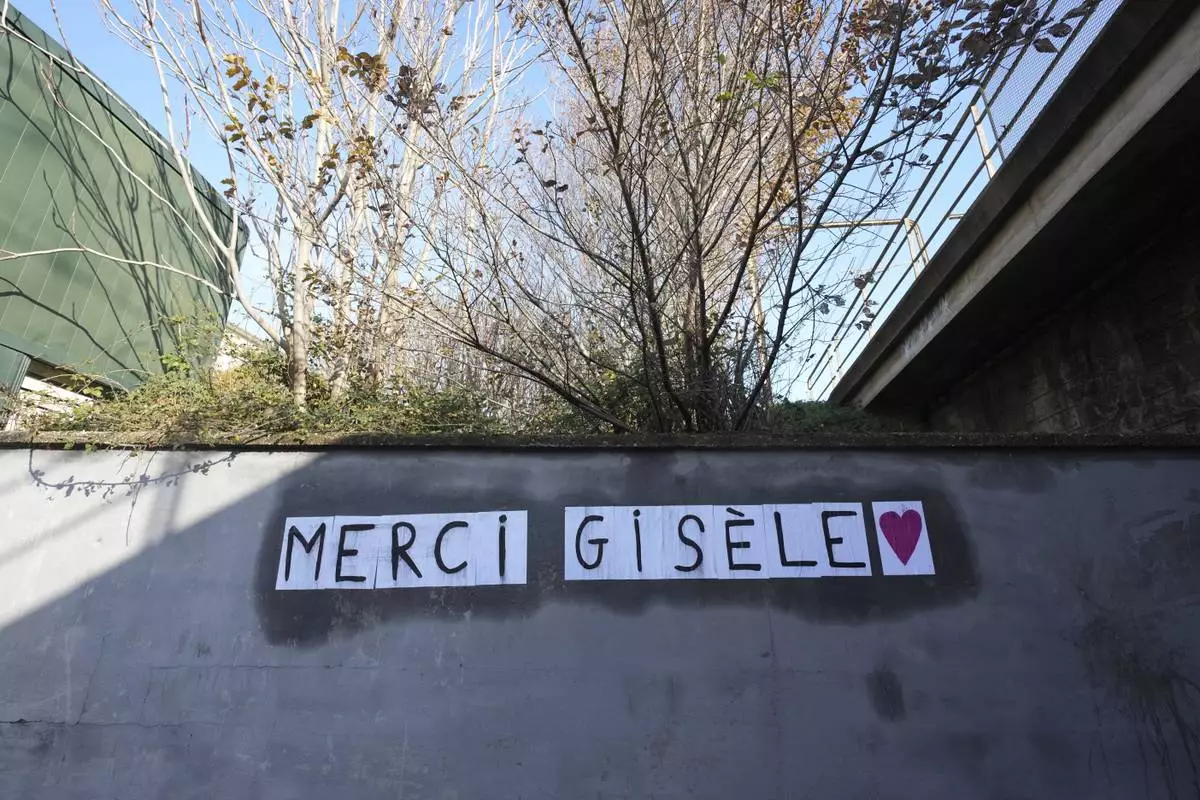
FILE -A poster "Thank you Gisele" is pictured, Dec. 14, 2024 in Avignon, southern France, near the courthouse where the Mazan rape trial is taking place. (AP Photo/Aurelien Morissard), File)
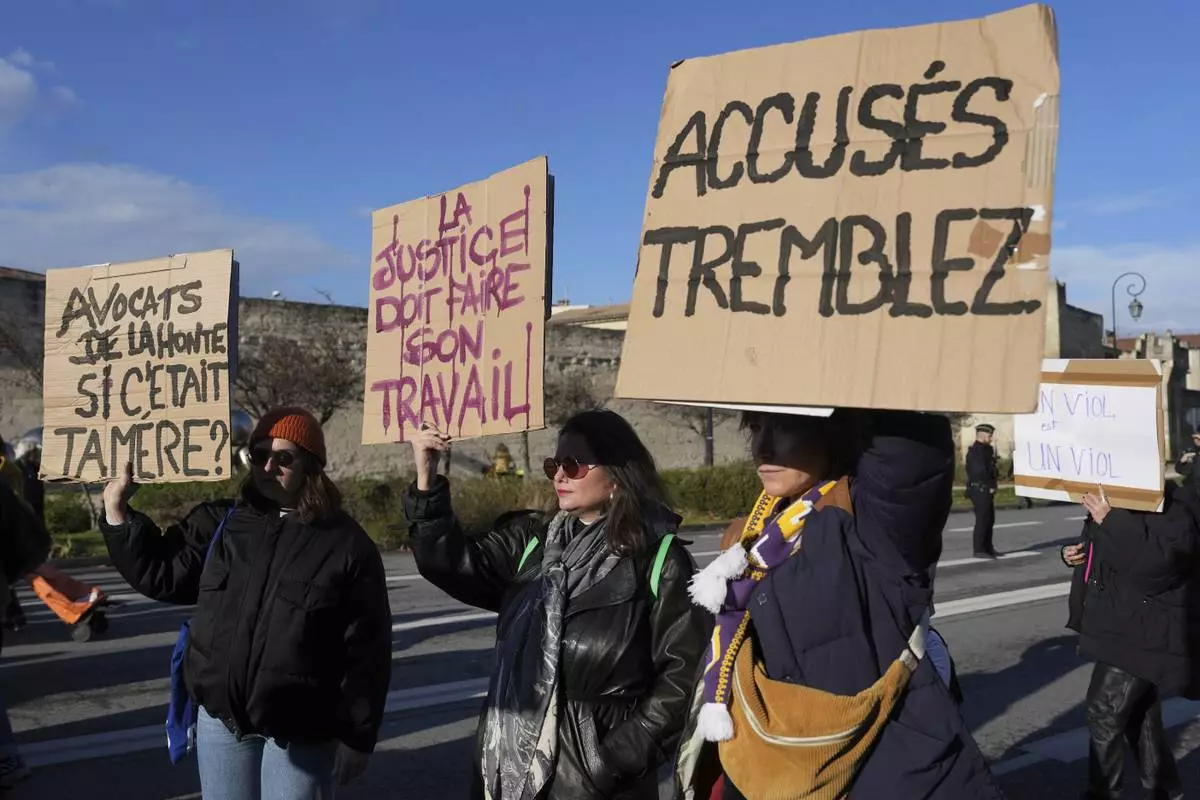
FILE -Activists hold posters during a women's rights demonstration, Dec. 14, 2024 in Avignon, southern France, where the trial of dozens of men accused of raping Gisèle Pelicot while she was drugged and rendered unconscious by her husband is taking place. (AP Photo/Aurelien Morissard), File)
CHERNIHIV, Ukraine (AP) — Young athletes in northern Ukraine spend their days cross-country skiing through a scorched forest, focused on their form — until a siren inevitably shatters the silence.
They respond swiftly but without panic, ditching their skis and following coaches to an underground bomb shelter.
It’s an ordinary training session at the complex that produced Ukraine’s first Olympic medalist.
Sleeping children no longer dream of Olympic glory in the facility's bombed-out dormitories, and unexploded ordnance has rendered nearby land off limits. But about 350 kids and teens — some of the nation's best young cross-country skiers and biathletes — still practice in fenced-off areas amid the sporadic buzz of drones passing overhead then explosions as they're shot down.
“We have adapted so well — even the children — that sometimes we don’t even react,” Mykola Vorchak, a 67-year-old coach, told The Associated Press in an interview on Oct. 31. “Although it goes against safety rules, the children have been hardened by the war. Adapting to this has changed them psychologically.”
War has taken a heavy toll on Ukrainian sport. Athletes were displaced or called up to fight. Soccer matches are often interrupted by air raid sirens so attendance is capped by bomb shelter capacity. Elite skaters, skiers and biathletes usually train abroad, with attacks and frequent blackouts shuttering local facilities.
But the government-run Sports Ski Base of the Olympic Reserve is open for cross-country skiing and biathlon, the event which combines skiing with shooting. The sprawling complex is on the outskirts of Chernihiv, a city two hours north of Kyiv along the path of destruction Russia's army left in its 2022 attempt to capture the capital. Chernihiv remains a regular target for air attacks aimed at the power grid and civilian infrastructure.
Several temporary structures at the sports center serve as changing rooms, toilets and coaches’ offices. Athletes train on snowy trails during the winter and, throughout the rest of the year, use roller skis on an asphalt track pocked by blast marks.
Biathletes aim laser rifles at electronic targets and, between shooting drills, sling skis over their shoulders and jog back to the start of the course, cheeks flushed from the cold.
Valentyna Tserbe-Nesina spent her adolescence at the Chernihiv center performing these same drills, and won bronze at the 1994 Winter Games in Lillehammer. It was Ukraine’s first Olympic medal as an independent country.
“The conditions weren’t great, but we had nothing better. And for us, it was like a family — our own little home,” she said inside her apartment, its shelves and walls lined with medals, trophies and souvenirs from competitions around the world.
Tserbe-Nesina, 56, was shocked when she visited the complex in 2022. Shelling had torn through buildings, fire had consumed others. Shattered glass littered the floors of rooms where she and friends once excitedly checked taped-up results sheets.
“I went inside, up to my old room on the second floor. It was gone — no windows, nothing,” she said. “I recorded a video and found the trophies we had left at the base. They were completely burned.”
Tserbe-Nesina has been volunteering to organize funerals for fallen Ukrainian soldiers in her hometown while her husband, a retired military officer, returned to the front. They see each other about once a year, whenever his unit allows him brief leave.
One adult who in 2022 completed a tour in a territorial defense unit of Ukraine’s army sometimes trains today alongside the center's youngsters. Khrystyna Dmytrenko, 26, will represent her country at the Milan Cortina Winter Olympics that start Feb. 6.
“Sports can show that Ukraine is strong,” Dmytrenko said in an interview next to the shooting range. “We represent Ukraine on the international stage, letting other countries, athletes and nations see our unity, strength and determination.”
The International Olympic Committee imposed bans and restrictions on Russian athletes after the invasion of Ukraine, effectively extending earlier sanctions tied to state‑sponsored doping. But a small group of them will participate in the upcoming Winter Games.
After vetting to ensure no military affiliation, they must compete without displaying any national symbols — and only in non-team events. That means Russian and Ukrainian athletes could face one another in some skating and skiing events. Moscow’s appeal at the federation level to allow its biathletes to compete is pending.
That's why many Ukrainians view training for these events as an act of defiance. Former Olympic biathlete Nina Lemesh, 52, noted that some young Ukrainians who first picked up rifles and skis at the Chernihiv ski base during wartime have become international champions in their age groups.
“Fortunately, Ukrainians remain here. They always will,” she said, standing beside the destroyed dormitories. “This is the next generation of Olympians.”
AP writer Derek Gatopoulos in Kyiv contributed to this report.
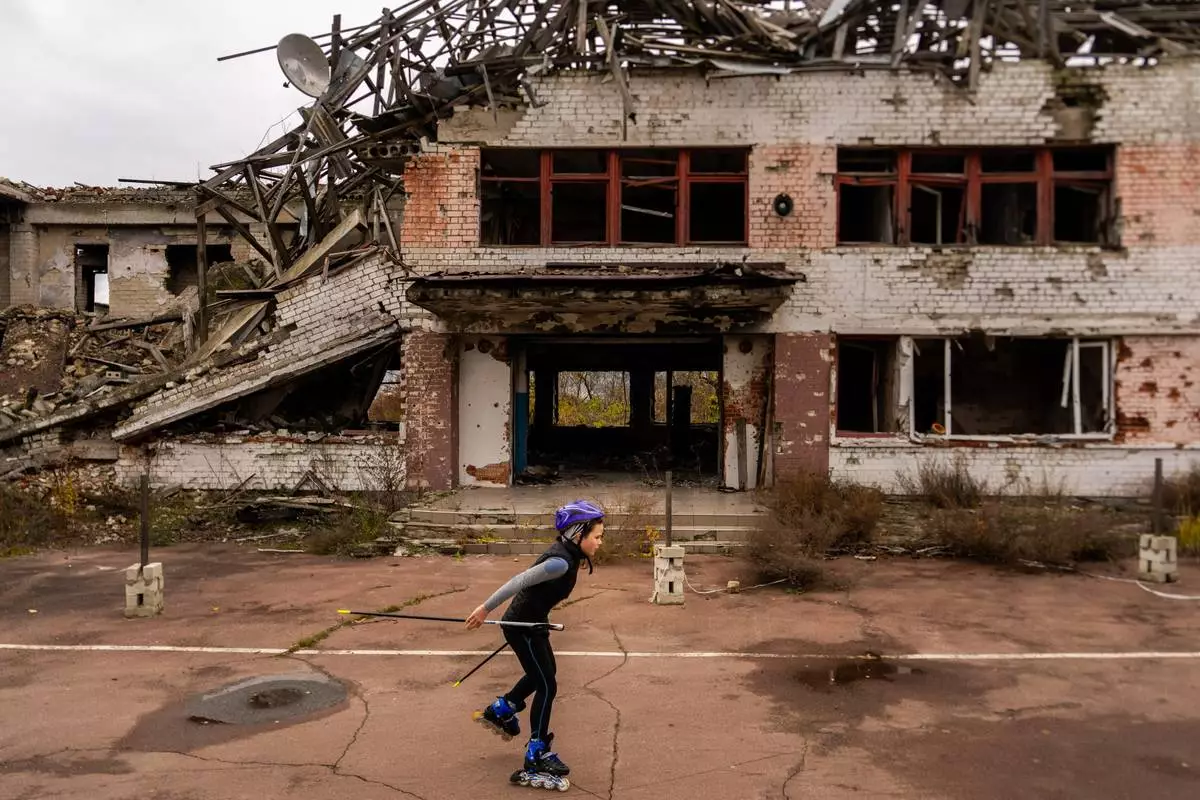
A young biathlete trains outside the destroyed ski base in Chernihiv, Ukraine, Thursday, Oct. 30, 2025. (AP Photo/Julia Demaree Nikhinson)
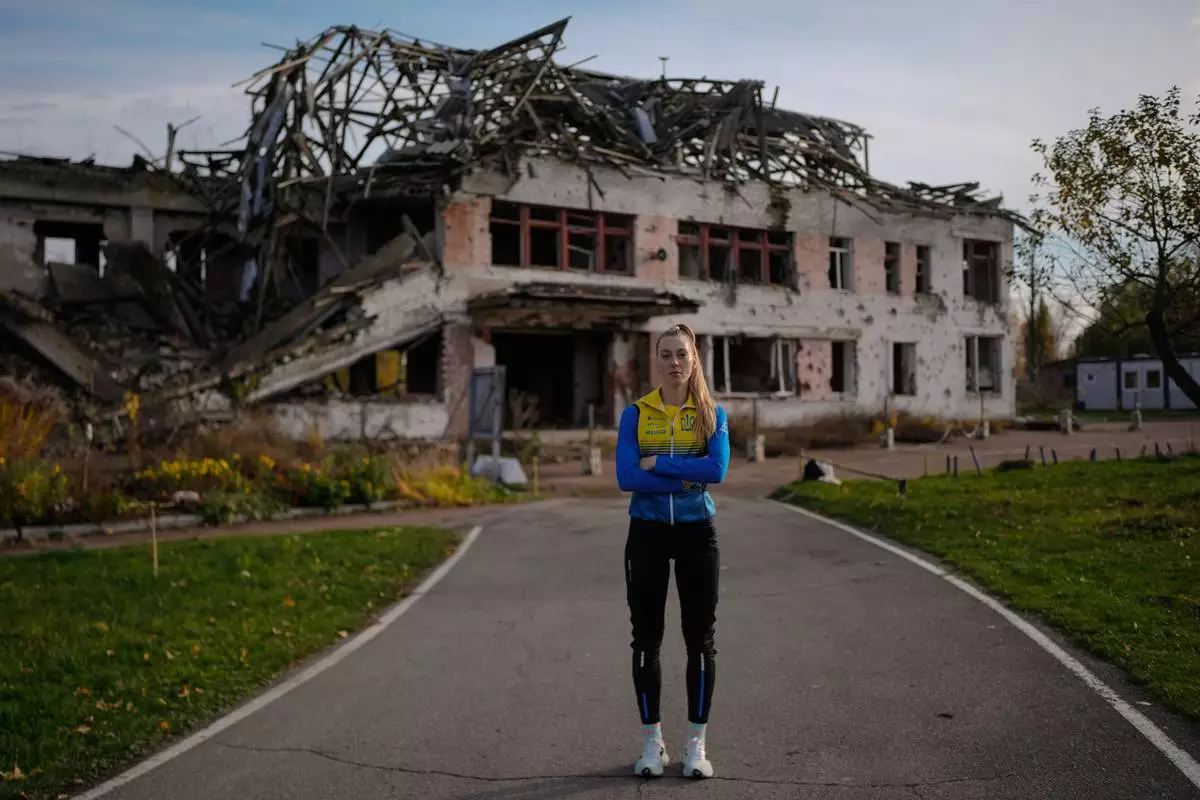
Biathlete Khrystyna Dmytrenko poses for photos outside the destroyed ski base in Chernihiv, Ukraine, Thursday, Oct. 30, 2025. (AP Photo/Julia Demaree Nikhinson)
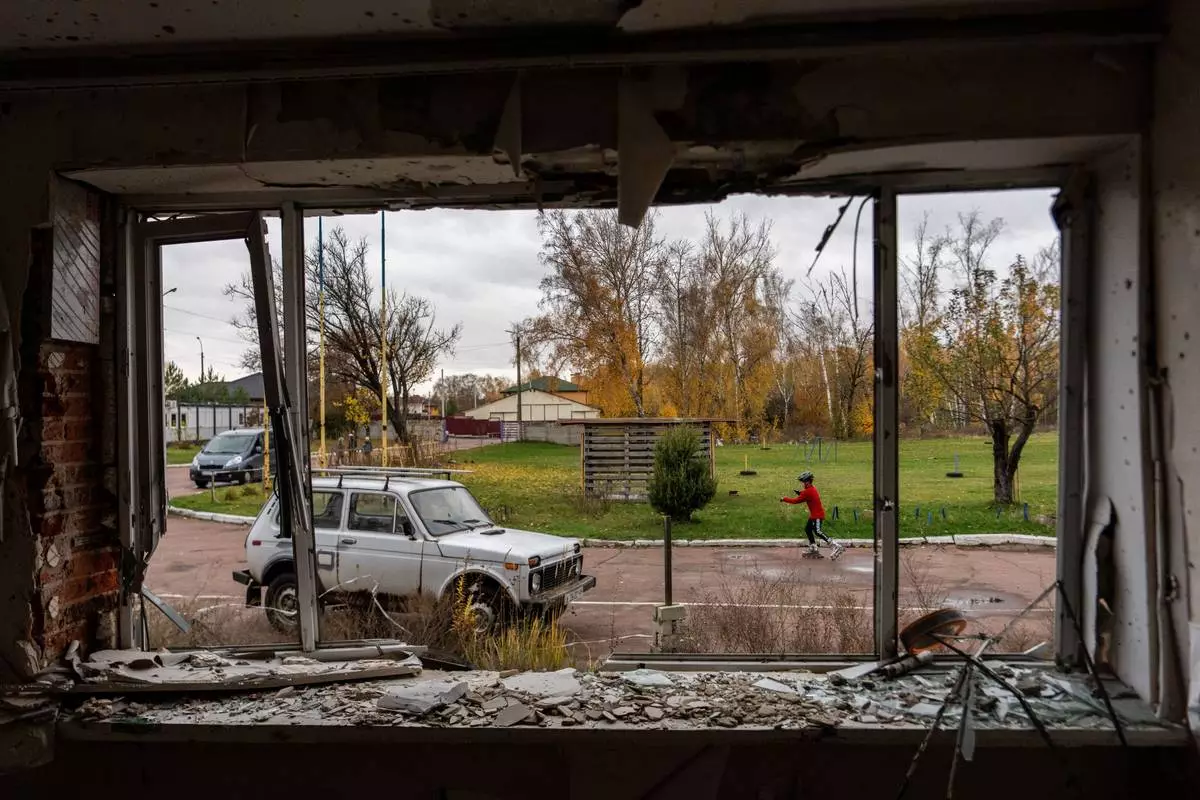
A young biathlete trains outside the destroyed ski base in Chernihiv, Ukraine, Thursday, Oct. 30, 2025. (AP Photo/Julia Demaree Nikhinson)
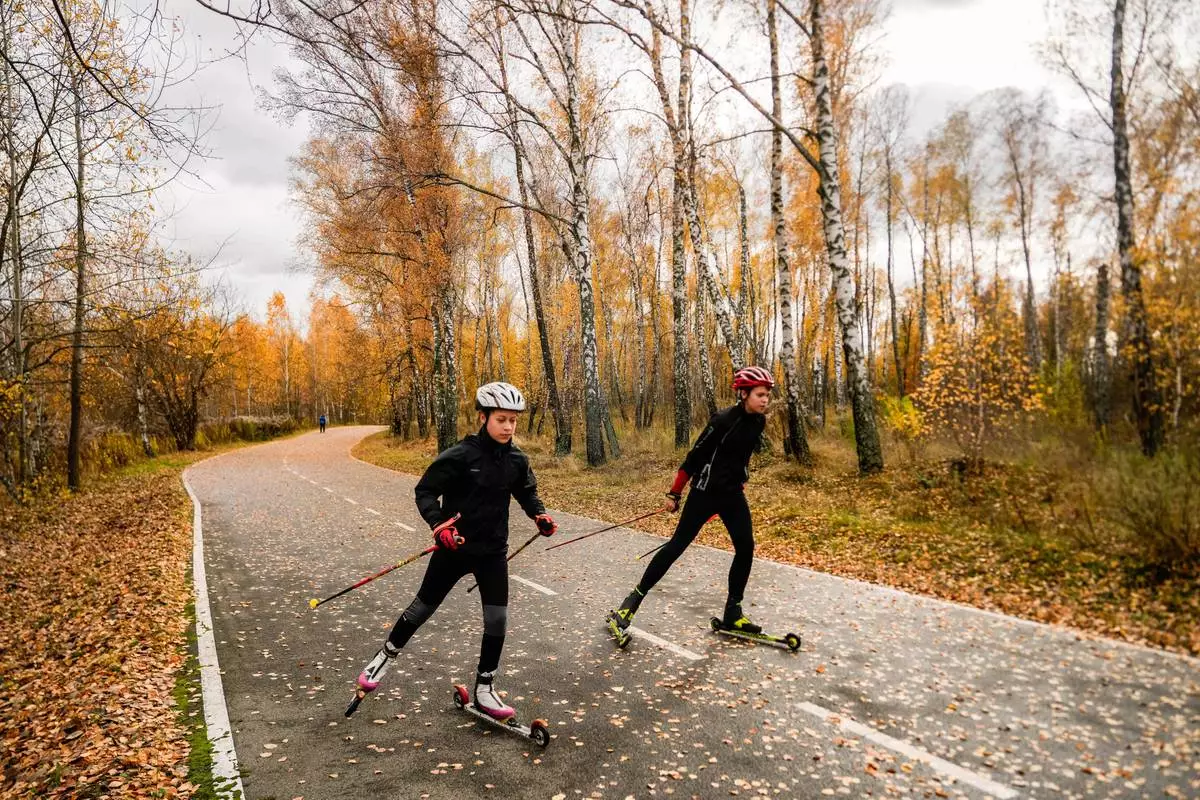
Biathletes Mykola Dorofeiev, 16, and Nazar Kravchenko, 12, left, train at the ski base in Chernihiv, Ukraine, Thursday, Oct. 30, 2025. (AP Photo/Julia Demaree Nikhinson)
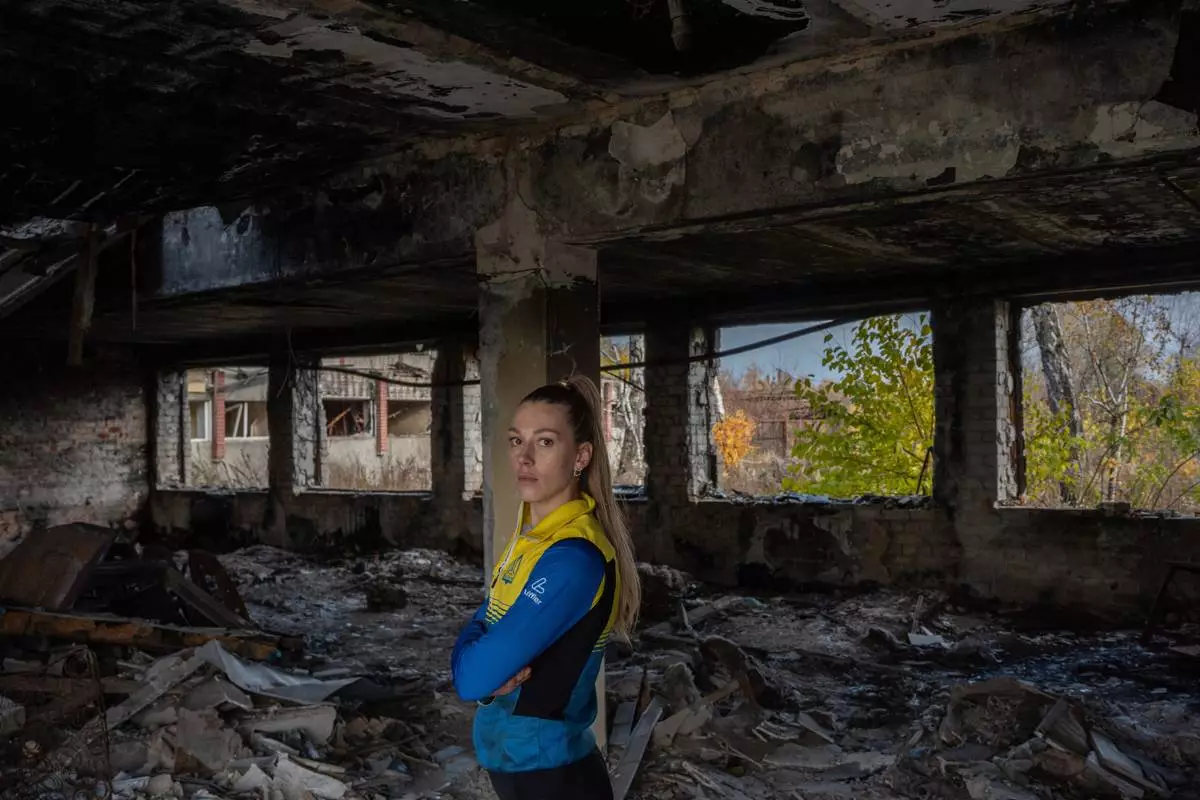
Biathlete Khrystyna Dmytrenko poses for photos inside the destroyed ski base in Chernihiv, Ukraine, Thursday, Oct. 30, 2025. (AP Photo/Julia Demaree Nikhinson)
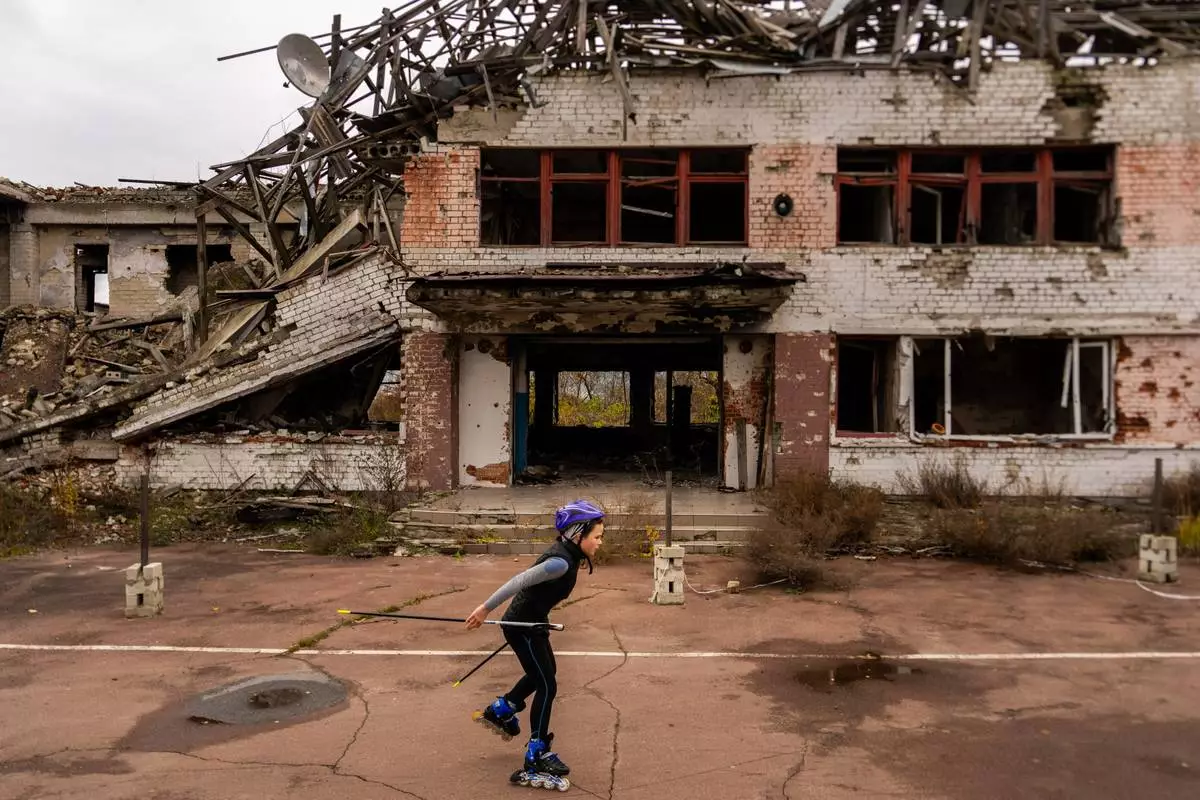
A young biathlete trains outside the destroyed ski base in Chernihiv, Ukraine, Thursday, Oct. 30, 2025. (AP Photo/Julia Demaree Nikhinson)