China's Unitree Robotics has been turning heads with its advanced humanoid robots, whose impressive speed, balance and agility have captured a lot of attention in real life and online.
Founded in 2016 by CEO Wang Xingxing, who was only 26 years old at the time, Unitree Robotics started with a small team and big dreams. Today, the company has around 500 employees specializing in the development and production of dog-like quadruped robots and bipedal humanoid robots.
The company gained widespread attention with its creations, including its dancing robots, during the 2025 Spring Festival Gala broadcast produced by China Media Group (CMG), one of the world's most-watched TV programs.
The latest data from Gaogong Robotics Industry Research Institute shows that Unitree's dog-like quadruped robots account for nearly 70 percent of the global market share.
However, the company's real breakthrough came with its rapid progress in bipedal human-sized robots, a market they entered just one and a half years ago.
"In the early days, we had probably just a dozen people. When did we have a big increase in numbers? It was only after we participated in the 2021 Spring Festival Gala for the Year of the Ox. And more people started to know about our company and our products," said Chen Xiyun, marketing manager of Unitree Robotics.
Chen said that the quadruped robots can serve different purposes such as safety inspections, and can also be great companions or performers.
Unitree's humanoid robots can mimic human movement with remarkable balance and precision. With cutting-edge technology, they have set new standards in the industry and have paved the way for future advancements in robotics.
"There are two cameras here, and over here is its laser radar. The battery is on the left side of its body, and inside this part is the integrated computing unit, which includes the control algorithms that operate everything," said Chen.
Despite their advancements, Chen emphasized that humanity has not yet fully realized the potential of humanoid robots.
"Currently, humanity hasn't even scratched the surface of humanoid robots. The future will present numerous challenges, such as how they perceive the world like humans, how they can interact with human being with emotions. These are all things for the future," said Chen.
"Right now, there is no true AI for humanoids yet. What we have figured out is how it can move stably and smoothly, in other words, its motion control algorithms," Chen continued.
While the idea of a robot that can cook and clean at home is enticing, Chen says humanity has not reached that point just yet.
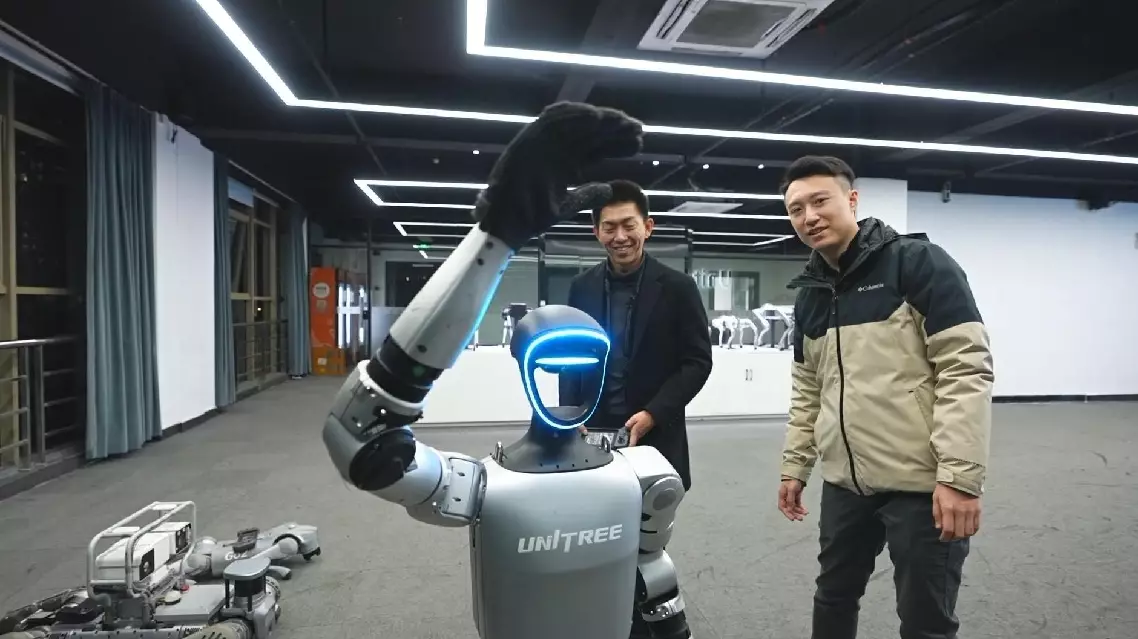
Unitree Robotics leads humanoid robot innovation
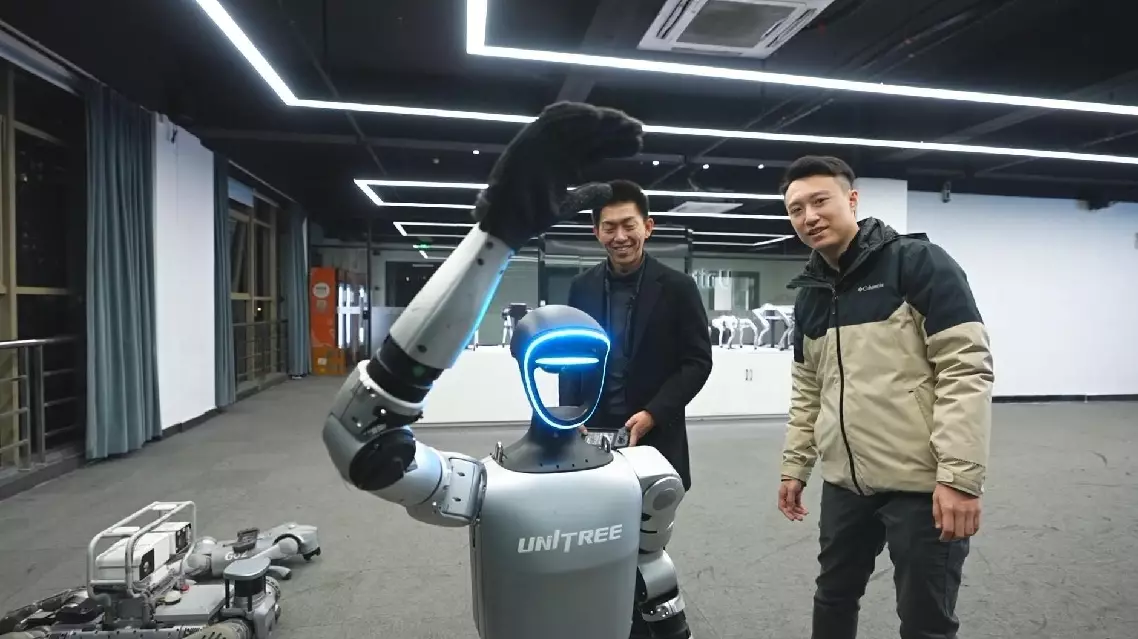
Unitree Robotics leads humanoid robot innovation