Skip to Content Facebook Feature Image

Ancient mythology brought to life as showcases folk tale, ethnic elements at Spring Festival Gala

China

China

China

Ancient mythology brought to life as showcases folk tale, ethnic elements at Spring Festival Gala

2026-02-16 22:03 Last Updated At:02-17 13:05

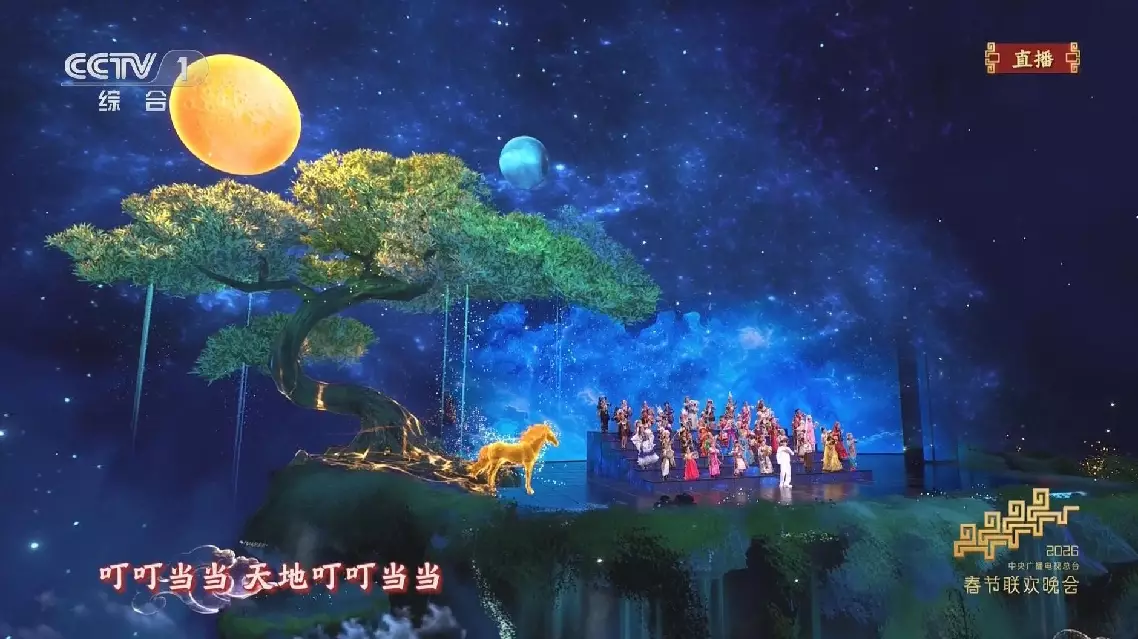
A lively musical performance featuring ethnic elements from across China brought a mythological story from an ancient Chinese text to life during the China Media Group (CMG)'s Spring Festival Gala on Monday evening.

Performed by Chinese singer Zhou Shen alongside children representing China's diverse ethnic groups, the song depicted the story of a divine horse named 'Jiliang', who features in a famous tale told in 'The Classic of Mountains and Seas', a major source of Chinese mythology that is believed to date back thousands of years.

In the classic text, Jiliang is described as having a white body, red mane, and golden eyes. Riding it was believed to grant a thousand-year lifespan, making it an auspicious symbol of longevity and good fortune.

The gala performance featured enchanting vocals and saw the children display the beauty of their traditional ethnic clothing while demonstrating their hopes for a bright future.

The Spring Festival, or the Chinese New Year, is the most important traditional holiday for the Chinese people, and watching the Spring Festival Gala, also known as "Chunwan," is a cherished part of the celebrations every year in hundreds of millions of Chinese homes.

Since first being broadcast in 1983, the gala has been recognized by Guinness World Records as the most-watched annual television program on the planet.

In December 2024, the Spring Festival itself was inscribed on UNESCO's Representative List of the Intangible Cultural Heritage of Humanity.
Ancient mythology brought to life as showcases folk tale, ethnic elements at Spring Festival Gala

Ancient mythology brought to life as showcases folk tale, ethnic elements at Spring Festival Gala

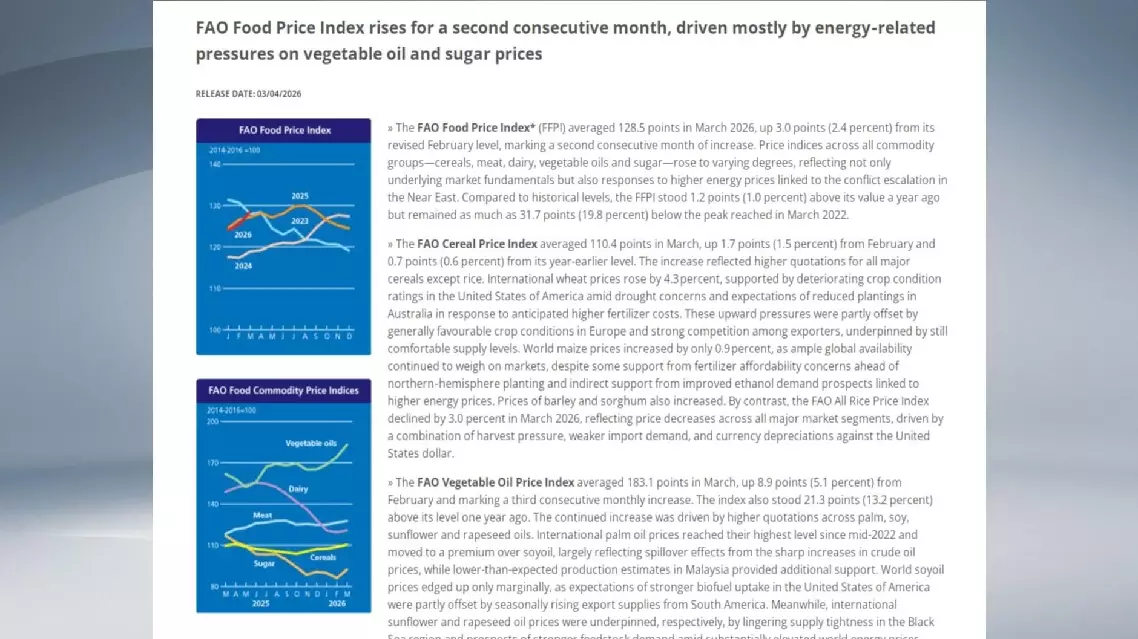
Global food commodity prices climbed for a second consecutive month in March, driven mainly by higher energy costs linked to escalating conflict in the Middle East, the Food and Agriculture Organization of the United Nations (FAO) said in report released on Friday.

The FAO Food Price Index, which tracks monthly changes in the international prices of a basket of globally traded food commodities, averaged 128.5 points in March, up 2.4 percent from February and 1.0 percent above its level a year ago.

According to the report, the FAO Vegetable Oil Index and Sugar Price Index showed the largest increases, up 5.1 percent and 7.2 percent, respectively.

The FAO Cereal Price Index increased by 1.5 percent from the previous month, driven primarily by higher world wheat prices, which rose 4.3 percent.

The FAO Meat Price Index rose by 1.0 percent from the previous month, and the FAO All-Rice Price Index declined by 3.0 percent in March, according to the report.

FAO stated that rising energy and fertilizer prices have been driving up agricultural input costs.

If the conflict stretches beyond 40 days, farmers will have to choose to farm the same with fewer inputs, plant less, or switch to less intensive fertilizer crops, according to FAO Chief Economist Maximo Torero.

These choices will hit future yields and shape food supply and commodity prices for the rest of this year and beyond, Torero said.

Global food prices rise for 2nd consecutive month in March amid Middle East conflict: FAO

Global food prices rise for 2nd consecutive month in March amid Middle East conflict: FAO

Recommended Articles