EDB holds kick-off ceremony and experiment proposal design briefing session for Hong Kong Secondary Student Space Station Popular Science Payload and Science Experiment Design Challenge
The Education Bureau (EDB) is organising the Hong Kong Secondary Student Space Station Popular Science Payload and Science Experiment Design Challenge, which encourages student teams to submit scientific experiment design proposals suitable for implementation under space conditions or microgravity. The kick-off ceremony and experiment proposal design briefing session of the challenge were held today (February 25).
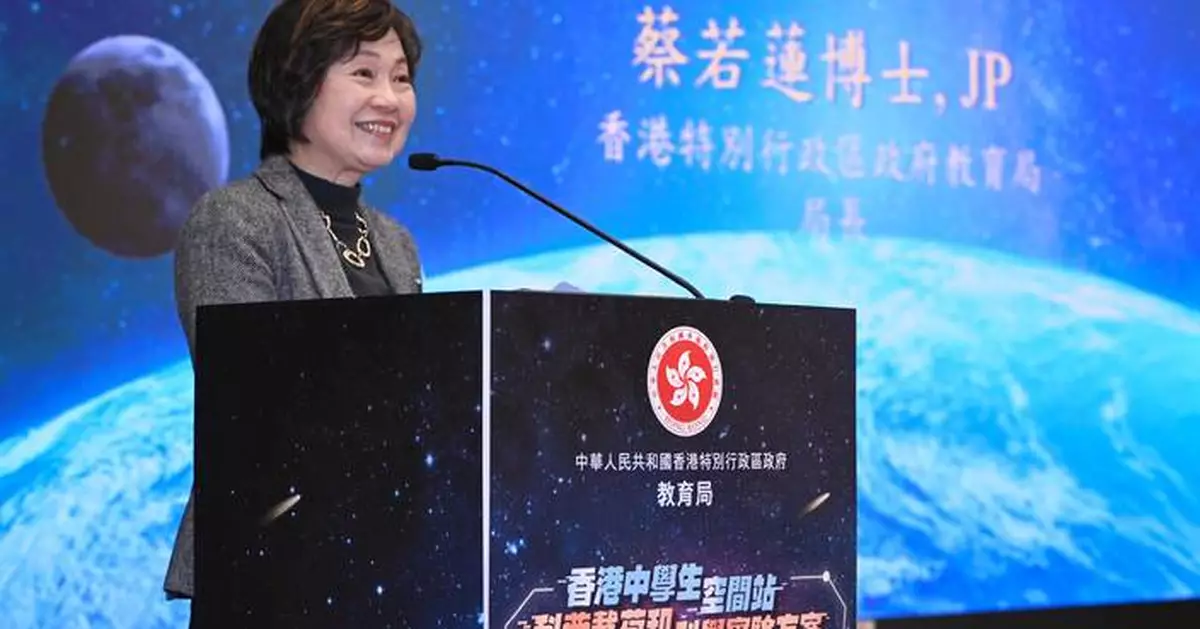
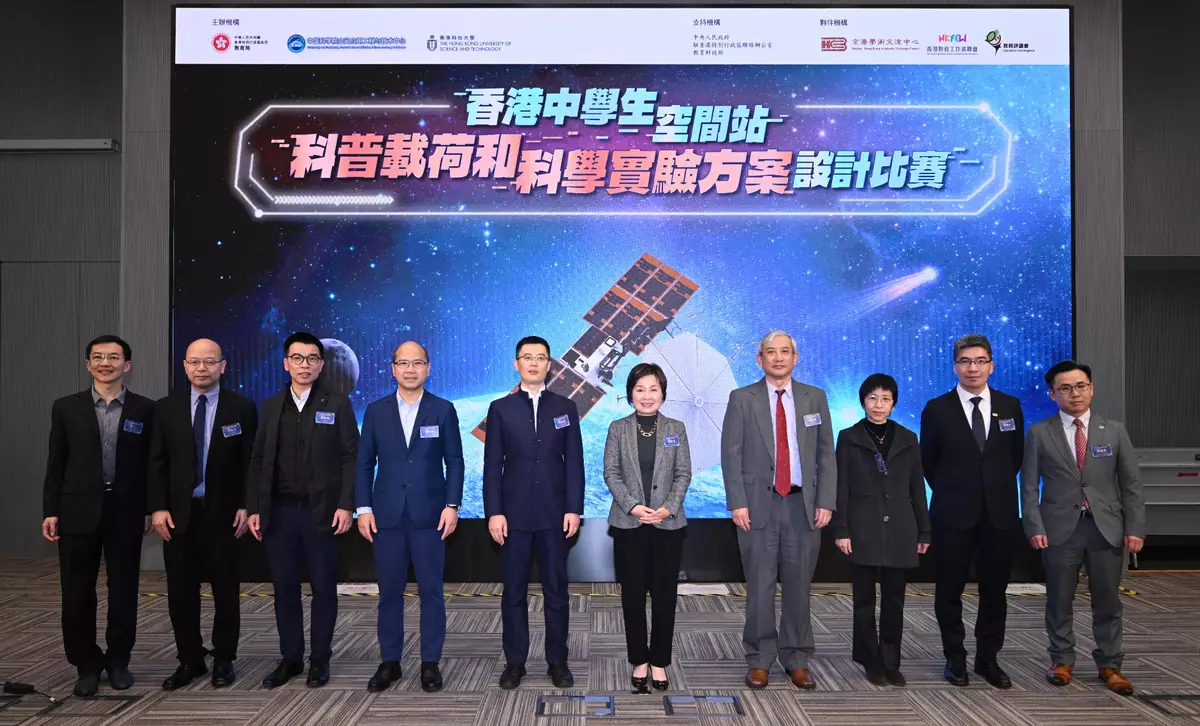
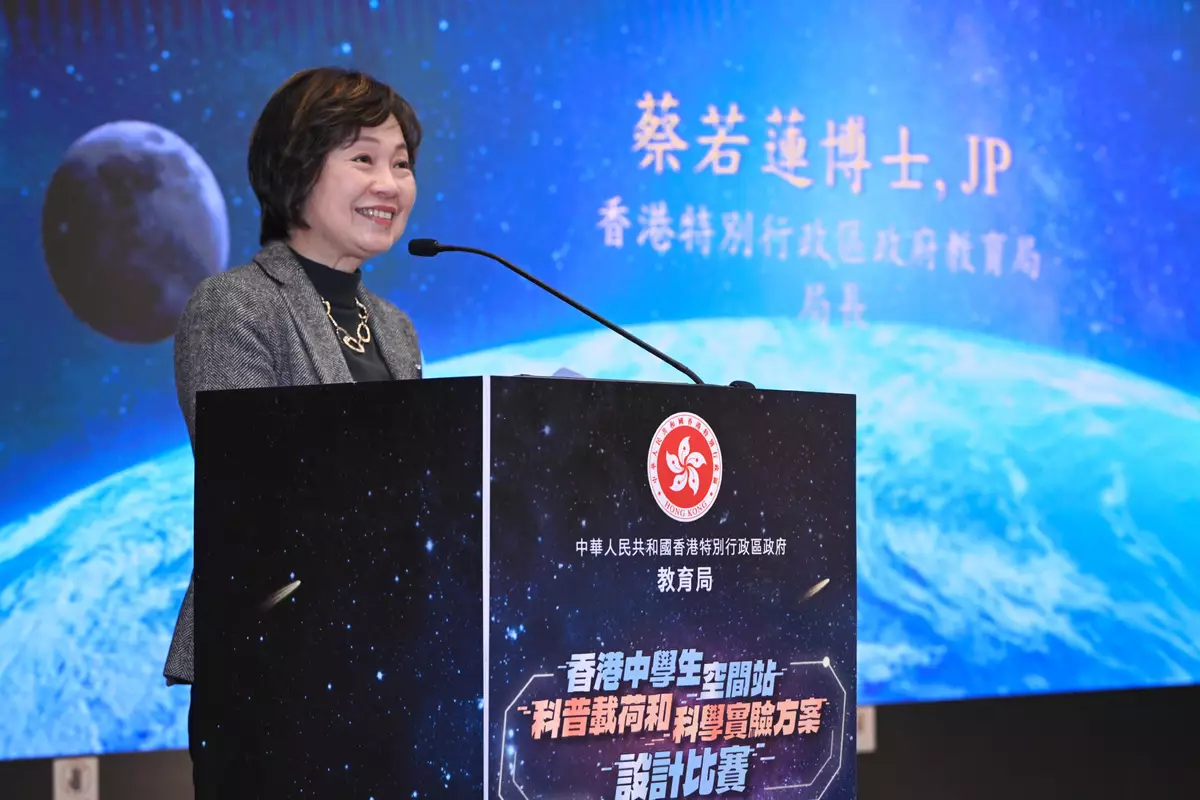
The Secretary for Education, Dr Choi Yuk-lin, officiated at the ceremony, which took place at the Education Bureau Kowloon Tong Education Services Centre with representatives from the co-organising, supporting, and partner institutions. The challenge is jointly organised by the EDB, the Technology and Engineering Center for Space Utilization of the Chinese Academy of Sciences (CAS-TECSU), and the Hong Kong University of Science and Technology (HKUST), with the Department of Educational, Scientific and Technological Affairs of the Liaison Office of the Central People's Government (LOCPG) in the Hong Kong Special Administrative Region (HKSAR) serving as a supporting organisation. The Beijing-Hong Kong Academic Exchange Centre, the Hong Kong Federation of Education Workers, and the Education Convergence are partner organisations.
The challenge aims to promote aerospace education, deepen students' understanding of the country's achievements in the aerospace area, and strengthen their confidence in science and technology. Award-winning and selected proposals have opportunities to be realised and developed into final products, and would be recommended to the space station space mission and Space Station Hong Kong Popular Science Satellite Project, to commence in 2026.
Speaking at the kick-off ceremony, Dr Choi said that China's aerospace engineering is a major testament to the country's technological and comprehensive national strengths, fulfilling the long-held aerospace dreams of the Chinese people. This competition gives students valuable opportunities for aerospace education, training and practice, enabling them to have the opportunity to participate in national aerospace projects, explore aerospace science, and realise their aerospace dreams. She added that the challenge is highly meaningful and students are encouraged to form teams to participate in it.
She pointed out that, to align with the national direction of invigorating the country through science and education, and in support of Hong Kong's development into an international innovation and technology (I&T) hub, the EDB continues to step up the promotion of STEAM (science, technology, engineering, the arts and mathematics) education in schools, with an aim to enhance students' interest and capabilities in scientific research and I&T through diversified support measures.
Dr Choi expressed her gratitude to the CAS-TECSU, the Department of Educational, Scientific and Technological Affairs of the LOCPG in the HKSAR, and HKUST, among other organisations, for their robust support of the challenge, which has enabled its smooth implementation.
Associate Vice-President for Research and Development (Research) of HKUST Professor Penger Tongalso officiated at the ceremony. He said he hopes that this science popularisation activity will ignite the passion of Hong Kong's younger generation for aerospace technology and enable them to make greater contributions to the aerospace endeavours of the country.
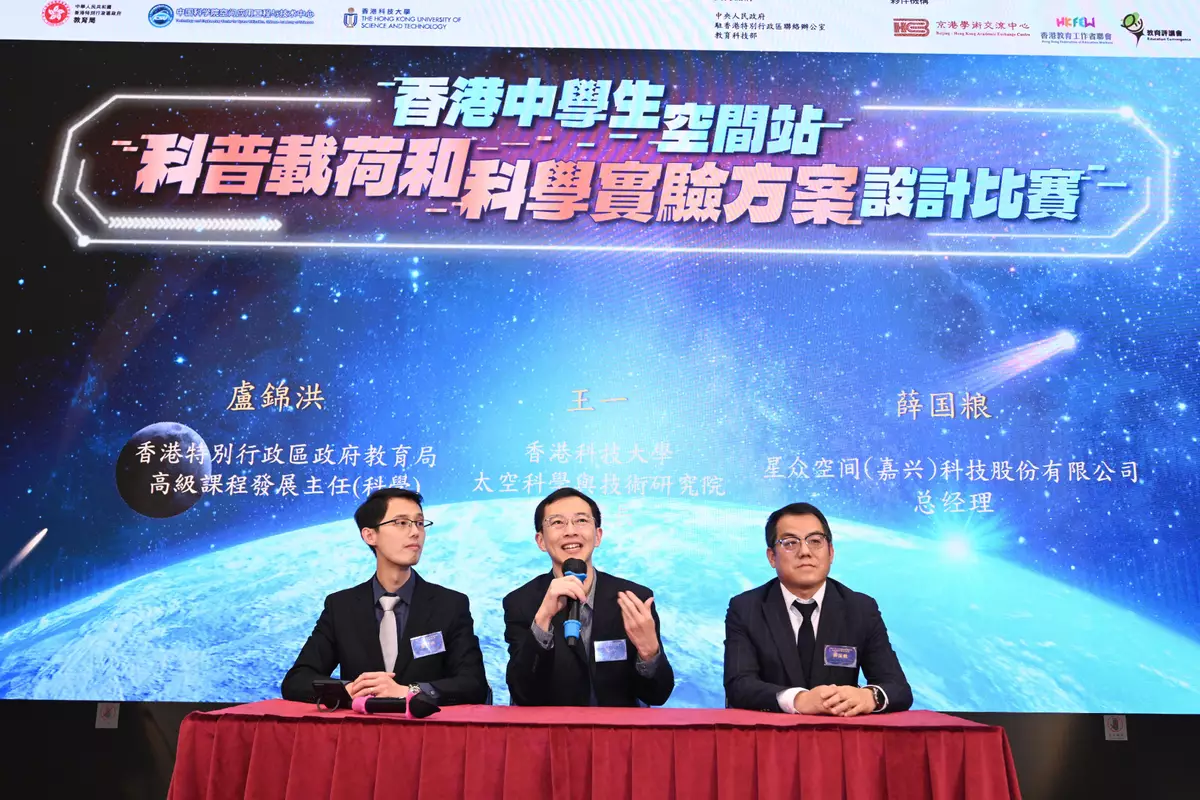
During the briefing session, the project leader of the Space Station Hong Kong Popular Science Satellite from HKUST, Professor Yu Hongyu, delivered a keynote titled "Exploring the Universe, Igniting Dreams - Building Aerospace Aspirations with Hong Kong Secondary Students," introducing the latest developments in the aerospace technology of the country to teachers and students. Meanwhile, Associate Director of the Space Science and Technology Institute of HKUST Professor Wang Yi and EDB representatives introduced the regulations, rules, and scoring criteria of the challenge.
Other officiating guests included the Deputy Director of the Department of Educational, Scientific and Technological Affairs of the LOCPG in the HKSAR, Dr Chen Zhilu; the President of the Beijing-Hong Kong Academic Exchange Centre, Mr Hsu Hoi-shan; the Chairman of the Hong Kong Federation of Education Workers, Mr Wong Kam-leung; and the Vice Chairperson of the Education Convergence, Mr Chan Wai-lun. A total of 400 teachers and students from various schools also attended the briefing session.
Under the Hong Kong Secondary Student Space Station Popular Science Payload and Science Experiment Design Challenge, participating student teams are required to submit science experiment design proposals that are suitable for conducting in a space environment or under microgravity conditions for review by an expert panel. The organising bodies will provide a series of training activities for participating teams, including payload design creation sessions led by aerospace experts, as well as online consultations, payload design reviews and improvement suggestions. An award ceremony and achievement exhibition is expected to be held in late June or July.
Student teams interested in participating are required to register on the challenge's website (spacepayload.hkust.edu.hk) after obtaining a nomination from their respective school(s) by March 8. For details, please refer to Education Bureau Circular Memorandum No. 31/2025 (applications.edb.gov.hk/circular/upload/EDBCM/EDBCM25031E.pdf).
EDB holds kick-off ceremony and experiment proposal design briefing session for Hong Kong Secondary Student Space Station Popular Science Payload and Science Experiment Design Challenge Source: HKSAR Government Press Releases
EDB holds kick-off ceremony and experiment proposal design briefing session for Hong Kong Secondary Student Space Station Popular Science Payload and Science Experiment Design Challenge Source: HKSAR Government Press Releases
EDB holds kick-off ceremony and experiment proposal design briefing session for Hong Kong Secondary Student Space Station Popular Science Payload and Science Experiment Design Challenge Source: HKSAR Government Press Releases