U.S. consumer confidence dropped to a nearly eight-month low in February, hitting 98.3, as concerns over tariffs and inflation have sparked uncertainty among American consumers, according to the Conference Board's Consumer Confidence Index.
The index dropped 7.0 points from January, marking its largest decline in over three years, according to the group's summary of its findings released Tuesday.
The Present Situation Index, which reflects consumers' assessments of current business and job conditions, declined 3.4 points to 136.5, while the Expectations Index -- measuring outlooks for income, business, and employment -- suffered a more pronounced 9.3-point drop to 72.9.
This marks the first time since June 2024 that the Expectations Index has fallen below 80, a threshold historically seen as indicative of recession risks. The data, which reflects sentiment as of February 19, underscores rising concerns about economic stability.
The surge in inflation expectations -- rising from 5.2 percent to 6 percent -- is largely attributed to persistent price pressures, particularly on staple goods like eggs, as well as the anticipated effects of tariffs on consumer prices. While inflation remained a dominant concern, discussions around trade and tariffs saw a notable rise, reaching levels not seen since 2019.
Both households and businesses pointed to President Donald Trump's tariff policies as key drivers of declining confidence, amplifying broader concerns about future economic growth and the potential for prolonged inflation.

US consumer confidence drops to eight-month low amid inflation, policy concerns

US consumer confidence drops to eight-month low amid inflation, policy concerns
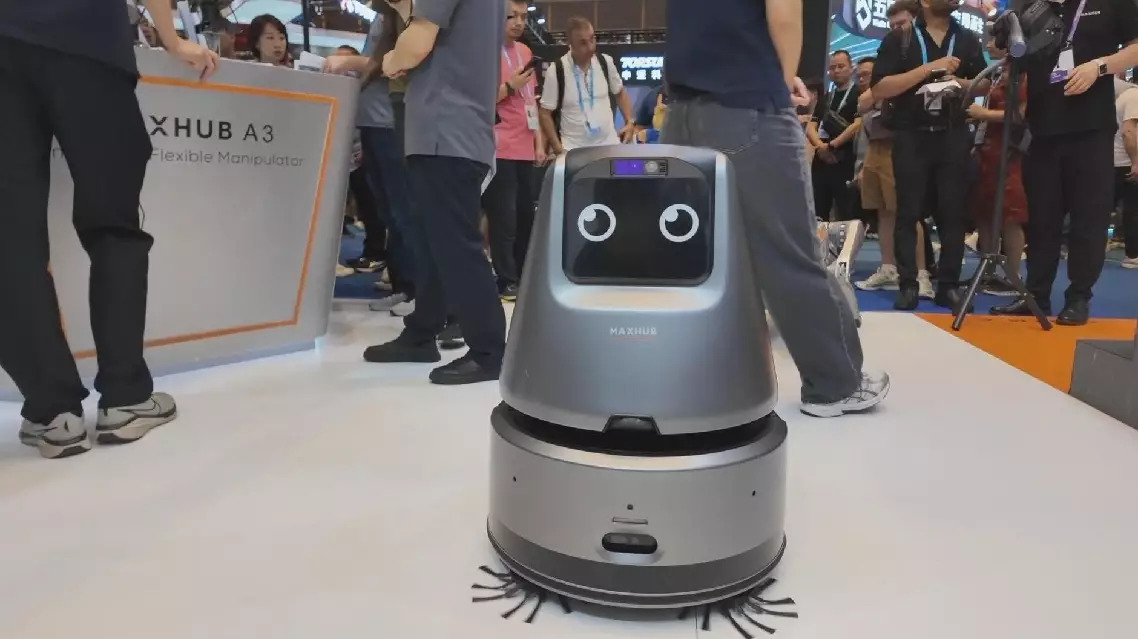
Smart products are a big draw at the ongoing 139th edition of the China Import and Export Fair, also known as the Canton Fair, currently underway in Guazhou, capital city of south China's Guangdong Province.
On Friday, the smart technology zone at the expo continued to draw growing attention.
Among the highlights, the service robot section became a focal point, with 46 companies showcasing a wide range of smart robot products.
Over the past two days, the zone attracted an average of more than 24,000 visitors daily.
The current edition of the Canton Fair, running from April 15 to May 5, features three distinct phases, each focusing on different product categories themed on "advanced manufacturing", "quality home life" and "better life".
The first phase has introduced four new sections -- consumer drones, smart wearables, display technology, and agricultural drones -- which collectively showcase China's innovative achievements in the field of smart technology.
"I also see a lot of new developments, especially in products that are AI-related. The Chinese products, Chinese factories are investing a lot in new developments. And I think this is really, really going fast. And I think these products, which are AI-related, will change consumer electronics markets. That's why I think it's it's a big advantage," a Dutch buyer at the expo.
The Canton Fair is held every spring and autumn in Guangzhou since its founding in 1957, and has been seen as a barometer of China's foreign trade.
The longest-established trade fair in China has seen record participation across its exhibition metrics this time - over 32,000 companies are exhibiting, including about 3,900 first-time participants.
Tech-driven innovations took the center stage among the more than 4.65 million products showcased, with new, green and independently developed products accounting for 23 percent, 22 percent and 25 percent, respectively.
Smart products steal limelight at 139th Canton Fair