The European Union economy could edge close to a recession if the energy supply shock triggered by the Middle East conflict continues, a senior International Monetary Fund (IMF) official warned on Friday.
Alfred Kammer, director of the IMF's European department, said that under the current tense situation involving Iran, euro area growth is projected to be dragged down by 0.5 percentage point over the next two years. In a more severe scenario, the drag could reach 1.7 percentage points, he added.
Kammer also cautioned that industrial energy prices in the EU are now about twice the level seen before 2022 and significantly higher than in the United States, a direct consequence of the bloc's heavy dependence on imported oil and gas.
Data released by Eurostat on Thursday showed that euro area inflation rose to 2.6 percent year on year in March, up sharply from 1.9 percent in February. Energy prices increased 4.9 percent annually, marking their first annual gain since February 2025.
In its latest World Economic Outlook, the IMF projected that due to the energy supply shock from the Middle East conflict, euro area inflation will reach 2.6 percent this year, up from 2.1 percent in 2025, while growth will slow to just 1.3 percent. In a more severe scenario, inflation could spike to nearly 5 percent, prompting the European Central Bank to raise interest rates and pushing the EU economy toward recession-like conditions, the report said.
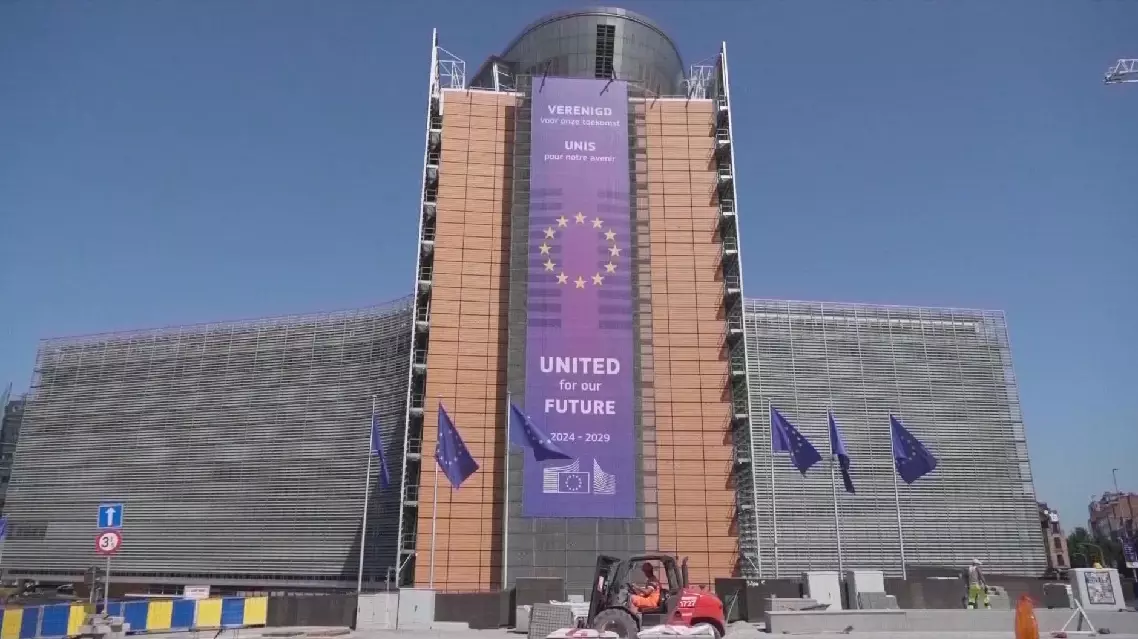
IMF warns EU economy could "near recession" if Mideast conflict persists
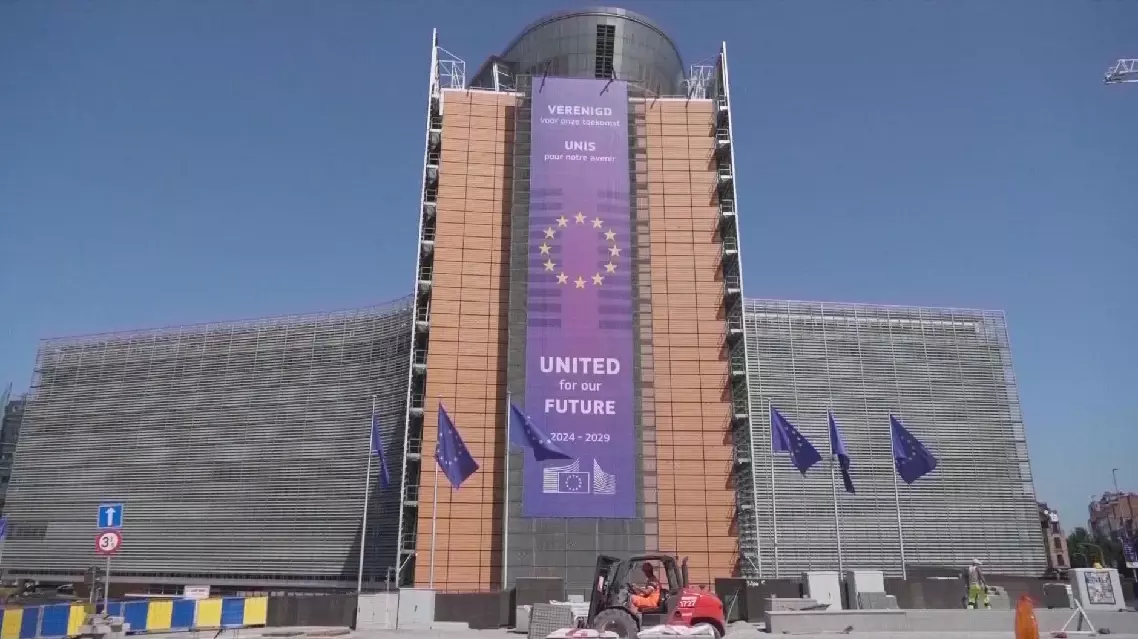
IMF warns EU economy could "near recession" if Mideast conflict persists
Teams attending the 2026 humanoid robot half-marathon are racing to fine-tune every detail before hitting the course on Sunday.
As the world's first humanoid robot marathon, this year's event will see a record 112 teams taking part, including five international teams from countries including Germany, France and Brazil.
Co-hosted by the Beijing Municipal People's Government and China Media Group, the event covers two main categories – autonomous navigation and remote control – with autonomous navigation teams accounting for nearly 40 percent of the total.
One week ago, a full-scale test of the event has already been conducted in Beijing's E-Town Economic and Technological Development Area.
"Really impressive! When I see what they've done in the first marathon that happened last year and what we saw this year, I'm impressed by the advancements that have been made. Last year, some robots had some hard time to just stay standing, but now this year almost every robot is able to stand. And they all focus on performances and that's very exciting," said Etienne, a member of Paris-Saclay University Team.
The 21-kilometer race route covers more than 10 types of terrain including flat ground, slopes, curves, and narrow sections. It features 12 left turns and 10 right turns, including several near-90-degree curves, providing complex environment for robots to test their adaptation and decision-making capabilities.
"This event requires robots to achieve such high mobility autonomously on the course, which poses a significant test of their agility. Even for humans, executing sharp turns under such complex conditions is quite challenging. For robots, this setup further increases the technical difficulty and challenge," said Zhao Mingguo, a researcher at the Department of Automation of Tsinghua University.
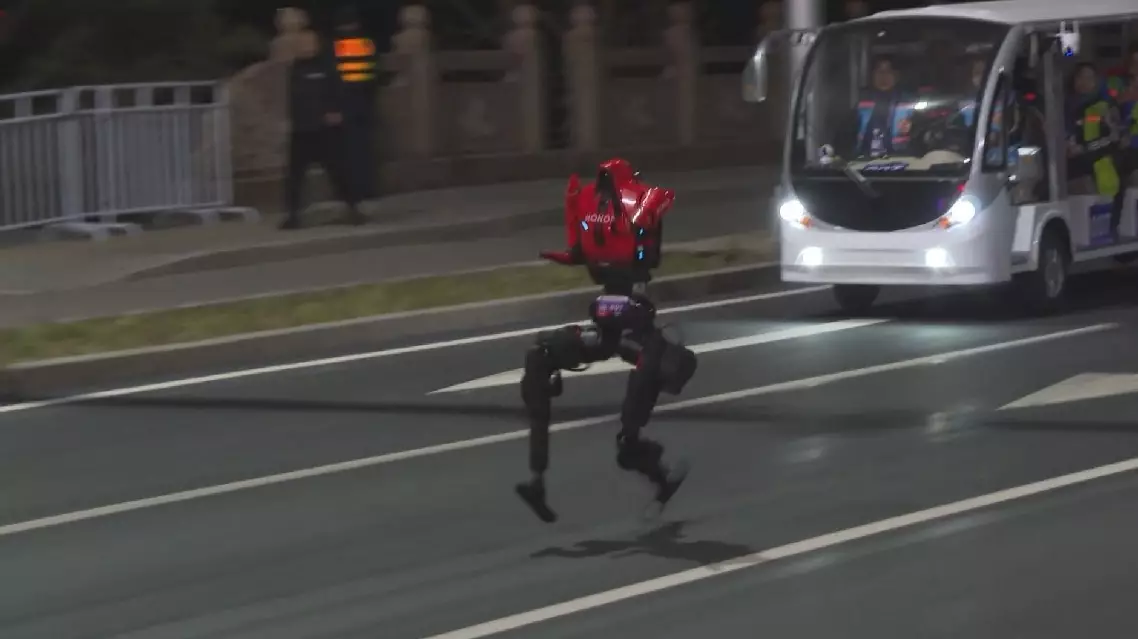
Humanoid robots gear up for Beijing half-marathon