U.S. President Donald Trump has denied reports that his country is considering unfreezing up to 20 billion U.S. dollars of Iranian assets in exchange for Iran to give up its enriched uranium stockpile, as Iran's foreign ministry spokesperson rejected any plan to ship its enriched uranium out of the country.
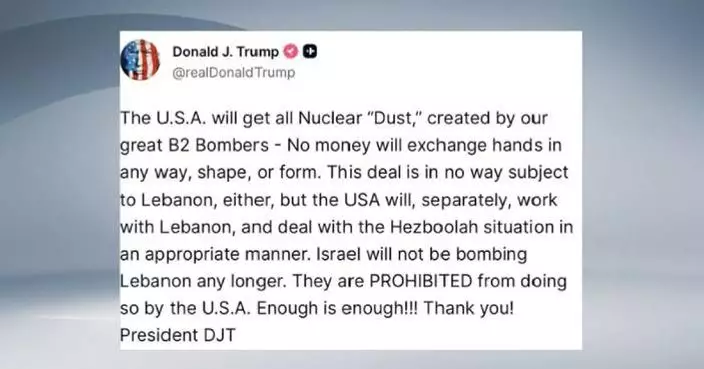
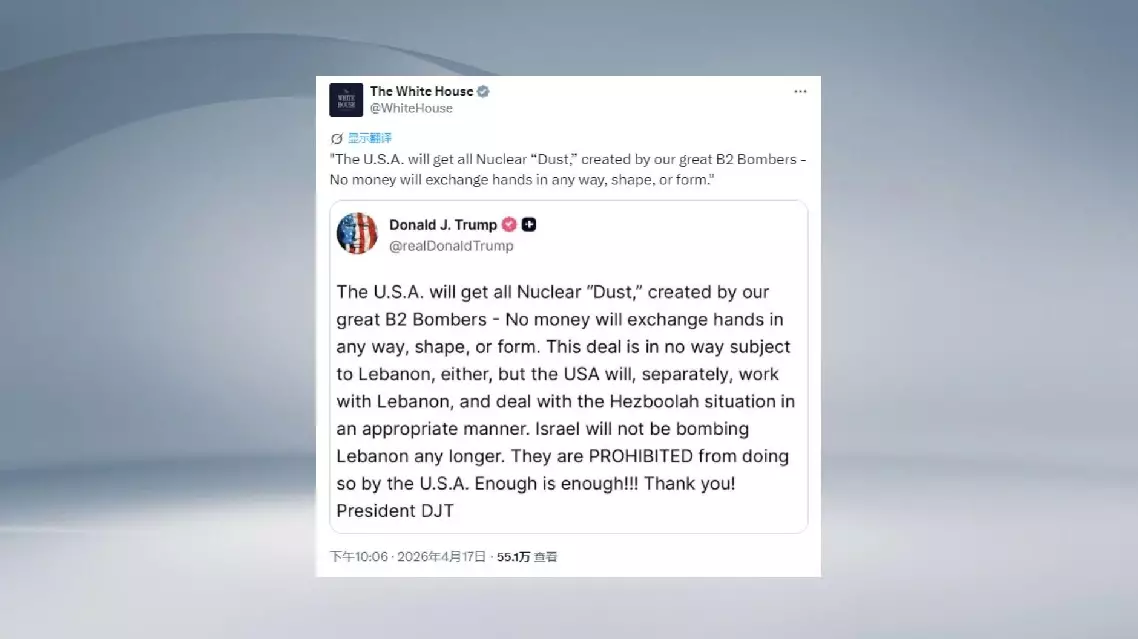
In a post on Truth Social on Friday, Trump claimed the United States would obtain all of Iran's enriched uranium, which he referred to as "nuclear dust" created by U.S. B2 bombers, without making any payment. "No money will exchange hands in any way, shape, or form," Trump wrote.
However, U.S. media reported Friday that American officials were preparing to unfreeze 20 billion dollars of Iranian funds as part of a three-page draft ceasefire memorandum currently under negotiation between the two sides. The proposed cash-for-uranium arrangement is among the key provisions being discussed, according to Axios.
Earlier in the talks, the U.S. side had reportedly offered to unfreeze 6 billion dollars for humanitarian purchases, while Iran sought 27 billion dollars. The latest figure under discussion is 20 billion dollars, sources said. Trump dismissed the reports in an interview on Friday, calling them "totally false" and insisting that no money was changing hands. He said Iran had agreed to indefinitely suspend its nuclear program without receiving any frozen funds, and claimed Washington would work with Tehran to excavate the country's enriched uranium and transport it back to the United States.
U.S. officials had initially demanded that all nuclear material be shipped to the United States, but Iran has only agreed to dilute the material within its own territory. Under a compromise proposal, some highly enriched uranium could be sent to a third country, not necessarily the United States.
Kremlin spokesperson Dmitry Peskov said Friday that Russia is open to storing Iran's enriched uranium, but the United States has shown no interest in the option.
Meanwhile, Iranian Foreign Ministry spokesperson Esmaeil Baghaei told Islamic Republic of Iran Broadcasting (IRIB) on Friday that Iran rejects any plan to ship its enriched uranium abroad. He said compensation for damage inflicted on Iran remains a critical issue in the talks, and that there is no ambiguity left regarding the matters under negotiation.
Trump denies cash-for-Uranium deal as Iran rejects shipping enriched Uranium abroad