Xi'an Xianyang International Airport unveiled the world's first airport on-site museum Wednesday, inviting travelers to explore Chinese culture during their layover. Travelers at the airport's Terminal 5 can now explore the Western Airport Museum, a 6,400 square meter space designed to transform waiting time into a cultural journey.
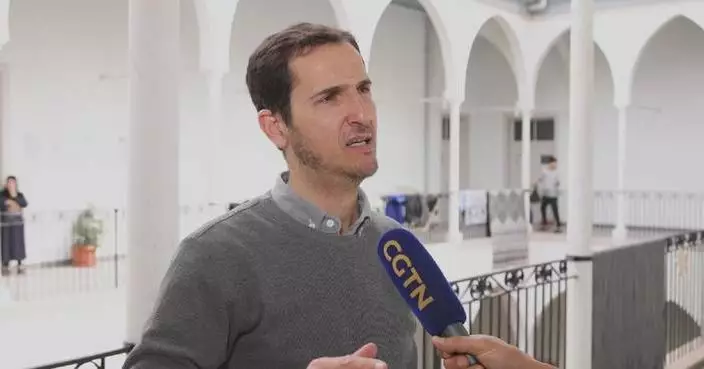
"The biggest feature of the Western Airport Museum is the unique combination of airport plus museum. The main exhibits are artifacts unearthed during the constructions of airport. There are very few places in the world where an airport can showcase artifacts excavated from its site that carry rich historical stories. Xi'an [Xianyang International] Airport indeed has exceptional advantages to achieve this," said Chen Yao, project manager of the Western Airport Museum. There're two halls in the Western Museum, one is the "Square Hall", which covers an area of 400 square meters, and the other is "Treasure Hall", which covers an area of 88 square meters.
The Square Hall is the basic exhibition, and 121 cultural relics unearthed in the airport archaeological excavations over the years are the main exhibits.
The Treasure Hall curates special exhibitions, displaying only one cultural relic at a time and replacing the exhibits every three to six months.
The West Airport Museum is closed every Monday and Chinese New Year's Eve after its official opening. The museum has a reservation system, which allows visitorsto make reservations online. "In our museum, there are free tours by volunteer tour guides throughout the day, and many activities including the intangible cultural heritage exhibition, cultural and creative exhibition and scientific and technological experience," said Chen.

Xi'an airport opens world's first on-site museum for passengers
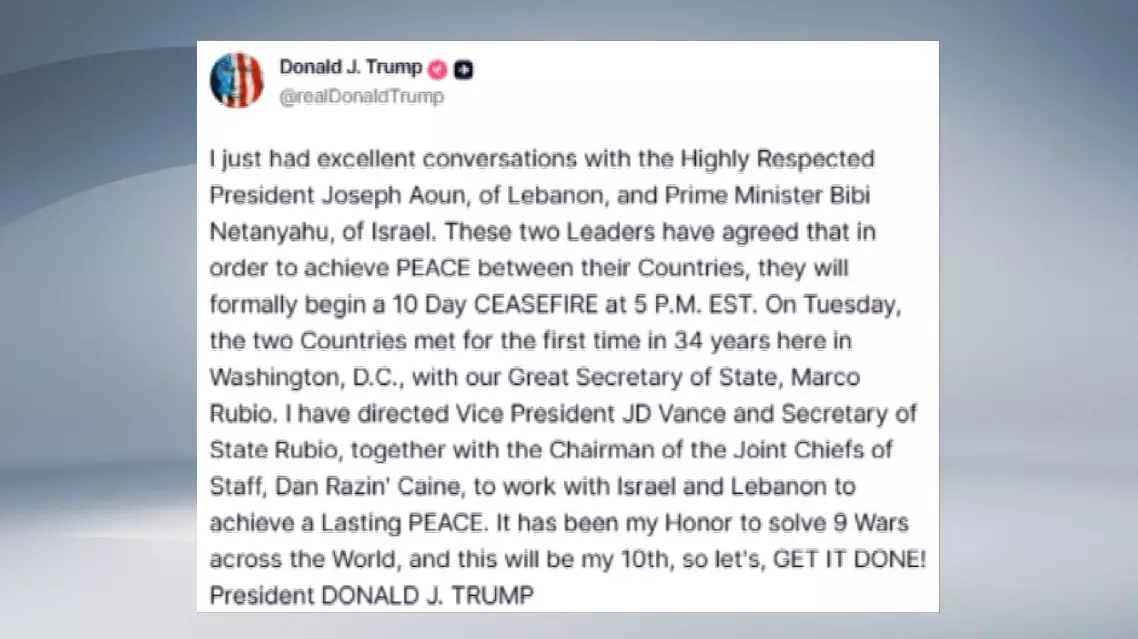
Israel and Lebanon will formally begin a 10-day ceasefire at 17:00 U.S. Eastern Time (2100 GMT) on Thursday, U.S. President Donald Trump announced after his phone calls with the two countries' leaders.
"I just had excellent conversations with the Highly Respected President Joseph Aoun, of Lebanon, and Prime Minister Bibi Netanyahu, of Israel. These two Leaders have agreed that in order to achieve PEACE between their Countries, they will formally begin a 10 Day CEASEFIRE at 5 P.M. EST," Trump wrote on Truth Social.
"I have directed Vice President JD Vance and Secretary of State Rubio, together with the Chairman of the Joint Chiefs of Staff, Dan Razin' Caine, to work with Israel and Lebanon to achieve a Lasting PEACE," he said.
He added that he will invite President Joseph Aoun and Prime Minister Benjamin Netanyahu to the White House "for the first meaningful talks between Lebanon and Israel since 1983," expressing belief that peace will be achieved between the two countries.
According to multiple Israeli media outlets, Netanyahu convened the security cabinet by phone to inform them of his acceptance of Trump's ceasefire request.
He told cabinet ministers that the Israeli army would remain in its current positions in southern Lebanon, which Israel defines as a security zone, and that the ceasefire conditions would allow Israeli forces to operate if it detected threats.
The prime minister noted that Israel has two main demands in these talks -- the disarmament of Hezbollah and a lasting peace agreement.
Following Trump's ceasefire announcement, a Hezbollah lawmaker said that the group will monitor Israel's "practical and effective" commitment to halting all hostile actions against Lebanon, following what he described as an Iran-mediated comprehensive ceasefire.
"We call on our people to wait for the actual implementation of the ceasefire, as we are accustomed to Israel reneging on its commitments," Hassan Fadlallah, the lawmaker, told Lebanese broadcaster Al Mayadeen.
Hezbollah sources, quoted by local Al Jadeed TV, said that any proposed ceasefire must include a comprehensive halt to Israeli attacks across all Lebanese territory and must not grant Israel any freedom of movement.
The sources added that the continued Israeli occupation of Lebanese territories grants Lebanon and its people the right to resist.
Israel and Lebanon held their first direct diplomatic talks since 1993 earlier this week in Washington, with both sides agreeing to launch "direct" negotiations after the meeting.
Lebanese health authorities said Thursday that the cumulative death toll from ongoing Israeli attacks on the country has risen to 2,196, with 7,185 others injured since March 2.
Trump says Israel, Lebanon to begin 10-day ceasefire