Skip to Content Facebook Feature Image

Meet Bernd das Brot, a depressed German loaf of bread that's spent 25 years as a TV cult classic

ENT

Meet Bernd das Brot, a depressed German loaf of bread that's spent 25 years as a TV cult classic
ENT

ENT

Meet Bernd das Brot, a depressed German loaf of bread that's spent 25 years as a TV cult classic

2025-02-28 20:45 Last Updated At:20:50

BERLIN (AP) — Forget SpongeBob SquarePants, Sesame Street and the sourdough starter craze: a depressed German loaf of bread named Bernd das Brot is celebrating his 25th anniversary as the reluctant star of a children's television program that accidentally became equally popular with adults.

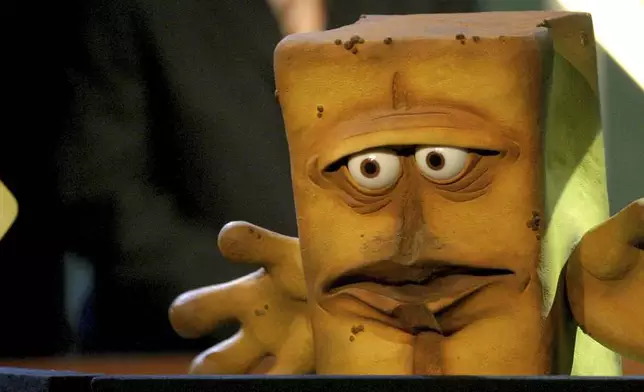
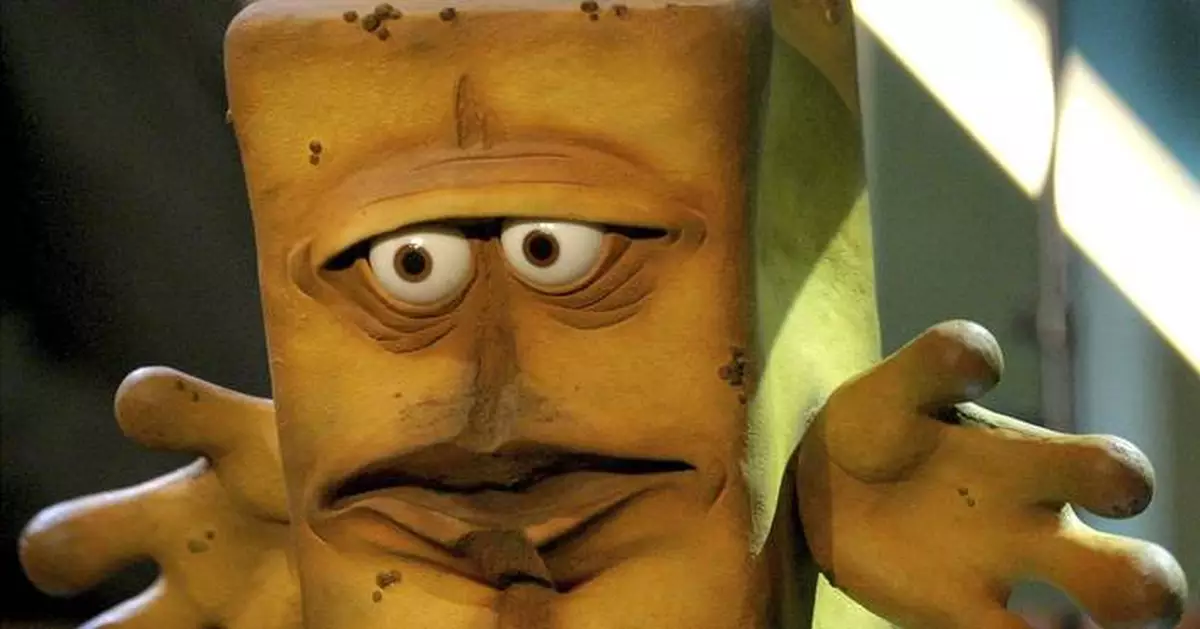
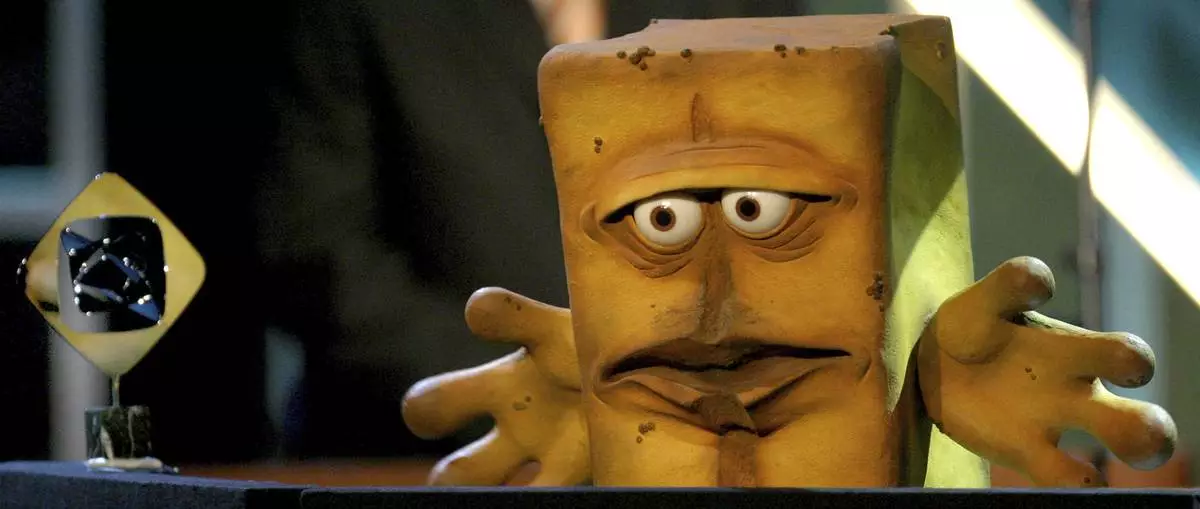
A cult classic in Germany, Bernd das Brot (Bernd the Bread) is a puppet renowned for his deep, gloomy voice, his perpetual pessimism and his signature expression, "Mist!" (Think “crap!” in English.)

More Images
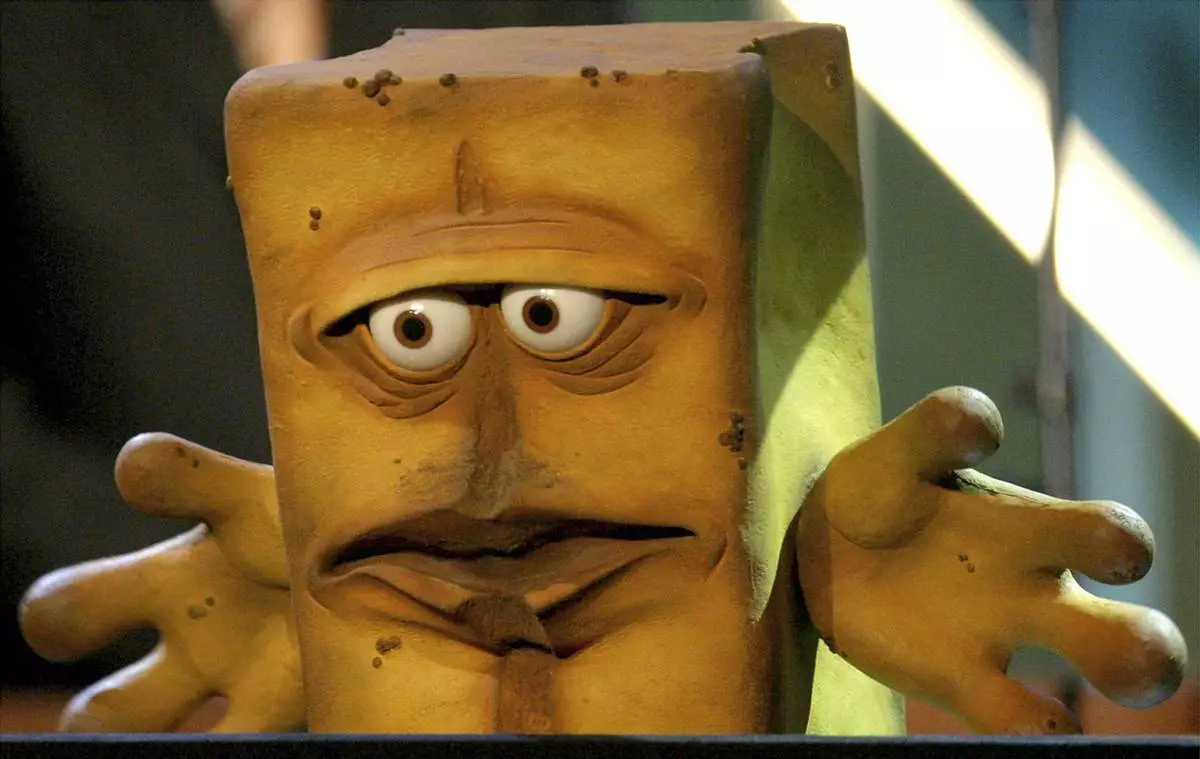
FILE - The tv figure "Bernd das Brot" on stage during the Grimme awards in Marl, Germany, Saturday, April 3, 2004. (AP Photo/Michael Sohn, File)
FILE - The tv figure "Bernd das Brot" on stage during the Grimme awards in Marl, Germany, Saturday, April 3, 2004. (AP Photo/Michael Sohn, File)

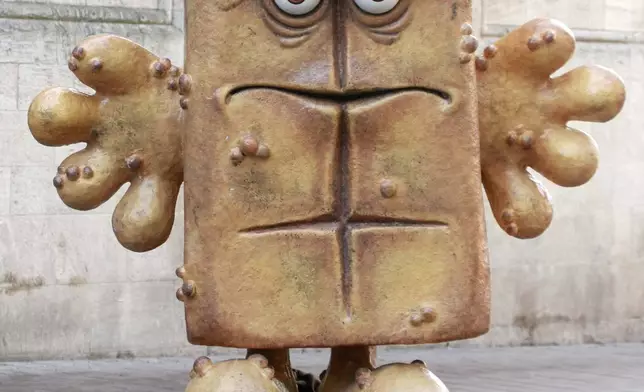
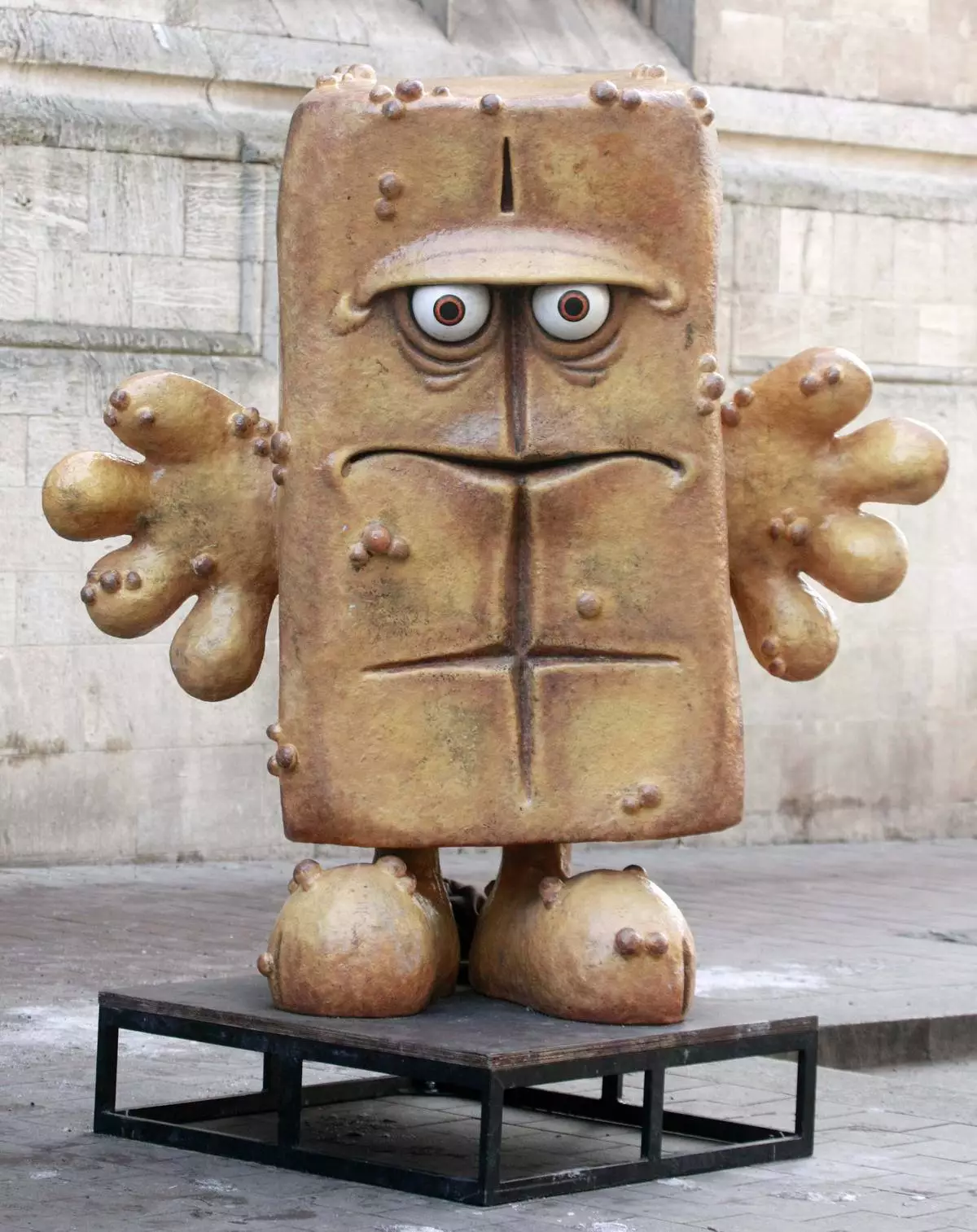
FILE - The statue "Bernd das Brot" stand in front of the City hall in Erfurt, Germany, on Wednesday, Feb. 4, 2009. (AP Photo/Jens Meyer, File)
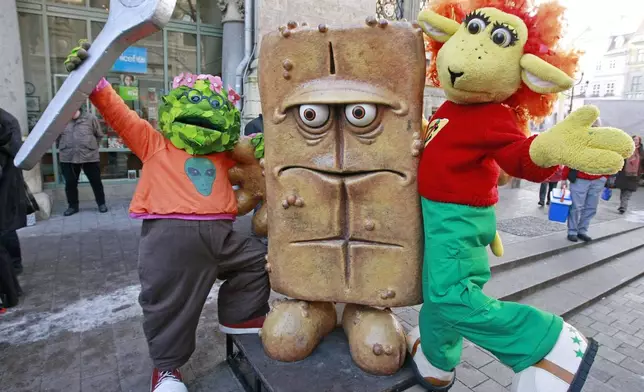
FILE - The statue "Bernd das Brot" stand in front of the City hall in Erfurt, Germany, on Wednesday, Feb. 4, 2009. (AP Photo/Jens Meyer, File)

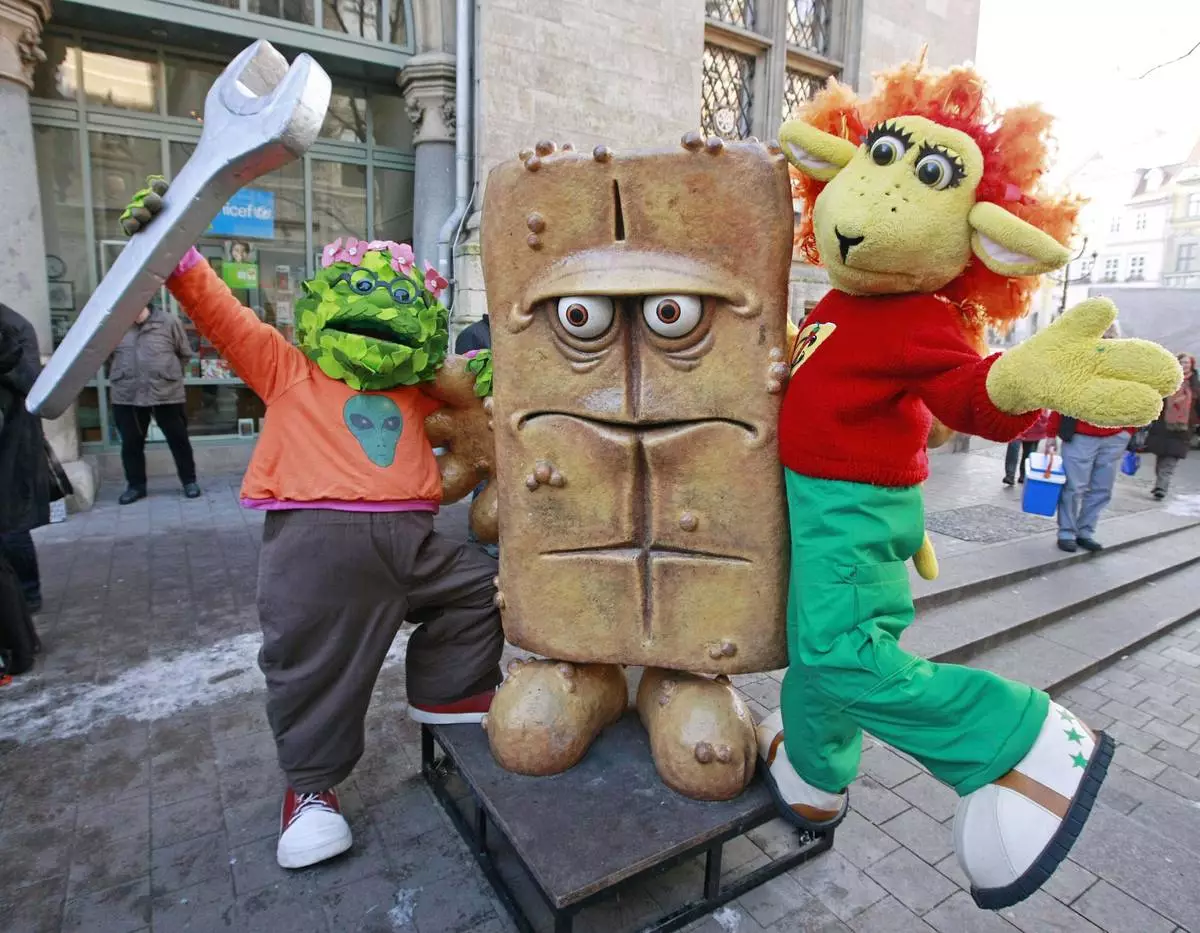
FILE - The puppet characters on the German children's television channel 'Kika' 'Briegel der Busch', left, and 'Chilie das Schaf', right, present the statue "Bernd das Brot" at his regular place in front of the City hall in Erfurt, Germany, Wednesday, Feb. 4, 2009. (AP Photo/Jens Meyer, File)
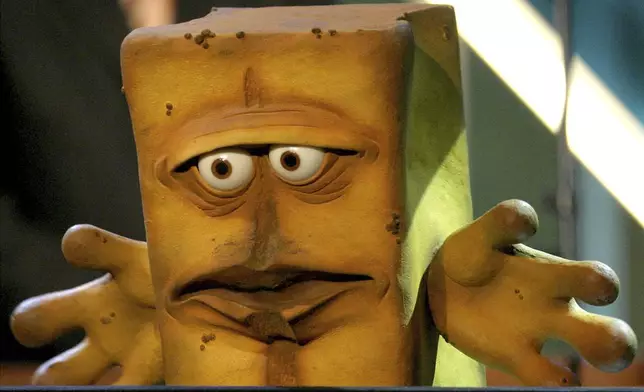
FILE - The puppet characters on the German children's television channel 'Kika' 'Briegel der Busch', left, and 'Chilie das Schaf', right, present the statue "Bernd das Brot" at his regular place in front of the City hall in Erfurt, Germany, Wednesday, Feb. 4, 2009. (AP Photo/Jens Meyer, File)

FILE - The tv figure "Bernd das Brot" on stage during the Grimme awards in Marl, Germany, Saturday, April 3, 2004. (AP Photo/Michael Sohn, File)

FILE - The tv figure "Bernd das Brot" on stage during the Grimme awards in Marl, Germany, Saturday, April 3, 2004. (AP Photo/Michael Sohn, File)

Played and voiced by puppeteer Jörg Teichgraeber, Bernd is a television presenter who wants nothing to do with TV and can’t wait to go home to stare at the wallpaper.

This year, his friends — a sheep and a flower bush — are urging him to become a bread influencer.

Born as a sketch on the back of a napkin in a pizzeria, Bernd’s infamous grimace was drawn by Tommy Krappweis who modeled it after co-creator Norman Cöster’s face. The duo had been asked to come up with mascots for KiKA, a German children’s public television channel.

Comic artist Georg Graf von Westphalen designed Bernd as a pullman loaf — white bread typically sliced for sandwiches — with short arms and a permanent scowl. Bernd channels German stereotypes with his grumpy disposition, penchant for complaining and dry sense of humor and irony.

Bernd's first episode aired on KiKA in 2000 alongside his more-optimistic pals, Chili the Sheep and Briegel the Bush.

Because KiKA is a children's channel, there was typically dead air from 9 p.m. to 6 a.m. On Jan. 1, 2003, the network put Bernd's short episodes into the night loop for the first time.

The move brought an adult audience — often those sitting at home and smoking pot, or returning after a long night of partying — into Bernd's world, cementing his popularity as a German cult classic.

In 2004, Bernd won the Adolf Grimme Prize — the German television equivalent of an Emmy — because the jury said he represents “the right to be in a bad mood.”

“Bernd shows you that you are less vulnerable with humor and self-irony. And perhaps the most important point is: It’s totally okay if you don’t feel well sometimes. That’s completely fine,” Krappweis, Bernd's creator, said in a KiKA Q&A about Bernd's anniversary.

Bernd is depressed for a multitude of reasons, including his failed attempt to be the mascot for a bakery's advertising campaign (that's how he ended up as a TV presenter, as a last resort).

But it's in Episode 85 that we finally learn about Bernd's broken heart.

“A long, long time ago I fell in love with a beautiful, slim baguette. She was so incredibly charming and funny,” Bernd tells Chili and Briegel. “But unfortunately it was in vain.

“She only had eyes for this run-of-the-mill multigrain bread with its 10 types of grain. It was so depressing.”

Despite Bernd’s best efforts — one of his catchphrases is “I would like to leave this show” — the episodes have never become stale. He sings, he dances, he’s been to space. He's the star of merchandise, a video game and headlines like “Give Us Our Daily Bernd.”

He was even kidnapped! In 2009, his 2-meter-tall (6.56 feet) statue was stolen from his traditional place outside the town hall in Erfurt, where KiKA is based.

A claim of responsibility surfaced on YouTube, by sympathizers of a group of demonstrators who were protesting a company that had produced cremation ovens for the Nazi extermination camp Auschwitz. The demonstrators, however, denied involvement in Bernd’s kidnapping and the video was removed from the internet.

Bernd was held hostage for nearly two weeks before being discovered unharmed in an abandoned barracks.

KiKA is honoring Bernd's 25th anniversary — despite his complaints — with new episodes, an update to his hit song and online activities for kids and adults alike. The celebrations begin now, as Bernd’s birthday is Feb. 29.

The latest series will premiere in September as Bernd, Chili and Briegel launch the social media channel “Better with Bernd" in their efforts to make him into a bread influencer.

The trio will present inventions to make school, and life, easier for viewers but naturally their concoctions backfire. Bernd instead becomes a defluencer — and an involuntary trendsetter.

AP journalist Kirsten Grieshaber in Berlin contributed to this report.
FILE - The tv figure "Bernd das Brot" on stage during the Grimme awards in Marl, Germany, Saturday, April 3, 2004. (AP Photo/Michael Sohn, File)
FILE - The tv figure "Bernd das Brot" on stage during the Grimme awards in Marl, Germany, Saturday, April 3, 2004. (AP Photo/Michael Sohn, File)

FILE - The statue "Bernd das Brot" stand in front of the City hall in Erfurt, Germany, on Wednesday, Feb. 4, 2009. (AP Photo/Jens Meyer, File)
FILE - The statue "Bernd das Brot" stand in front of the City hall in Erfurt, Germany, on Wednesday, Feb. 4, 2009. (AP Photo/Jens Meyer, File)

FILE - The puppet characters on the German children's television channel 'Kika' 'Briegel der Busch', left, and 'Chilie das Schaf', right, present the statue "Bernd das Brot" at his regular place in front of the City hall in Erfurt, Germany, Wednesday, Feb. 4, 2009. (AP Photo/Jens Meyer, File)
FILE - The puppet characters on the German children's television channel 'Kika' 'Briegel der Busch', left, and 'Chilie das Schaf', right, present the statue "Bernd das Brot" at his regular place in front of the City hall in Erfurt, Germany, Wednesday, Feb. 4, 2009. (AP Photo/Jens Meyer, File)

FILE - The tv figure "Bernd das Brot" on stage during the Grimme awards in Marl, Germany, Saturday, April 3, 2004. (AP Photo/Michael Sohn, File)
FILE - The tv figure "Bernd das Brot" on stage during the Grimme awards in Marl, Germany, Saturday, April 3, 2004. (AP Photo/Michael Sohn, File)
They've died from artillery fire, aircraft crashes, gunfire, disease — even by execution — in conflict zones and elsewhere around the world.

Over the 180-year history of The Associated Press, 38 journalists have fallen on the job while working for the independent not-for-profit news organization.

Thursday marked the 150th anniversary of the very first: Mark Kellogg, one of five civilians killed alongside Lt. Col. George Armstrong Custer and his men at the Battle of Little Bighorn.

Kellogg, 43, was embedded with Custer's troops. He was reporting for The Bismarck Tribune and New York Herald — the AP circulated his reports across the country — when Custer underestimated the size of a Sioux village that he attacked.

Custer and his outnumbered men made a last stand on a hill. There, they were annihilated by Native American defenders. Kellogg's scalped body was found not far away.

His last published dispatch read in part: “I go with Custer and will be at the death.”

It was more of an attempt at poetry than prophecy. “At the death” is a foxhunting term for the end of the hunt, suggesting Kellogg expected Custer to prevail.

Still, Kellogg's final words and fate circulated far and wide through his employers and the AP. It gave the obscure, part-time journalist — a widower who worked a variety of jobs to support his two daughters — fame in death.

He got to know Custer. He covered the campaign. He mingled with the soldiers and interviewed them at their camps, historian Sandy Barnard said.

“While his record as a journalist might be very small compared to modern reporters who go into combat, he certainly was doing exactly what they are doing,” Barnard said.

Yet in other ways, Kellogg was much different from modern journalists. He carried a rifle into action, Barnard pointed out. And he made no attempt to avoid not just bias but racism against Native Americans, whom he called “red devils.”

“During the last stages of the campaign, Kellogg was probably more of a soldier than he was a newspaper man,” said Barnard, author of a Kellogg biography and other books on the Battle of the Little Bighorn.

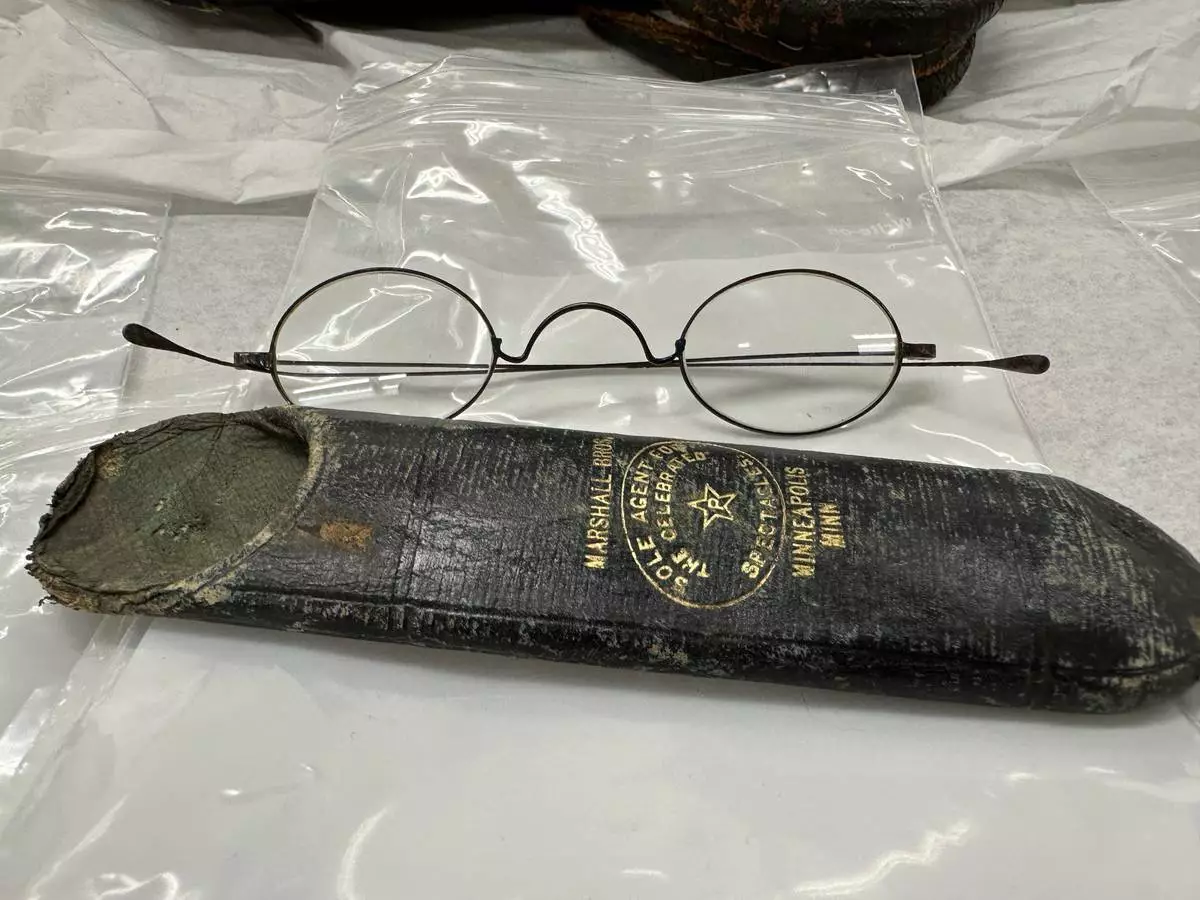
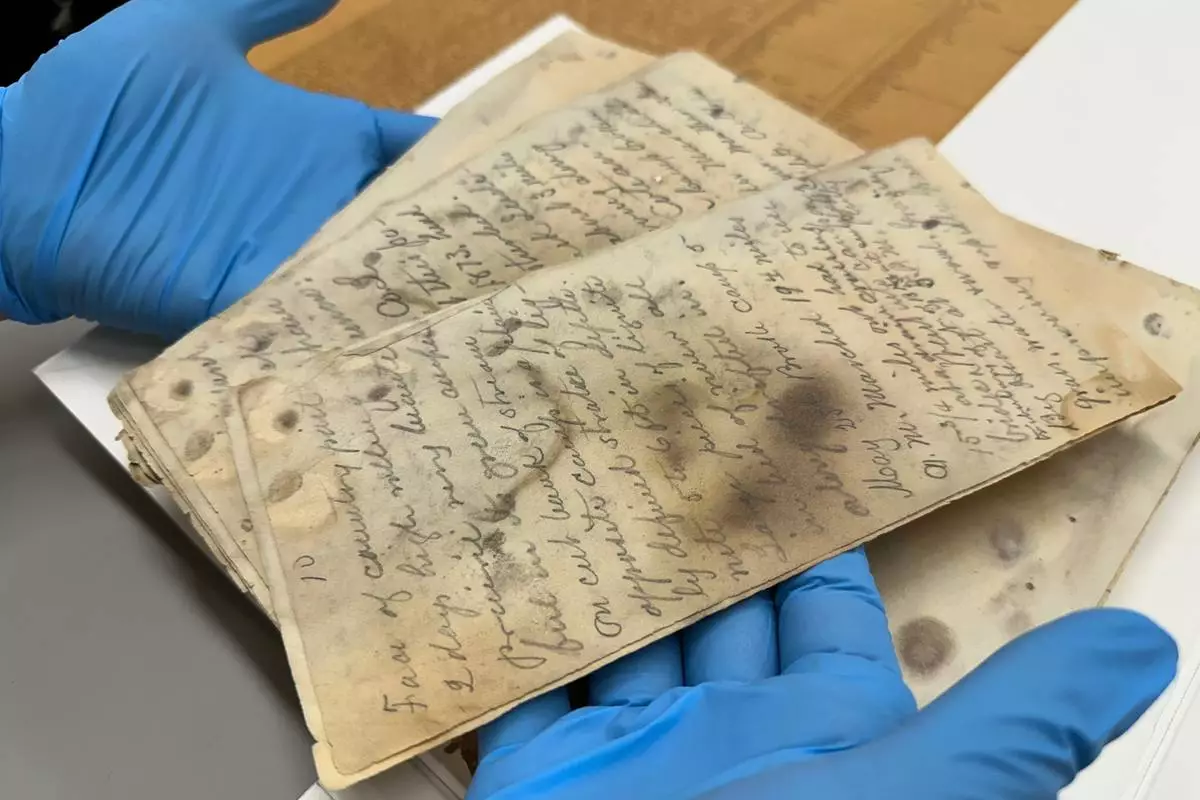
The State Historical Society of North Dakota preserves Kellogg’s diary and various belongings, including eyeglasses, tobacco, clothing and a mosquito head net. The fragile diary, now digitized online, documents weather, distances covered, who was riding in front and in back, how many antelope they saw and other day-to-day operations, Deputy State Archivist Lindsay Meidinger said. The diary ends before the battle.

“It’s a primary source of the historical event, that not many other primary sources remain from that time period related to the Seventh Cavalry and Custer,” Meidinger said.

Others who have perished while reporting for AP in war zones include:

— Mariam Dagga, a freelance visual journalist who was killed in an Israeli strike on a hospital in the Gaza Strip last August;

— Anja Niedringhaus, a photographer shot by a police officer as she sat in her car in Afghanistan in 2014;

— Myles Tierney, a videojournalist killed while traveling in a convoy that came under fire in Freetown, Sierra Leone, in 1999;

— Joseph Morton, a war correspondent who was the only U.S. reporter known to have been executed by the Nazis following his capture alongside Slovakian partisans in 1944.

This story has been updated to restore correct attribution in final quote to Meidinger, not Barnard.

Associated Press corporate archivist Sarit Hand in New York and Jack Dura in Bismarck, North Dakota, contributed to this report.

The eyeglasses and case belonging to Mark Kellogg, a reporter killed during the Battle of the Little Bighorn in 1876, are displayed Wednesday, June 24, 2026, at the North Dakota Heritage Center and State Museum in Bismarck, N.D. (AP Photo/Jack Dura)

The eyeglasses and case belonging to Mark Kellogg, a reporter killed during the Battle of the Little Bighorn in 1876, are displayed Wednesday, June 24, 2026, at the North Dakota Heritage Center and State Museum in Bismarck, N.D. (AP Photo/Jack Dura)

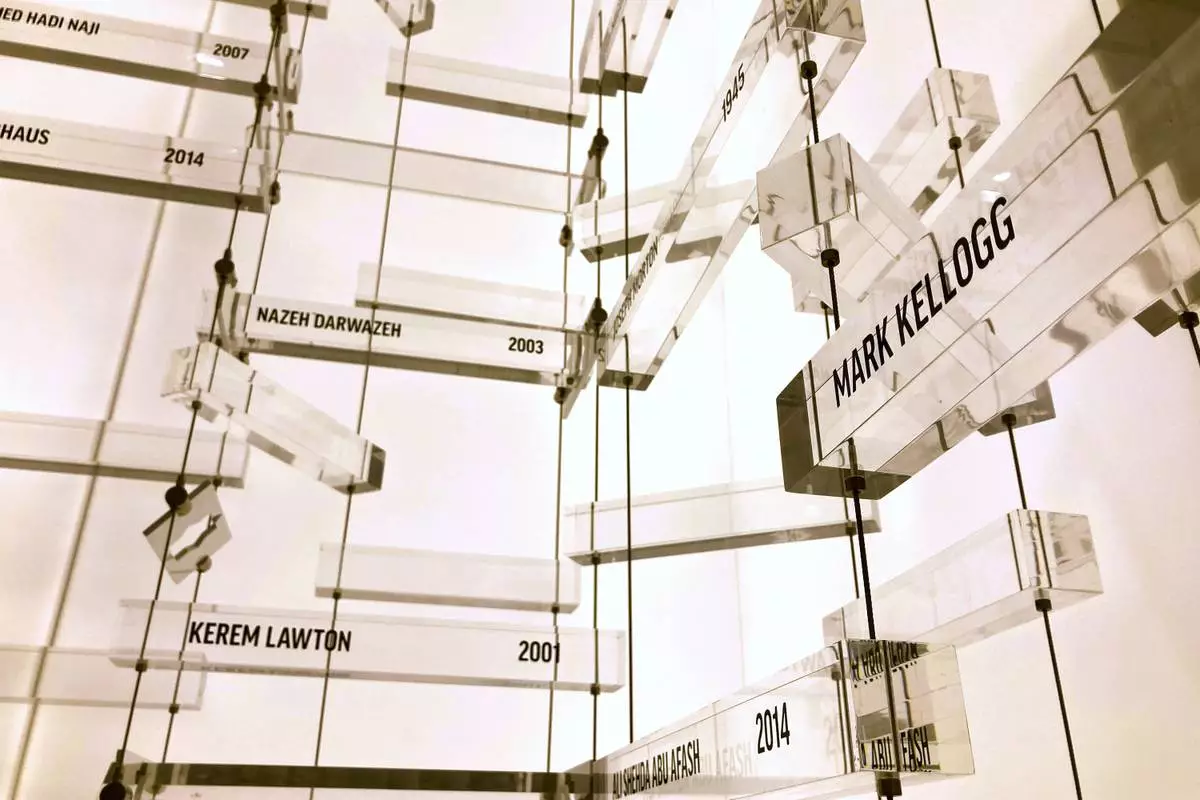
A commemorative marker with the name of reporter Mark Kellogg, who died in 1876 while covering the Battle of Little Bighorn, is displayed with fellow journalists and others who have fallen on the job of newsgathering for The Associated Press, at its New York headquarters, on Wednesday, June 24, 2026. (AP Photo/Patrick Sison)

A commemorative marker with the name of reporter Mark Kellogg, who died in 1876 while covering the Battle of Little Bighorn, is displayed with fellow journalists and others who have fallen on the job of newsgathering for The Associated Press, at its New York headquarters, on Wednesday, June 24, 2026. (AP Photo/Patrick Sison)

State Historical Society of North Dakota Deputy State Archivist Lindsay Meidinger holds pages of the diary of Mark Kellogg, a reporter killed during the Battle of the Little Bighorn in 1876, at the North Dakota Heritage Center and State Museum in Bismarck, N.D., Wednesday, June 24, 2026. (AP Photo/Jack Dura

State Historical Society of North Dakota Deputy State Archivist Lindsay Meidinger holds pages of the diary of Mark Kellogg, a reporter killed during the Battle of the Little Bighorn in 1876, at the North Dakota Heritage Center and State Museum in Bismarck, N.D., Wednesday, June 24, 2026. (AP Photo/Jack Dura

Recommended Articles