A deep-sea research megaproject China has just launched is expected to help researchers further explore the origins of organisms and the green development of resources in extreme deep-sea environment.
The country officially launched the Cold Seep Ecosystem Research Facility on Friday, which is to be the first crewed and long-term deep-sea laboratory in the world at depths of 2,000 meters.
Cold seeps refers to the activity where gases such as methane, hydrogen sulfide, and carbon dioxide beneath the seabed escape into the seawater due to geological structures or pressure changes.
The organisms in the cold seep ecosystem, located 2,000 meters beneath the surface of the ocean, are characterized by their independence from photosynthesis.
Cold seeps are similar to underwater fountains, releasing various fluids such as methane, hydrogen sulfide, and carbon dioxide from the seabed. The temperature in these areas is relatively low, ranging from 2 to 5 degrees Celsius, which is why they are referred to as cold seeps.
These ecosystems form diverse biological communities by absorbing methane and hydrogen sulfide through chemosynthesis.
"The cold seep ecosystem has three notable characteristics in terms of its resources. First, it is a rich area for gas hydrates, which are recognized as a new generation of clean energy. Second, it harbors abundant biological resources, including microorganisms and invertebrates. Third, it serves as a significant carbon sink, converting methane into solid carbon sources through physical, chemical, and biological fixation," said Zhang Si, an academician of the Chinese Academy of Engineering, also chief scientist of the cold seep ecosystem research facility.
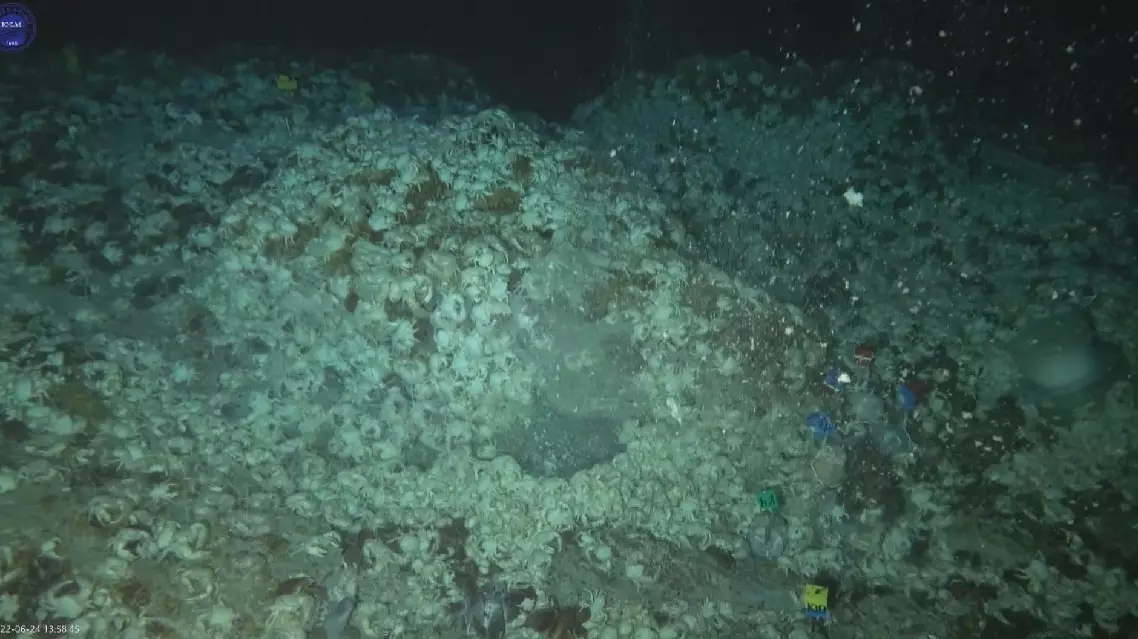
Over 600 different species, such as mussels, crabs, and sea urchins were found in the cold seep ecosystem.
Yet, once these organisms leave the cold seep ecosystem, it may collapse almost instantly, making in-situ long-term observations in underwater laboratories essential.
"Combustible ice samples will rapidly decompose once removed from their in-situ environment. Additionally, deep-sea microorganisms will quickly respond to environmental changes if displaced. Furthermore, microorganisms like ammonia-oxidizing archaea will undergo rapid genomic changes outside their in-situ environment. Organisms in the cold seep ecosystem will die quickly if removed from their original setting. Therefore, research on cold seeps must remain in-situ," said Zhang.
Deep-sea cold seep megaproject launched to explore clean sources