German business leaders voiced strong confidence in expanding cooperation with China during Chancellor Friedrich Merz’s visit, underscoring the country’s innovation drive, rapid development and long-term economic planning as powerful engines for joint growth.
On Thursday evening, Merz concluded his inaugural China trip during his tenure. Leaders from both nations exchanged views on bilateral relations, international and regional issues, as well as economic policies. Multiple cooperation agreements were signed across various fields.
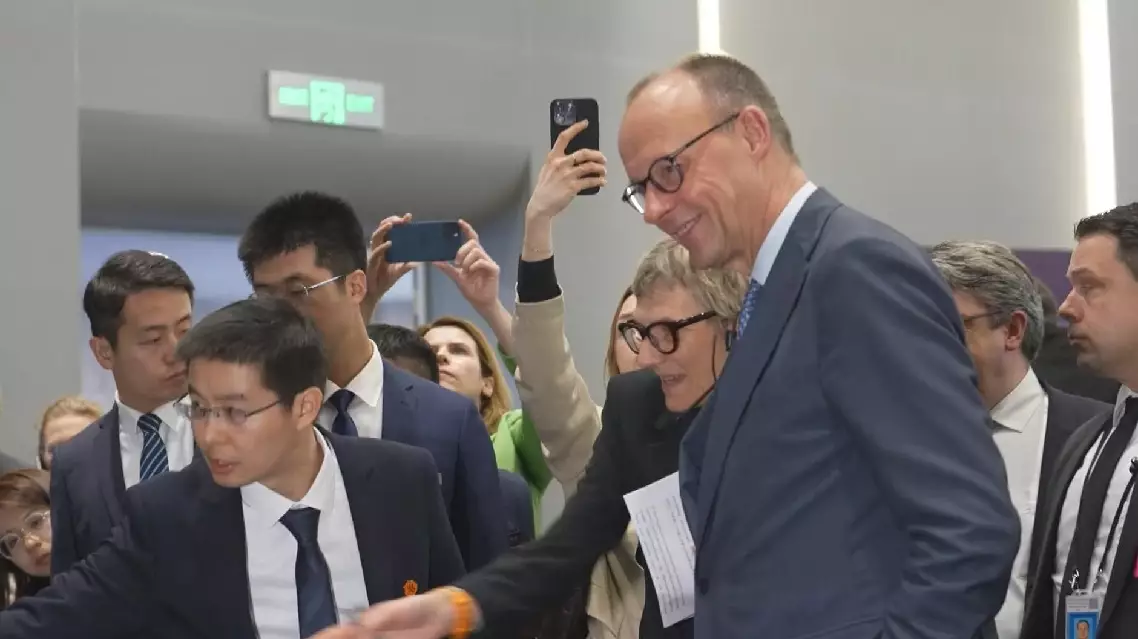
Merz, the first foreign leader to visit China in the Year of the Horse, had a tightly packed and highly efficient schedule during his more than 30-hour stay. He attended a meeting of the China-Germany Economic Advisory Committee and toured several enterprises. On various occasions, the chancellor emphasized the necessity of China-Germany cooperation.
Economic and trade cooperation took center stage during Merz's visit. The two countries’ leaders witnessed the signing of five cooperation agreements covering the green transition, customs, sports, media and other areas. Merz’s "top-tier" economic delegation, which included executives from leading German companies such as BMW, Siemens and Bayer, also signed a series of cooperation deals with Chinese enterprises.
Analysts believe that the German government has put forward new development strategies in such areas as technology, innovation and digital development, which highly resonate with China’s objective of pursuing intelligent, green and integrated development during the 15th Five-Year Plan period (2026-2030). This signals that the two sides share a broad prospect for collaborating to upgrade traditional industries and a huge potential for cooperation in emerging fields.
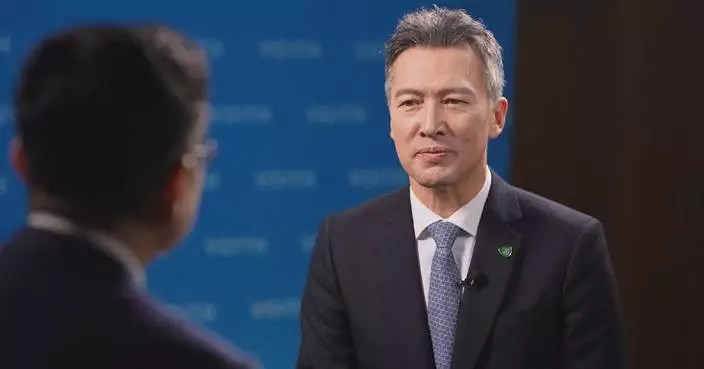
"The 15th Five-Year Plan is a very solid plan. It's a good one. It's talking about stimulating the local market, the private consumption. It's about green technology. It's about high technology and manufacturing and the like. So, for us, it's a very good sign. I think the achievement is that we recognized that the relationship which both countries have for so many years is a very good baseline to really go forward to the future," said Roland Busch, Siemens president and CEO.
Technology was another defining theme of Merz's visit. In east China’s tech hub of Hangzhou, he tried AR glasses developed by Rokid and watched humanoid robot performances at Unitree Robotics. He and fellow German executives experienced firsthand the achievements of China's new quality productive forces.
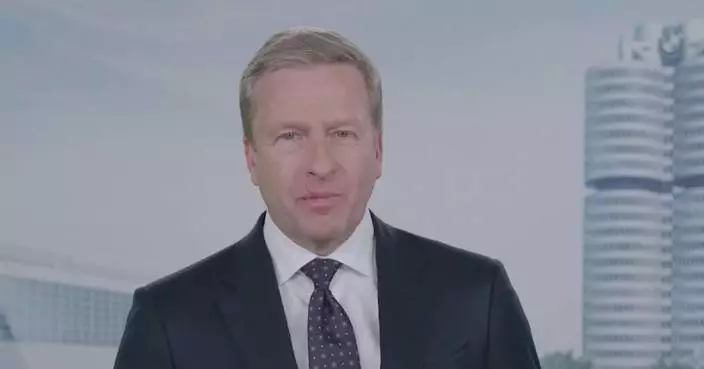
"The innovative power of China becomes very visible like here at Unitree. And I think it's very motivating. And the spirit is one of cooperation, one of trust, one of contributing to the world," said Oliver Zipse, chairman of Board of Management of BMW AG
"China is really developing things at rapid speed -- we call it 'China Speed' in Germany. As a technologist, I'm very much interested in it and I see big opportunities for joint market development and for a good trade relationship also in the future," said Dirk Stenkamp, chairman of Board of Management of TUV Nord AG.
China, Germany embrace deeper cooperation for win-win growth