Shanghai is taking steps to improve its business environment starting from the neighborhood-level up, delivering greater precision of city management and ensuring the meets of small business operators and residents are met.
At the start of this year, Shanghai launched its ninth version of an action plan to accelerate the development of a world-class business environment, with the plan prioritizing government service efficiency.
Building a world-class business environment is also highlighted in the recommendation for China's 15th Five-Year Plan (2026-2030) -- a key blueprint mapping out the country's development goals for the years ahead -- signaling a clear commitment to supporting enterprises, especially small and private companies.
These measures are already being put into practice to good effect across the city.
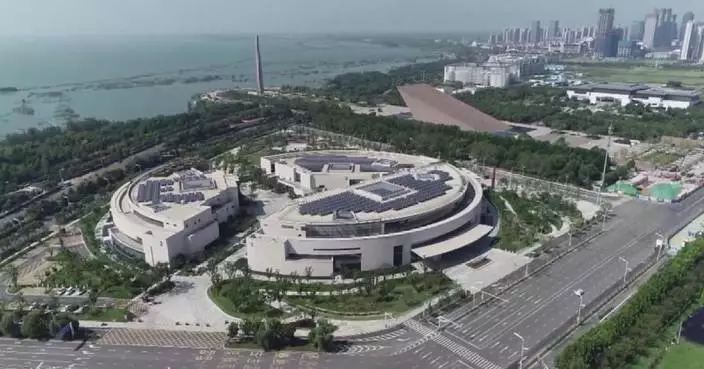
The redeveloped Suzhou Creek is a popular spot for leisure and exercise in the city, with the Fotografiska Museum overlooking the river being a top choice for many to stop for a cup of coffee and enjoy the outdoor vibe.
However, when the gallery first opened in 2023, though it wanted to set up an outdoor seating area, it was mindful of not disturbing the public space.
"We are located by the road and along the creek, so there are many joggers, sports enthusiasts, and tourists passing by. We need to consider how to balance our operations with the flow of people through the area," said Crystal Cao, guest experience manager of the gallery.
The problem was quickly solved with the help of a "business environment specialist" in the neighborhood, who weighed up the concerns and found a workable solution.
In Shanghai's "North Station" area, 12 specialists each oversee 30 to 40 local companies, ensuring that their requests are addressed promptly.
"My job is to communicate with enterprises and know their needs. If they have requests, we help solve them," said Sun Danyan, one of the business environment specialists in the North Station Neighborhood.
Looking to push ahead with its outdoor seating concept, the gallery shared its plans with the specialist, who then reported them to the neighborhood office. The office coordinated with district-level departments, such as landscaping and city appearance bureaus, to design the outdoor area.
Without such specialists, companies, especially smaller ones, would have to navigate multiple departments on their own, which can be challenging.
"Small companies often have limited access to resources and information. They need our neighborhood office to provide support and help them access the resources they require," said Sang Zhenxiao, office director of Shanghai North Station Neighborhood.
Private enterprises account for more than 90 percent of Shanghai's businesses and are a key pillar of the city's economy.
Xu Jiao, deputy director of the Development and Reform Commission in Shanghai's Jing'an District, said the upgraded business environment is designed to support not only large or foreign firms, but also small local companies.
"The neighborhood is the closest to the companies and the last kilometer in the business environment. So, we use the 'neighborhood serving as whistle blower to urge departments to report for duty' to make our job more efficient. Any problems companies meet can be reported to the higher level via this mechanism," he said.

Shanghai improves business environment starting from neighborhood level

Shanghai improves business environment starting from neighborhood level

Shanghai improves business environment starting from neighborhood level