German multinational tech giant Siemens Energy is deepening its three-decade partnership with south China's Hainan Province through the construction of new assembly and research centers, reinforcing the company's confidence in Hainan as a key hub for green energy and high-end manufacturing.
The tropical southern island province has long been an attractive destination for tourism but is also now becoming an increasingly appealing place for foreign investment, particularly after island-wide special customs operations took effect in December.
The expanded Hainan Free Trade Port (FTP) is now the world's largest FTP by area, allowing freer entry of overseas goods, zero-tariff coverage and more business-friendly measures.
Siemens Energy became the first foreign-invested enterprise to register after this measure came into force, with the company breaking ground on a new gas turbine assembly base and service center.
However, Siemens' relationship with Hainan dates all the way back to 1995, when two Siemens V94.2 gas turbines were installed in the island's Yangpu Economic Development Zone.
By the time they were retired in November last year, these units had generated a staggering 28.4 billion kilowatt-hours of electricity. Today, that legacy is evolving into a more sophisticated industrial presence as the new Siemens Energy Hainan Gas Turbine Assembly and Service Center now takes shape. Meanwhile, the company's Green Energy Industry Innovation Research Center is also set to begin full operations later this year, focusing on the research, application, and commercialization of low-carbon solutions.
According to a local investment official, the industrial maturity of Yangpu, and the connectivity it offers via its port in the north of the island, was another decisive factor for the German energy giant's continued investment.
"Specifically, because Yangpu is actually [right at] Hainan Province's industrial heart, it covers the main core of petrochemical or advanced manufacturing, so we have very comprehensive industrial facilities, auxiliaries -- everything is prepared. So they think this place is the best-equipped place in the whole Hainan Free Trade Port," said Li Rui, deputy general manager of the energy development department at the Yangpu International Investment Consulting Company.
Construction is also underway on Siemens Energy's second global gas turbine assembly base. Scheduled to be fully operational by 2027, the facility will handle assembly work and provide full-life-cycle services, including upgrades and maintenance for key equipment.
The more than 30-year journey of Siemens in Hainan's Yangpu highlights the ongoing evolution of China-Germany cooperation, reflecting a shared vision for pursuing sustainable projects amid the wider green energy transition.
Joern Schmuecker, senior vice president of Gas Services Central at Siemens Energy, emphasized that the goal is to build a comprehensive industrial network across Hainan.
"Together with our partners, we want to drive innovation across the value chain and we want to enhance capabilities around the equipment, the manufacturing, but also around service and on top [of that], of course, we can enhance project execution capabilities," he said, when speaking on the sidelines of an event inaugurating Siemens' new assembly base project back in December.
The partnership is also one of the highlights of the long-standing cooperation between Germany and China, with ties between the two sides in the spotlight this week as German Chancellor Friedrich Merz completed a two-day official visit to China.
On Thursday, Merz and the delegation visited a site run by Siemens Energy in the eastern Chinese tech hub of Hangzhou, where they learned about the company's operations in China and toured its circuit breaker production workshop.
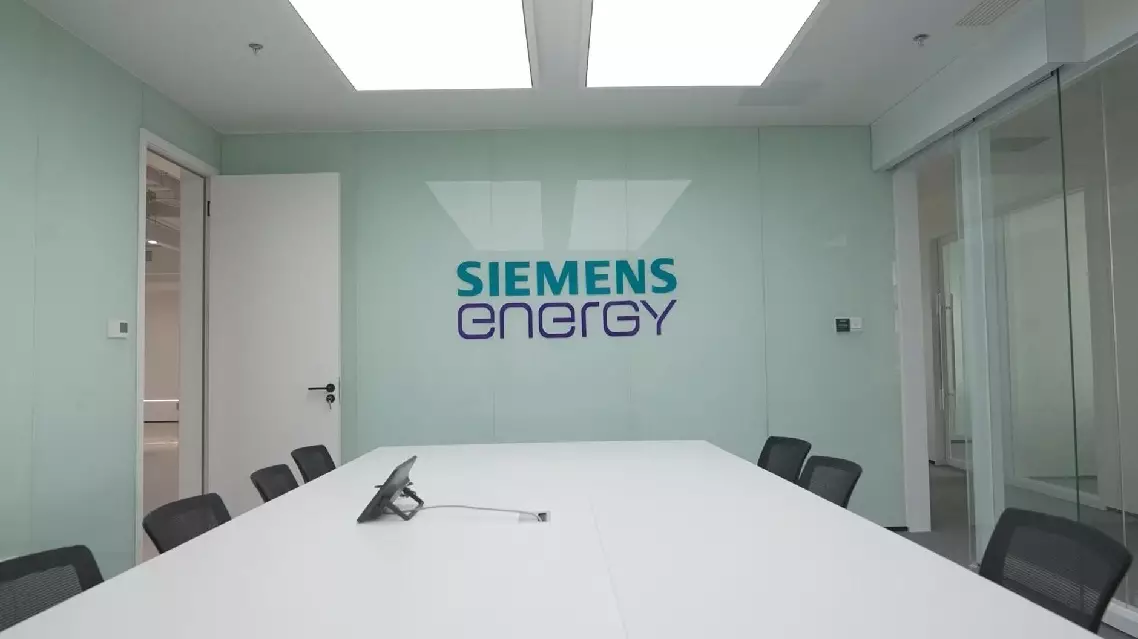
German tech giant Siemens expands green energy cooperation in Hainan