Thousands of Americans are turning to plasma donation as a financial lifeline to cover basic expenses such as rent and bills, in a country that permits compensated plasma and supplies nearly 70 percent of the world's exports.
Allowed to give up to twice a week, as many as 104 times annually, donors shoulder the burden of sustaining this global supply, a frequency that reflects both the relentless demand and the economic desperation behind the industry.
The slogan "Do the amazing, help save lives" is splashed across U.S. plasma centers. It celebrates altruism, yet for many struggling below the economic comfort line, plasma donation has become less about saving others than about surviving themselves.
The roots of this vast supply chain run deep through America's poorest communities. Many donors earn less than 20,000 U.S. dollars per year, trading their plasma for rent money, gas cards, or infant formula. For them, donation is not an act of charity but a financial lifeline.
"I see it as a money grab from what I hear about it. I've never donated plasma myself. Everybody I know who has done it has done it for money, like 200 U.S. dollars or something," said Andre Allen, a musician.
"I work in film and television production and Hollywood has seen a downturn, so I know a lot of my colleagues have resorted to plasma donation to help pay the bills," said Jim, a television producer.
Beyond the financial calculus, some donors describe the physical toll.
"For me personally, it just did not feel well after. So I felt that it was not a good experience for me. It was really rough and I do not think I'll ever donate it again," said Antoine Smith Brown, a singer and songwriter.
For others, the practice has become a regular part of survival.
"I was looking for a way to make some extra money. I heard donating plasma is a way. Yeah, some people, they honestly rely on it, and some people don't work," said Jordan Abass, a resident in Las Vegas.
"The money I get with the plasma donation, I use it to pay bills, and maybe the car payments and gas," said Eleazar Sanchez, another plasma donor.
The ethical dimension of paid plasma donation has also drawn sharp criticism from observers.
"It should be a voluntary thing, and no money should be made on it. It's not something you should make money out of all this. No,I don't agree with that. It should be done on a humanitarian basis. Money shouldn't be a consideration. People who think there's money involved in it ain't doing the work because they are not to me, humans," said a Swedish tourist.
When health becomes a tradable commodity and life itself carries a price tag, plasma donation exposes the harsh reality of an industry built on poverty, a global supply chain sustained not by altruism, but by the desperation of America's struggling population.
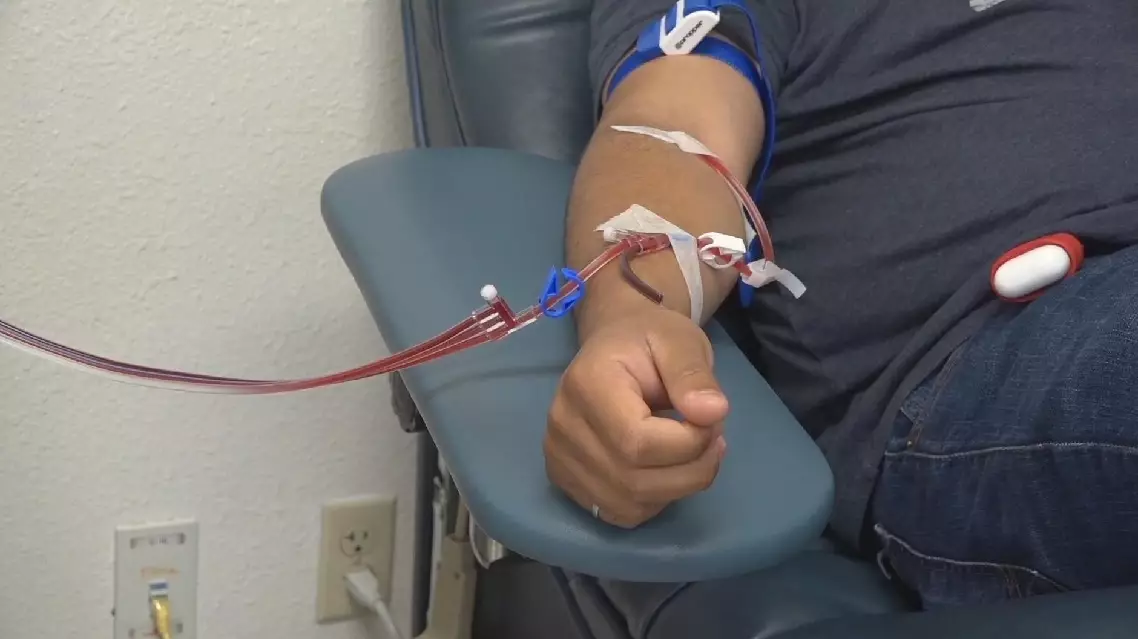
Blood for bills as struggling Americans sell plasma to survive
Shanghai is improving its business environment starting from the neighborhood level to ensure the precision of the city management.
This footpath along the Suzhou Creek is a popular spot for leisure and exercise in the city.
Many visitors of the Fotografiska Museum like to have a cup of coffee and enjoy the outdoor vibe. But in fact, putting chairs outdoors is not a simple matter for the store itself.
When this gallery opened in 2023, it wanted to set up an outdoor seating area.
"We are located by the road and along the creek, so there are many joggers, sports enthusiasts, and tourists passing by. We need to consider how to balance our operations with the flow of people through the area,” said Crystal Cao, guest experience manager of the gallery.
The problem was quickly solved with the help of a "business environment specialist" in the neighborhood.
In Shanghai's North Station neighborhood, 12 specialists each oversee 30 to 40 local companies, ensuring that their requests are addressed promptly.
"My job is to communicate with enterprises and know their needs. If they have requests, we help solve them," said Sun Danyan, a business environment specialist of Shanghai North Station Neighborhood.
The gallery shared its plans with the specialist, who then reported them to the neighborhood office. The office coordinates with district-level departments, such as landscaping and city appearance bureaus, to design the outdoor area.
Without such specialists, companies, especially smaller ones, would have to navigate multiple departments on their own, which can be challenging.
"Small companies often have limited access to resources and information. They need our neighborhood office to provide support and help them access the resources they require," said Sang Zhenxiao, office director of Shanghai North Station Neighborhood.
Private enterprises account for more than 90 percent of Shanghai's businesses and are a key pillar of the city's economy.
Xu Jiao, deputy director of the Development and Reform Commission in Shanghai's Jing'an District, said the business environment is designed to support not only large or foreign firms, but also small local companies.
"The neighborhood is the closest to the companies and the last kilometer in the business environment. So, we use the ‘neighborhood serving as whistle blower to urge departments to report for duty’ to make our job more efficient. Any problems companies meet can be reported to the higher level via this mechanism," he said.
On the first workday of 2026, Shanghai launched its ninth version of the action plan to accelerate the development of a world-class business environment. The plan prioritizes government service efficiency as its first chapter.
Building a world-class business environment is also highlighted in the recommendation for China's 15th Five-Year Plan (2026-2030), signaling a clear commitment to supporting enterprises, especially small and private companies.

Shanghai improves business environment starting from neighborhood level

Shanghai improves business environment starting from neighborhood level