China's AG600 large amphibious aircraft on Friday completed all of its prior-certification flight test subjects, a key step toward achieving its airworthiness certification target, announced the Aviation Industry Corporation of China (AVIC).
The Chinese independently-developed AG600 aircraft on Friday accomplished the compliance flight test subject of combustible liquid discharge at a civil aircraft flight test center in Pucheng County in northwest China's Shaanxi Province, the AVIC said.
"All civil aircraft require three main certificates: TC (Type Certificate), PC (Production Certificate), and AC (Airworthiness Certificate). The TC, which represents the approval of the aircraft's design, is like a birth certificate for a baby. It's most time-consuming to get the TC," said Zhao Yuhe, a flight test director at the AVIC.
Over the past two years, the AG600 aircraft conducted up to 2,014 flight movements totaling 3,560 flight hours for flight test missions prior to its airworthiness certification, said the developer.
The AG600 aircraft traveled to multiple sites across the country to carry out its flight tests in order to secure special meteorological conditions for some flight tests.
The AVIC said the flight tests were conducted in diversified scenarios, such as water surface, extreme cold, high temperature and humidity, crosswinds, and typical firefighting tasks to verify the aircraft's operational capabilities in various special environments.
"The test flights included high-risk, medium-risk, and low-risk subjects. One of the high-risk aspects was the introduction of a fly-by-wire flight control system on the AG600, a civil aviation aircraft with four turboprop engines, for the first time. Detailed plans were made to ensure efficient test flights, and the return flight routes were carefully prepared," said Wang Chenghua, chief engineer with the AVIC's flight test center.
The flight test results showed that the aircraft's operation and stability characteristics meet the design requirements, its stall characteristics are better than the expected indicators, and all of its systems function reliably.
Meanwhile, the water dropping function and efficiency of the AG600 aircraft have been fully verified. It is capable of serving fire fighting missions in diverse scenarios such as plains, hills and plateaus.
China's AG600 large amphibious aircraft family is being developed as vital advanced aeronautical equipment to strengthen the country's emergency rescue and natural disaster prevention capabilities.
The AG600 aircraft family is tailored to carry out rescue missions such as firefighting and maritime search and rescue in all types of terrain across the country.
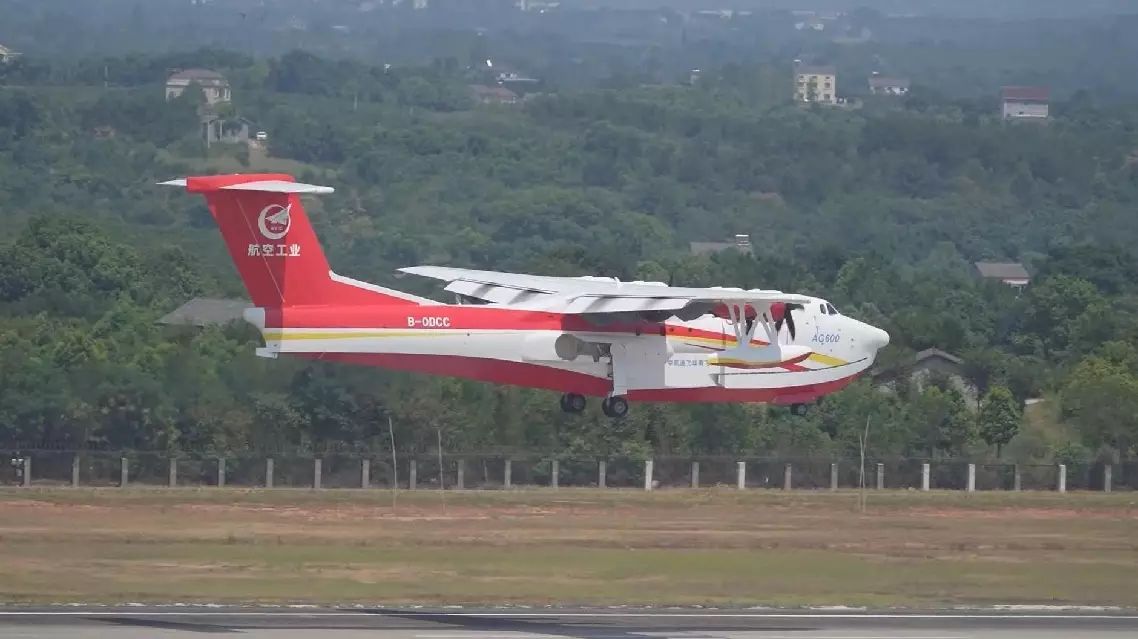
China's AG600 amphibious aircraft completes all prior-certification flight tests
Hundreds of activists from Latin America, North America and Europe have arrived in Cuba as part of an international solidarity convoy, bringing over 20 tons of humanitarian aid for Cubans struggling with a severe economic and energy crisis.
The first members of the convoy arrived in Cuba by air while a second group is expected to come aboard a flotilla that sailed out of Mexico.
The first group was officially welcomed to Cuba during a ceremony in Havana, where Cuban President Miguel Diaz-Canel expressed appreciation for the solidarity at a critical time for the Cuban people.
The group brought humanitarian aid to local hospitals including medicines to treat cancer patients. The activists were briefed about the hardships currently being faced by Cubans.
Convoy organizers met with Cuban government officials and talked to the media about their initiative.
"There are deeply humanistic motivations for this convoy. That's why people are conducting these 'acopios,' these aid collections in their own communities, in their own plazas, in their own homes, packing suitcases full of basic medicines that the blockade seeks to prevent the Cuban people from accessing," said David Adler, a convoy coordinator.
Cubans have endured a deep economic crisis for the past few years, made worse by a U.S. embargo. A recent oil blockade against the country has caused a severe energy shortage.
"For us, it's a good opportunity because we are walking in the neighborhoods, we are talking to ordinary people, we are hearing people's stories. With no intermediaries, we are hearing how difficult life is right now, how it's been difficult over the last few years but how its gotten infinitely worse in the last three months because of the fuel blockade brought on by Trump," said Manolo De Los Santos, the executive director of The People's Forum.
The activists said their task is to shed light on what U.S. government policies are doing to Cuba. British Member of Parliament Jeremy Corbyn, who has joined other parliamentarians in the convoy, said that their presence in Cuba is sending a clear message.
"I think the images around the world of ordinary people coming to Cuba with the necessary equipment for children to be treated in hospital, to repair the damaged electricity system and all the rest of it is very important, and I think that will lead to pressure on governments all around the world," said Corbyn.
The 10th Summit of the Community of Latin American and Caribbean States (CELAC), which concluded in the Colombian capital Bogota on Saturday, adopted the Bogota Declaration, calling on relevant countries to abide by UN resolutions and end the economic, commercial and financial blockade against Cuba.
Cuban Foreign Minister Bruno Rodriguez said in his speech that Cuba is facing severe challenges and is engaged in a struggle for dignity and freedom. Cuba is willing to conduct serious and responsible dialogue with the United States on the basis of mutual respect, but the precondition is that neither side should interfere in each other's internal affairs or their respective political, economic and social systems.
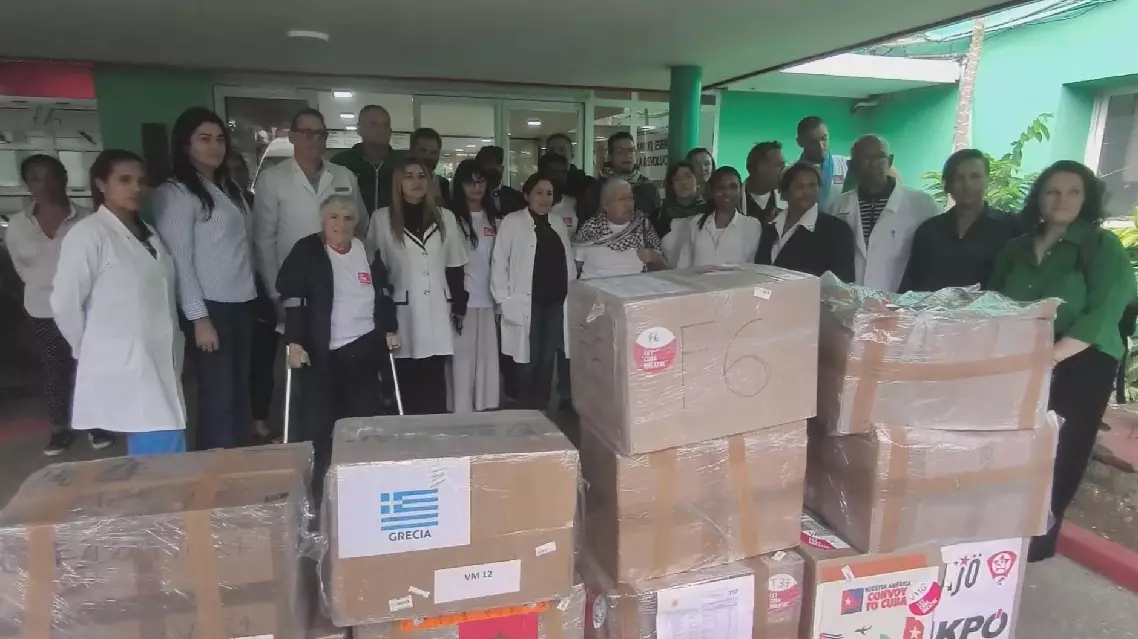
Global activists arrive in Cuba with humanitarian aid