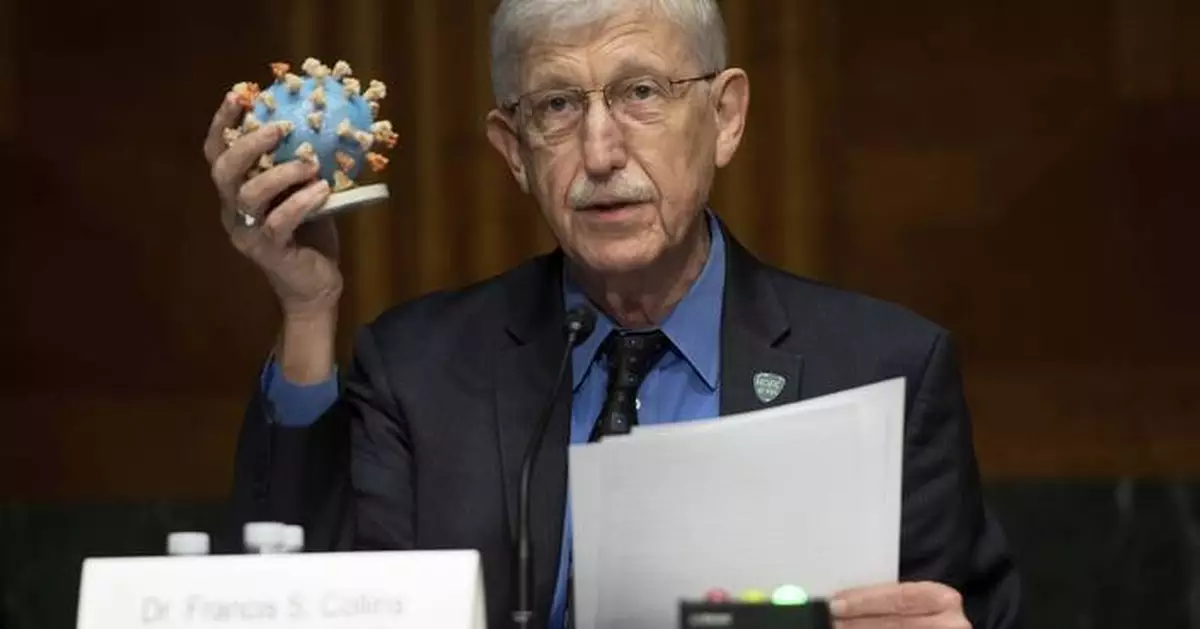
WASHINGTON (AP) — Dr. Francis Collins, a renowned geneticist and former longtime director of the National Institutes of Health, announced Saturday that he has retired, leaving an agency being upended by budget cuts and layoffs.
Collins — a guitar-playing researcher and evangelical Christian known for finding common ground between religion and science — gave no reason for his abrupt departure. He issued a statement that he’d been honored with a long career at an agency “rightfully called the crown jewel of the federal government for decades.”
He came to the NIH in 1993 to lead the Human Genome Project, which in 2003 completed mapping the human DNA instruction book — two years ahead of schedule and $400 million under budget, Collins noted in his statement Saturday.
Collins, 74, was the NIH’s director for 12 years and under three presidents — Barack Obama, Donald Trump and Joe Biden.
Collins stepped down from that position in October 2021 to return to his research laboratory, overseeing scientists studying diabetes and a genetic aging disorder. He also advised Biden on how to combat hepatitis C.
The $48 billion NIH is the largest funder of biomedical research and has long had strong bipartisan support.
NIH employees “are individuals of extraordinary intellect and integrity, selfless and hard-working, generous and compassionate. They personify excellence in every way and they deserve the utmost respect and support of all Americans,” Collins wrote.
In a text message, Collins declined an interview. His retirement had taken effect on Friday.
But his statement defended an agency in turmoil under the new Trump administration’s funding policies and the recent firings of more than 1,000 workers.
“When you hear about patients surviving stage 4 cancer because of immunotherapy, that was based on NIH research over many decades. When you hear about sickle cell disease being cured because of CRISPR gene editing, that was built on many years of research supported by NIH,” Collins wrote.
Early in his career, Collins discovered the gene that causes cystic fibrosis, which helped lead years later to effective treatment for the lung disease. He credited the discovery to an NIH grant supporting his research at the University of Michigan.
Later, as NIH’s director, he oversaw work to understand and fight serious diseases such as cancer, Alzheimer’s, diabetes and COVID-19, including vaccines against the coronavirus that have saved millions of lives.
Aside from his NIH work, Collins is known widely for writing on the intersection of religion and science.
The Associated Press Health and Science Department receives support from the Howard Hughes Medical Institute’s Science and Educational Media Group. The AP is solely responsible for all content.
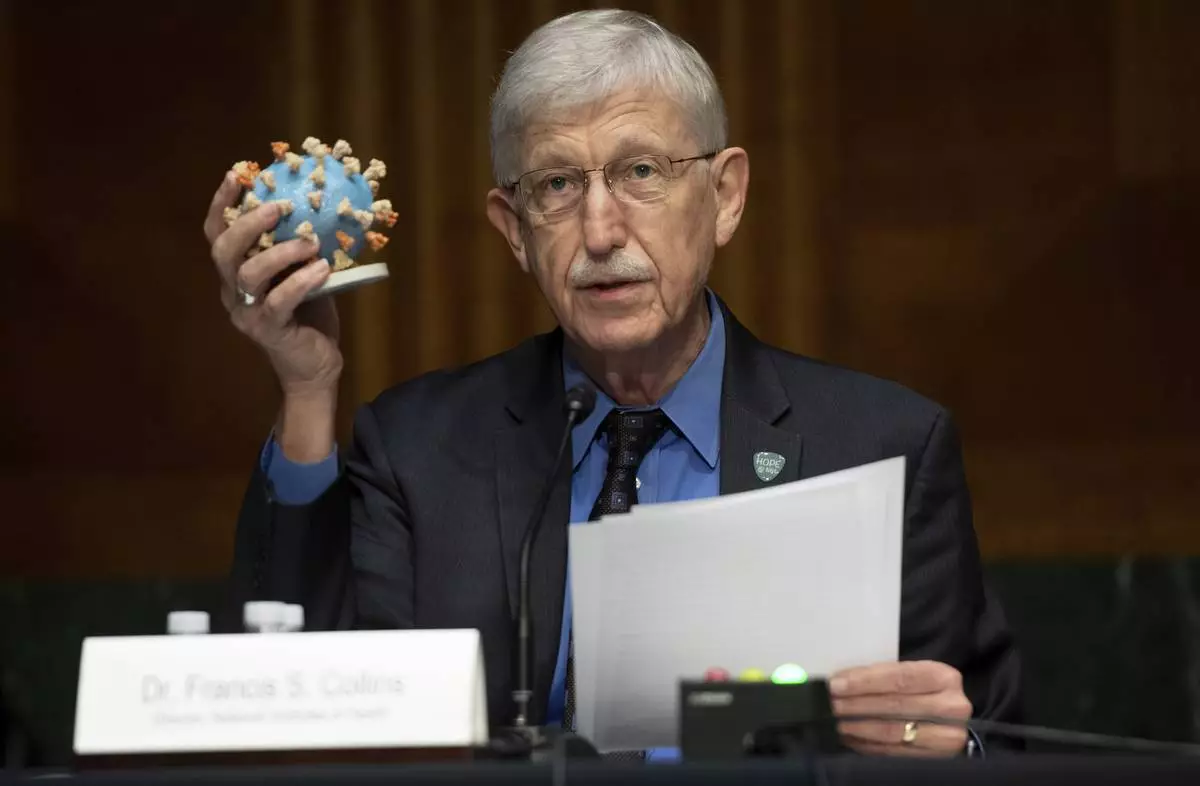
FILE- Dr. Francis Collins, Director of the National Institutes of Health (NIH), holds up a model of COVID-19, known as coronavirus, during a Senate Appropriations subcommittee hearing on the plan to research, manufacture and distribute a coronavirus vaccine, known as Operation Warp Speed, Thursday, July 2, 2020, on Capitol Hill in Washington. (Saul Loeb/Pool Photo via AP, File)
For a third consecutive year, there is no clear choice for the Hart Trophy as NHL MVP, and again the debate over the importance of “valuable” comes into play.
Edmonton’s Connor McDavid is on track to win the scoring race for the most points and the Art Ross Trophy, while Colorado’s Nathan MacKinnon has the inside track for the league lead in goals. Tampa Bay’s Nikita Kucherov is more than 40 points clear of his next-closest teammate and could be a Hart finalist for a second consecutive year.
AP Hockey Writers John Wawrow and Stephen Whyno give their predictions on who should take home all the major awards, which are based on how players performed during the regular season:
BetMGM Sportsbook favorite: Nathan MacKinnon, Colorado
Wawrow: Nikita Kucherov. As much as McDavid and MacKinnon deserve consideration, and maybe Montreal's Nick Suzuki merits mention, Kucherov did more with less on a Tampa Bay team that proved immune to the shakeup that turned the Atlantic Division upside down.
Whyno: McDavid. There's an argument to be made for Kucherov, given where the Lightning could be without him after a season full of injuries. But McDavid carried the Oilers down the stretch after Leon Draisaitl got injured, and he should add a fourth MVP honor to his impressive resume that is missing only the Stanley Cup.
BetMGM Sportsbook favorite: Andrei Vasilevskiy, Tampa Bay
Wawrow: Vasilevskiy. The numbers simply speak for themselves. Leading the league with 39 wins, no goalie had a better goals-against average and save percentage playing 50 or more games this season.
Whyno: Vasilevskiy. John and I are on the same wavelength here. With a nod to Utah's Karel Vejmelka for making more than 60 starts, no one has mixed a heavy workload with quality of play like Vasilevskiy, who has made the Cup Final four times, won it twice, but only won the Vezina once (2019).
BetMGM Sportsbook favorite: Zach Werenski, Columbus
Wawrow: Cale Makar, Colorado. A case could be made for Werenski over a ton of talent such as Buffalo’s Rasmus Dahlin and Minnesota’s Quinn Hughes. Makar, however, stands out for once again being the NHL’s most complete defenseman.
Whyno: Makar. Had Werenski on top for much of the year, but it was a rough second half for the 28-year-old since the Olympic break. Dallas' Miro Heiskanen deserves consideration, but Makar controlled the play for Colorado and only missed a handful of games because of injury.
BetMGM Sportsbook favorite: Matthew Schaefer, New York Islanders (off the board)
Wawrow: Schaefer. Montreal’s Ivan Demidov and Anaheim’s Beckett Sennecke might have more points, but no rookie played more valuable minutes than Schaefer, justifying his selection as a No. 1 pick.
Whyno: Schaefer could be unanimous. Even some of the best defensemen of this generation needed years to adapt to the learning curve at the position, and Schaefer did it perfectly at 18.
BetMGM Sportsbook favorite: N/A
Wawrow: Nick Suzuki, Montreal. With Aleksander Barkov injured, the field was wide open and Suzuki may run away with the honor. Though he is a secondary figure on the Canadiens' penalty kill, his 5-on-5 numbers and puck-possession metrics, while facing opposing top lines, are solid.
Whyno: Jordan Staal, Carolina. The team captain has consistently drawn tough defensive matchups and dominated on faceoffs and has only once been a Selke finalist. This should be his year.
BetMGM Sportsbook favorite: Lindy Ruff, Buffalo
Wawrow: Ruff. He found the elusive key to finally unlock the potential of a team that too often faltered under pressure, carrying over the lessons learned from his first season back in Buffalo. He did so with a game-at-a-time focus, a changing lineup and being Buffalo’s first coach during the team’s 14-season playoff drought to finally place an emphasis on improving locker room culture.
Whyno: Jon Cooper, Tampa Bay. Injuries and extended absences to key players, including Victor Hedman, Brayden Point, Anthony Cirelli and Ryan McDonagh, led the Lightning to dress 33 skaters and three goalies and showcased why Cooper is considered among the best in the business.
AP NHL: https://apnews.com/hub/nhl
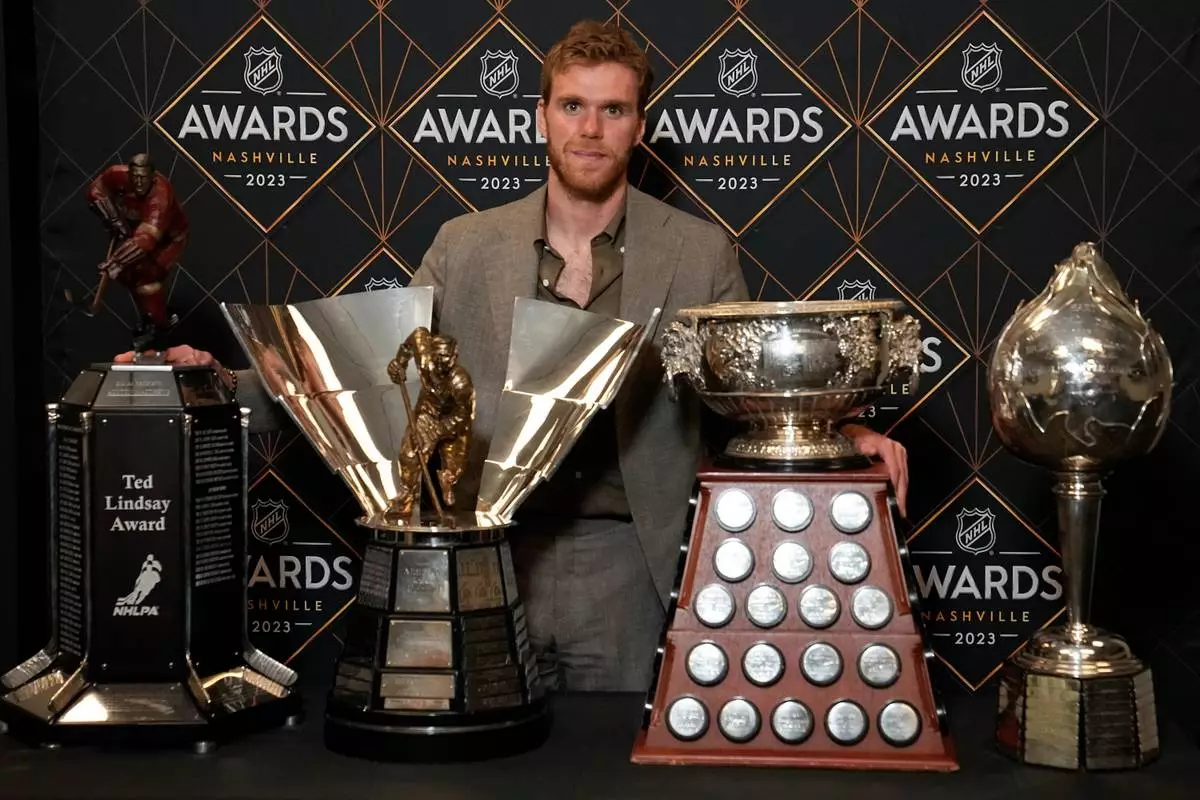
FILE - Edmonton Oilers hockey player Connor McDavid poses with the Ted Lindsey Award, the Maurice "Rocket" Richard Trophy, the Art Ross Trophy and the Hart Memorial Trophy at the NHL Awards, on June 26, 2023, in Nashville, Tenn. (AP Photo/George Walker IV, File)
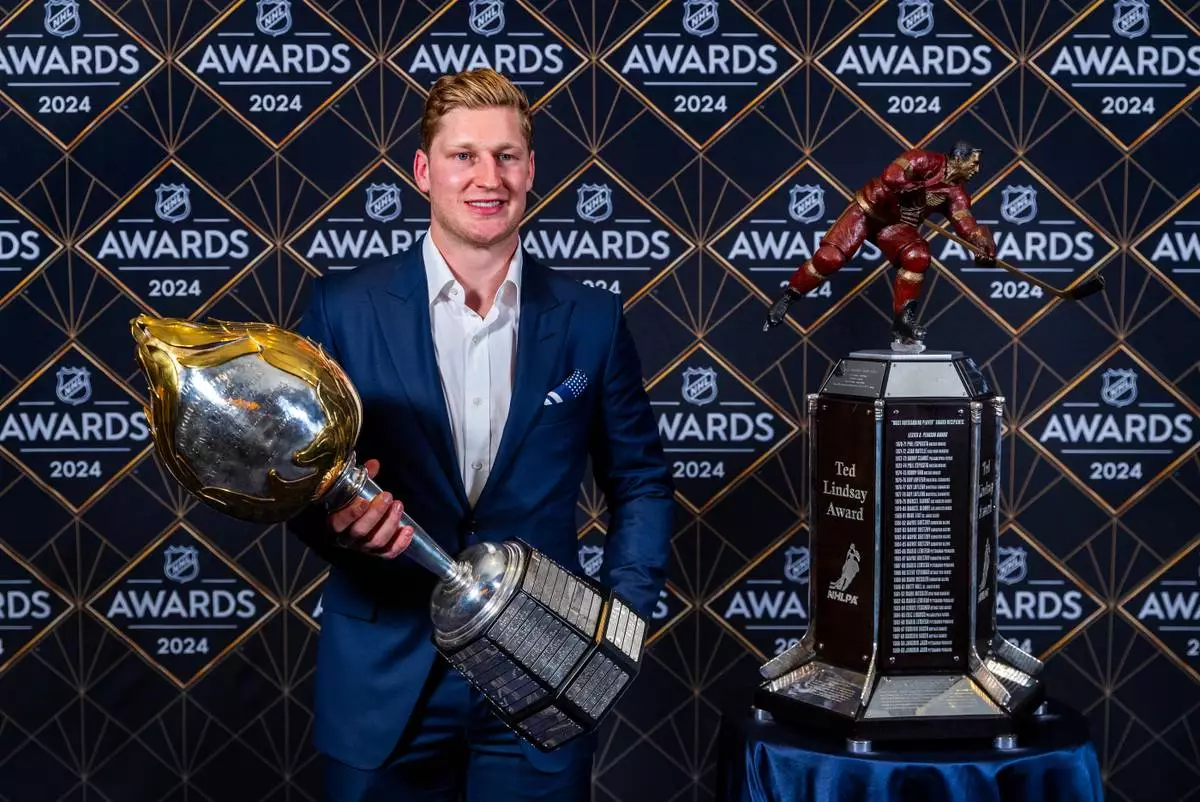
FILE - Colorado Avalanche forward Nathan MacKinnon stands with his trophies as the recipient of the Hart Memorial Trophy, left, and Ted Lindsay Award at hockey's NHL Awards, Thursday, June 27, 2024, in Las Vegas. (AP Photo/L.E. Baskow, File)
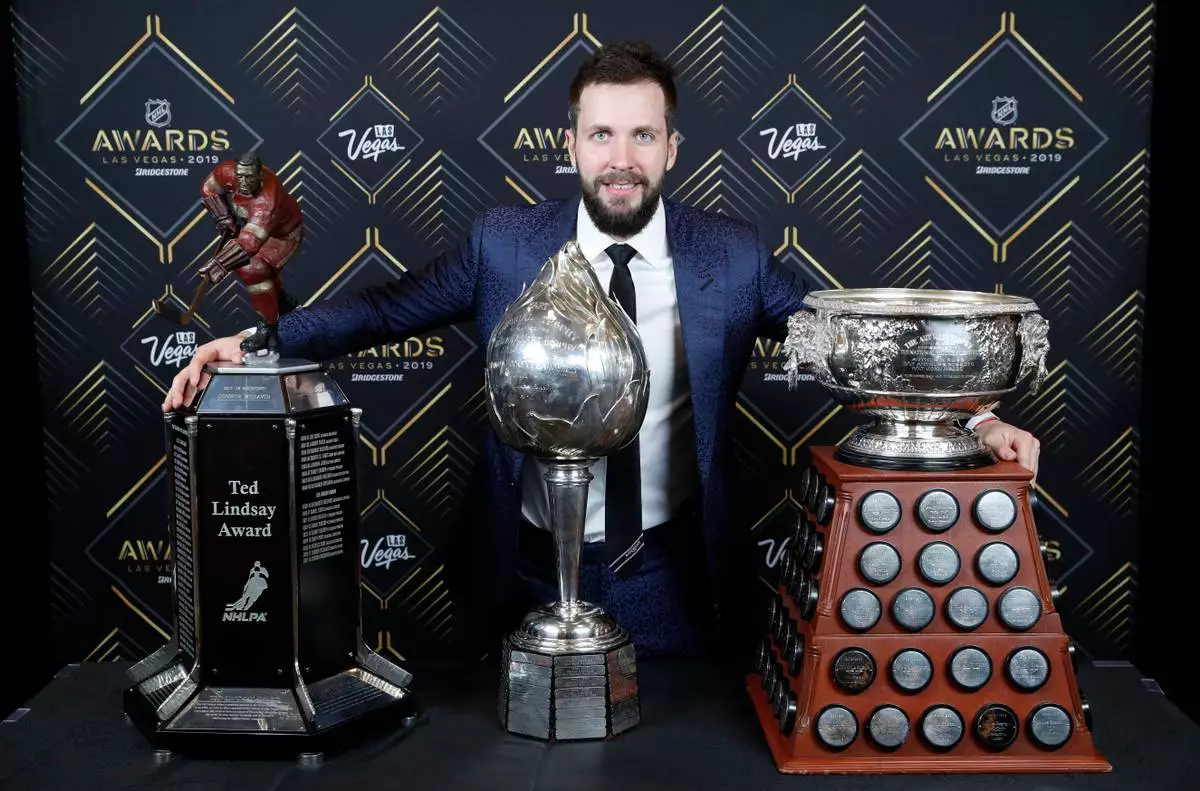
FILE - Tampa Bay Lightning's Nikita Kucherov poses with, from left, the Ted Lindsay Award, Hart Memorial Trophy and the Art Ross Trophy after winning the honors at the NHL Awards, onJune 19, 2019, in Las Vegas. (AP Photo/John Locher, File)