WILMINGTON, Del.--(BUSINESS WIRE)--Apr 15, 2026--
Wrtn Technologies, the South Korean consumer AI company behind one of the country's fastest-growing platforms, announced the North American launch of OOC, an AI character chat and interactive storytelling platform. Available on iOS, Android, and Web, the service marks the company's major expansion into English-speaking markets.
This press release features multimedia. View the full release here: https://www.businesswire.com/news/home/20260415199414/en/
The name OOC stands for "Out Of Character," a term from roleplaying culture for the moment a player steps outside the story to speak as themselves. It is the North American edition of Crack, Wrtn's flagship interactive character AI chat platform, which has rapidly become a major revenue driver since its standalone launch in South Korea in April 2025.
Branded as "The Playable Anime," OOC brings the sensibility of Japanimation or Japanese animation. It serves rich character arcs, dramatic world-building, and serialized storytelling into an interactive format. Users become the protagonist. Every choice shapes the narrative in real time.
Seyoung Lee, CEO of Wrtn Technologies, said, "Users aren't just chatting with a character, they are entering a narrative world where they are the protagonist." The platform's AI functions like a dungeon master in a tabletop RPG, constructing narratives that respond to user decisions while generating text, images, and audio on the fly.
Unlike standard AI companion chatbots or text-based adventure generators, OOC is designed around narrative structure, including world-building, evolving plot arcs, and real-time multimodal content generation. The company calls this new category "playable anime," positioning interactive AI fiction as a distinct form of entertainment.
OOC’s underlying platform has already been validated across two major Asian markets (Crack in South Korea and Kyarapu in Japan), building a large and highly engaged user base with strong daily retention. The North American launch incorporates localization insights from the company's Japanese expansion, with storytelling conventions tailored for Western audiences.
For more information, visit ooc.ai.

OOC arrives in North America as a “The Playable Anime” platform, transforming interactive AI fiction into a narrative-driven entertainment experience (Image: Wrtn Technologies)
SOUTH SAN FRANCISCO, Calif.--(BUSINESS WIRE)--Oct 14, 2026--
Shenandoah Therapeutics, a biotechnology company developing a new class of cancer therapeutics that use chemically induced proximity to rewire cancer drivers to activate programmed cell death, today announced the appointment of Steve Worland, Ph.D., as President and Chief Executive Officer and a member of its Board of Directors. Co-Founder and founding CEO Isabella Graef, M.D., has transitioned to Chief Scientific Officer and will continue to lead Shenandoah’s scientific strategy.
This press release features multimedia. View the full release here: https://www.businesswire.com/news/home/20261014661985/en/
The leadership transition comes as Shenandoah advances its lead oncology program toward IND-enabling studies. In preclinical studies, the company’s lead molecules have demonstrated potent activity and complete and durable tumor regression in models of B-cell lymphoma, including patient-derived models harboring multiple cancer-driving mutations.
Shenandoah Therapeutics was founded in 2022 based on scientific work originating at Stanford Medicine by Gerald R. Crabtree, M.D., and Nathanael S. Gray, Ph.D., bringing together expertise in chemically induced proximity, chemical biology and drug discovery. Crabtree developed the first induced proximity molecules and has used them to define the roles of chemically induced proximity in biology and medicine. Gray has spearheaded the development of several induced proximity modalities and has broad experience in bringing drugs to market. In 2025, the company closed a $21.5 million seed financing, co-led by Samsara BioCapital and YK Bioventures, with participation from First Spark Ventures and Time BioVentures, among others, to advance its TCIP platform and lead oncology program targeting BCL6 in B-cell malignancies.
“I’m delighted to welcome Steve to Shenandoah at this important stage in the company’s evolution,” said Dr. Graef. “We have made significant progress translating our science into molecules with compelling activity in cancer models, and our lead program is now approaching IND-enabling studies. Steve brings a rare combination of scientific depth, drug development experience and company-building expertise, and I look forward to working closely with him as we advance toward the clinic.”
“Shenandoah brings together compelling science, an experienced founding team and a platform with the potential to generate multiple new medicines,” said Dr. Srinivas Akkaraju, Founder and Managing General Partner, Samsara BioCapital. “We are pleased to support the team as they advance the company’s lead oncology program and build a broader pipeline.”
Dr. Worland brings more than 30 years of biotechnology leadership, drug discovery and development experience to Shenandoah. Most recently, he served as Chief Executive Officer of Numerion Labs. He previously co-founded eFFECTOR Therapeutics and served as its President, Chief Executive Officer and Board Member, leading the oncology company from inception through its public listing in 2021 and advancing two product candidates from target concept into Phase 2 clinical development. During his tenure, eFFECTOR raised more than $250 million in private and public equity financing and established a major research collaboration with Pfizer. Prior to eFFECTOR, Dr. Worland served as President and Chief Executive Officer of Anadys Pharmaceuticals, where he led the company through its $230 million acquisition by Roche. He has also held senior leadership roles spanning research, development and corporate strategy across the biotechnology industry.
“I’m excited to join Shenandoah at a point when the company is positioned to translate its scientific foundation into a clinical-stage pipeline,” said Dr. Worland. “The team has generated compelling preclinical results, and I look forward to working with Isabella and the broader team to advance promising new therapies to patients and position the company for its next stage of growth.”
Most targeted cancer therapies inhibit or degrade proteins that drive tumor growth. Shenandoah’s TCIPs instead use chemically induced proximity to redirect cancer-driving proteins to activate programmed cell death, effectively turning the cancer driver against the cancer cell itself. The company’s lead program targets BCL6, an oncogenic driver in B-cell malignancies that normally represses genes involved in programmed cell death, rewiring it to activate pro-apoptotic genes and trigger cancer cell destruction.
In preclinical studies, Shenandoah’s lead TCIP molecules have demonstrated potent activity and complete, durable tumor regression in models of B-cell lymphoma, including patient-derived models with multiple cancer-driving mutations. The foundational science has been published in Nature and Science and Cell. Shenandoah is advancing its lead BCL6 program toward IND-enabling studies while applying its TCIP platform to additional oncogenic drivers and solid tumors.
“With his track record of successfully bridging science and business, Steve is ideally suited to lead Shenandoah through its next stage of growth,” said Gary Yeung, Managing Partner, YK Bioventures and a member of Shenandoah’s Board of Directors. “The company is entering an important phase as its lead program advances into IND-enabling studies and toward clinical development, while the platform expands into solid tumors and other therapeutic areas. Steve and Isabella bring highly complementary experience to advancing this next phase of the company’s development.”
About Shenandoah Therapeutics
Shenandoah Therapeutics is developing a new class of small-molecule cancer medicines designed to rewire cancer-driving proteins to activate programmed cell death. Founded in 2022 based on science originating at Stanford University, the company’s proprietary Transcriptional/Epigenetic Chemical Inducers of Proximity (TCIP) platform uses a gain-of-function approach to transform disease-driving proteins into therapeutic activities. Shenandoah is advancing a lead TCIP program targeting BCL6 in B-cell malignancies while expanding the platform across additional cancer drivers and solid tumors. For more information, visit www.shenandoah-tx.com.
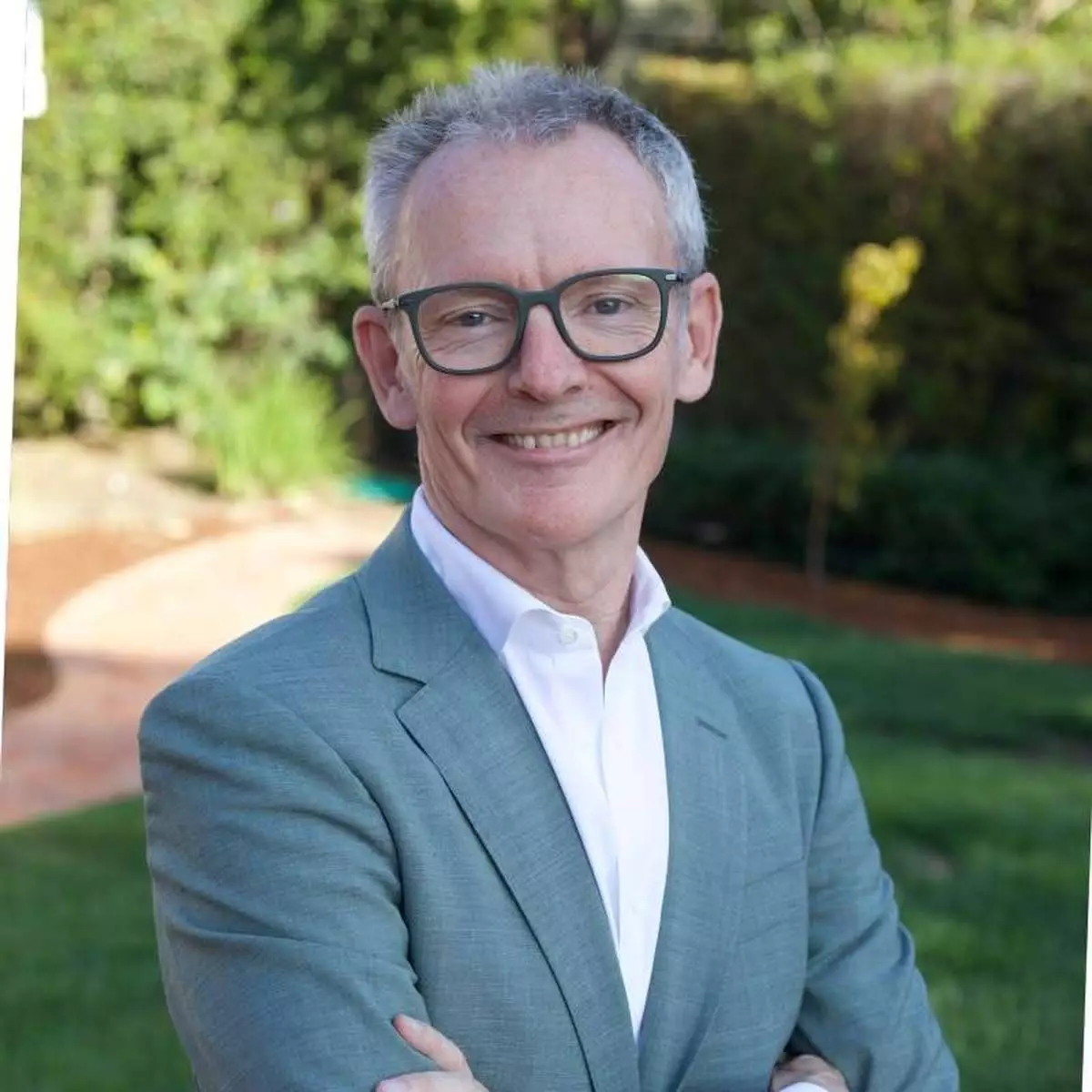
Steve Worland, Ph.D., CEO, Shenandoah Therapeutics