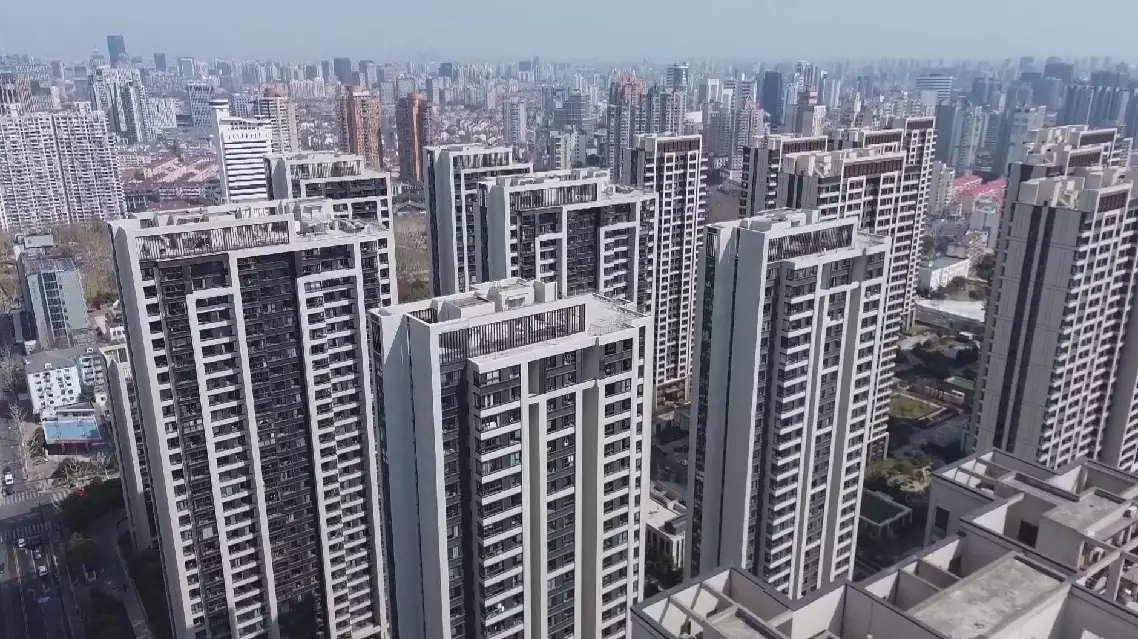
In the first months of 2025, China's real estate market has shown the signs of booming, with multiple cities across the country experiencing a notable uptick in transactions and land auction fervor.
In Beijing, data showed that from January to February, over 24,000 second-hand residential units were registered, marking a nearly 30 percent year-on-year increase.
"From the current influx of new clientele and the proactive attitude of homeowners listing their properties, we expect March to potentially outpace February in transaction volume," said Hu Deping, a real estate agent in Chaoyang District, Beijing.
The enthusiasm in the housing market has also resonated in the land auction sector. Recent statistics showed that the total land acquisition by the top 100 real estate companies in the first two months of this year surged by 26.7 percent year on year, with an average premium rate of 13.4 percent.
This trend is evident in Shanghai, where the volume of second-hand property transactions in February, including commercial and residential units, doubled compared to last year, soaring by 123 percent to over 16,700 units, particularly gaining momentum in the final two weeks of the month. The first round of residential land auctions in Shanghai this year saw all four parcels sold, totaling over 15.9 billion yuan.
"In this year's land auctions, we are gradually witnessing new benchmarks for floor prices in various regions. The developers' land acquisition activities subtly indicate their growing confidence in the market's future," said analyst Lu Wenxi from Shanghai Zhongyuan Real Estate.
Experts anticipate that in the coming months, as the sales momentum continues to stabilize and the successful release of premium land plots boosts market dynamics, developers' eagerness and confidence in acquiring land will persist.
"The 2025 market is expected to experience a structural recovery following a period of stabilization, with favorable policies injecting new growth momentum into the market," said Tang Daizhong, an associate professor at Tongji University's School of Economics and Management.
China's real estate market sees first trading boom in 2025
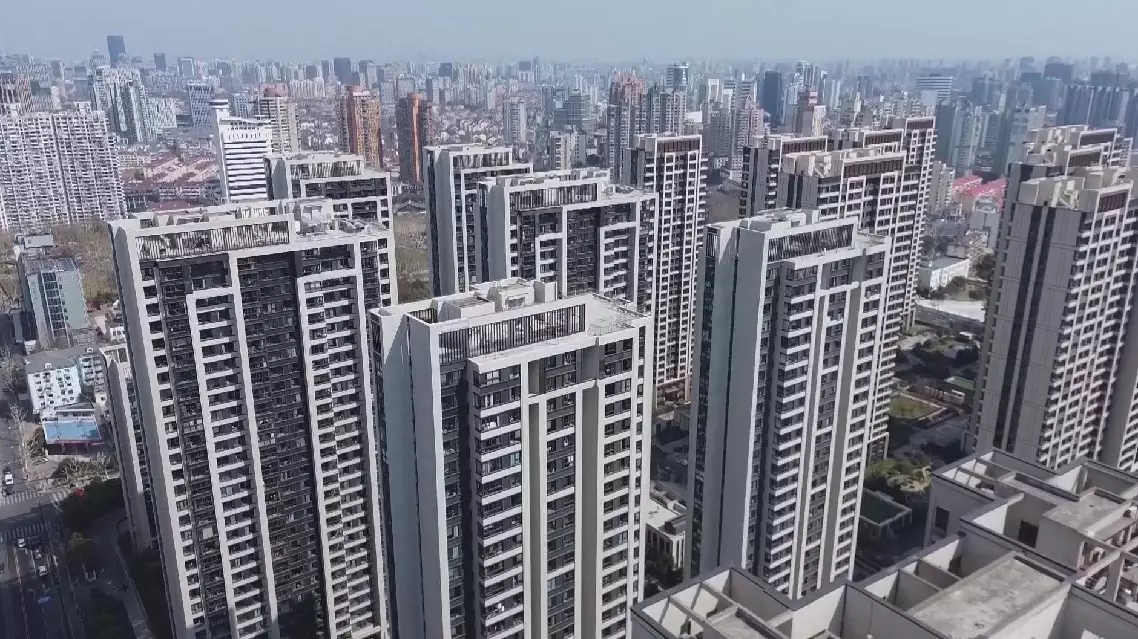
China's real estate market sees first trading boom in 2025
Flowers with novel appearances drew strong interest from visitors at this year's Hortiflorexpo IPM Beijing, which ran from April 10 to 12.
With more Chinese consumers seeking products that offer emotional value, expo visitors were noticing not only traditional, beautiful flowers, but also those newer, more distinctive varieties.
Among the many blooms on display, those featuring widely recognized icons stood out as especially eye catching.
"This is the Psychopsis papilio, also known as 'Monkey King'. You can see that its flower has three tendrils, which vividly resembles the pheasant feathers worn by Monkey King," said Zha Niyi, an exhibitor, introducing the flower commonly known as the butterfly orchid.
Monkey King, or Sun Wukong, is from a classic Chinese novel, Journey to the West, written by Wu Cheng'en during the Ming Dynasty (1368-1644). Monkey King has stood as one of the most iconic symbols of Chinese culture, embodying generations of Chinese people's imagination of a hero.
This growing consumer interest is also evident in the flowers' sales volumes. In 2025, China’s fresh-cut flower exports surged by over 40 percent, surpassing 200 million U.S. dollars for the first time. Over the past five years, the country's total flower exports have exceeded two billion U.S. dollars.
"This demonstrates that China's flower industry has a solid export base and strong production capacity with the approach of high-quality development," said Zhang Li, deputy director of the Market Circulation Branch of the China Flower Association.
As Chinese consumers become more willing to pay for experiences that generate positive emotions, visitors at the exhibition were increasingly drawn to flowers with cute names and auspicious meanings.
Consumers' growing desire for emotional fulfillment is also driving the wider development in the flower-consumption market. "A single flower can give rise to an entire industry and a whole sector," said Wang Caiyun, president of the Osmanthus Branch of the China Flower Association.
China has grown into the world's largest flower producer, a major consumer, and a leading trading country. Its flower economy now delivers annual output worth more than 520 billion yuan (about 76.16 billion U.S. dollars), driving employment and income growth for more than 220,000 business entities.
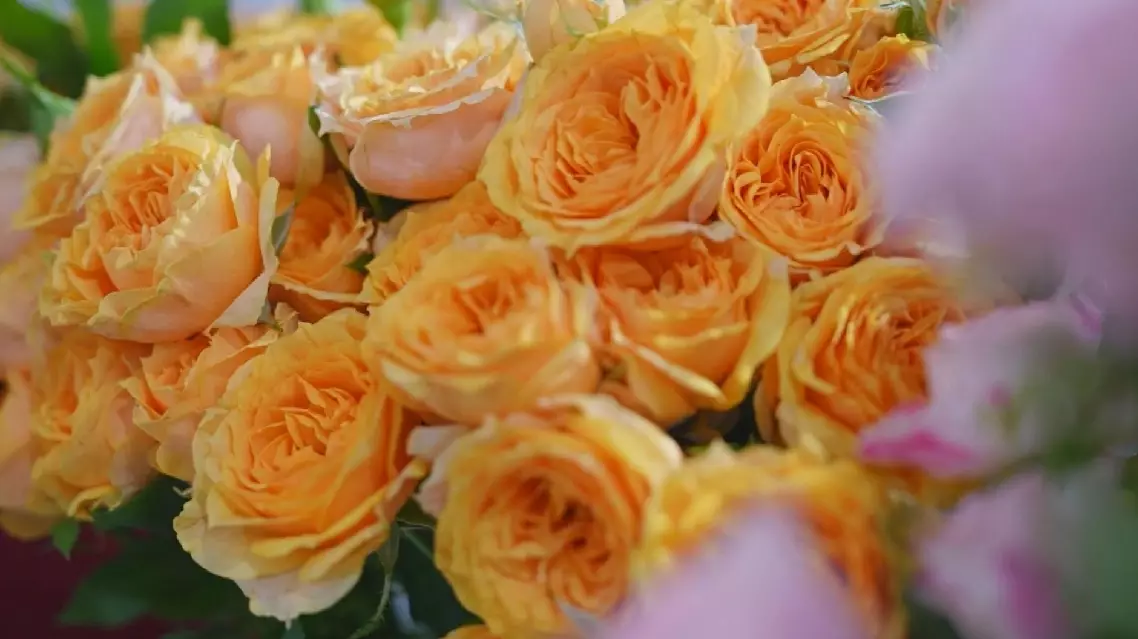
Novel flowers catch eyes at Hortiflorexpo IPM Beijing