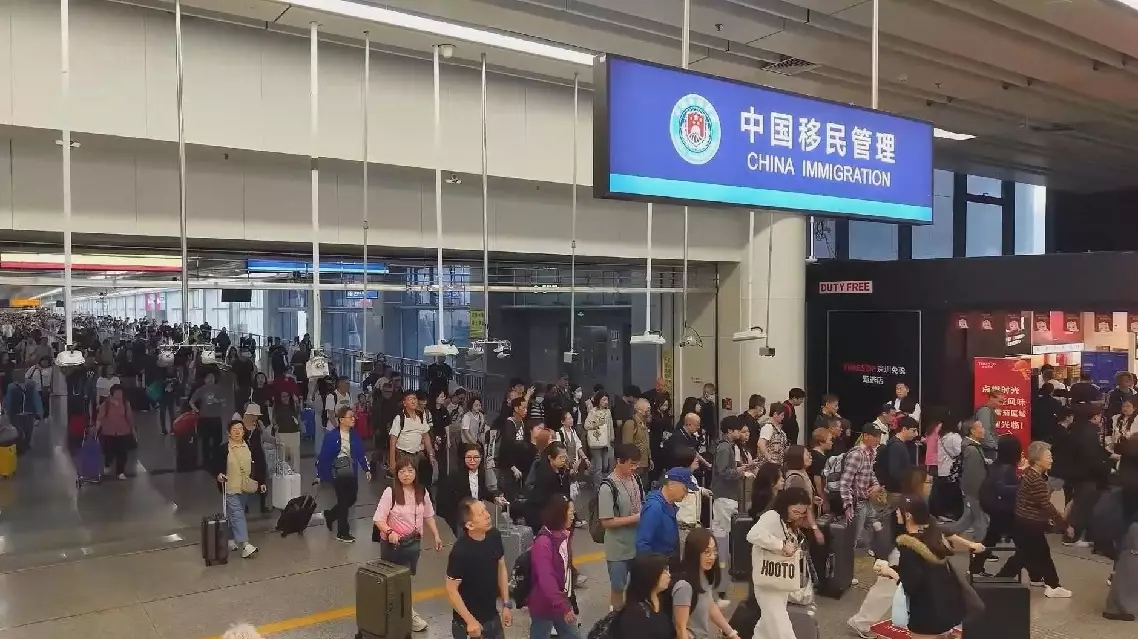
Ports in south China's Shenzhen City recorded more than 73 million cross-border passenger trips and 3.48 million transport vehicle trips in the first quarter of 2026, reflecting a surge in cross-border exchanges amid refined measures.
Shenzhen, which borders China's Hong Kong Special Administrative Region, is a key gateway to the Chinese mainland for both Hong Kong and Macao, as well as for the world through the bays on either side of the city and its Bao'an International Airport.
According to Shenzhen General Station of Exit and Entry Frontier Inspection, Shenzhen's border ports processed over 73.44 million entries and exits in the first three months of the year, up 14.6 percent year on year.
Of these, 36.49 million were entries and 36.95 million were exits, representing year-on-year growth of 14.9 percent and 14.3 percent, respectively.
"In the first quarter of this year, ports [in Shenzhen] saw 12 instances of daily passenger flow exceeding 1 million, with a peak of 1.09 million passenger trips. Two-way travel between residents of the Chinese mainland and those from Hong Kong and Macao is becoming increasingly frequent, and the number of foreign visitors continues to rise," said Zhou Yin, deputy director of the Border Inspection Division of Shenzhen General Station of Exit and Entry Frontier Inspection.
As regional entry and transit visa exemption policies are refined and custom clearance is facilitated, the movement of people between Hong Kong, Macao and the Chinese mainland continues to surge.
"We can pass through border check simply by scanning the face. It's quick and convenient," said Ms. Ku, a passenger from Hong Kong.
"I took my family to Shantou for a leisure trip. There are a lot of people here, but crossing the border is very convenient," said Ms. Yao, another passenger from Hong Kong.
With the expanded visa-free policies and 240-hour transit visa-free arrangements, a growing number of foreign visitors are choosing China as their travel destination.
Border authorities in Shenzhen handled 2.02 million cross-border trips from January to March this year, up 31.3 percent year on year.
During this period, visa-free entries for foreign nationals reached 460,000, marking a 58.1 percent increase year on year.
Arriving travelers from eligible countries praised the policy, saying it helped secure their decision to visit China.
"We are coming the first time to China and to Shenzhen in general, especially because now we can enter without a visa. I think it's a very good idea because it makes it very easy to travel," said a visitor from Germany.
Shenzhen sees surging cross-border travel with over 73 million trips logged in Q1
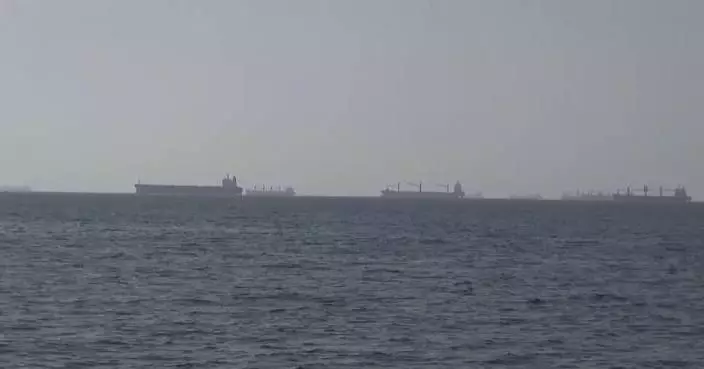
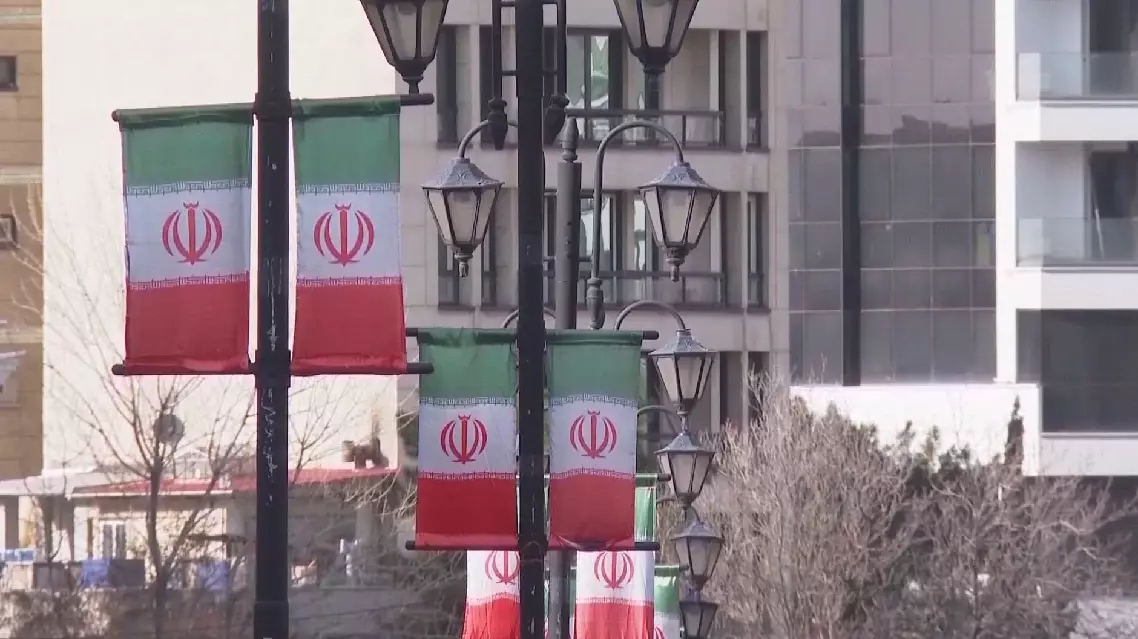
The Navy of Iran's Islamic Revolution Guards Corps (IRGC) said that the Strait of Hormuz has been blocked since Saturday evening and will not reopen until the United States lifts its naval blockade on the waterway.
In a statement carried by its official news outlet Sepah News, the IGRC said that the move came after the United States violated its commitments under the two-week ceasefire, which took effect on April 8, and failed to end its naval blockade against Iranian vessels and ports.
The IRGC Navy called on all vessels and their owners to follow official updates via its channel and VHF Channel 16, the international maritime distress, safety, and calling frequency. The statements by U.S. President Donald Trump hold no credibility in the strait and the Gulf, it added.
The IRGC warned that no vessel should move from its anchorage in the Gulf or the Gulf of Oman, and any approach to the strait would be deemed "cooperation with the enemy" and targeted accordingly.
Tehran's political leadership echoed the IRGC's firm position. Parliament Speaker Mohammad Bagher Ghalibaf asserted that the Strait of Hormuz is under Iran's control, revealing that during previous negotiations, Iran had firmly countered U.S. attempts to carry out minesweeping operations, which Tehran viewed as a ceasefire violation.
He said the situation had come close to conflict, but the U.S. had eventually backed off.
Calling the U.S. maritime blockade "reckless and ignorant," Ghalibaf warned that passage through the strait would certainly be restricted if Washington does not lift the blockade.
Underpinning these public announcements, Iran's Supreme National Security Council on Saturday affirmed the country's resolve to exercise control and supervision over traffic through the Strait of Hormuz until the war is definitively ended and lasting peace is achieved in the region.
For its part, the United States pressed ahead with its own military measures.
The U.S. Central Command (CENTCOM) said in a statement on Saturday that the U.S. military is imposing a maritime blockade on ships entering and exiting Iranian ports and nearby coastal areas. Since the blockade began on April 13, 23 ships have complied with U.S. directions to turn around.
Meanwhile, the U.S. military is preparing in the coming days to board Iran-linked oil tankers and seize commercial ships in international waters, The Wall Street Journal reported on Saturday, citing U.S. officials.
The move will enable the U.S. to take control of Iran-linked vessels around the world, including ships carrying Iranian oil that are already sailing outside the Persian Gulf and those carrying arms that could support Tehran, the report said.
Iran's IRGC says Strait of Hormuz blocked, demands end to US naval blockade