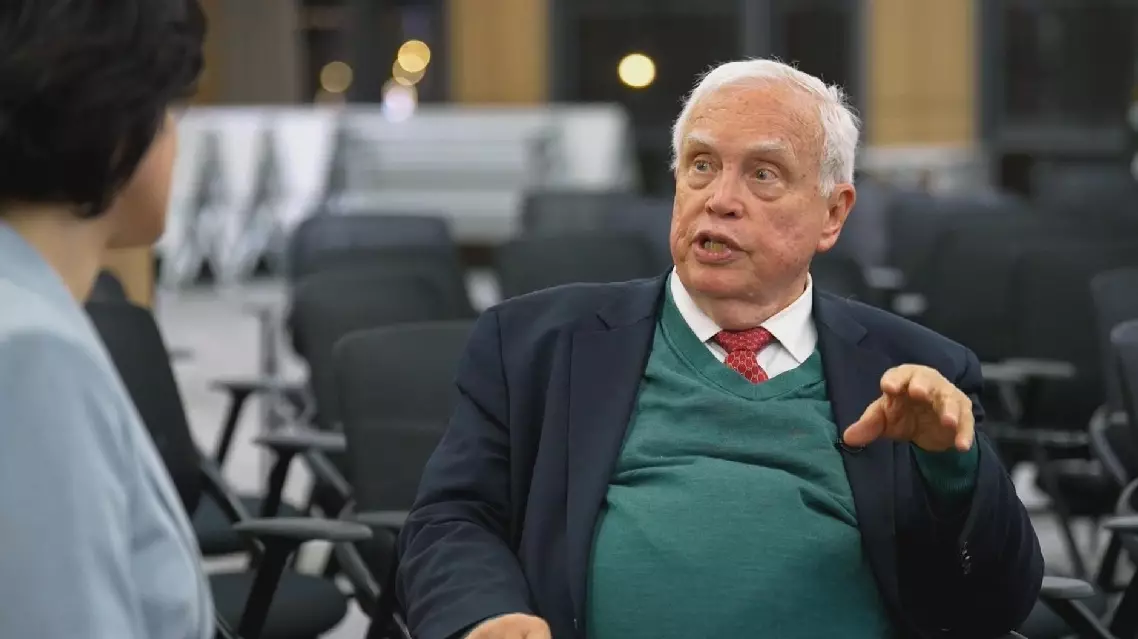
American Nobel laureate James Heckman said he remains positive and optimistic about China's development, as the Chinese have always been pragmatic and realistic.
Heckman, an American economist who won the Nobel Prize in Economics in 2000, shared his views on China and the Chinese people in an exclusive interview with China Media Group (CMG) in Beijing, which was released on Friday.
"I think it comes from several forces, dealing with the Chinese and seeing the vitality in the society. And I think there is a fundamental energy there. The elements are there, the vitality is there in terms of the industries, the universities. The country's vital, the people are intelligent, the society is rich in a fundamental way. The Chinese have always been very pragmatic, and they are very realistic," he said.
Heckman said what makes him admire about the Chinese people is their virtues and values.
"Look at China as a place that has a deep sense of values. Hard work and the values that I think are truly virtues, character values. But, see, China also has a chip on its shoulder, it does. It had a chip on its shoulder since the 1840s, the Opium War, right? And so there's a sense that you can see it, and I don't mind, that's kind of good. Because they're getting stronger and stronger and you can't help but admire it in the sense that, yes, they are stronger, and they're doing things much more wisely in many ways than what we're doing," Heckman said.
"So there's a sense in which there's more of a sense of purpose in China. Most of the Chinese students that I deal with and people I deal with, even though they may disagree on details, have this sense of unity and pride in China. And I think that's lacking with a lot of Americans," he said.
U.S. Nobel laureate optimistic about China's development
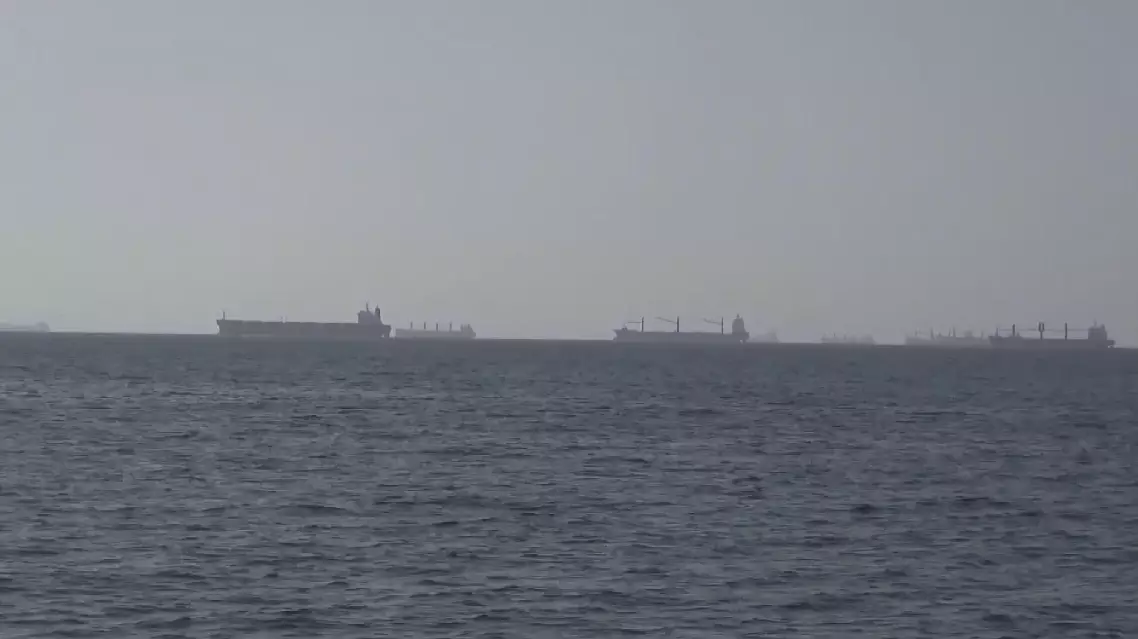
The Strait of Hormuz is back under Iran's strict control due to repeated breaches of commitments by the U.S., said a spokesman for Iran's Khatam al-Anbia Central Headquarters on Saturday.
Iran had agreed to allow a limited number of oil tankers and commercial vessels to pass through the strategic waterway in a managed manner. However, the United States has repeatedly breached its commitments, continuing acts of "piracy" and "sea robbery" under the pretext of a blockade, said the statement.
As a result, control over the Strait of Hormuz has been returned to its previous state, and this strategic waterway is under strict management and control by the Armed Forces, according to the statement.
The spokesperson further stated that as long as the United States does not stop interfering with the free passage of vessels traveling from or to Iran, the Strait of Hormuz will remain under strict control and maintain its previous state.
The latest move came after a brief reopening of the Strait based on prior arrangements between Iran and the United States.
Both Washington and Tehran confirmed on Friday that the strait had been completely open for all commercial vessels. However, U.S. President Donald Trump said on Truth Social that the U.S. naval blockade would "remain in full force." In response, Iran warned of closing the waterway again if the U.S. blockade continues.
Middle East expert Wang Jin from China's Northwest University believes the shifting situation at the Strait stems from the preconditions set by both sides, which undermine confidence in passage.
"Iran has imposed its own rules for passage through the Strait, requiring vessels to notify the Islamic Revolutionary Guard Corps and navigate only through designated waterways. Meanwhile, the United States has set up an interception and blockade outside the Strait, prohibiting vessels from engaging in direct trade or contact with Iran or participating in Iran's foreign trade. Both sides have added preconditions to passage through the Strait, which in effect undermines confidence in the normal flow of traffic through this vital waterway,” said Wang.
Iran says Hormuz Strait back under control due to US repeated breaches of commitments