Iranian Parliament Speaker Mohammad Bagher Ghalibaf said on Saturday that multiple claims made by U.S. President Donald Trump on social media earlier "were false."
In a post on social media platform X, Ghalibaf said that the U.S. failed to "win the war with these lies, and they will certainly not get anywhere in negotiation either."
Ghalibaf warned that the "Strait of Hormuz will not remain open" if the U.S. continues its blockade against Iran. He stressed that passage through the Strait of Hormuz must follow a "designated route" and be conducted with "Iranian authorization."
He said in the post that whether the strait remains open and the regulations governing it "will be determined by the field," not by content posted on social media.
Ghalibaf said that "media warfare and engineering public opinion are an important part of war, and the Iranian nation is not affected by these tricks."
Iranian Foreign Minister Seyed Abbas Araghchi said in a post on X on Friday that in line with the ceasefire in Lebanon, the passage for all commercial vessels through the Strait of Hormuz is declared "completely open" for the remaining period of the ceasefire.
However, the Iranian Foreign Ministry also made clear that if the U.S. continues its naval blockade against Iran, Iran will take necessary countermeasures.
Trump, in multiple social media posts on Friday, claimed that Iran has agreed never to close the Strait of Hormuz again. He also said that Iran, with U.S. assistance, has either already cleared or is in the process of clearing all mines in the waterway.
At the same time, Trump said that the U.S. naval blockade against Iran will continue until a full agreement is reached with Iran.
Aboard Air Force One on Friday night, Trump told news media that the temporary ceasefire between the U.S. and Iran may not be extended if a long-term agreement is not reached by next Wednesday.
The United States and Iran announced a two-week ceasefire on April 8.
Israel and the United States launched joint attacks on Tehran and several other Iranian cities on Feb. 28, killing Iran's then Supreme Leader Ali Khamenei, along with senior military commanders and civilians. Iran responded with waves of missile and drone strikes against Israel and U.S. targets in the Middle East, while tightening control over the Strait of Hormuz by restricting passage to vessels belonging to or affiliated with Israel and the United States.
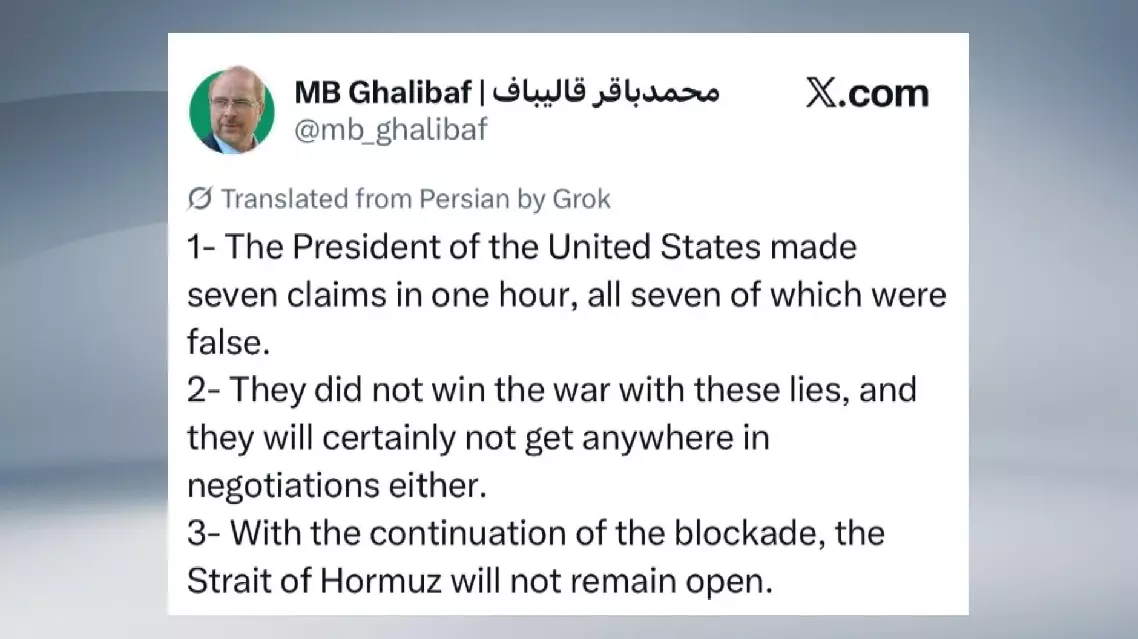
Iranian parliament speaker denies Trump's statements
Thursday was marked by grief and frustration in southern Türkiye's Kahramanmaras City, where funerals for the school shooting victims took place, and the city came together in mourning.
At least nine people were killed and 13 others wounded in the attack on Wednesday.
The attacker, an eighth-grade student at the same school who later committed suicide, had used a photo of a U.S. mass shooter as his profile picture on social media, according to the police. The father of the gunman - a former police officer whose weapons were used - has been taken into custody.
At the funerals, families clung to coffins during prayers, many of them in tears.
"Sadly, we lost the child of our colleague. We are in indescribable pain. I hope security measures will be in place in schools and that our students can come safely, because right now, we unfortunately don't even have the strength to go to school," said Emre Kurkut, a teacher.
At the house in mourning, Mustafa Kazici grieved over his 11-year-old daughter Suranur. He said she was among the first to be shot.
"Our pain is great. These may sound like familiar words, but they are words that truly reflect this moment and what we are going through," said the father.
Details of the incident have been emerging. As the attack unfolded, some students were seen jumping out of windows on the second floor, while it's been reported that the teacher who was killed died as she shielded her students, saving others. The school is now closed - at least until Monday.
Kutay Doluzengin, a student, said he arrived shortly after the first shots and is still shaken by what he saw.
"I felt like it was a massacre. I was scared. I kept thinking, what if it had been my sibling? What if it had been me? What if it had been my friend? What I would have done," said Doluzengin.
Amid his grief, Kazici also called for stronger security measures.
"There must be a police officer at the entrance of every school for security. Just as you cannot enter shopping malls without going through X-ray screening, I believe the same should be implemented in schools. Children's bags should be checked as well," said Kazici.
The government says it plans to introduce tighter school security, increase inspections, limit access to weapons, and expand psychosocial support.
The incident took place just one day after a school shooting in the Siverek district in southeastern Türkiye's Sanliurfa Province, where a former student at the school injured at least 16 people with a shotgun on campus before taking his own life.
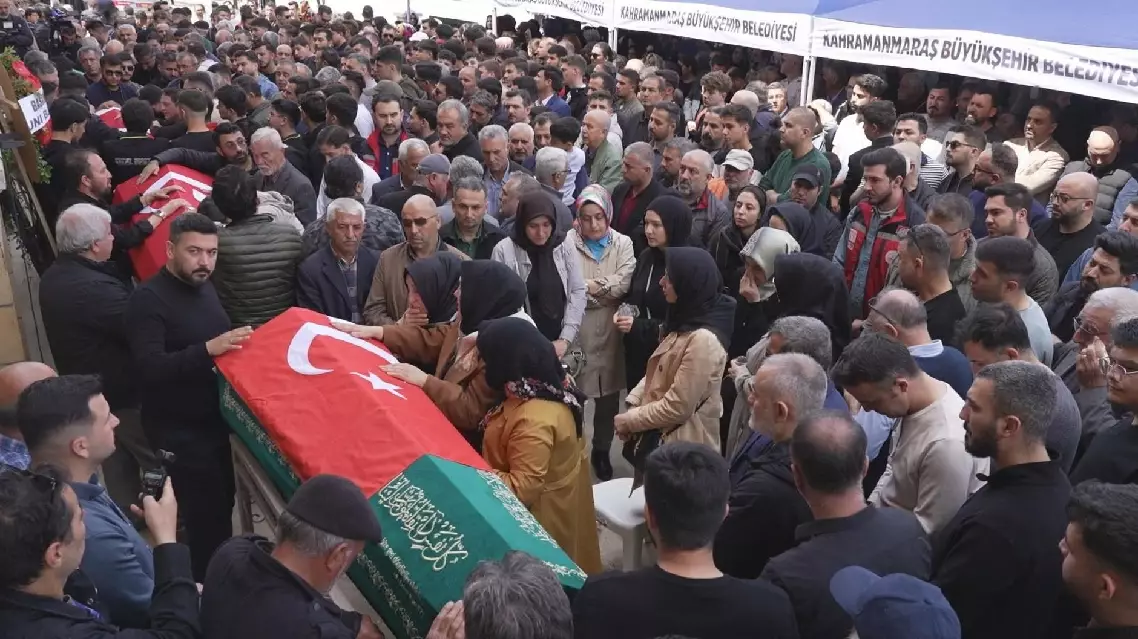
Funeral held for victims of school shooting, as gov't vows to tighten school security