The Russian Armed Forces conducted one massive strike and five group strikes using long-range high-precision weapons launched from air, sea and ground platforms, as well as strike drones, the ministry said in a statement.
The strikes occurred between April 11 and 17 in response to Ukrainian attacks on Russian civilian targets, the statement said.
According to the ministry, Russian forces took control of the settlement of Volchanskie Khutory in the Kharkiv region over the past week and brought the settlement of Zybino in the same region under control over the past 24 hours.
Over the same period, Russian air defense systems destroyed 1,665 drones, 60 guided aerial bombs and nine U.S.-made HIMARS rockets, the ministry said, adding that the Black Sea Fleet destroyed five Ukrainian unmanned boats.
The General Staff of the Armed Forces of Ukraine reported on the same day that 132 engagements took place along the frontline over the past day, with Ukrainian forces repelling Russian attacks in multiple directions.
Ukrainian troops struck one Russian troop and an equipment concentration area and destroyed 2,410 Russian drones.
During a briefing on the situation along the frontline, Ukrainian President Volodymyr Zelensky stated that Ukraine’s strikes have remained at a high intensity, and Russia has failed to regain the initiative on the battlefield.
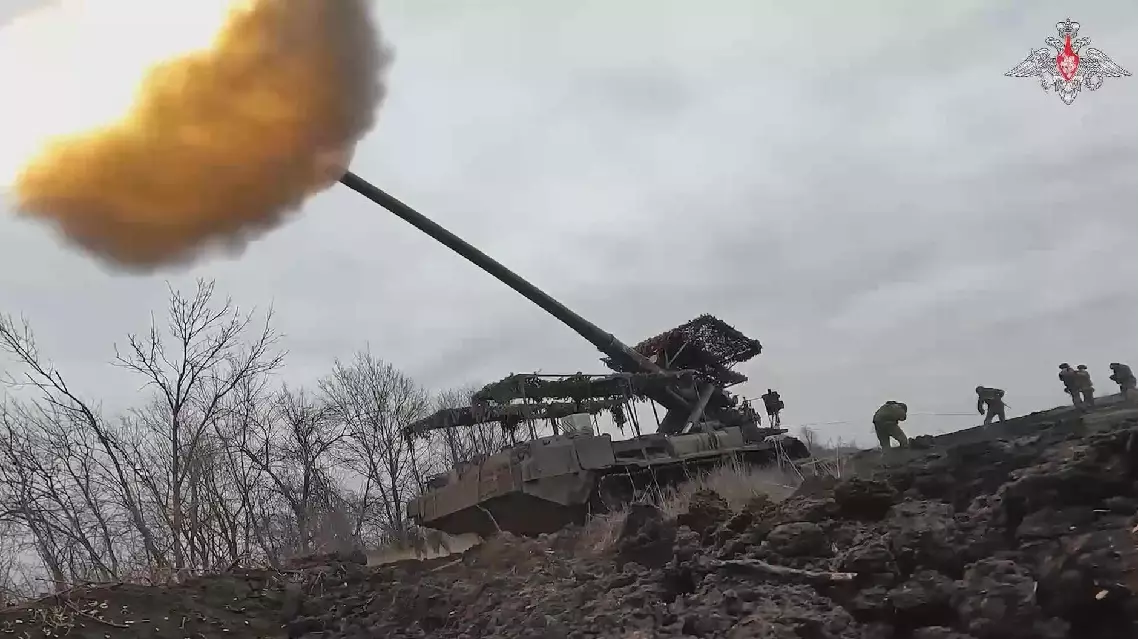
Russia claims launching group strikes, Ukraine reports repelling Russian attacks
Nobel laureate James Heckman has hailed the “dynamism” of the Chinese society, reflecting on his extensive experience conducting research on the country and being granted the Chinese Government Friendship Award.
Hackman, an American economist and winner of the 2000 Nobel Memorial Prize in Economic Sciences, shared his insights on China's development based on years of research in an exclusive interview with China Media Group (CMG) in Beijing, which was released on Friday.
As a founding figure in microeconometrics, Heckman was jointly awarded his Nobel Prize with Daniel McFadden for their groundbreaking contributions to the development of microeconometric theory and methods, particularly their outstanding work on the principles and methods for analyzing selective sampling.
Over the years, Heckman has dedicated himself to researching and addressing global socioeconomic issues, with a particular focus on human capital, early childhood development, and social mobility. The "Heckman Curve," named after him, demonstrated the positive impact of early childhood development on individual and societal progress, as well as national human capital accumulation, and has been widely cited by policymakers around the world.
In the past decade or so, China has become a major focus of Heckman's research. In 2014, China launched a rural home-based early childhood education program, and Heckman has served as an advisor, providing academic guidance and recommendations for the program's design and research.
On Sept. 30, 2019, Heckman received the Chinese Government Friendship Award, the highest honor granted by the Chinese government to foreign experts. Ever a humble academic, Heckman said he never expected to receive such a prestigious award.
"I certainly didn't know that I was gonna get it. I'm not even sure I deserve it. I'm sure there are people who have given more to China than me. But I am working a lot in China. I find it a very interesting place. But it's the dynamism," he said.
Speaking on his thoughts during the most formative years of his research in China, the economist drew a vivid parallel between the vitality of the Chinese society during its reform-era and the oil-driven prosperity of his father's childhood in the U.S. state of Oklahoma.
"That was oil boom country in the 1920s and 30s when my father was young. And he told me a lot about the boom towns that were there. So I felt that kind of dynamism also at work in China, who was was opening up the markets. There was a lot of entrepreneurship. People were going in and trying new ideas. There was an expansion of the country's production and exchange with the world," the Nobel laureate said.
That vibrancy has extended to the current Chinese society and academia, he added.
"You could feel the optimism and everybody's body in their faces, and then the projects they were describing. So I like that very much. There was a sense that there was vitality, which I saw a real sense of vitality and engagement, and engagement with Chinese scholars and engagement with Chinese coming into the world in a very general way," he said.
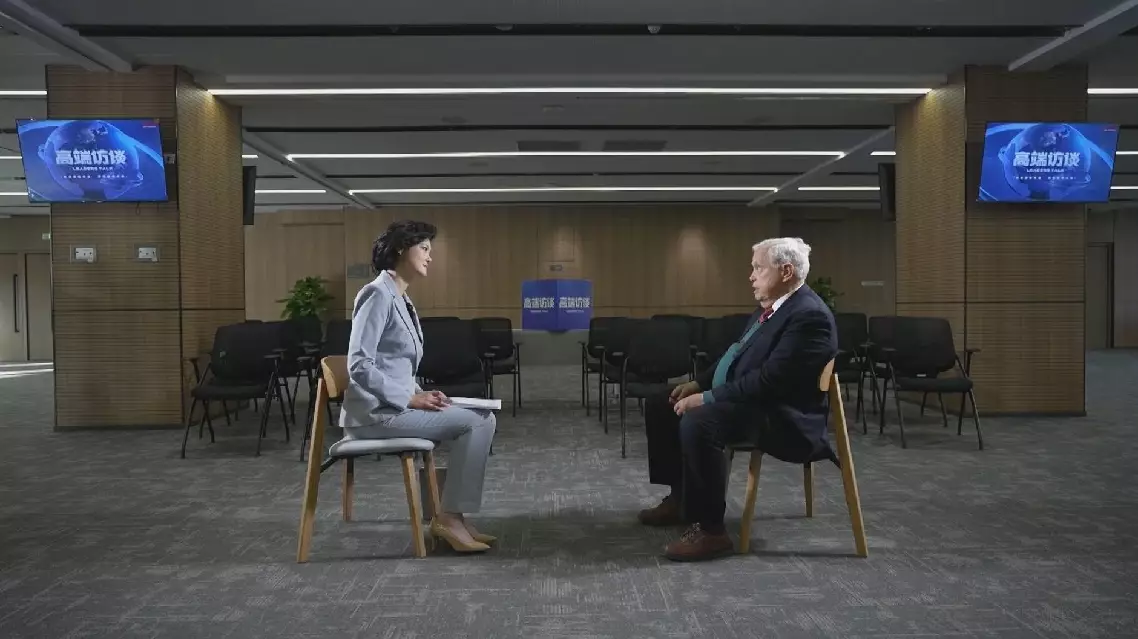
Nobel laureate hails dynamism of Chinese society