Skip to Content Facebook Feature Image

China's logistics sector shows positive recovery in February

China

China

China

China's logistics sector shows positive recovery in February

2025-03-04 10:46 Last Updated At:12:37

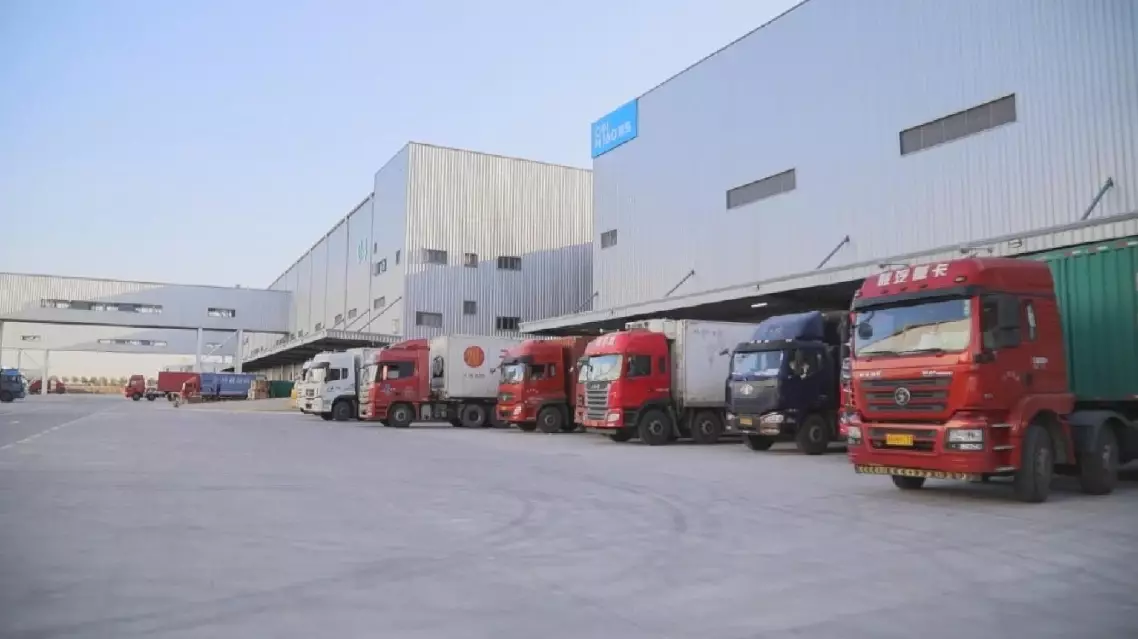
China's logistics sector began to pick up in February after the conclusion of the Spring Festival in late January, data from the China Federation of Logistics and Purchasing (CFLP) showed on Tuesday.

In February, the index tracking the prosperity of the country's logistics market stood at 49.3 percent, showing a continued recovery as businesses resumed operation, major infrastructure projects started in various regions and industries across the supply chain were gradually recovering after the holiday.

Road and railway transportation sectors were operating in an expansion zone, with waterborne transport activity continuing to improve.

Multimodal transportation and postal express logistics sectors, particularly in e-commerce, saw an increase in their business activities, with the business volume indices for the two sectors reaching 55.6 percent and 66.3 percent, respectively, indicating a strong growth.

"Since February, demand for logistics in sectors such as consumer goods, metallurgy, chemicals and smart manufacturing has grown continuously, driving increase in physical logistics volume. The central and eastern regions of China have seen a marked rebound, especially in railway and road transportation, where new orders are consistently in an expansion zone," said Liu Yuhang, director of the China Logistics Information Center.

In February, logistics companies experienced a slowdown in the rate of cost increase and their main business profit index rose by 0.3 percentage points from the previous month.

Notably, road transportation, water transport, warehousing and multimodal transport sectors all saw varying degrees of profit growth from the previous month.
China's logistics sector shows positive recovery in February

China's logistics sector shows positive recovery in February

Smart technologies have reshaped China's ecological and environmental monitoring system, Huang Runqiu, minister of Ecology and Environment, said Thursday in Beijing on the sidelines of the fourth session of the 14th National People's Congress(NPC).

"Regarding ecological and environmental monitoring, we have been promoting the digitalization, informatization, and intelligentization of the entire monitoring process in recent years, reshaping the ecological and environmental monitoring system. For instance, in water environment monitoring and sampling, we have used intelligent drones which can quickly locate sampling points, collect samples accurately, return rapidly, and they are safe and reliable, improving work efficiency by over 70 percent. They are particularly advantageous for sampling during flood seasons and in remote areas," Huang told the press.

"In terms of environmental sample analysis, we have developed 'lights-out laboratories' in recent years. As the name suggests, these labs operate without lights and are unattended. Through robotic arms, robots, and intelligent management systems, they achieve full-process automation and intelligence from sample handover, testing, and analysis to report generation. This has significantly enhanced work efficiency, increasing it by more than eightfold compared to traditional labs. More importantly, it reduces human interference, human error, and even data falsification," he said.

Thanks to the improved ecological and environmental supervision capabilities, the number of environmental violation cases nationwide has decreased from 130,000 five years ago to 43,000 last year, representing a decline of 68 percent, Huang said.

The minister said China has already applied environmental DNA technology in the biodiversity monitoring work.

"In the field of biodiversity monitoring, monitoring aquatic organisms remains a weak point. However, significant progress has been made in recent years as we have developed environmental DNA technology. Although this chip is very small in size, it contains DNA detection information for aquatic organisms, including the finless porpoise and the Chinese sucker, from 19 state-controlled sections in the Jiangsu segment of the Yangtze River. The results showed that over the past five years, more than 20 species of aquatic organisms have increased in this river section, fully demonstrating the tangible effectiveness of the ten-year fishing ban in the Yangtze River," Huang said while showing a chip to reporters.

The 14th NPC, China's national legislature, concluded its fourth session on Thursday.

Smart technologies reshape China's ecological, environmental monitoring system: minister

Smart technologies reshape China's ecological, environmental monitoring system: minister

Recommended Articles