China has strengthened its regulatory framework for state-owned asset transactions with the issuance of revised operational regulations, aimed at improving efficiency of asset circulation and allocation.
According to the State-owned Assets Supervision and Administration Commission (SASAC) of the State Council, the new rules will further regulate the transaction of state-owned assets while effectively preventing asset loss.
The new regulations clarify key points for selecting investors during the capital increase process, specify methods for reducing transaction prices, optimize transaction procedures, shorten transaction cycles, and lower transaction costs.
The rules outline the main processes of state-owned asset transactions, including decision approval, information release, and completion of transfer, as well as the basic content of transaction contract terms.
They also address requirements related to avoidance of related parties, use of names and trademarks, confidentiality obligations, document retention, and the rights and obligations of all parties involved in the transactions.
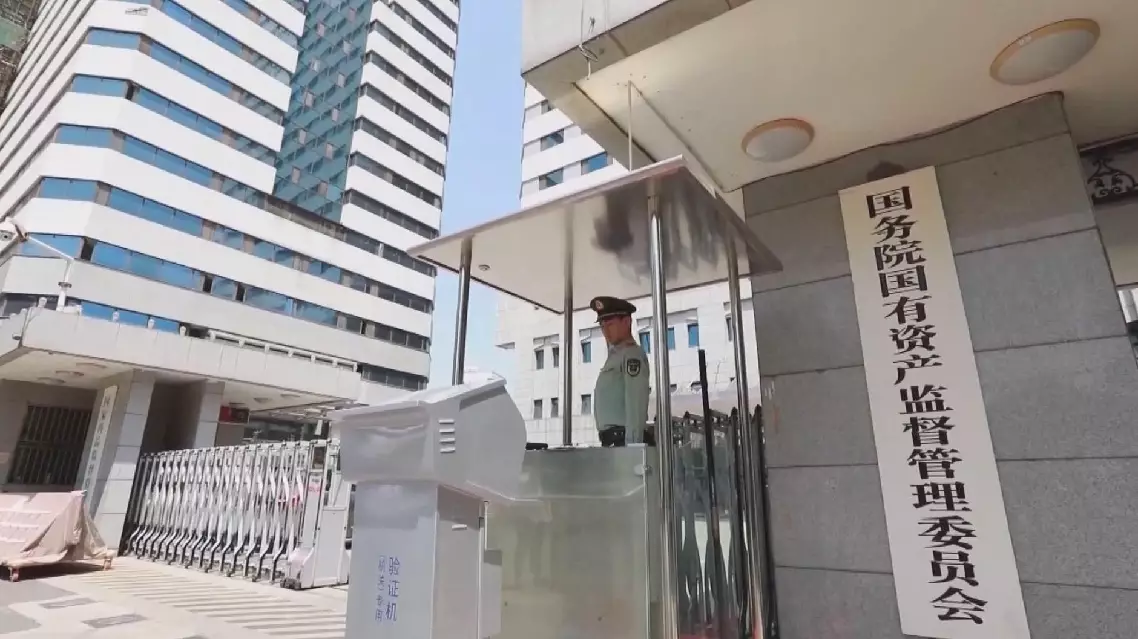
China strengthens oversight of state-owned asset transactions
More than 20 U.S. warships are enforcing blockade against Iran, U.S. Central Command posted on social media platform X on Sunday.
Since April 13, the U.S. military has ordered 61 merchant ships to change course and has disabled four vessels, said the post.
Following a temporary ceasefire between the U.S. and Iran, the former has continued its naval blockade against Iran, while Iran has demanded its lifting.
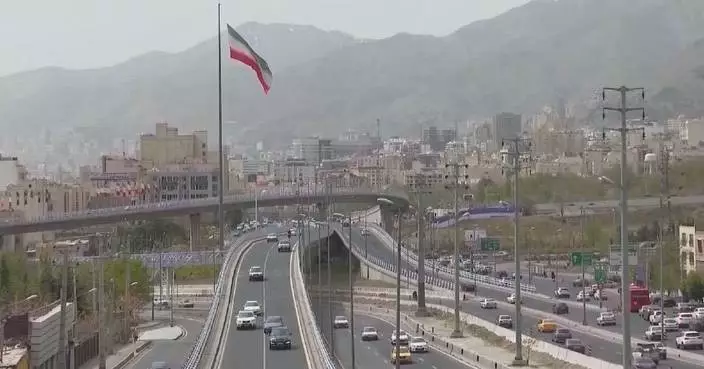
A top Iranian diplomat on Sunday warned that the presence of French and British warships in the Strait of Hormuz to accompany the U.S. "illegal and internationally unlawful" actions will be met with a "decisive and immediate" response from Iran's armed forces.
Kazem Gharibabadi, Iran's Deputy Foreign Minister for Legal and International Affairs, made the statement in a social media post while responding to France's deployment of its nuclear-powered aircraft carrier Charles de Gaulle to the Red Sea and the Gulf of Aden to prepare for a future joint mission between Paris and London to secure the freedom of shipping and navigation through the Strait of Hormuz.
Gharibabadi said the British government has also announced that to accompany France, it will send a warship to the Red Sea, adding any deployment and stationing of trans-regional destroyers around the Strait of Hormuz under the pretext of protecting shipping "is nothing but an escalation of the crisis, the militarization of the vital waterway, and an attempt to cover up the true root of insecurity in the region."
He added that maritime security cannot be ensured through a "show of military power," especially by actors who themselves contribute to the problems through their support, participation, or silence in the face of the anti-Iran "aggression and blockade."
He claimed that Iran, as a coastal country, has the right to exercise sovereignty over the Strait of Hormuz and determine its legal arrangements.
Meanwhile, the semi-official Tasnim news agency quoted Iran's Navy Commander Shahram Irani as saying the navy has deployed light, homegrown submarines in the Strait of Hormuz to counter the "enemy's" warships.
Also on Sunday, French President Emmanuel Macron said in Nairobi, Kenya, that France had "never envisaged" a naval deployment in the Strait of Hormuz, but rather a security mission to be "coordinated with Iran," noting that he was sticking to his position of opposing a blockade from either side.
Iran tightened its grip on the Strait of Hormuz beginning Feb. 28, when it barred safe passage to vessels belonging to or affiliated with Israel and the United States following their joint strikes on Iranian territory.
The United States has also imposed a naval blockade on the strait, preventing ships traveling to and from Iranian ports from transiting the waterway.
Sporadic clashes erupted last Thursday and Friday between Iran and the United States in and around the Strait of Hormuz after Washington launched a project, called Project Freedom, to guide stranded ships out of the waterway.
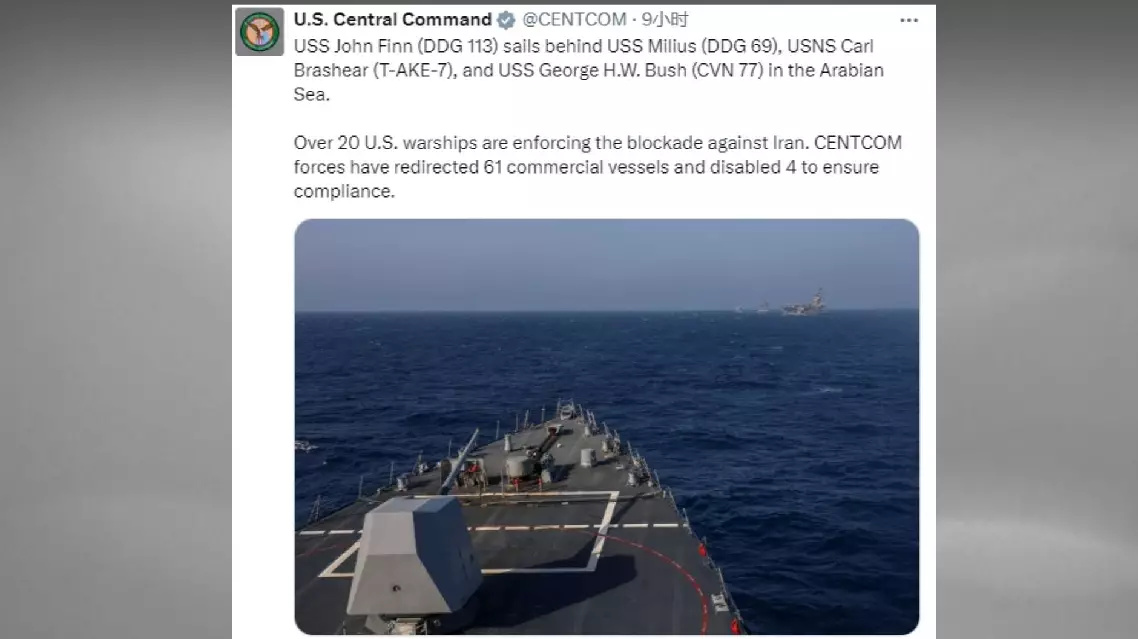
Over 20 US warships enforcing blockade against Iran