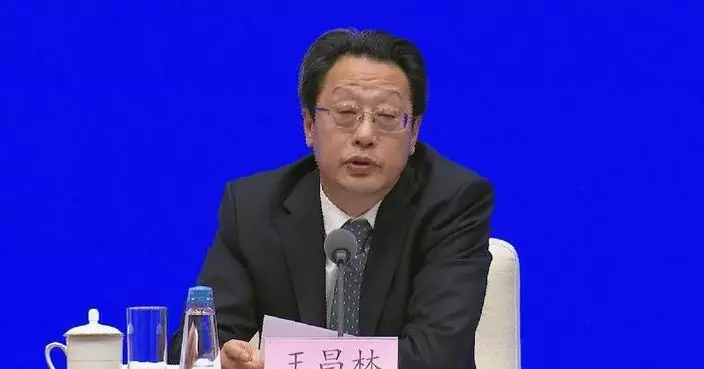
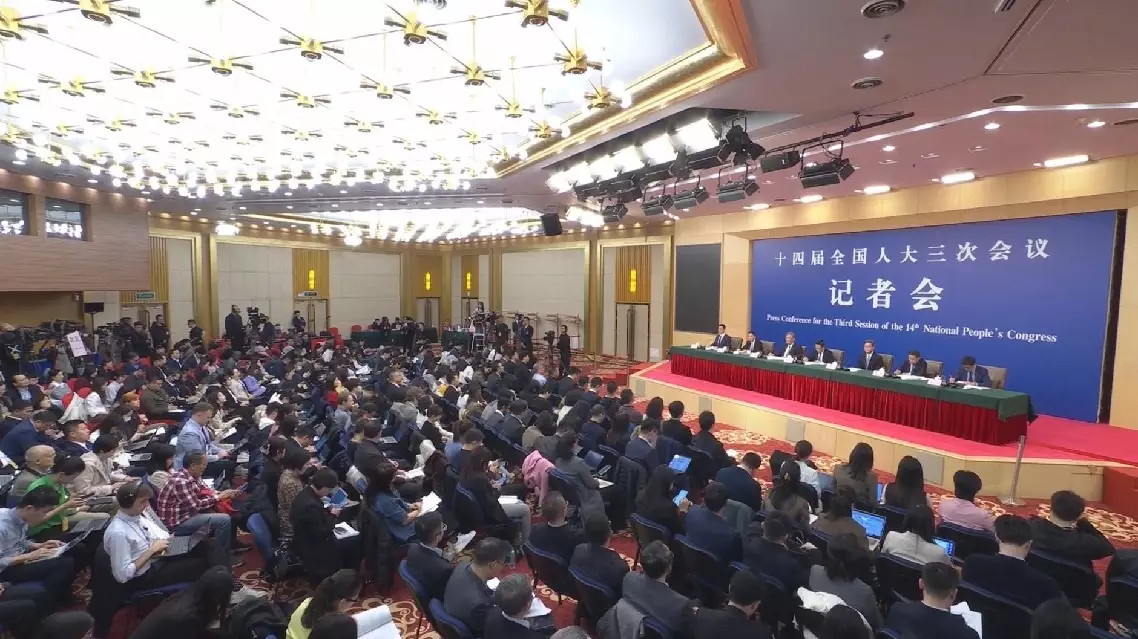
China's top securities regulator provided an update on the implementation of policies aimed at boosting medium- and long-term capital inflows into the stock market during a press conference on Thursday on the sidelines of the third session of the 14th National People's Congress (NPC) in Beijing.
Wu Qing, chairman of the China Securities Regulatory Commission (CSRC), emphasized the vital role of long-term funds as a "stabilizer" and "ballast" for capital markets.
The CSRC and relevant authorities have introduced policy guidelines and implementation plans to promote the entry of medium- and long-term capital into the market, Wu said, as well as launching specific and targeted measures to create a more favorable institutional environment for long-term investment.
These efforts align with the government's broader commitment to encouraging long-term capital participation in the market, as laid out in this year's government work report.
Various departments are actively implementing the policy, and the initial results are beginning to emerge, said Wu, outlining three major developments in China's capital markets.
Firstly, he said the inflow of long-term capital into the stock market had significantly increased.
The People's Bank of China has facilitated two rounds of swap transactions for securities and fund companies, totaling over 100 billion yuan (around 13.79 billion U.S. dollars).
More than 400 listed companies have disclosed information of stock buybacks, increases in holdings, and refinancing, with a combined credit limit of nearly 80 billion yuan (around 11.03 billion U.S. dollars), said Wu.
He said that the National Financial Regulatory Administration has launched a second batch of pilot programs for long-term stock market investment from insurance funds, approving 52 billion yuan (around 7.17 billion U.S. dollars) before the Spring Festival and an additional 60 billion yuan (around 8.27 billion U.S. dollars) just days ago, with further expansion planned.
The Ministry of Human Resources and Social Security has also implemented the private pension system nationwide and the CSRC has included the first batch of 85 equity index funds into the investment product catalog for the private pension scheme, Wu said.
Since last September, insurance funds and various pension schemes have bought around 2.9 trillion yuan (around 39.99 billion U.S. dollars) purchases of A-shares, supporting the stabilization and improvement of the market, said Wu.
Secondly, the development of equity funds has accelerated, said Wu.
The approval process for exchange-traded funds (ETFs) has been streamlined, allowing new products to be registered within five business days. Since last September, 459 equity funds have been registered, accounting for 70 percent of all new funds during the period, he said.
The total value of equity funds has grown from 6.3 trillion yuan (around 868.83 billion U.S. dollars) to 7.7 trillion yuan (around 1.06 trillion U.S. dollars), with their share of the public fund market rising from 20 percent to 24 percent, said Wu.
To further protect investors' interests, authorities are advancing fee structure reforms that will gradually reduce overall costs, saving investors an estimated 45 billion yuan (around 6.21 billion U.S. dollars) annually, he said.
Thirdly, regulatory authorities are strengthening long-term performance evaluation mechanisms, said Wu.
"The Ministry of Finance and the Ministry of Human Resources and Social Security are actively advancing the formulation and revision of policy documents on long-term funding and long-cycle assessment. They have solicited opinions and suggestions from relevant parties. We have learned that it will be launched as soon as possible. The forthcoming regulations will establish a minimum five-year assessment period for the national social security fund and a minimum three-year period for pension and insurance funds. The CSRC's upcoming public fund reform will further emphasize minimum three-year performance assessments, promoting rational, long-term, and value-driven investment practices," said Wu.
"With joint efforts from all parties, implementation of the guidelines and action plans for increasing medium- and long-term capital inflows into the market has made a strong start, yielding initial results. The momentum of medium- and long-term capital entering the market continues to build. Since September last year, the market value of A-shares held by various types of medium- and long-term investors has grown from 14.6 trillion yuan (around 2.01 trillion U.S. dollars) to 17.8 trillion yuan (around 2.45 trillion U.S. dollars), marking a 22 percent increase," he said.
China ramps up efforts to boost long-term capital flows into stock market