Skip to Content Facebook Feature Image

China to open wider to neighboring countries: FM

China

China

China

China to open wider to neighboring countries: FM

2025-03-07 12:42 Last Updated At:15:37

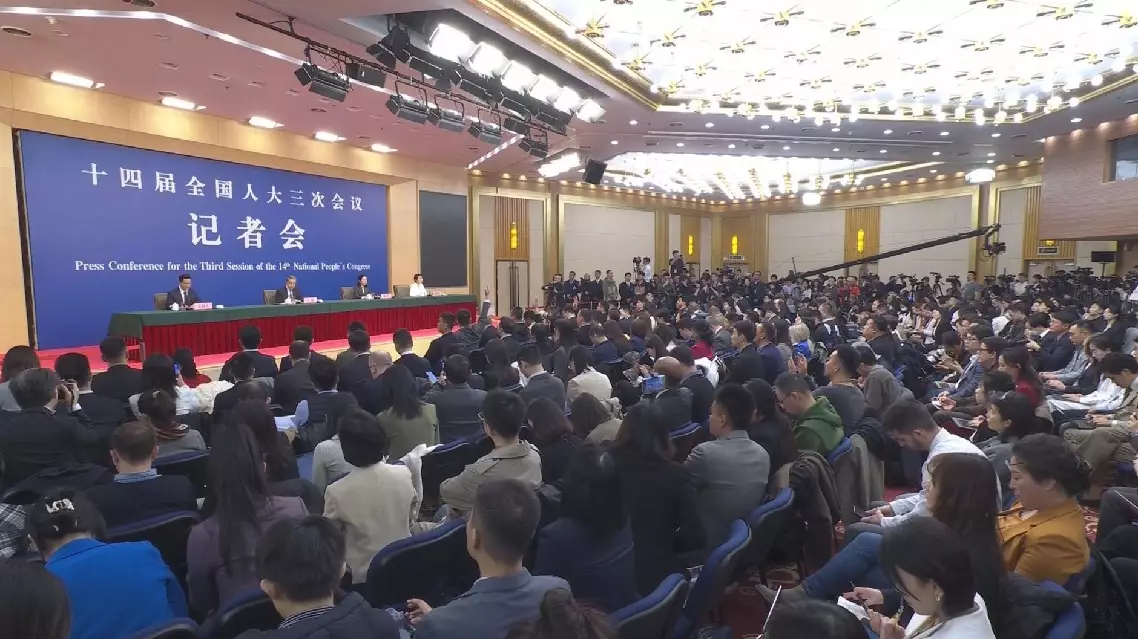
China will continue to open wider to neighboring countries, and share more development benefits with its neighbors, Chinese Foreign Minister Wang Yi said Friday while meeting the press in Beijing.

Wang briefed journalists from home and abroad on China's foreign policies and answered questions on a wide range of issues on the sidelines of the third session of the 14th National People's Congress.

"Since the beginning of this century, Asia has maintained rapid growth, and become a leading force for global development and a shining example of peace and stability. This has not easily come by, and should be cherished with great care. Asia is where China calls home and builds its future. It is also the common home for China and fellow Asian countries. Following the principle of amity, sincerity, mutual benefit and inclusiveness on neighborhood diplomacy put forward by President Xi Jinping, China has opened up new prospects in developing friendship and cooperation with its neighbors," he said, responding to a question about China's neighborhood diplomacy.

To date, China has reached common understanding on building a community with a shared future with 17 neighboring countries, forming "two clusters" in the Indochina Peninsula and Central Asia, respectively, according to Wang.

In its neighborhood, China has signed Belt and Road cooperation agreements with 25 countries, and remained the largest trading partner of 18 countries, said the foreign minister.

"Today's China is an anchor of stability, engine of economic development, and pillar of regional security in Asia," he said.

"Of course, it is common for neighbors to not agree on everything. Issues left from the past and conflict of immediate interests should both be properly handled. But we believe that harmony is key to a prosperous family in all endeavors. As long as we remain committed to the vision of a common home, stick to the goal of building a community with a shared future, and follow the principles of equal-footed consultation, mutual understanding and mutual accommodation, we will surely be able to resolve differences, work with one another, and achieve win-win results. In the meantime, China will continue to open wider to neighboring countries, including through unilateral initiatives, and share more development benefits with its neighbors," Wang said.

Meanwhile, he voiced strong opposition to U.S. deployment of mid-range missile system in Asia.

"Of course, China is firmly opposed to it, and it is not welcomed by countries in the region either. Years have passed since the United States released its 'Indo-Pacific Strategy,' but what has it done for countries in the region? Nothing, except for stirring up troubles and creating disputes. It has proved to be more of a disruptive factor than a constructive contributor," Wang said.

"Asia is not an arena for big power rivalry, it should become a demonstration field for international cooperation. We believe that it's important to practice open regionalism and share in Asia's development opportunities on the basis of mutual respect and win-win cooperation," he added.
China to open wider to neighboring countries: FM
China to open wider to neighboring countries: FM
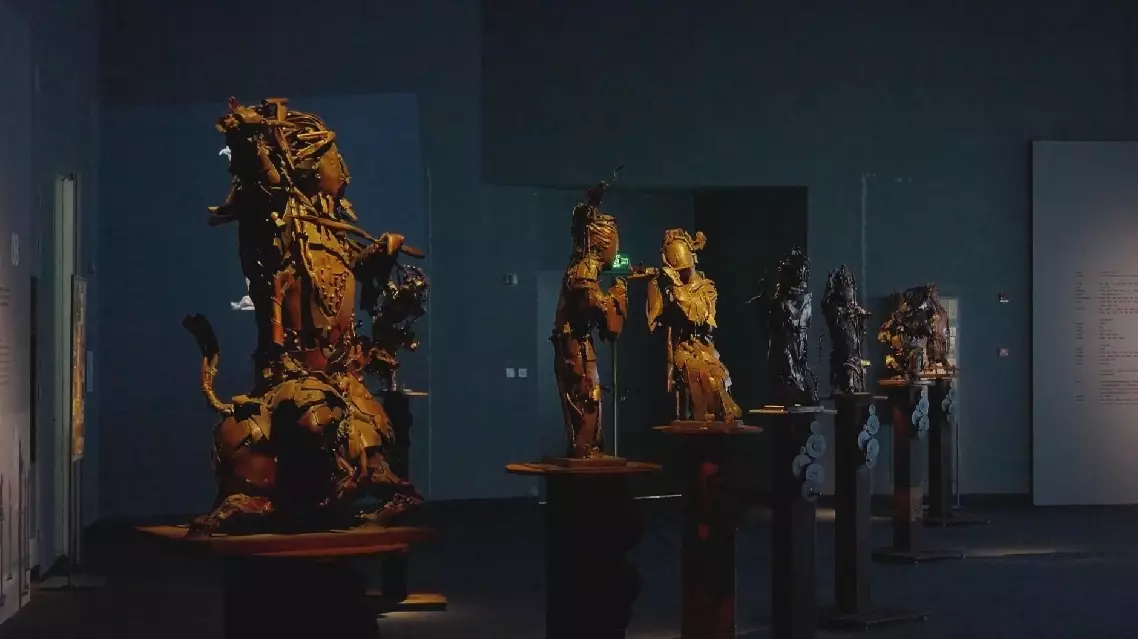
Artists have reimagined ancient themes through a modern lens at the 60th Venice Biennale China National Pavilion Exhibition, now underway in Shanghai.

The main feature of the exhibition is a fully immersive project by artist Che Jianquan, who has placed consecutive screens placed side by side to present his two-decade-long documentation of the same pavilion since 2003.

Through his lens, the artist captures the pavilion, as it emerges and disappears amidst mist and clouds, evoking the aesthetic of misty landscapes in traditional Chinese ink paintings.

"At the beginning, I wanted to use painting to document my feeling, but later I realized that painting was somewhat powerless. So, starting in 2003, I began using the earliest video equipment to start recording. What I care about more is a place—a very small location—and the unique connection it has within that field to history and to the culture of that region. I think this is something I hope to achieve: through a seemingly ordinary scene, to uncover the stories behind it, as well as its possible influence on both the past era and the present," said Chen.

Established in 1895, the Venice Biennale is one of the premier events in the global art world. This year, the China National Pavilion Exhibition, under the theme "Atlas: Harmony in Diversity," presents not only the documentary archives of 100 Chinese paintings held overseas, but also seven contemporary artworks created by seven Chinese artists exploring themes, such as architecture, landscapes, figures, flora and fauna.

"The core of the Venice Biennale is contemporary art, reflecting the spirit of the present era—yet the present and history cannot be separated. This exhibition is rooted in the tradition of Chinese painting across dynasties, drawing from over 20,000 individual works that took us twenty years to collect globally," said Wang Xiaosong, an artist and the curator of the exhibition.

"Notably, we discovered that more than 3,000 of these paintings had been lost overseas, which we spent two decades retrieving through digital tools. This is how we engage with traditional art: through each artist's reflection and a new understanding of the relationship between the ancients, the present, and the future," he added.

Wang drew special attention to a piece by the modern artist Qiu Zhenzhong, who he said merges the art of Chinese gardens with calligraphy using traditional methods to showcase contemporary issues such as environmental and ecological change.

"It's like a dialogue with nature," Wang said.

The exhibition in Shanghai is the final stop of the national tour, following the legs in the southwest Chinese city of Chongqing and the southern Chinese city of Guangzhou, and will run until May 31.

Exhibition in Shanghai bridges contemporary art with centuries of Chinese artistic tradition

Exhibition in Shanghai bridges contemporary art with centuries of Chinese artistic tradition

Recommended Articles