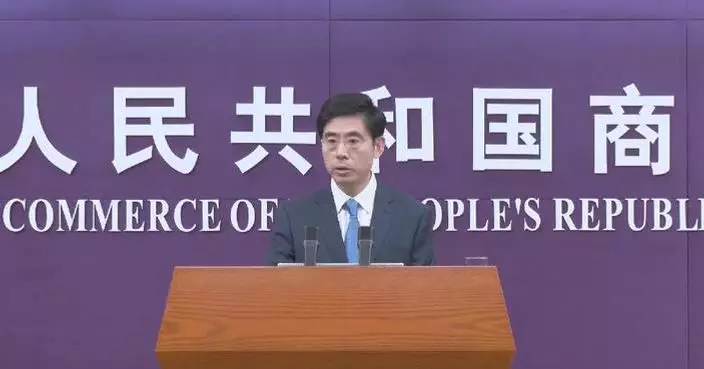
Special representative of the Chinese government on European affairs Lu Shaye, in commenting on reports alleging that China is using the widening U.S.-European Union (EU) divergence to draw Europe to its side, said Wednesday that China will not take advantage of others' misfortunes, nor will it sow discord among other countries.
Lu, also a member of the 14th National Committee of the Chinese People's Political Consultative Conference (CPPCC), China's national political advisory body, and former Chinese ambassador to France, made the statement in an interview with China Media Group on the sidelines of the ongoing annual political "two sessions" in Beijing.
The "two sessions," a key political event shaping the country's policy direction, refer to the annual meetings of the National People's Congress (NPC), China's national legislature, and the CPPCC.
Denying the allegation that the way Washington has been treating the EU recently represents "an opportunity for China-Europe relations", Lu said that such statements sound "as if China is trying to take advantage of others' misfortunes or something".
"We will not sow discord between other countries. China's foreign policy is always based on its own position, and is determined on the basis of the common interests of mankind," said Lu, who served in Paris from 2019 for five years, and assumed his new position in January.
Tensions are running high between Washington and Brussels after U.S. President Donald Trump threatened to impose 25 percent tariffs on imports from the European Union.
The seasoned Chinese diplomat said Europe needs to find out the difference between the policies of the United States and China toward them.
"With or without such a current U.S. policy toward Europe, China's Europe policy is always to advocate peace, friendship, cooperation and all-win outcome, and we have never changed. As I just said, in contrast with the U.S. policy towards Europe, China's policy towards Europe is more visionary, just and reasonable," Lu said.
This year, the third session of the 14th NPC runs from March 5 to 11, while the third session of the 14th CPPCC National Committee lasts from March 4 to 10.

China denies leveraging EU-U.S. divide
Israel aims to fuel division among Lebanese factions by holding direct talks with the Lebanese government, said a senior Hezbollah official in an interview with China Global Television Network (CGTN).
Bilal Lakkis, a member of Hezbollah's Central Committee, said Israel's military plans are failing in southern Lebanon, with no prominent military gains despite weeks of bombardment.
Israel has been bombarding most bridges over the Litani River, leaving only about two intact, in what appears to be an attempt to create an expanded buffer zone or to advance further north. Asked how Hezbollah views this strategy, Lakkis dismissed Israeli objectives as incoherent and militarily unachieved.
"Every day one of Israel's leaders says something different. Some say 'we need protection from the attacks', others say they want an occupation to settle the Israeli military. A third group says they want a buffer zone. A buffer zone needs a huge military victory, which has not been achieved. This proves that there is hesitance among them, there is no clarity. In any case, the region south of the river, some parts of it are just three kilometers between the river and the occupied Palestinian territories, so it doesn't achieve security," he said.
The United States hosted political talks for the first time in decades between the Lebanese government and Israel this week. Asked whether any agreement could be implemented without Hezbollah's consent and what Israel seeks from these negotiations, Lakkis was unequivocal in his rejection.
"The government is violating all laws. Some in Lebanon had hopes that the war on Iran would hit the brain, all the affiliates would perish. Instead they found success in holding negotiations in Pakistan. Every time Netanyahu fails militarily, he attempts to fuel the division within the Lebanese body," he said.
Asked about whether Hezbollah would avoid actions that might fuel such divisions, Lakkis emphasized the group's commitment to internal stability.
"The resistance in Lebanon doesn't want any internal instability. That is a long-standing historic stance. It's a red line for us to tamper with peace and stability. Moreover, the Arab and the Islamic support towards the resistance and Hezbollah specifically is at its best. To resist that is a way more valuable gain than to be dragged against an internal party. We are keen on national unity and Islamic unity," he said.
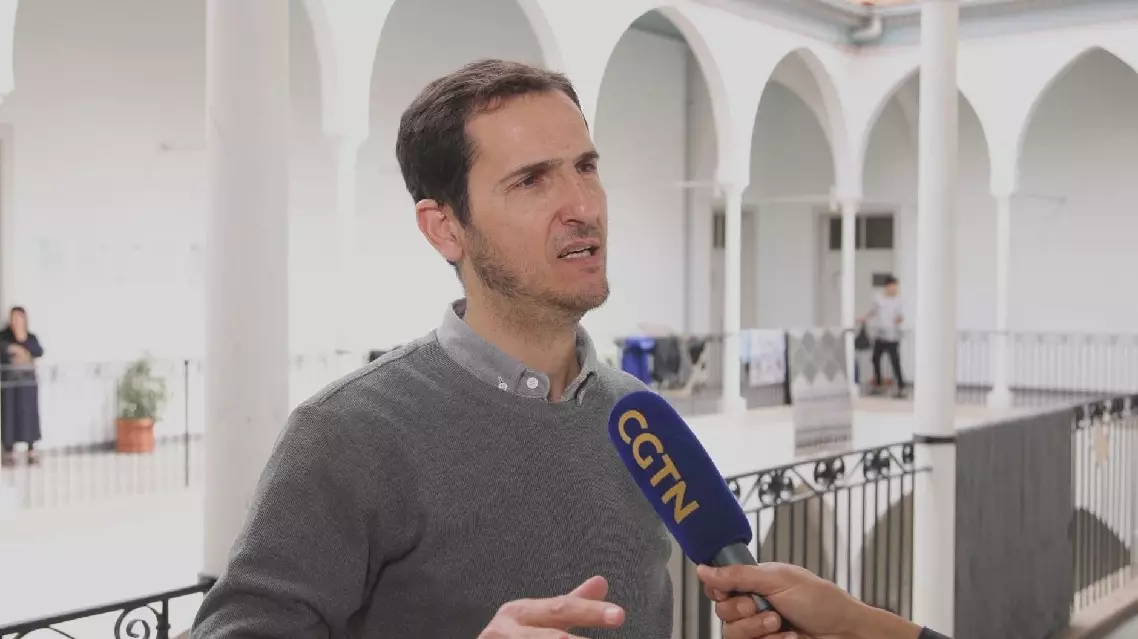
Hezbollah official says Israel aims to fuel division among Lebanese factions