China continues to hold a dominant position in global investment priorities, with the surveyed multinationals considering the country as one of the top spots in their global investment plan, according to a report recently released by the American Chamber of Commerce in South China.
The 2025 Special Report on the State of Business in South China showed that 76 percent of surveyed companies plan to reinvest their profit in China.
Among these companies, 77 percent have budgeted under 100 million U.S. dollars for reinvestment in China this year, and six percent of them have allocated more than 250 million U.S. dollars for their reinvestment plans in the coming year.
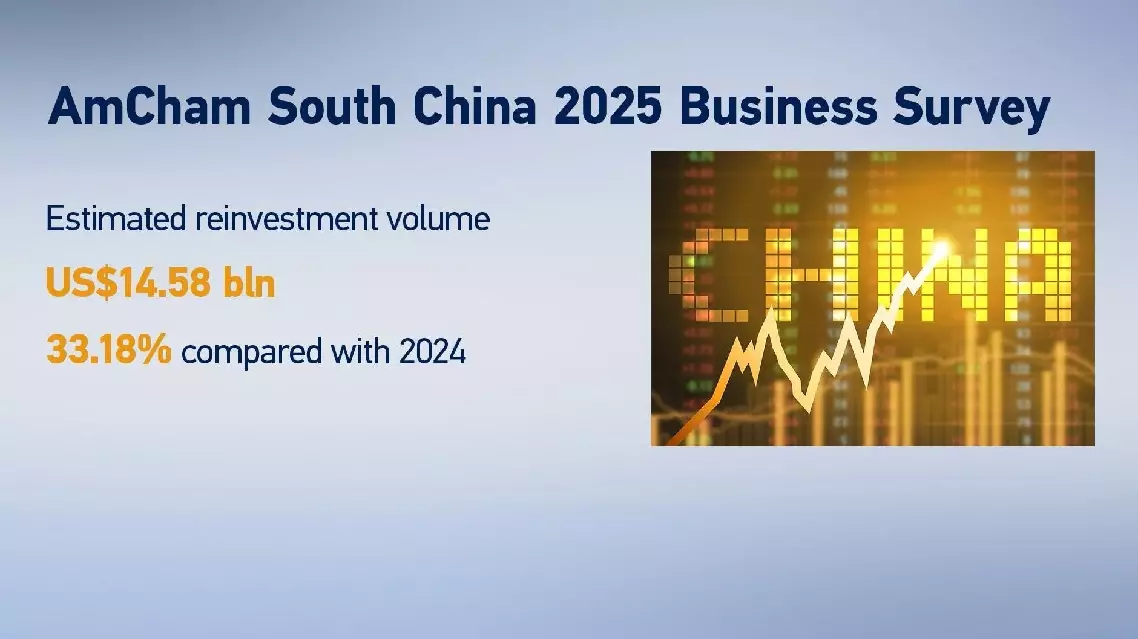
The report also estimated that the chamber's member companies have set aside a total of about 14.6 billion U.S. dollars from profits in China to reinvest in the next three to five years, marking an over 33 percent increase compared with previous figures.
Speaking to China Global Television Network (CGTN) on Friday, Le Xia, chief economist for Asia at BBVA Research, said foreign investors' growing desire to increase their investment in China was partly driven by the country's continuous development, which has yielded remarkable achievements in both traditional and emerging sectors and which helps boost the country's global competitiveness. "Many of the international investors I know are interested in this move. We can see in traditional ones like finance sectors, and also in these manufacturing sectors, and AI -- all these ones -- that China has already showed its competitiveness globally. So, [for] the foreign investors, they want to join to share the fruit of this new development," Le said.
Le also said that as China continues to vigorously encourage foreign investment, the country is going against the rising trend of protectionism led by some developed economies, which are suffering from economic troubles that can be solved through trade.
"I think that China is adopting the right approach to deal with, we can say, the rising protectionism globally. [For] these developed countries, for different reasons, they are trying to promote this kind of protectionist measures, but China is doing the opposite. It opens more to these foreign investors, opens more to their developing trade partners. I think it's a very good strategy. It not only benefits all these important trade partners. But also, it, I think, has laid a strong foundation for China and these developed economies to solve their problems," he said.
China remains one of most attractive global investment destinations: report
U.S. President Donald Trump said on Friday that he estimates a deal with Iran will be signed "in the next day or two."
Trump said in an interview with Israel's Channel 12 News that the United States and Iran will probably meet over the weekend to finalize a deal to end the war. "The Iranians want to meet and make a deal," he said.
He said "the naval blockade on Iran is helping to make a deal. I will not lift it until we make a deal," adding that "the biggest part of this deal is that it will make Israel safer. This deal is good for Israel."
According to the channel, one component of the deal under discussion is that the United States will release 20 billion U.S. dollars in frozen Iranian funds.
In exchange, Iran would give up its stockpile of enriched uranium, and would be only allowed to have nuclear research reactors to produce medical isotopes, all above ground.
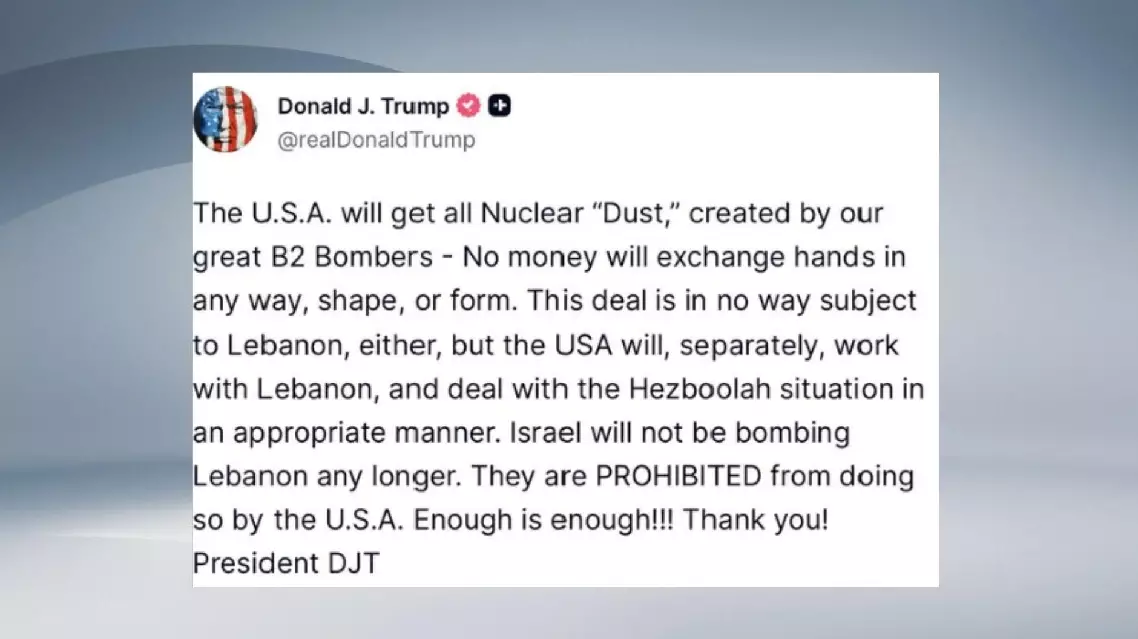
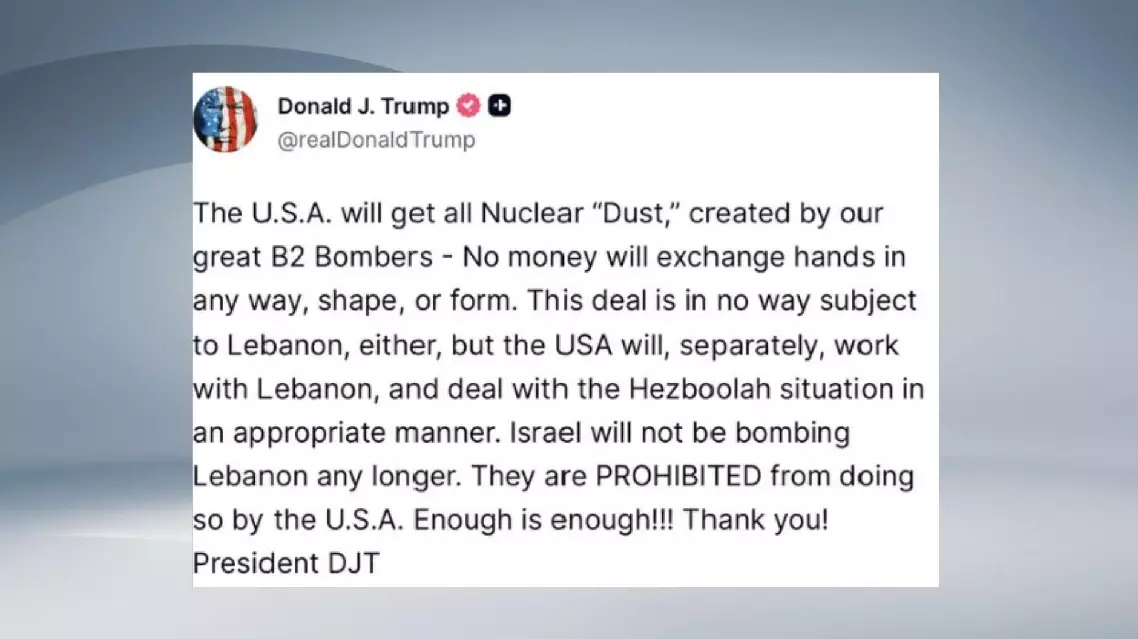
Trump also stressed that Israel must stop the strikes on Lebanon, saying, "They can't keep blowing up buildings. I'm not going to allow that."
Also on Friday, Trump said in a phone interview with Bloomberg that a deal to end the U.S.-Israeli war with Iran is mostly complete as talks over a lasting peace deal will "probably" be held this weekend in Pakistan.
Trump said in the phone interview that Iran agreed to suspend its nuclear program indefinitely, and will not receive any frozen funds from the United States.
"Most of the main points are finalized. It'll go pretty quickly," Trump said.
Asked if he would travel to Pakistan to sign the potential deal, Trump said: "I may."
Trump again denied that the moratorium on Iran's nuclear program would expire after 20 years. "No years, unlimited," Trump said.
The United States will get all of Iran's nuclear "dust" with no money having exchanged hands "in any way, shape, or form," Trump wrote on social media earlier on Friday. Multiple Western media outlets have interpreted Trump's reference to nuclear "dust" as meaning Iran's stockpile of enriched uranium.
Iran has yet to comment on any deal beyond the reopening of the Strait of Hormuz, nor on claims made by Trump that Tehran had offered concessions, including over the key issue of its nuclear program.
If the United States continues its naval blockade of the Strait of Hormuz, Iran will consider it a violation of the ceasefire between the two countries and will close the waterway, the semi-official Tasnim news agency reported Friday, citing an informed source close to the Supreme National Security Council.
The Iranian side has yet to respond to the media report on the enriched uranium issue.
The United States and Iran had their first round of negotiations in Pakistan's Islamabad last weekend to ease tension in the Middle East. The talks, which failed to produce an agreement, took place after a ceasefire was announced on April 8 between Iran, the United States, and Israel, following 40 days of fighting.
Iran tightened control over the Strait of Hormuz after the United States and Israel launched joint attacks on the country on Feb. 28. The United States also imposed a naval blockade on the strait following the failed negotiations in Islamabad.
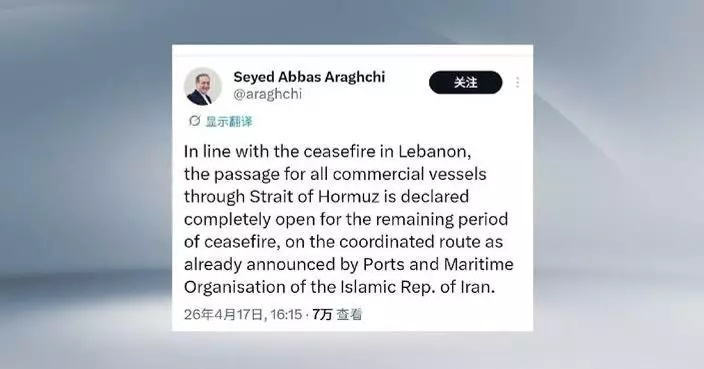
Earlier on Friday, both Washington and Tehran confirmed that the strait had been completely open for all commercial vessels. However, Trump said on Truth Social that the U.S. naval blockade would "remain in full force." In response, Iran warned of closing the waterway again if the U.S. blockade continues.
Trump says may sign deal with Iran "in the next day or two": Israeli media
Trump claims peace deal with Iran mostly complete: report