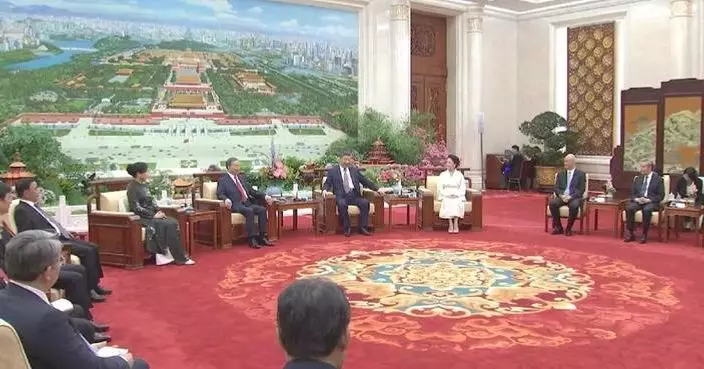
National political advisors on Thursday shared their perspectives on innovative approaches to China's education development with Chinese President Xi Jinping in a joint group meeting during the third session of the 14th National Committee of the Chinese People's Political Consultative Conference (CPPCC), the top political advisory body.
In the meeting, Xi, also general secretary of the Communist Party of China (CPC) Central Committee and chairman of the Central Military Commission, stressed strengthening the role of education in supporting scientific and technological advancement as well as talent development.
The meeting was attended by national political advisors from the China Democratic League, the China Association for Promoting Democracy, and the education sector.
Zhang Yunkai, a member of the CPPCC National Committee, reported his efforts in vocational education at the meeting.
"Today, I feel truly overwhelmed to have the chance to listen to the general secretary's guidance up close. I reported on our efforts to implement school-enterprise cooperation in ideological and political education, integrating the spirit of model workers, the ethos of work and craftsmanship into the entire vocational education process. This ensures that students can go to the frontlines of enterprises, stay in their positions, apply their skills effectively, and perform well," said Zhang, also vice-president of Hebei Jiaotong Vocational and Technical College.
Ma Jinglin, another member of the CPPCC National Committee, emphasized in his report the role of traditional Chinese culture in national education.
"One of the key topics I talked about is traditional culture. Promoting traditional culture is a strategic priority for our country, and we hope to integrate it into all levels of national education. But, implementing this at secondary schools comes with challenges. We need to consider both the psychological characteristics of today's students and the unique features of basic education. How to effectively bridge these two factors remains an interesting issue for us," said Ma, also principal of Beijing No. 4 High School.
"I mainly reported on making breakthroughs in the construction of 'new medical disciplines' at universities and colleges to effectively promote the coordinated development of education, science, and talent. In recent years, China's medical equipment and pharmaceutical industries have reached a world-class level. Against this backdrop, we are in a strong position to further advance talent cultivation, discipline development, and industrial application of sci-tech achievements," said national political advisor Cui Yali, also professor at the College of Life Sciences under Northwest University.
National political advisor Xu Kun, also president of Beijing University of Posts and Telecommunications, reported on the transformative impact of artificial intelligence (AI) on education.
"I reported to the general secretary about how we are utilizing artificial intelligence to promote educational reform. In particular, we are leveraging China's strengths in information and communication infrastructure to enhance the advantages of smart education. As AI technology develops, our teaching methods and educational models must evolve accordingly. At the same time, we must also pay close attention to cultivating students' physical fitness, mental health, and other basic qualities," he said.
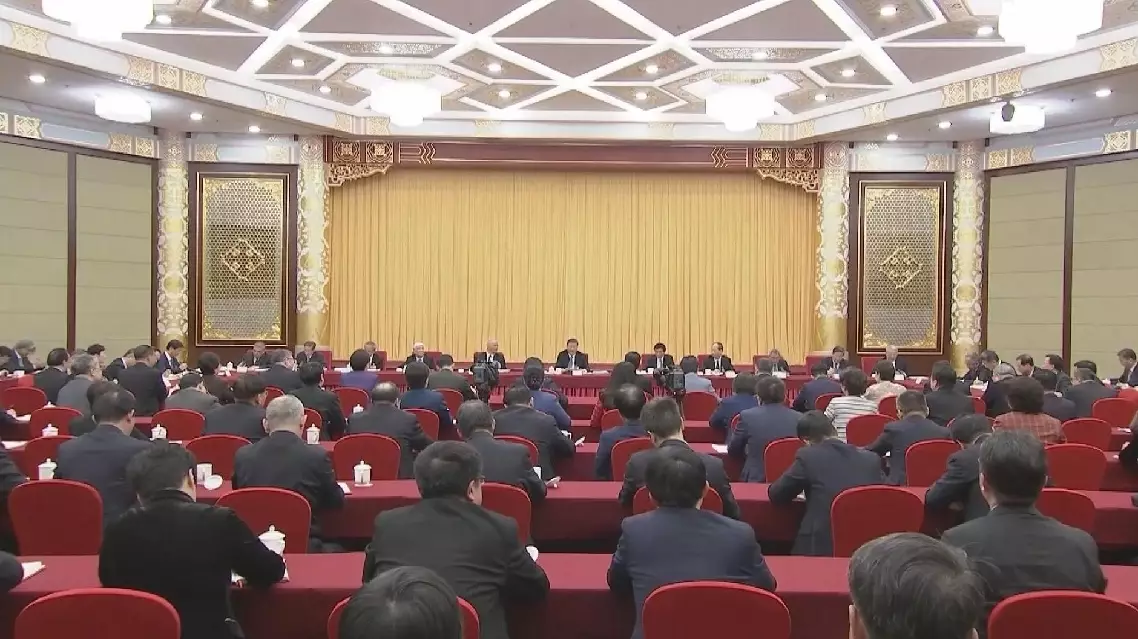
National political advisors share insights on meeting with Xi