The rapid advancements in artificial intelligence (AI) and robotics are set to fundamentally reshape the automotive industry, He Xiaopeng, chairman and CEO of China's electric vehicle maker XPeng, also a deputy to the 14th National People's Congress (NPC), said on Saturday.
Speaking at a group interview ahead of the second plenary meeting of the third session of the 14th NPC at the Great Hall of the People in Beijing, He outlined his vision for the future of mobility, emphasizing the transformative potential of AI and robotics.
"We are witnessing the dawn of an entirely new AI era. I believe two major transformations are underway. First, AI will accelerate the arrival of autonomous driving and even fully driverless vehicles. Second, the automotive industry is beginning to merge with robotics," he said.
According to He, XPeng is positioning itself at the forefront of the global race toward autonomous driving.
"In 2024, XPeng took the lead in the country in mass-producing and delivering end-to-end model for autonomous driving. In 2025, we are exploring the accelerated implementation of Level 3 (L3) autonomous driving, and we believe that this year we will surpass our global competitors across the board. By 2026, XPeng aims to explore Level 4 (L4) driverless capabilities in parking scenarios, including fully driverless parking and vehicle retrieval in parking lots. This will propel the development of the entire Chinese autonomous driving industry," he said.
As a legislator, He said that he has proposed initiatives to establish China's leadership in autonomous driving standards, with the hope that these standards will place the country at the forefront of the global regulatory framework.
Beyond autonomous vehicles, XPeng is venturing into robotics as part of its long-term strategy.
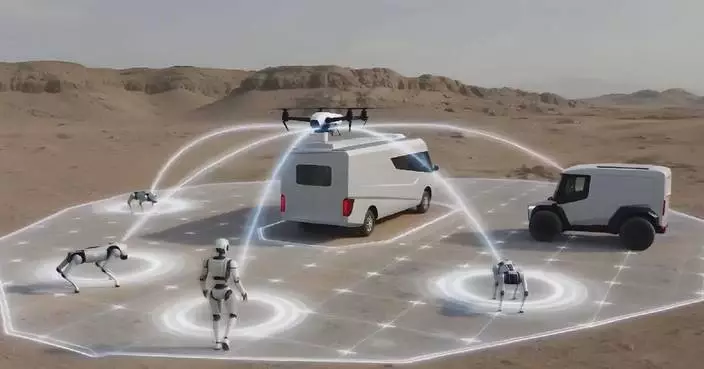
"Xpeng has been engaged in humanoid robot development for the past five years, categorizing these robots into five levels from L1 to L5, similar to the levels of autonomous driving. Currently, humanoid robots are primarily at the early stages of L2. We believe that to successfully commercialize humanoid robots, it is essential to achieve L3 capabilities, which involves fully integrating their hands, feet, mouth, eyes, and brain," he said.
Leveraging its expertise in robot development and policy support from the government, XPeng aims to mass-produce industrial humanoid robots with L3 capabilities by 2026, according to He.
XPeng's ambitions extend beyond road-based mobility. The company has also set its sights on the burgeoning low-altitude economy in China. XPeng has developed a modular flying car, dubbed the "Land Aircraft Carrier," which integrates a passenger-carrying flight module into a conventional vehicle. The company plan to achieve mass production and delivery of the bold innovation by 2026, He said.
XPeng's vision is clear: to explore future mobility where driverless vehicles navigate urban landscapes, low-altitude flying cars traverse city-to-city travel, and robots assist in factories and communities. The CEO said that he is looking forward to the day when China's high-tech products reach global markets sooner, benefiting consumers worldwide.

AI, robotics expected to revolutionize auto industry: XPeng CEO