Despite the improvement in its flood prevention system, China should stay alert as extreme rainstorms and floods keep occurring and become increasingly severe, according to Minister of Water Resources Li Guoying.
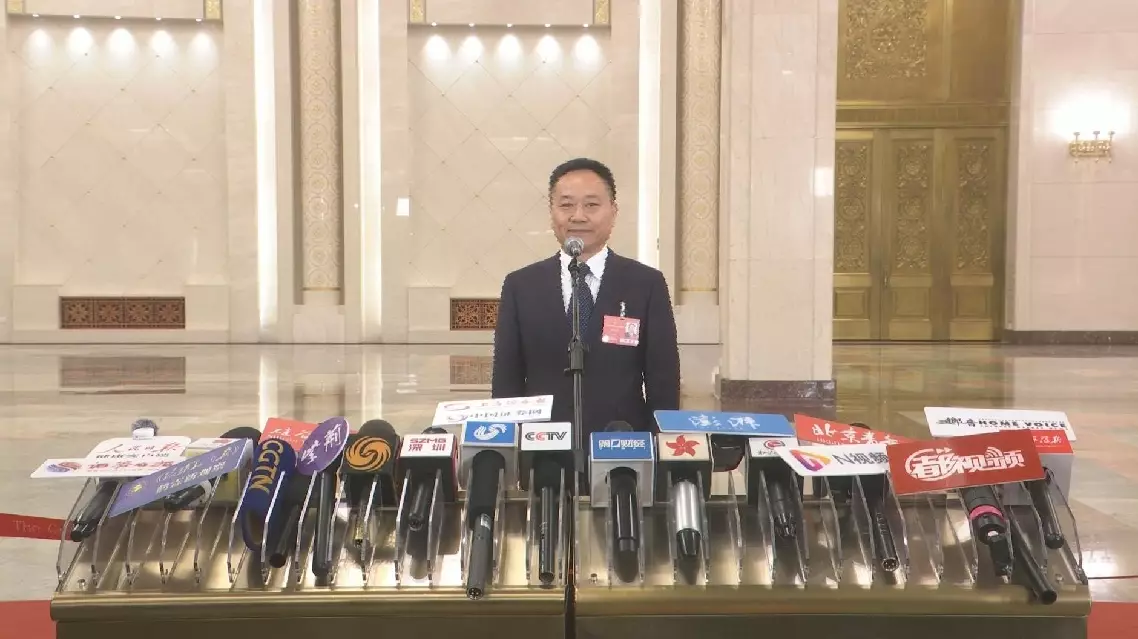
In a group interview after the second plenary meeting of the third session of the 14th National People's Congress (NPC) in Beijing on Saturday, Li elaborated on the efforts the water resources ministry has made in flood prevention and control.
"In recent years, as global climate change has growing impacts, extreme rainstorms and floods have occurred frequently in China. The Ministry of Water Resources has been actively promoting the construction of three systems to enhance the flood prevention system and capacity building. The first one is the river basin flood control engineering system. The second one is the rainfall and water monitoring and forecasting system. The third one is the flood defense system," he said.
Li said the basin flood control engineering system is composed of three major parts -- reservoirs, river courses and embankments, as well as flood storage areas.
According to Li, reservoirs are built to enhance the ability to actively control floods. So far, 94,877 reservoirs of various types have been built across the country, with a flood control storage capacity of 185.6 billion cubic meters.
Rivers and embankments are designed to enhance the flood discharge or drainage capacities. So far, 325,000 kilometers of various river embankments have been built across the country.
Flood storage areas are used to store floods that exceed rivers' carrying capacity. So far, 98 national-level flood storage areas have been built nationwide, with a flood storage capacity of 109 billion cubic meters.
According to Li, the rainfall and water monitoring and forecasting system consists of three parts -- meteorological satellites and rainfall radars, which monitor and forecast rain in the clouds; rainfall station network, which is mainly responsible for monitoring and forecasting rainfall on the ground; and the hydrological station network, which monitors and forecasts water in the river.
As for the flood defense system, Li said it comprises three mechanisms.
The first one is the responsibility implementation mechanism, which prompts people in charge at all levels to clearly know and fulfill their responsibilities in fighting control.
The second one is the supportive mechanism for decision-making, which uses digital platforms to simulate flood scenarios and predict possible risks, as well as the operations of the flood prevention engineering system.
The third one is the dispatching and command mechanism, which clarifies the work procedures of water conservancy departments at all levels in terms of decision-making, instruction issuance and execution, so as to ensure that flood defense work can be carried out effectively, orderly, and efficiently.
"These three systems played an important role in last year's flood prevention and control work. In the flood season of 2024, 1,321 rivers across the country were flooded, and the water conservancy department issued 4,303 flood warnings in advance and 30,100 instructions of various types. A total of 6,929 large and medium-sized reservoirs across the country were put into flood control work, intercepting and storing 147.1 billion cubic meters of flood water, reducing the number of flooded towns by 2,330, cutting the number of flooded farmland by 16.87 million mu (1.12 million hectares), and avoiding the relocation of 11.15 million residents, thus protecting people's lives and property and minimizing the flood-caused losses to the greatest extent possible," he said.
"Overall, China's flood prevention system and capability are gradually improving. However, the trend that extreme rainstorms and floods keep occurring and become more severe has not changed. Therefore, flood prevention work should never be taken lightly at any time," Li stressed.
Going forward, the Ministry of Water Resources will continue its efforts to improve the management of rivers, lakes and reservoirs, and strengthen the construction of the three systems, according to Li.
The minister said efforts will be made to accelerate the modernization of the country's flood prevention system and capability, so as to strengthen the foundations to protect the lives and property of the people.
China's flood prevention system, capability to keep improving: water resources minister