The chief economist for Greater China at ANZ Bank has expressed confidence in China's economic growth outlook, attributing the optimism to insights from the 2025 government work report.
This year's China government work report vows to increase support for small and medium-sized high-tech companies, including unicorns and a newly mentioned term - "gazelle companies". The government also aims to attract more private capital to invest in national-level infrastructure projects.
In an exclusive interview with China Global Television Network (CGTN), Raymond Yeung, the Chief Greater China economist of one of Australia's four biggest banks - ANZ, analyzed the impact of these private sector-friendly policies on China's overall economy, and the other signals delivered by the government work report.
He believes these policies demonstrate the Chinese government's commitment to fostering technological development within the economy while emphasizing the importance of the private sector's role in driving innovation.
"It's clear that what happened in the last few months, especially after DeepSeek and many other new startups, that the success has boosted confidence that China is still a very important source of innovation globally. So, I think this is the right direction," he said.
China's 2025 government work report, presented Wednesday at the third session of the 14th National People's Congress (NPC) for deliberation, sets the deficit-to-GDP ratio at approximately 4 percent, marking a one-percentage-point rise from the previous year.
The government work report submitted by Premier Li Qiang to the NPC session says China will make good use of revenues, bonds and other fiscal funds to ensure that fiscal policies provide sustained and more effective support.
Yeung stated that the four-percent official fiscal deficit indicates the government's intention to adopt a highly proactive approach to fiscal policy support.
"This year, having a 100 basis point more of fiscal deficit means that the government will try to rely on the recent positive momentum of the economy and to secure the growth momentum going forward. Now, obviously, the question is not how much the governments are willing to spend to the economy, but also how they're going to use the money is more important. So, I think that my focus is not just about whether this is four percent or five percent or three percent. It is more about how the government is going to use the money. And is it willing to it really able to execute different types of, say, infrastructure projects, consumption support, or even other measures to offset some of the external head winds from very uncertain global environment. I think this means more to me than the number itself," he said.
China will issue a total of 1.3 trillion yuan (about 182 billion U.S. dollars) of ultra-long special treasury bonds in 2025, up 300 billion yuan from last year, according to the government work report.
"I think the issue of 1.3 trillion [yuan] of ultra long bond is in line with our expectation. We do believe that in the future, this type of ultra long bond or extending the duration of bond issue will be a new normal," he said.
Yeung also noted that this strategy aligns closely with China's industrial development goals, as much of the progress focuses on long-term economic benefits. He added that extending the timeline would allow for the funding of additional projects.
For the first time, the government work report has emphasized stabilizing the real estate market as part of its overall policy framework.
The economist highlighted that signs of recovery are emerging in China's real estate sector, underscoring the importance of maintaining stability as the industry navigates its way back to strength.
"In the last few months, we have seen some improvement in some cities in terms of the property prices. Under these 70 cities, real estate index, we've seen more cities reporting positive month on month improvements in property prices. Now, I would regard these as green shoot, but more needs to be done to sustain the improvement in momentum. At this stage, it is still too early to conclude that the property market is recovering. I would say that this year is a year of stabilization in the real estate market. Hopefully that would be less contraction in property investment and also some improvement in property price in certain cities. We need to wait for perhaps one or two years to have a broad-based recovery for real estate prices, also a sustained effort for the local government to execute the central government mandate to stabilize property prices. I think we will be able to see some improvement, especially in the second half of this year," he said.
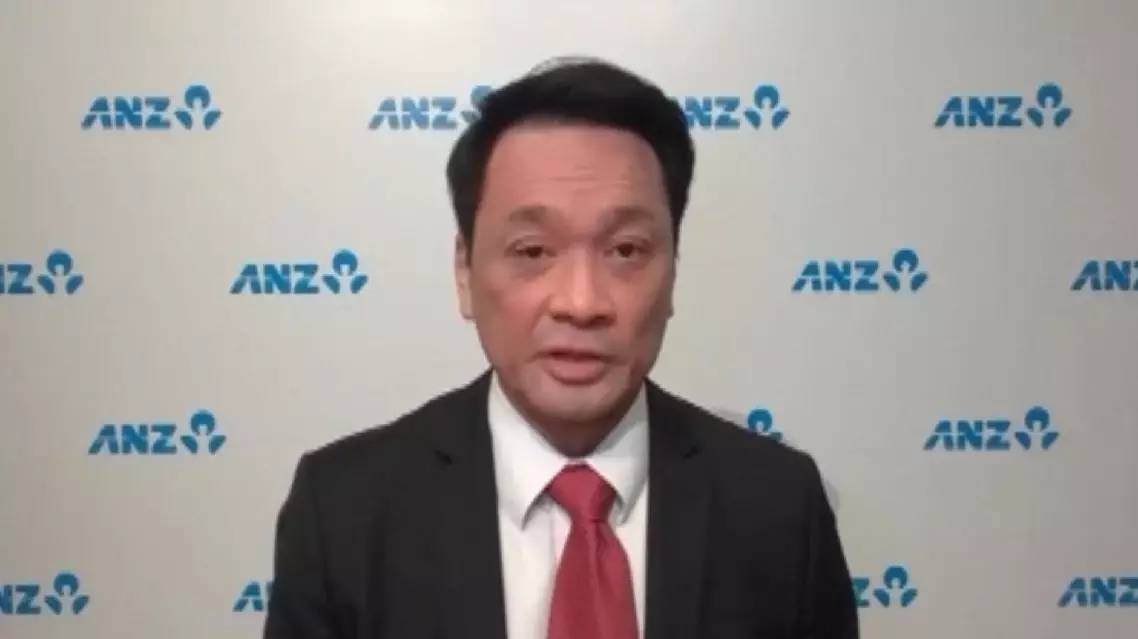
Economist confident in China's economic growth following 2025 work report