LOS ANGELES--(BUSINESS WIRE)--Mar 11, 2025--
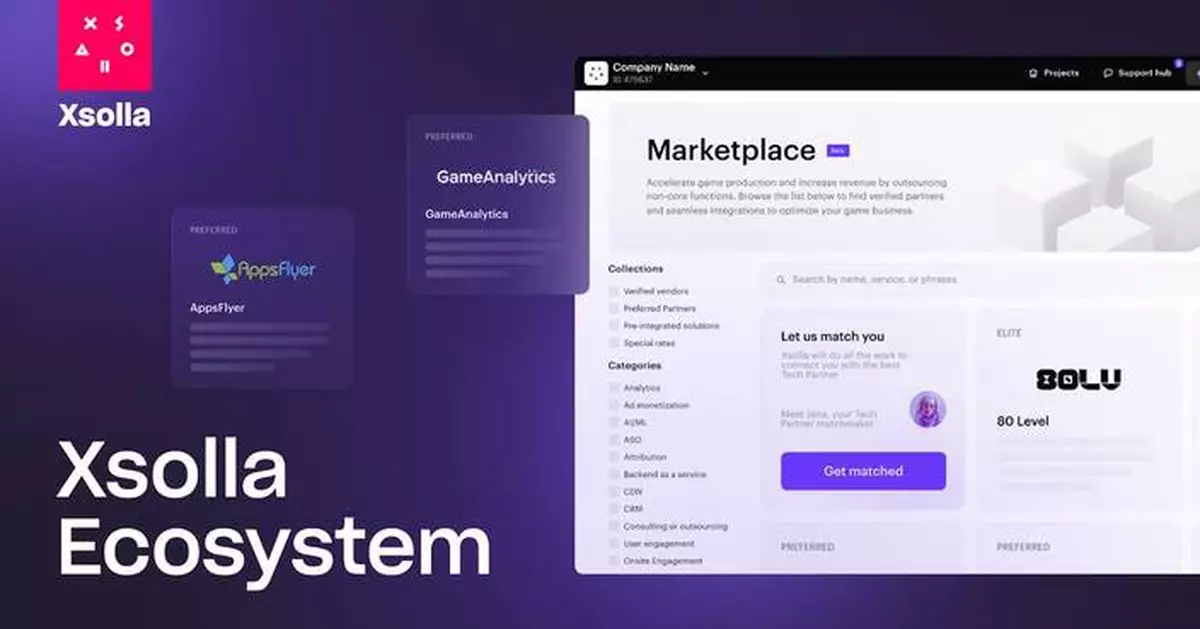
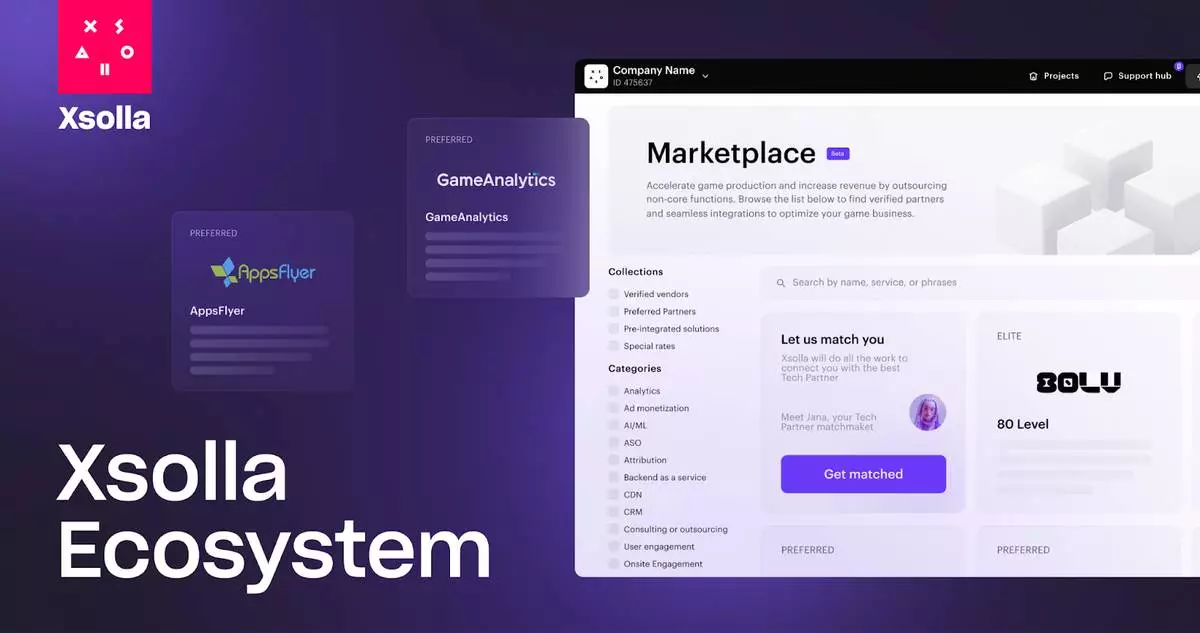
Xsolla, a leading global video game commerce company, announces the launch of the Xsolla Ecosystem, a platform designed to create a connected network of trusted partners and vendors for game developers. Through the Ecosystem Marketplace, available via Publisher Account, developers can access a curated selection of vendors, leveraging Xsolla’s pre-established integrations and exclusive rates. This interconnected ecosystem simplifies vendor selection, fosters collaboration, and enables developers to make more informed business decisions while reducing development resources and operational costs.
This press release features multimedia. View the full release here: https://www.businesswire.com/news/home/20250311165336/en/
Unlike the complexity of sourcing and accessing credible vendors in today’s competitive market, Xsolla Ecosystem provides game developers with a pre-validated marketplace of trusted partners. This solution eliminates the risks of delays, subpar service quality, and increased costs associated with selecting the wrong vendors, enabling developers to focus on delivering exceptional games.
Developers can streamline their projects and achieve their goals with the Xsolla Ecosystem, which includes features such as:
“With the Xsolla Ecosystem, we’re deepening our commitment to the gaming industry by creating meaningful connections and bringing opportunities together for developers and trusted vendors,” said Chris Hewish, Chief Strategy Officer at Xsolla. “This platform simplifies the vendor selection process, accelerates game development, and ultimately contributes to successfully bringing more games to market.”
The Xsolla Ecosystem is currently available in English; additional languages are planned for future updates. Developers can access the platform through the Xsolla Publisher Account, eliminating the need for extensive setup or technical expertise.
For more information or to explore the Xsolla Ecosystem, visit: https://xsolla.pro/rws25eco
About Xsolla
Xsolla is a leading global video game commerce company with a robust and powerful set of tools and services designed specifically for the industry. Since its founding in 2005, Xsolla has helped thousands of game developers and publishers of all sizes fund, market, launch, and monetize their games globally and across multiple platforms. As an innovative leader in game commerce, Xsolla’s mission is to solve the inherent complexities of global distribution, marketing, and monetization to help our partners reach more geographies, generate more revenue, and create relationships with gamers worldwide. Headquartered and incorporated in Los Angeles, California, with offices in London, Berlin, Seoul, Beijing, Kuala Lumpur, Raleigh, Tokyo, Montreal, and cities around the world.
For more information, visit xsolla.com
Graphic: Xsolla
The San Diego Padres have reached an agreement to sell control of the team to an investor group led by Kwanza Jones and José E. Feliciano.
The family of late owner Peter Seidler formally announced the deal Saturday. The sale must still be approved by Major League Baseball.
The deal with private equity billionaire Feliciano and his wife took shape last month at an MLB-record valuation of $3.9 billion. The Padres' announcement of the deal didn't give specifics on the members of the investor group or the purchase price.
“The Padres are more than a baseball team; they are a unifying force in San Diego, rooted in community, connection and belonging,” Jones and Feliciano said in a joint statement. “As life and business partners, and as a family, we are honored to lead this next chapter together. We have worked hard for everything we have achieved, and we have built it together. We see that same spirit in this team and its fans, and we know what it takes to win. We are committed to showing up, listening and earning the trust of this community while building on the strong foundation established by the Seidler family.
“This is about more than baseball — it’s about boosting the pride, energy, and connection that define the Padres, investing in community, deepening belonging and ensuring this team remains accessible and endures for generations. We are all in — with the goal of bringing a World Series championship to San Diego.”
Seidler’s family began to explore a sale of the Padres last November, two years after the death of the popular Peter Seidler, who became the Padres' primary owner in 2020. His brother, John Seidler, has served as the Padres’ chairman since his death.
“When I became control person, my goal was to continue building on our recent success in pursuit of a World Series championship for the city of San Diego and our faithful fans,” John Seidler said in a statement. "As I pass the baton to Kwanza and José, I do so with full confidence that they share that vision as well as the Padres' deep commitment to San Diego. It’s what the team, our fans and the community deserve. Our family loves this team.”
Peter Seidler joined the Padres' ownership group in 2012 when John Moores sold the team for $800 million to a group headed by Ron Fowler. Seidler took over and immediately endeared himself to San Diego's fans with his aggressive financial backing of general manager A.J. Preller, who built a team that has reached the playoffs in four of the past six years.
The Padres have been a hot ticket for several years as San Diego's only team in the four biggest North American sports leagues, ranking second in the majors in attendance last season. Preller's roster is off to another strong start this season, sitting second in the NL West at 19-12 heading into a home game against the Chicago White Sox on Saturday night.
Jones and Feliciano already got a start on their new endeavor last month when they traveled to Mexico City to watch the Padres' international series against the Arizona Diamondbacks. The couple was spotted sitting with Padres CEO Erik Greupner.
Feliciano will become the second Latino owner in baseball, joining Los Angeles Angels owner Arte Moreno. Latino and Hispanic players comprise roughly 30% of major league rosters.
AP MLB: https://apnews.com/MLB
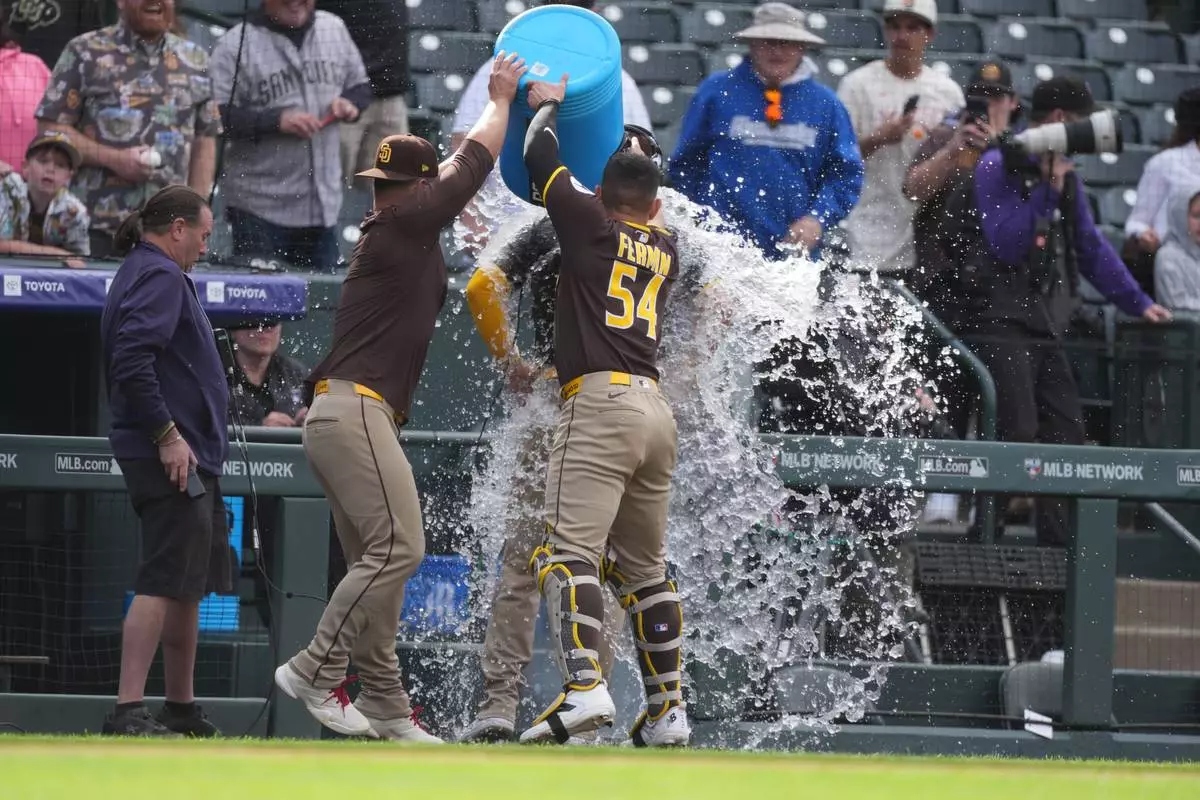
San Diego Padres first baseman Ty France, left, and catcher Freddy Fermin, right, douse Gavin Sheets as he does a television interview after leading the Padres to a victory over the Colorado Rockies in a baseball game Thursday, April 23, 2026, in Denver. (AP Photo/David Zalubowski)
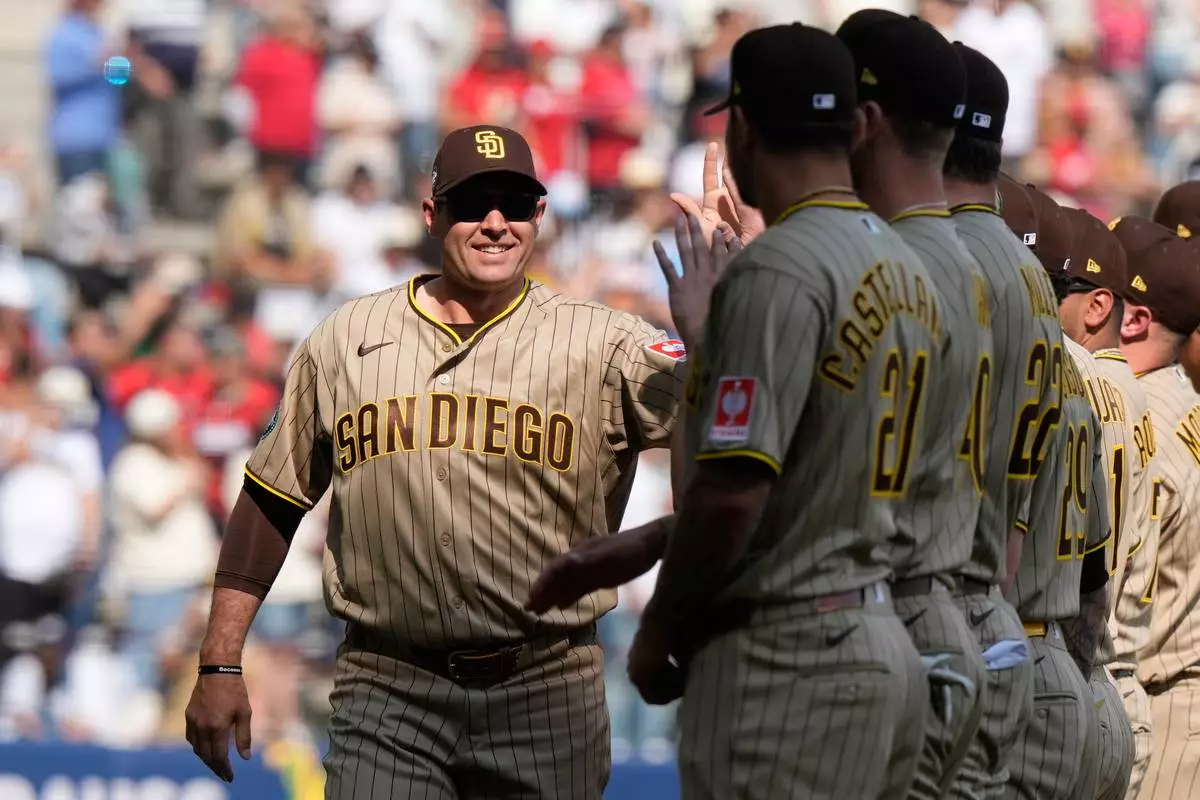
San Diego Padres' coach Craig Stammen, left, enters the field prior to a baseball game against Arizona Diamondbacks in Mexico City, Saturday, April 25, 2026. (AP Photo/Fernando Llano)
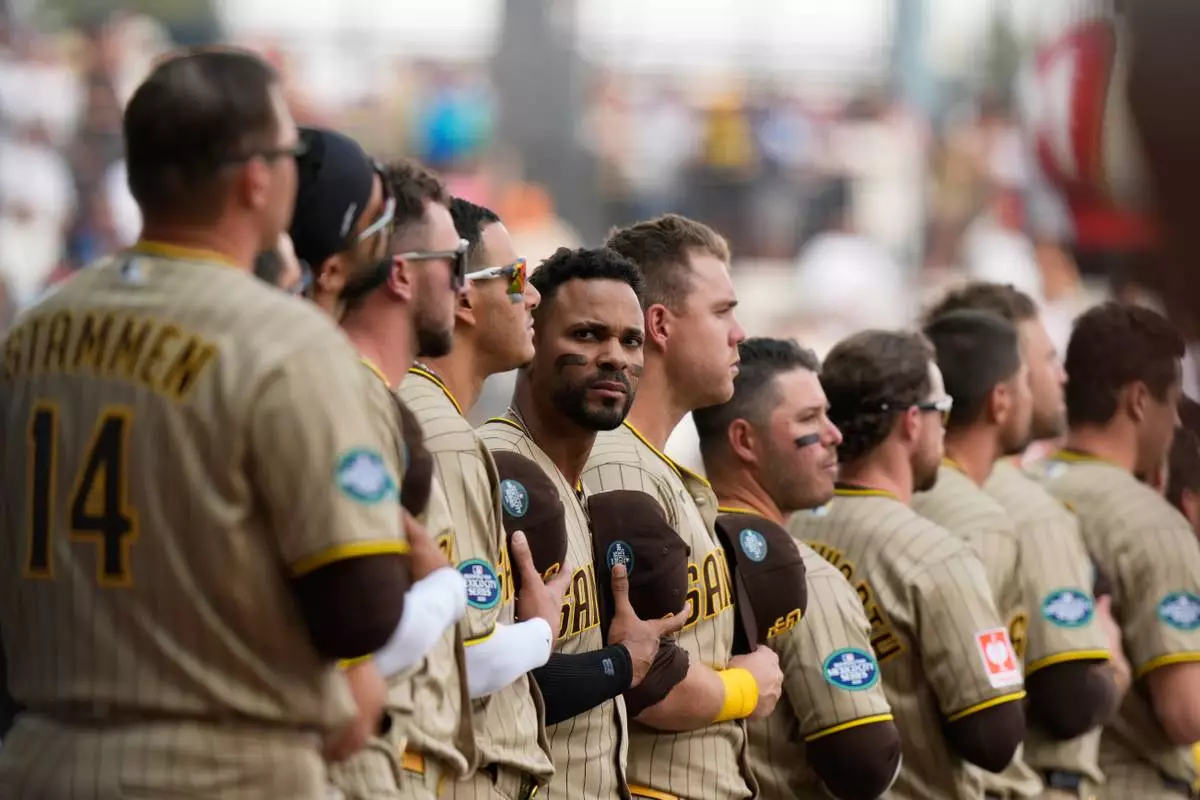
San Diego Padres' Xander Bogaerts, center, and teammate stand line prior to a baseball game against Arizona Diamondbacks in Mexico City, Saturday, April 25, 2026. (AP Photo/Fernando Llano)