The Top 100 organizations generate $4.6 trillion USD in annual revenues, representing 4.4% of the global economy
LONDON, March 12, 2025 /PRNewswire/ -- Clarivate Plc (NYSE:CLVT), a leading global provider of transformative intelligence, today revealed its 2025 ranked list of Top 100 Global Innovators – the organizations at the forefront of technology research and innovation worldwide.
The Top 100 organizations prioritize innovation as a central part of their business strategy. Their investment levels in science, engineering, product design and problem-solving is, on average, 8.8% of their revenues. Across the Top 100, this was almost $290 billion USD.
New this year: This year, Clarivate analyzes the convergence phenomenon – the integration of various scientific and engineering fields that promote the spread of innovation into products – through five macro-forces: sustainability, wellbeing, mobility, connectivity and automation. Within the top 0.5% of the most critical and valuable protected ideas, convergent inventions, those overlapping between innovation forces, account for almost 40%.
Geographical spread: Eleven countries and regions are identified in this year's list – one more than last year. Japan maintains its position as the biggest contributor to the Top 100 entities, with 33 organizations named, although it has seen a decrease of five since last year. The United States has 18 organizations listed this year, Taiwan has 13, Germany and South Korea both have eight, France has seven, Mainland China has six, Switzerland has three, Netherlands has two, and Sweden and Finland, which is back on the list this year, both have one.
Industry sectors: There has been little change in the industry sector representation compared to 2024, with movements up and down by one or two individual representations. Four industry sectors saw an increase and five declined this year. Electronics and computing equipment continues to have the most Top 100 entities, followed by Semiconductors, Industrial systems, and Automotive.
Gordon Samson, President, Intellectual Property, Clarivate, said, "Being recognized as a Top 100 Global Innovator is a remarkable achievement given the pace of change - since 2000, we've seen an 80-fold increase in the volume of inventions. Competition is more global than ever before, and developments in one region can have a significant global impact. Hyperconnectivity and technological convergence play a pivotal role in driving innovation. The Top 100 organizations target innovation at the deployment and diffusion of technology and knowledge."
Other key findings from the 2025 report include:
- Samsung Electronics maintains its position as the #1 ranked global innovator.
- Six companies awarded Top 100 status for the first time: Samsung Electro-Mechanics, GE Aerospace, Siemens Energy, CATL, FORVIA and Caterpillar.
- Six companies re-enter the Top 100: Nokia, NTT, Micron Technology, TE Connectivity, Quanta Computer and Asus.
- 16 all-time recipient organizations retained Top 100 Global Innovator status: Samsung Electronics, Honda, Toyota, LG Electronics, Panasonic, Sony, Qualcomm, Toshiba, Hitachi, Ericsson, Dow, Fujitsu, Boeing, Shin-Etsu Chemical, Honeywell and NEC.
The Top 100 Global Innovators rankings are generated by the Clarivate Center for IP and Innovation Research. Their analyses are underpinned by rigorous research leveraging the proprietary Derwent Strength Index, derived from the Derwent World Patents Index (DWPI) and global patent data to measure the influence of ideas, their success and rarity, and the investment in inventions.
To learn more, please visit our Top 100 Global Innovators 2025 site.
Detailed Methodology
The Top 100 Global Innovators uses a complete comparative analysis of global invention data to assess the strength of every patented idea, using measures tied directly to their innovative power. To move from the individual strength of inventions to identifying the organizations that create them more consistently and frequently, Clarivate sets two threshold criteria that potential candidates must meet and then adds a measure of their patented innovation output over the past five years.
For full information, please visit our Top 100 Global Innovators 2025 methodology site.
About Clarivate Center for IP and Innovation Research
Combining more than 60 years of IP experience, the Clarivate Center for IP and Innovation Research empowers organizations worldwide to excel by providing expert guidance grounded in pioneering benchmarks and data-driven insights. Bringing together senior practitioners, consultants and data analysts, the Center performs research to establish and disseminate benchmarks that guide management and strategy. It works with legal, IP and innovation leaders to optimize IP operations and technology and improve IP decision-making, supported by industry-leading data, analytics and proven practices.
About Clarivate
Clarivate is a leading global provider of transformative intelligence. We offer enriched data, insights & analytics, workflow solutions and expert services in the areas of Academia & Government, Intellectual Property and Life Sciences & Healthcare. For more information, please visit www.clarivate.com
Media contact:
Sofia Nogués, Sr. External Communications Manager
newsroom@clarivate.com
** The press release content is from PR Newswire. Bastille Post is not involved in its creation. **
Clarivate Reveals Top 100 Global Innovators 2025
|
New platform known as 'Avatar' aims to give autonomous AI agents verified identity, credentials and digital asset access to enable agentic economy
HONG KONG, April 15, 2026 /PRNewswire/ -- Zetrix AI Berhad ("Zetrix AI") and the China Academy of Information and Communications Technology ("CAICT") unveiled a new initiative: the blockchain-based trust protocol for artificial intelligence agents, pitching it as critical infrastructure for an emerging "agentic economy" in which AI systems act, transact and communicate on behalf of people and companies.
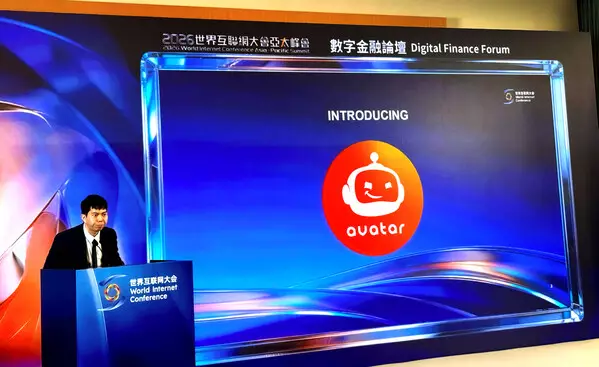
Launched at the World Internet Conference Asia Pacific in Hong Kong, the platform — Avatar (http://avatar.inc) — allows individuals and enterprises to create agentic AI "digital twins" trained on their personality, preferences, knowledge and communications style. Those agents can then interact with users, other AI agents and online systems to carry out tasks with a verified identity layer and access to credentials or digital assets.
The announcement comes as companies push beyond chatbots toward autonomous systems that can negotiate, coordinate, execute workflows and represent users in digital environments. Avatar enables this by providing a trust protocol to verify who an agent represents, what it is authorised to do, and whether the assets or credentials it uses are real.
Built on a hybrid OpenClaw and pipeline framework and integrated with the Astron and Zetrix blockchains, Avatar is designed to let AI agents access verifiable credentials, including identity, professional qualifications and digital assets. The platform is set to also feature a CAICT-certified security framework and an open agent task store where third-party developers can publish their own specialised agents.
"Blockchain-empowered agentic AI will form the trust foundation for next-generation autonomous digital interactions" said Mr. You Xiao Yu, Vice President of Astron CAICT. "As agents begin acting on behalf of individuals and enterprises, the secure and trustworthy execution becomes non-negotiable."
Avatar is not just another AI assistant, but as infrastructure for a new category of internet activity built on verified machine-led engagement between people, companies and autonomous software agents.
"'Agents that represent their human users and/or companies herald a new wave of agentic tasks that require knowing who you are transacting with and having access to verifiable credentials or digital assets required to complete the task" said Mr. TS Wong, Group Managing Director of Zetrix AI, which developed the Zetrix layer-1 public blockchain.
During the showcase, Mr. CZ Wong, Chief AI Officer of Zetrix AI and architect of Avatar, outlined a future in which agentic AI avatars have the following interaction modes.
For executives and professionals, the company envisions avatars that can onboard employees, answer strategic questions and preserve institutional knowledge beyond the limits of human availability.
For celebrities and public personalities, avatars could handle fan engagement and commercial interactions at scale, allowing thousands of simultaneous personalised exchanges without requiring the individual to be physically present.
For creators and influencers, Zetrix AI sees Avatar as an AI-native monetisation engine, allowing users to package expertise, run paid communities, deliver personalised teaching and extend their commercial reach far beyond real-time human bandwidth.
For companies, the pitch is more disruptive: a shift away from static websites toward autonomous corporate agents that actively seek out prospects, tailor messaging to individual customer profiles and engage in continuous, customised outreach.
For consumers, the platform offers a more personal ambition: creating an enhanced super intelligent extension of themselves trained on his or her own knowledge and preferences, that can assist the user in completing tasks. Zetrix AI says that capability could evolve into a form of verifiable digital legacy, allowing future generations to interact with a persistent, knowledge-rich representation of a person after they are no longer available.
The most far-reaching opportunity, however, may be agent-to-agent interaction, or A2A. In that model, a user's avatar could directly negotiate, collaborate, exchange information and transact with another verified avatar, without immediate human intervention. Zetrix AI says the blockchain would serve as the trust, identity and settlement layer for those machine-to-machine exchanges.
A core part of that strategy is the platform's agent store, where third-party developers can upload specialised agents for use by other participants. Those agents can integrate with user credentials to perform specific functions, while developers can also seek CAICT security certification to improve adoption among enterprises and institutions.
The move highlights a growing effort to merge blockchain-based verification with AI autonomy as concerns mount over impersonation, permissions, hallucinations and the absence of trusted identity rails in open AI ecosystems.
Zetrix AI believes that trusted agent infrastructure could become as important to the next internet era as websites were to the first and mobile apps were to the second. If that thesis holds, Avatar is not just a product launch. It is a bet that the coming AI economy will need a trust layer — and that blockchain will supply it.
About Zetrix AI Berhad
Zetrix AI Berhad ("Zetrix AI"), formerly known as MY E.G. Services Berhad, is leading the way in the deployment of blockchain technology and artificial intelligence in powering the public and private sectors across ASEAN. Headquartered in Malaysia, Zetrix AI started operations in 2000 as a pioneer in the provision of electronic government services and complementary commercial offerings in its home country. Today, it has advanced to the forefront of technology transformation in the broader region, leveraging its Layer-1 blockchain platform Zetrix and embracing the convergence of Web3, AI and robotics to enable optimally-efficient, intelligent and secure cross-border transactions, digital identity interoperability and automation solutions that seamlessly connect people, businesses and governments.
About Zetrix
Zetrix is a layer-1 public blockchain that facilitates smart contracts and delivers privacy, security and scalability. Zetrix's cryptographic infrastructure can be introduced to multiple industries to connect governments, businesses and their citizens to a global blockchain-based economy. Developed by Zetrix AI Berhad, formerly known as MY E.G. Services Berhad, the cross-border and cross-chain integration with China enables Zetrix to serve as a blockchain gateway that facilitates global trade by deploying critical building blocks for Web3 services such as Blockchain-based Identifiers (BID) and Verifiable Credentials (VC).
About China Academy of Information and Communications Technology
Founded in 1957, the China Academy of Information and Communications Technology ("CAICT") is a scientific research institute directly under the Ministry of Industry and Information Technology ("MIIT") of China. It cherishes the cultural philosophy of "Boosting prosperity with virtues and expertise" for years while adhering to the development positioning of "a specialized think-tank for the government and an innovation and development platform for the industry". Committed to "the think-tank and enabler for innovation and development in an information society", CAICT has provided strong support for major strategy, plan, policy, test, and certification for the development of the national ICT sector and the IT application, thus proving itself an important facilitator in the leapfrog development and innovation of China's information and communications sector. It has been granted hundreds of scientific and technological awards at both national and provincial levels.
In recent years, with a view to adapting to the new eco-social backdrop and requirements, CAICT has strengthened its efforts in innovation to achieve a wider and deeper research landscape. It has conducted in-depth research and foresighted planning in the fields of 4G/5G/6G, industrial Internet, smart manufacturing, mobile Internet, Internet of Things (IoT), Internet of Vehicles (loV), cloud computing, big data, blockchain, artificial intelligence (AI), future networks, virtual reality/augmented reality (VR/AR), intelligent hardware, and cyber and information security. This enables CAICT to play an important role in strategy and policy study, technological innovation, industrial development, and international cooperation related to the ICT sector and the integration of industrialization and informatization.
New platform known as 'Avatar' aims to give autonomous AI agents verified identity, credentials and digital asset access to enable agentic economy
HONG KONG, April 15, 2026 /PRNewswire/ -- Zetrix AI Berhad ("Zetrix AI") and the China Academy of Information and Communications Technology ("CAICT") unveiled a new initiative: the blockchain-based trust protocol for artificial intelligence agents, pitching it as critical infrastructure for an emerging "agentic economy" in which AI systems act, transact and communicate on behalf of people and companies.
Launched at the World Internet Conference Asia Pacific in Hong Kong, the platform — Avatar (http://avatar.inc) — allows individuals and enterprises to create agentic AI "digital twins" trained on their personality, preferences, knowledge and communications style. Those agents can then interact with users, other AI agents and online systems to carry out tasks with a verified identity layer and access to credentials or digital assets.
The announcement comes as companies push beyond chatbots toward autonomous systems that can negotiate, coordinate, execute workflows and represent users in digital environments. Avatar enables this by providing a trust protocol to verify who an agent represents, what it is authorised to do, and whether the assets or credentials it uses are real.
Built on a hybrid OpenClaw and pipeline framework and integrated with the Astron and Zetrix blockchains, Avatar is designed to let AI agents access verifiable credentials, including identity, professional qualifications and digital assets. The platform is set to also feature a CAICT-certified security framework and an open agent task store where third-party developers can publish their own specialised agents.
"Blockchain-empowered agentic AI will form the trust foundation for next-generation autonomous digital interactions" said Mr. You Xiao Yu, Vice President of Astron CAICT. "As agents begin acting on behalf of individuals and enterprises, the secure and trustworthy execution becomes non-negotiable."
Avatar is not just another AI assistant, but as infrastructure for a new category of internet activity built on verified machine-led engagement between people, companies and autonomous software agents.
"'Agents that represent their human users and/or companies herald a new wave of agentic tasks that require knowing who you are transacting with and having access to verifiable credentials or digital assets required to complete the task" said Mr. TS Wong, Group Managing Director of Zetrix AI, which developed the Zetrix layer-1 public blockchain.
During the showcase, Mr. CZ Wong, Chief AI Officer of Zetrix AI and architect of Avatar, outlined a future in which agentic AI avatars have the following interaction modes.
For executives and professionals, the company envisions avatars that can onboard employees, answer strategic questions and preserve institutional knowledge beyond the limits of human availability.
For celebrities and public personalities, avatars could handle fan engagement and commercial interactions at scale, allowing thousands of simultaneous personalised exchanges without requiring the individual to be physically present.
For creators and influencers, Zetrix AI sees Avatar as an AI-native monetisation engine, allowing users to package expertise, run paid communities, deliver personalised teaching and extend their commercial reach far beyond real-time human bandwidth.
For companies, the pitch is more disruptive: a shift away from static websites toward autonomous corporate agents that actively seek out prospects, tailor messaging to individual customer profiles and engage in continuous, customised outreach.
For consumers, the platform offers a more personal ambition: creating an enhanced super intelligent extension of themselves trained on his or her own knowledge and preferences, that can assist the user in completing tasks. Zetrix AI says that capability could evolve into a form of verifiable digital legacy, allowing future generations to interact with a persistent, knowledge-rich representation of a person after they are no longer available.
The most far-reaching opportunity, however, may be agent-to-agent interaction, or A2A. In that model, a user's avatar could directly negotiate, collaborate, exchange information and transact with another verified avatar, without immediate human intervention. Zetrix AI says the blockchain would serve as the trust, identity and settlement layer for those machine-to-machine exchanges.
A core part of that strategy is the platform's agent store, where third-party developers can upload specialised agents for use by other participants. Those agents can integrate with user credentials to perform specific functions, while developers can also seek CAICT security certification to improve adoption among enterprises and institutions.
The move highlights a growing effort to merge blockchain-based verification with AI autonomy as concerns mount over impersonation, permissions, hallucinations and the absence of trusted identity rails in open AI ecosystems.
Zetrix AI believes that trusted agent infrastructure could become as important to the next internet era as websites were to the first and mobile apps were to the second. If that thesis holds, Avatar is not just a product launch. It is a bet that the coming AI economy will need a trust layer — and that blockchain will supply it.
About Zetrix AI Berhad
Zetrix AI Berhad ("Zetrix AI"), formerly known as MY E.G. Services Berhad, is leading the way in the deployment of blockchain technology and artificial intelligence in powering the public and private sectors across ASEAN. Headquartered in Malaysia, Zetrix AI started operations in 2000 as a pioneer in the provision of electronic government services and complementary commercial offerings in its home country. Today, it has advanced to the forefront of technology transformation in the broader region, leveraging its Layer-1 blockchain platform Zetrix and embracing the convergence of Web3, AI and robotics to enable optimally-efficient, intelligent and secure cross-border transactions, digital identity interoperability and automation solutions that seamlessly connect people, businesses and governments.
About Zetrix
Zetrix is a layer-1 public blockchain that facilitates smart contracts and delivers privacy, security and scalability. Zetrix's cryptographic infrastructure can be introduced to multiple industries to connect governments, businesses and their citizens to a global blockchain-based economy. Developed by Zetrix AI Berhad, formerly known as MY E.G. Services Berhad, the cross-border and cross-chain integration with China enables Zetrix to serve as a blockchain gateway that facilitates global trade by deploying critical building blocks for Web3 services such as Blockchain-based Identifiers (BID) and Verifiable Credentials (VC).
About China Academy of Information and Communications Technology
Founded in 1957, the China Academy of Information and Communications Technology ("CAICT") is a scientific research institute directly under the Ministry of Industry and Information Technology ("MIIT") of China. It cherishes the cultural philosophy of "Boosting prosperity with virtues and expertise" for years while adhering to the development positioning of "a specialized think-tank for the government and an innovation and development platform for the industry". Committed to "the think-tank and enabler for innovation and development in an information society", CAICT has provided strong support for major strategy, plan, policy, test, and certification for the development of the national ICT sector and the IT application, thus proving itself an important facilitator in the leapfrog development and innovation of China's information and communications sector. It has been granted hundreds of scientific and technological awards at both national and provincial levels.
In recent years, with a view to adapting to the new eco-social backdrop and requirements, CAICT has strengthened its efforts in innovation to achieve a wider and deeper research landscape. It has conducted in-depth research and foresighted planning in the fields of 4G/5G/6G, industrial Internet, smart manufacturing, mobile Internet, Internet of Things (IoT), Internet of Vehicles (loV), cloud computing, big data, blockchain, artificial intelligence (AI), future networks, virtual reality/augmented reality (VR/AR), intelligent hardware, and cyber and information security. This enables CAICT to play an important role in strategy and policy study, technological innovation, industrial development, and international cooperation related to the ICT sector and the integration of industrialization and informatization.
** This press release is distributed by PR Newswire through automated distribution system, for which the client assumes full responsibility. **
Zetrix, CAICT's Astron Unveil Blockchain-AI Trust Layer for Agentic AI Ecosystem