If you ask Brian Tyree Henry about taking time off, he bursts out laughing.
Since breaking out as rapper Paper Boi in the FX series “Atlanta,” he's become one of the busiest actors in Hollywood. He's worked consistently — with directors including Barry Jenkins, Steve McQueen and Chloe Zhao and big-name actors like Brad Pitt, Jennifer Lawrence, Chris Hemsworth and Melissa McCarthy. Henry's been nominated for two Primetime Emmy Awards, a Tony Award and an Oscar.
Click to Gallery
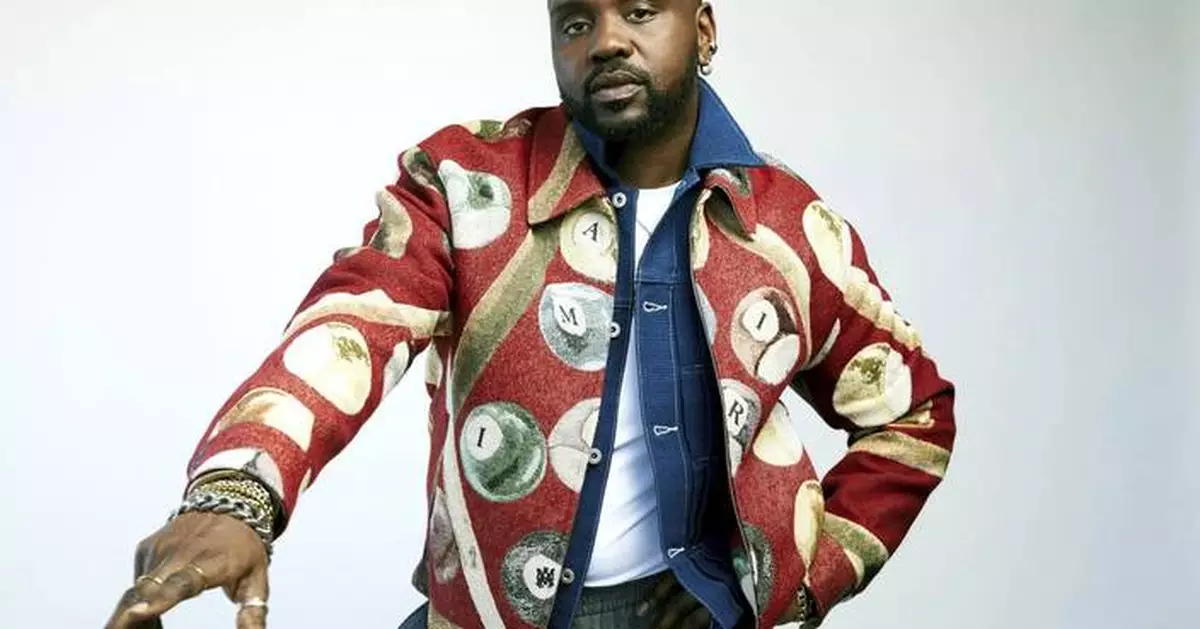
Brian Tyree Henry poses for a portrait on Wednesday, Feb. 26, 2025, in New York. (Photo by Taylor Jewell/Invision/AP)


His latest role is in the limited series “Dope Thief" for Apple TV+ premiering Friday. Henry and Wagner Moura play Ray and Manny, two longtime friends in Philadelphia who pose as federal agents, conducting fake raids to steal drugs and money. It's a series of easy scores until they rob the wrong people and become targets themselves. Soon they're hiding out from the real DEA and a drug kingpin while trying to keep their family safe.
“The minute that Wagner and I met each other, it was an instant electricity... We just felt like we knew each other all our lives," said Henry. "That is exactly what you needed for Ray and Manny.”
The first episode was directed by Ridley Scott, and the series was created and written by Peter Craig, adapted from a novel by Dennis Tafoya.
Craig describes Henry's versatility as an actor as "like a jazz musician... It’s fantastic for a writer, because you can throw him all kinds of added moments, and he’ll incorporate and use them all.”
When the opportunity to star in “Dope Thief” came about, Henry was ready for that long-awaited break — from TV. He wrapped “Atlanta” and had “about two days off” before going into another FX show, “Class of ‘09,” where he played a character’s past, present and future, and he was exhausted.
“Television is hard, you know? Like, I hear myself complaining about it; I know it’s a first world problem, but you get very attached when you’re doing a series. You're living with the character for quite a long time."
So, there Henry was at 3 a.m. on a night shoot of “Class of ‘09," wearing prosthetics as his character’s future self, when his manager presented him with the script for “Dope Thief.” “Within the first 10 pages I was incredibly attracted to Ray and also the bond he has with Manny.”
Time off otherwise really hasn't been his thing (hence the laughter), but Henry is quick to remind that he’s had two long breaks from acting. One was during the lockdown phase of the pandemic, and the other was during the Hollywood strikes.
“When you’re a person that’s constantly on the move and the universe tells you to sit your (expletive) down, you kind of have to listen,” said Henry. “I don’t think I would have stopped had the universe not said stop.”
Production was underway on “Dope Thief” when the Hollywood guild strikes were called in 2023. Henry opted to stay in Philadelphia.
“I didn’t go anywhere. I made sure to be there just in case," said Henry, who for the first time was an executive producer on the project. He wanted to be close in proximity to his local crew. They had a cookout with bouncy castles. “I would explore, or we'd go tubing and I would drive to this little town called New Hope that has a wonderful ice cream shop called Moo Hope. It was truly amazing to be present and experience that part of life for myself.”
Henry doesn't just bond with the crew on his sets but actors too, often walking away with new friends who happen to be very famous, like, say, Julia Roberts — whom he's currently filming a movie with in London. “She's somebody I truly cherish,” he said.
“It’s never going to stop being weird to me," Henry admits. “The part that is really hard for me — that I’m still fighting with — is when they tell me they’re fans of my stuff and I’m just like, ‘Shut up!’ I literally say it to their face.”
The biggest revelation about working alongside these accomplished actors is that Henry is now one of them.
“At the end of the day, now, these are my peers, these are my contemporaries, and I can’t continue to act like they’re not. I can’t continue to act like I have to shrink myself to fit in these spaces. I no longer have to do that. And what I also love is that they’ll reaffirm that for me, too ... and that's the great part.”

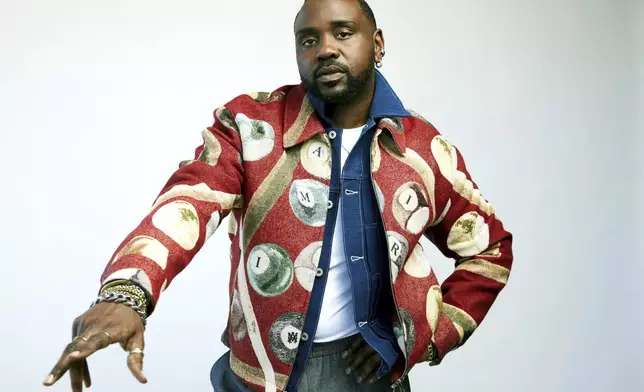
Brian Tyree Henry poses for a portrait on Wednesday, Feb. 26, 2025, in New York. (Photo by Taylor Jewell/Invision/AP)


NUSEIRAT, Gaza Strip (AP) — Sitting in her wheelchair, Haneen al-Mabhouh dreams of rebuilding her family, of cradling a new baby. She dreams of walking again. But with her leg gone, her life in Gaza is on hold, she says, as she waits to go abroad for further treatment.
An Israeli airstrike in July 2024 smashed her home in central Gaza as she and her family slept. All four of her daughters were killed, including her 5-month-old baby. Her husband was severely burned. Al-Mabhouh’s legs were crushed under the rubble, and doctors had to amputate her right leg above the knee.
“For the past year and a half, I have been unable to move around, to live like others. For the past year and a half, I have been without children,” she said, speaking at her parents’ home.
The 2-month-old ceasefire in Gaza has been slow to bring help for thousands of Palestinians who suffered amputations from Israeli bombardment over the past two years. The World Health Organization estimates there are some 5,000 to 6,000 amputees from the war, 25% of them children.
Those who lost limbs are struggling to adapt, faced with a shortage of prosthetic limbs and long delays in medical evacuations out of Gaza.
The WHO said a shipment of essential prosthetic supplies recently made it into Gaza. That appears to be the first significant shipment for the past two years.
Previously, Israel had let in almost no ready-made prosthetic limbs or material to manufacture limbs since the war began, according to Loay Abu Saif, the head of the disability program at Medical Aid for Palestinians, or MAP, and Nevin Al Ghussein, acting director of the Artificial Limbs and Polio Center in Gaza City.
The Israeli military body in charge of coordinating aid, known as COGAT, did not respond when asked how many prosthetic supplies had entered during the war or about its policies on such supplies.
Al-Mabhouh was asleep with her baby girl in her arms when the strike hit their home in Nuseirat, she said. For several weeks while recovering in the hospital, al-Mabhouh had no idea her children had been killed.
She underwent multiple surgeries. Her hand still has difficulty moving. Her remaining leg remains shattered, held together with rods. She needs a bone graft and other treatments that are only available outside of Gaza.
She was put on the list for medical evacuation 10 months ago but still hasn’t gotten permission to leave Gaza.
Waiting for her chance to go, she lives at her parents’ house. She needs help changing clothes and can’t even hold a pen, and remains crushed by grief over her daughters. “I never got to hear her say ‘mama,’ see her first tooth or watch her take her first steps,” she said of her baby.
She dreams of having a new child but can’t until she gets treatment.
“It’s my right to live, to have another child, to regain what I lost, to walk, just to walk again,” she said. “Now my future is paralyzed. They destroyed my dreams.”
The ceasefire has hardly brought any increase in medical evacuations for the 16,500 Palestinians the U.N. says are waiting to get vital treatment abroad — not just amputees, but patients suffering many kinds of chronic conditions or wounds.
As of Dec. 1, 235 patients have been evacuated since the ceasefire began in October, just under five a day. In the months before that, the average was about three a day.
Israel last week said it was ready to allow patients and other Palestinians to leave Gaza via the Israeli-held Rafah crossing between Gaza and Egypt. But it's unsure that will happen because Egypt, which controls the crossing’s other side, demands Rafah also be opened for Palestinians to enter Gaza as called for under the ceasefire deal.
Dr. Richard Peeperkorn, the WHO's representative in the occupied Palestinian territory, told The Associated Press that the backlog is caused by the lack of countries to host the evacuated patients. He said new medevac routes need to be opened, especially to the Israeli-occupied West Bank and east Jerusalem, where hospitals are ready to receive patients.
Yassin Marouf lies in a tent in central Gaza, his left foot amputated, his right leg barely held together with rods.
The 23-year-old and his brother were hit by Israeli shelling in May as they returned from visiting their home in northern Gaza that their family had been forced to flee. His brother was killed. Marouf lay bleeding on the ground, as a stray dog attacked his mangled left leg.
Doctors say his right leg will also need to be amputated, unless he can travel abroad for operations that might save it. Marouf said he can’t afford painkillers and can’t go to the hospital regularly to have his bandages changed as they’re supposed to.
“If I want to go to the bathroom, I need two or three people to carry me,” he said.
Mohamed al-Naggar had been pursuing an IT degree at the University of Palestine before the war.
Seven months ago, shrapnel pierced his left leg during strikes on the house where his family was sheltering. Doctors amputated his leg above the knee. His right leg was also badly injured and shrapnel remains in parts of his body.
Despite four surgeries and physical therapy, the 21-year-old al-Naggar can’t move around.
“I’d like to travel abroad and put on a prosthetic and graduate from college and be normal like young people outside Gaza,” he said.
Some 42,000 Palestinians have suffered life-changing injuries in the war, including amputations, brain trauma, spinal cord injuries and major burns, the WHO said in an October report.
The situation has “improved slightly” for those with assistance needs but “there is still a huge overall shortage of assistive products,” such as wheelchairs, walkers and crutches. Gaza has only eight prosthetists able to manufacture and fit artificial limbs, the WHO said in a statement to the AP.
The Artificial Limbs and Polio Center in Gaza City, one of two prosthetics centers still operating in the territory, received a shipment of material to manufacture limbs just before the war began in 2023, said its director, Al Ghussein. Another small shipment entered in December 2024, but nothing since.
The center has been able to provide artificial limbs for 250 cases over the course of the war, but supplies are running out, Al Ghussein said.
No pre-made prosthetic legs or arms have entered, according to Abu Saif of MAP, who said Israel does not ban them, but its procedures cause delays and “in the end they ignore it.”
Ibrahim Khalif wants a prosthetic right leg so he can get a job doing manual labor or cleaning houses to support his pregnant wife and children.
In January, he lost his leg when an Israeli airstrike hit Gaza City while he was out getting food.
“I used to be the provider for my kids, but now I’m sitting here," Khalif said. "I think of how I was and what I’ve become.”
Prosthetic limb technician Ahmed Al-Ashqar, 34, prepares a leg amputation splint in the first stage of building an artificial leg at Hamad Hospital in Zawaida, central Gaza Strip, Thursday, Nov. 27, 2025. (AP Photo/Abdel Kareem Hana)
Yassin Marouf, 23, second from right, who lost his left foot and suffered a severe injury to his right leg after Israeli shelling in May, sits on a mattress in a tent surrounded by family and neighbors in Zawaida, central Gaza, Thursday, Nov. 6, 2025. (AP Photo/Abdel Kareem Hana)
Haneen al-Mabhouh, 34, who lost her leg in an Israeli strike on her home that also killed all four of her daughters, including her 5-month-old baby, shows a photo of one of her daughters on a cellphone while sitting in a wheelchair in her family home in Nuseirat, central Gaza Strip, Thursday, Nov. 6, 2025. (AP Photo/Abdel Kareem Hana)
Haneen al-Mabhouh, 34, who lost her leg in an Israeli strike on her home that also killed all four of her daughters, including her 5-month-old baby, sits in a wheelchair in her family home in Nuseirat, central Gaza Strip, Thursday, Nov. 6, 2025. (AP Photo/Abdel Kareem Hana)
Yassin Marouf, 23, who lost his left foot and suffered a severe injury to his right leg after being hit by Israeli shelling in May, lies in a tent surrounded by his family in Zawaida, central Gaza, Thursday, Nov. 6, 2025. (AP Photo/Abdel Kareem Hana)