VILNIUS, Lithuania (AP) — Belarus freed Nobel Peace Prize laureate Ales Bialiatski, key opposition figure Maria Kolesnikova and dozens of other political prisoners on Saturday, capping two days of talks with Washington aimed at improving ties and getting crippling U.S. sanctions lifted on a key Belarusian agricultural export.
President Alexander Lukashenko pardoned 123 prisoners, Belarus’ state news agency, Belta, reported. In exchange, the U.S. said it was lifting sanctions on the Eastern European country's potash sector.
Click to Gallery
A woman holds an Old Belarusian flag as she stands waiting released Belarusian prisoners at the U.S. Embassy in Vilnius, Lithuania, on Saturday, Dec. 13, 2025. (AP Photo/Mindaugas Kulbis)
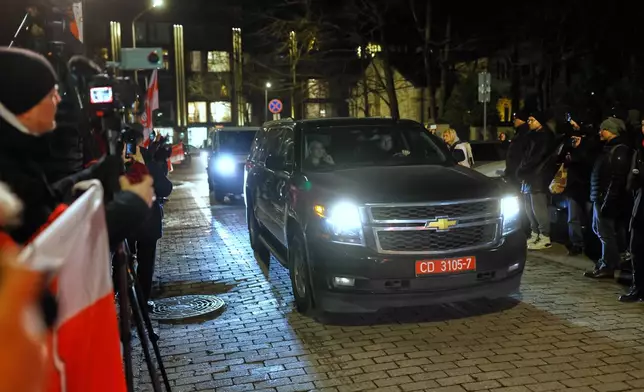
A motorcade arrives at the U.S. Embassy in Vilnius, Lithuania, on Saturday, Dec. 13, 2025. (AP Photo/Mindaugas Kulbis)
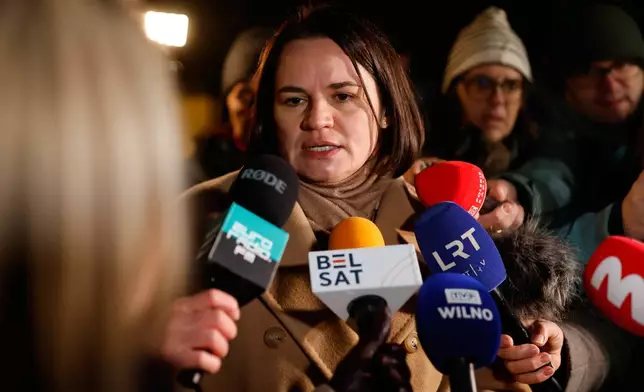
Belarusian opposition leader Sviatlana Tsikhanouskaya speaks to journalists as she waits to meet released Belarusian prisoners at the U.S. Embassy in Vilnius, Lithuania, on Saturday, Dec. 13, 2025. (AP Photo/Mindaugas Kulbis)
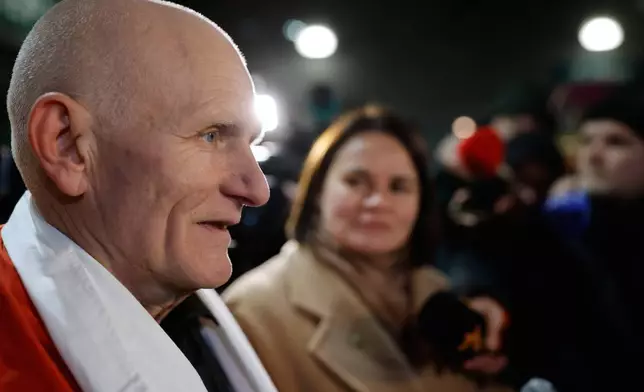
Nobel Peace Prize laureate Ales Bialiatski, one of released Belarusian prisoners, arrives at the U.S. Embassy in Vilnius, Lithuania, on Saturday, Dec. 13, 2025, as Belarusian opposition leader Sviatlana Tsikhanouskaya, background stands near. (AP Photo/Mindaugas Kulbis)
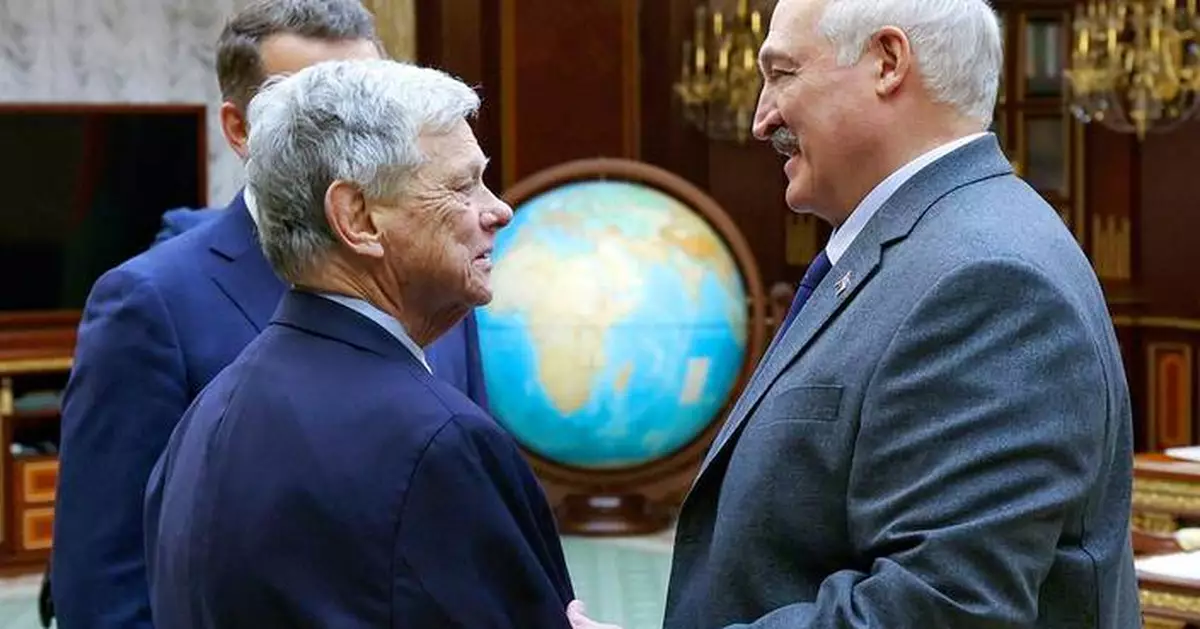
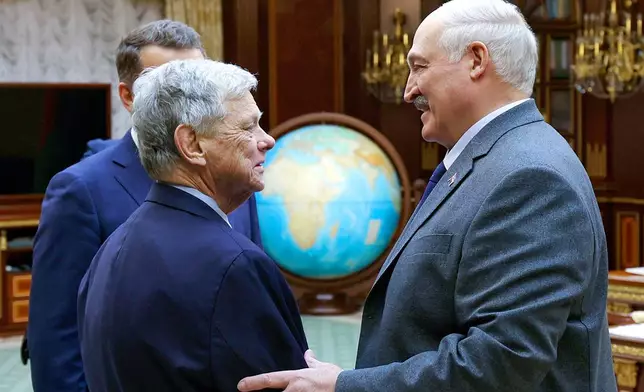
In this photo released by Belarusian presidential press service, Belarusian President Alexander Lukashenko, right, and U.S. Presidential envoy John Coale shake hands during their meeting in Minsk, Belarus, Friday, Dec. 12, 2025. (Belarusian Presidential Press Service via AP)
A close ally of Russia, Minsk has faced Western isolation and sanctions for years. Lukashenko has ruled the nation of 9.5 million with an iron fist for more than three decades, and the country has been repeatedly sanctioned by the West for its crackdown on human rights and for allowing Moscow to use its territory during the 2022 invasion of Ukraine.
John Coale, the U.S. special envoy for Belarus who met with Lukashenko in Minsk on Friday and Saturday, described the talks to reporters as “very productive" and said normalizing relations between the two countries was “our goal,” Belta reported.
“We’re lifting sanctions, releasing prisoners. We’re constantly talking to each other,” Coale said, adding that the relationship between the U.S. and Belarus was moving from “baby steps to more confident steps” as they increased dialogue, the Belarusian news agency reported.
Belarus has released hundreds of prisoners since July 2024. Among the 123 freed Saturday were a U.S. citizen, six citizens of U.S. allied countries, and five Ukrainian citizens, a U.S. official told The Associated Press in an email. The official, who spoke on condition of anonymity to discuss private diplomatic negotiations, described the release as “a significant milestone in U.S.-Belarus engagement” and “yet another diplomatic victory” for U.S. President Donald Trump.
The official said Trump’s engagement so far “has led to the release of over 200 political prisoners in Belarus, including six unjustly detained U.S. citizens and over 60 citizens of U.S. Allies and partners.”
Pavel Sapelka, an advocate with the Viasna rights group, confirmed to the AP that Bialiatski and Kolesnikova were among those released.
Bialiatski, a human rights advocate who founded Viasna, was in jail when he was awarded the Nobel Peace Prize in 2022 along with the prominent Russian rights group Memorial and Ukraine’s Center for Civil Liberties. He was later convicted of smuggling and financing actions that violated public order — charges that were widely denounced as politically motivated — and sentenced to 10 years in 2023.
Bialiatski told the AP by phone Saturday that his release after 1,613 days behind bars came as a surprise — in the morning, he was still in an overcrowded prison cell.
“It feels like I jumped out of icy water into a normal, warm room, so I have to adapt. After isolation, I need to get information about what’s going on," said Bialiatski, who seemed energetic but pale and emaciated in post-release videos and photos.
He vowed to continue his work, stressing that “more than a thousand political prisoners in Belarus remain behind bars simply because they chose freedom. And, of course, I am their voice."
Kolesnikova, meanwhile, was a key figure in the mass protests that rocked Belarus in 2020 and is a close ally of an opposition leader in exile, Sviatlana Tsikhanouskaya.
Known for her close-cropped hair and trademark gesture of forming a heart with her hands, Kolesnikova became an even greater symbol of resistance when Belarusian authorities tried to deport her in September 2020. Driven to the Ukrainian border, she briefly broke away from security forces at the frontier, tore up her passport and walked back into Belarus.
The 43-year-old professional flutist was convicted in 2021 on charges including conspiracy to seize power and sentenced to 11 years in prison.
Among the others who were released, according to Viasna, was Viktar Babaryka — an opposition figure who had sought to challenge Lukashenko in the 2020 presidential election, widely seen as rigged, before being convicted and sentenced to 14 years in prison on charges he rejected as political.
Viasna reported that the group's imprisoned advocates, Valiantsin Stefanovic and Uladzimir Labkovich, and prominent opposition figure Maxim Znak were also freed. But it later said it was clarifying its report about Stefanovic's release, and Bialiatski told the AP that Stefanovic had not been freed, though he hopes he will be soon.
Most of the freed prisoners were sent to Ukraine, Franak Viachorka, Tsikhanouskaya’s senior adviser, told the AP. Eight or nine others, including Bialiatski, were being sent to Lithuania on Saturday, and more prisoners will be taken to the Baltic country in the next few days, Viachorka said.
Ukrainian authorities confirmed that Belarus had handed over 114 civilians, including five Ukrainian nationals. Freed Belarusian nationals “at their request” and “after being given necessary medical treatment” will be taken to Poland and Lithuania, they said.
Lukashenko’s press secretary, Natalya Eismont, said those released were sent to Ukraine because Kyiv was to free several imprisoned Belarusian and Russian nationals as part of the deal, although Ukrainian officials haven't confirmed the claim yet.
When U.S. officials last met with Lukashenko in September, Washington eased some of the sanctions on Belarus while Minsk released more than 50 political prisoners.
“The freeing of political prisoners means that Lukashenko understands the pain of Western sanctions and is seeking to ease them,” Tsikhanouskaya, the opposition leader in exile, told the AP on Saturday.
She added: “But let’s not be naive: Lukashenko hasn’t changed his policies, his crackdown continues and he keeps on supporting Russia’s war against Ukraine. That’s why we need to be extremely cautious with any talk of sanctions relief, so that we don't reinforce Russia's war machine and encourage continued repressions.”
Belarus, which previously accounted for about 20% of global potash fertilizer exports, has been forced to sharply cut them after Western sanctions targeted state producer Belaruskali and cut off transit through Lithuania’s port in Klaipeda, the country’s main export route.
“Sanctions by the U.S., EU and their allies have significantly weakened Belarus’s potash industry, depriving the country of a key source of foreign exchange earnings and access to key markets,” Anastasiya Luzgina, an analyst at the Belarusian Economic Research Center BEROC, told the AP, noting that Minsk likely hopes this paves the way for easing the more painful European sanctions.
The latest round of U.S.-Belarus talks also touched on Venezuela, as well as Russia's ongoing invasion of Ukraine, Belta reported.
Coale told reporters that Lukashenko had given “good advice” on how to address the war, saying that Lukashenko and Russian President Vladimir Putin were “longtime friends” with “the necessary level of relationship to discuss such issues.”
The U.S. official told the AP that “continued progress in U.S.-Belarus relations" also requires steps to resolve tensions between Belarus and neighboring Lithuania, which is a member of the EU and NATO.
Lithuanian President Gitanas Nauseda welcomed the prisoners’ release, praising their “remarkable courage” in a post on X and adding that “Lithuania stands with them and all who strive for freedom.”
The Lithuanian government this week declared a national emergency over security risks posed by meteorological balloons sent from Belarus. The balloons forced Lithuania to repeatedly shut down its main airport, stranding thousands of people.
Associated Press writer Matthew Lee in Washington contributed to this report.

A woman holds an Old Belarusian flag as she stands waiting released Belarusian prisoners at the U.S. Embassy in Vilnius, Lithuania, on Saturday, Dec. 13, 2025. (AP Photo/Mindaugas Kulbis)
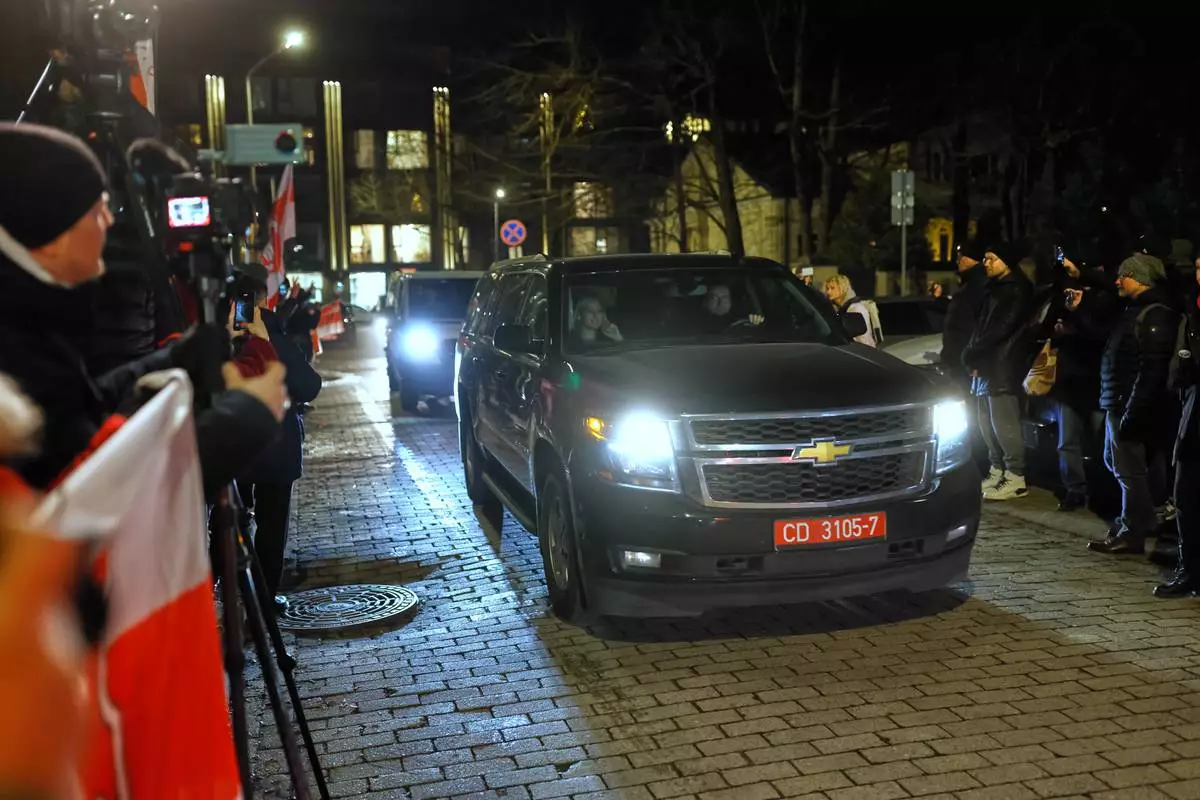
A motorcade arrives at the U.S. Embassy in Vilnius, Lithuania, on Saturday, Dec. 13, 2025. (AP Photo/Mindaugas Kulbis)
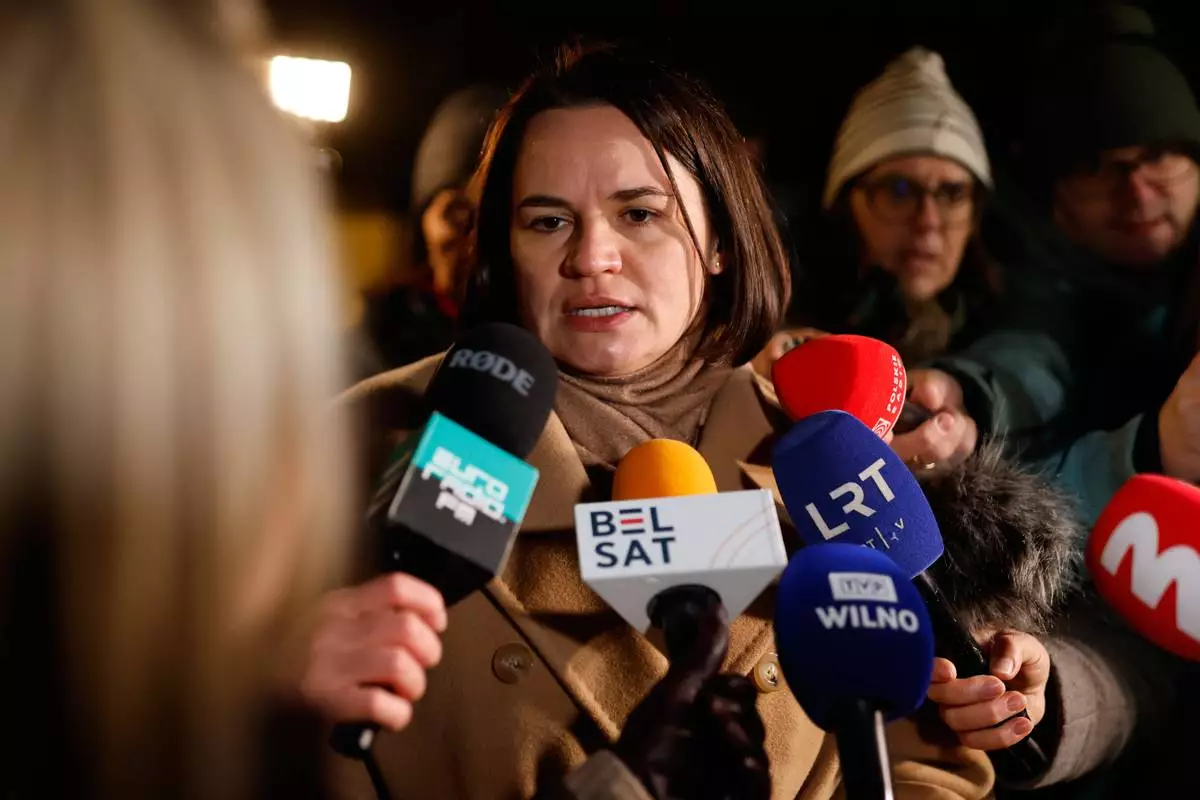
Belarusian opposition leader Sviatlana Tsikhanouskaya speaks to journalists as she waits to meet released Belarusian prisoners at the U.S. Embassy in Vilnius, Lithuania, on Saturday, Dec. 13, 2025. (AP Photo/Mindaugas Kulbis)
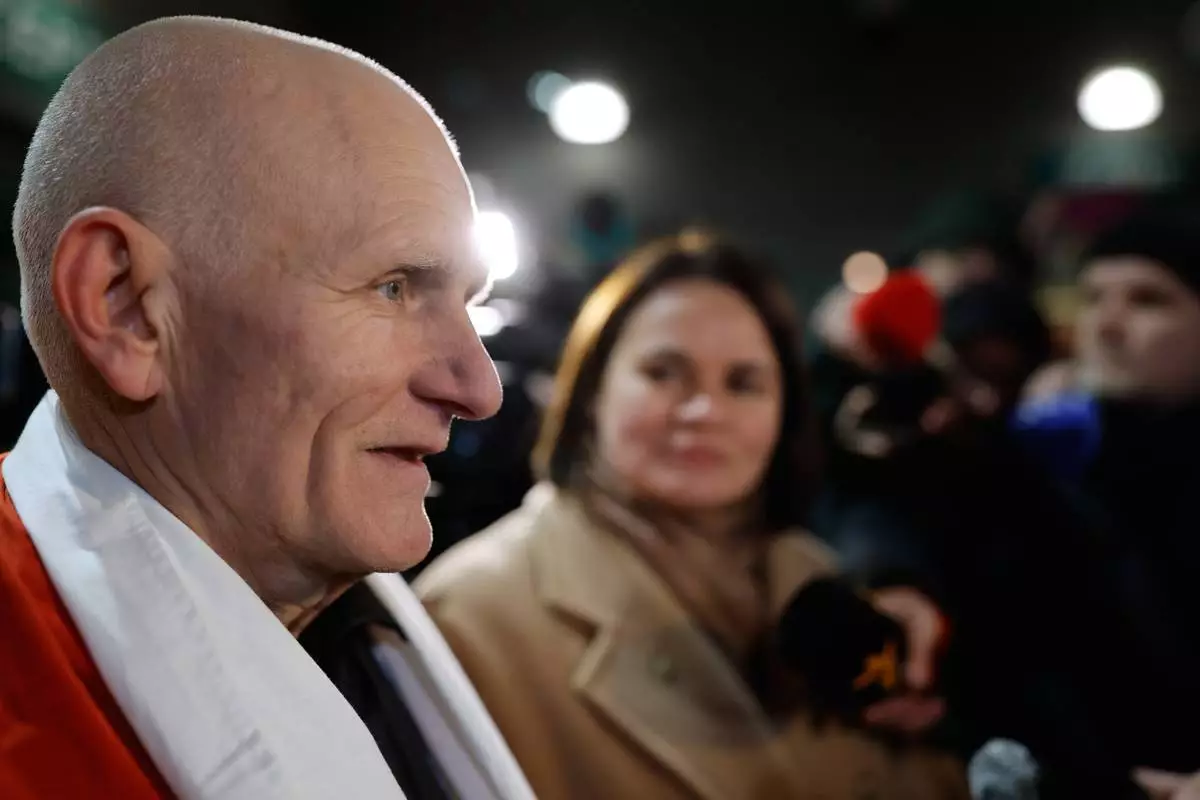
Nobel Peace Prize laureate Ales Bialiatski, one of released Belarusian prisoners, arrives at the U.S. Embassy in Vilnius, Lithuania, on Saturday, Dec. 13, 2025, as Belarusian opposition leader Sviatlana Tsikhanouskaya, background stands near. (AP Photo/Mindaugas Kulbis)
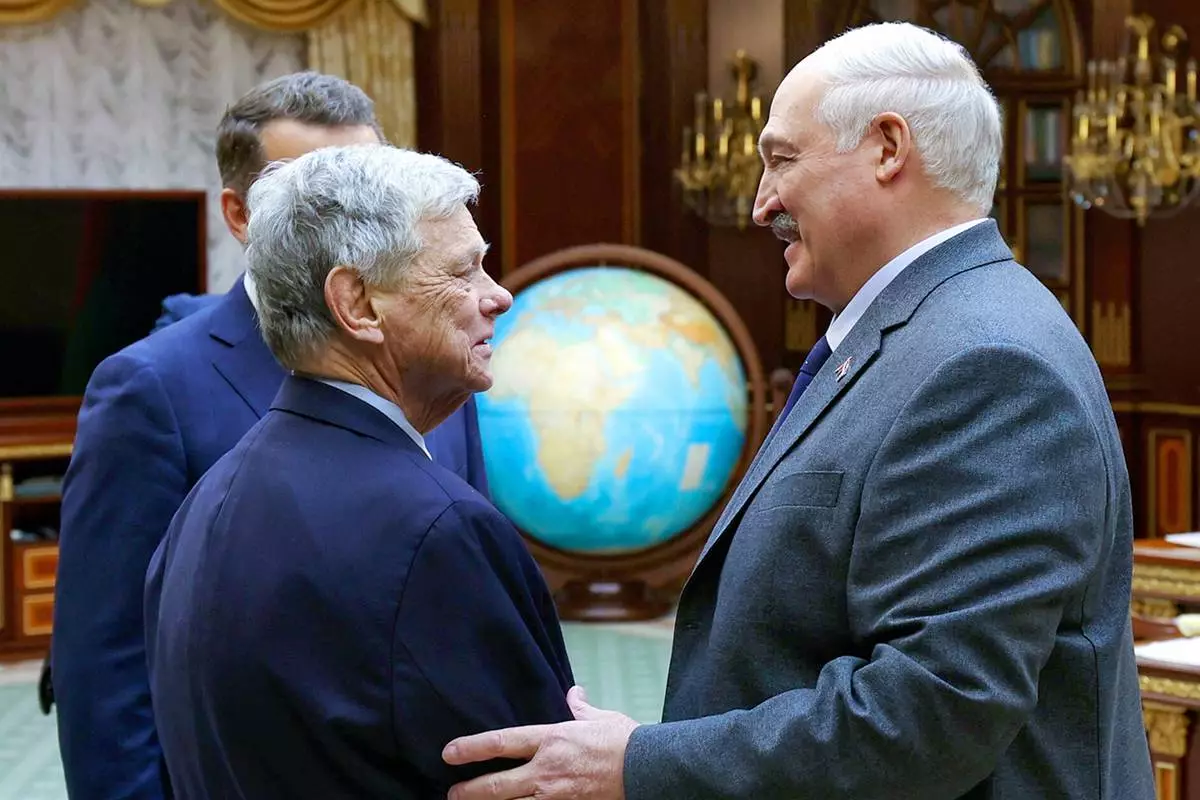
In this photo released by Belarusian presidential press service, Belarusian President Alexander Lukashenko, right, and U.S. Presidential envoy John Coale shake hands during their meeting in Minsk, Belarus, Friday, Dec. 12, 2025. (Belarusian Presidential Press Service via AP)
U.S. President Donald Trump said “someone from within” Iran’s government might be best suited to take power once the U.S.-Israeli war on the country ends.
His remarks came four days into a war that has killed hundreds, nearly all of them in Iran, as well as many of the country’s top leaders, including Supreme Leader Ayatollah Ali Khamenei.
Although Tehran has kept up its retaliatory missile and drone strikes against Israel and across the Gulf — disrupting travel and driving up oil prices — the pace of Iranian attacks appears to be slowing. However the conflict has also spread to Lebanon, where Iran-backed Hezbollah fired missiles at Israel, prompting Israeli strikes in Beirut and additional troop deployments to southern Lebanon.
The spiraling nature of the war has raised questions about when and how it would end, and the Trump administration has given various objectives.
Here is the latest:
Sen. Tim Kaine, D-Va., says there’s a “troubling pattern” of the Trump administration launching military operations — from Venezuela to Nigeria and to Iran — without involving Congress.
The Trump administration has made a habit of not seeking authorization, providing no advanced notice and then holding a classified hearing that restricts lawmakers’ ability to talk about it publicly, Kaine said Tuesday.
Kaine said he brought up his concerns during the administration’s closed-door briefing on Tuesday to senators on the military operation in Iran. He said his point was not refuted.
“It’s convinced many of us in the room that you’ve decided that you will never come to Congress,” Kaine told reporters at the Capitol after the briefing. “You don’t think you ever have to come to Congress for war authorization.”
The Pentagon has released the names of four of the six service members who have been killed in the Iran war, saying they died in a drone strike in Kuwait.
All four Army Reserve soldiers were killed Sunday when a drone hit a command center in Port Shuaiba, Kuwait. That was just a day after the U.S. and Israel launched its military campaign against Iran, which has launched retailatory strikes.
All were assigned to the 103rd Sustainment Command in Des Moines, lowa.
Killed were Capt. Cody A. Khork, 35, of Winter Haven, Florida; Sgt. 1st Class Noah L. Tietjens, 42, of Bellevue, Nebraska; Sgt. 1st Class Nicole M. Amor, 39, of White Bear Lake, Minnesota; and Sgt. Declan J. Coady, 20, of West Des Moines, lowa, who was posthumously promoted from specialist.
Qatar’s Ministry of Defense said early Wednesday that Iran launched two ballistic missiles against it and one hit Al-Udeid Qatari Base, though it didn’t cause casualties.
The other missile was intercepted by air defense, the ministry said.
Israel also said Iran had launched multiple missiles targeting the north of the country overnight with no reports of casualties there either.
Sen. Josh Hawley, R-MO, said after Tuesday’s closed-door briefing on the Iran operation that he would still vote ‘no’ on a war powers resolution, “unless they were to introduce ground troops.”
He added: “I didn’t hear in there any prediction of ground troops.”
“Personally, I would hope for a very swift conclusion, but I don’t know if that’s going to be the case,” he said.
Hawley said he learned more about the scope of the operation, which he said was “quite large” and “rapidly, rapidly evolving.”
“The briefers emphasized this, it’s really almost changing by the hour,” he said.
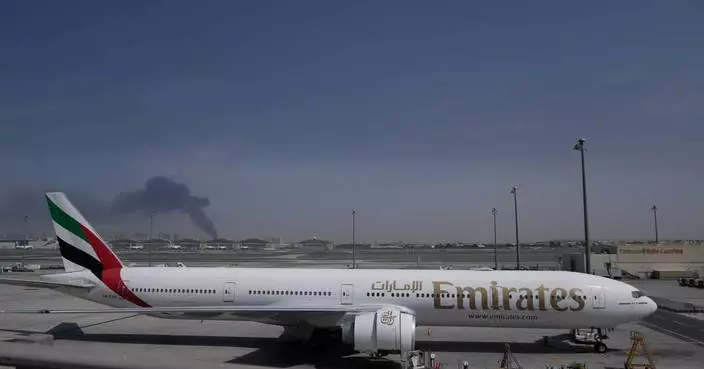
A commercial flight is planned from Dubai to Sydney to start repatriating 24,000 Australians stranded in the United Arab Emirates by the Iran war, Australia’s Foreign Minister Penny Wong says.
Wong said the flight was scheduled to leave Dubai on Wednesday.
“This is a consular crisis that dwarfs any that Australia has had to deal with in terms of numbers of people,” Wong told Australian Broadcasting Corp.
She and Australian Prime Minister Anthnony Albanese had spoken to United Arab Emirates Foreign Minister Sheikh Abdullah bin Zayed Al Nahyan, who is also the UAE’s deputy prime minister.
“The best way to get people out is to get commercial flights started. I asked if they could look at commercial flights restarting. Obviously it’s very unpredictable and I understand there is a flight scheduled from Dubai to Sydney. Obviously we would say to people on the ground you need to ensure you stay in contact with your airline in relation to that flight if you are on it. Flights have been cancelled and changed at short notice,” Wong said.
She did not identify the airline.
The death toll over the past two days in Lebanon has risen to 50, with 335 wounded, Lebanon’s Health Ministry said Tuesday evening.
On Monday, Hezbollah launched missiles toward Israel for the first time in more than a year, and Israel responded by bombarding southern Lebanon and the southern suburbs of Beirut with strikes. No casualties have been reported from the Hezbollah attacks in Israel.
It is not clear how many of those killed in Lebanon were civilians, but the health ministry said earlier Tuesday that they included seven children. Officials with Hezbollah and the Palestinian Islamic Jihad militant group were also killed.
The first government evacuation plane landed in Prague late Tuesday. The airbus that belongs to the Czech military has a capacity for some 40 passengers and was flying from Jordan.
Another two government planes are expected to arrive during the night. One of them will fly from Egypt to take home Czech nationals who traveled there by buses from Israel. The other one will transport people from Oman.
“It was perfect. We saw everything we wanted to in Jordan,” said Zdenek Viktorin, who was traveling with his family of four. He said that he didn’t expect the war could start during their stay. “When the politicians say one day that the talks are fine and the other day (the war) begins, that’s hard to comprehend.”
In neighboring Slovakia, the first two evacuation planes sent by the Slovak government to Jordan landed in the Slovak capital Bratislava on Tuesday with 127 people on board. The government plans at least 10 such flights from the Middle East.
“I’m sure we will be able to show that superiority in the next few days,” Israeli ambassador Danny Danon told reporters at the United Nations.
He cautioned, however, that while U.S.-Israeli attacks have degraded Iranian capabilities and it’s harder for them to launch missiles, “they put missiles underground, in caves, in secret locations.”
He said Israel has told its own citizens and people in the region, “give us some more time” to further degrade the Iranian military and achieve its objectives: “no nuclear weapons, no missile threat, no terror infrastructure.”
“It will not continue forever,“ Danon said.
The United Arab Emirates said Tuesday on X that it retains the right to self-defense, insisting that the Gulf monarchy is not part of the U.S.-Israel war against Iran and that it hasn’t authorized the use of its territories for attacks against Iran.
The UAE Defense Ministry also released a breakdown of its missile and drone interceptions. It said Iranian drones struck within its territory 57 times out of more than 800 detected, while only one of 186 ballistic missiles managed to hit. All eight Iranian cruise missiles were intercepted, the ministry said. It was not possible to independently very those figures.
Dozens of Venezuelan government supporters on Tuesday marched in the capital in solidarity with Iran and mourning Supreme Leader Ayatollah Ali Khamenei, who was killed on the first day of the war.
Demonstrators wore T-shirts with the photo of former Venezuelan President Nicolás Maduro, whom the U.S. military captured from the capital Caracas in a stunning operation two months ago.
Two women at the head of the demonstration carried photos of Khamenei and of late Ayatollah Ruhollah Khomeini, who orchestrated Iran’s 1979 Islamic revolution and ruled as supreme leader for a decade.
“We are here to give our support to the Iranian diplomatic representation in Caracas,” Yoser Quijada, an engineer, said. “We are here with our presence telling them that the people of Venezuela, the heart of the Venezuelan people, is together with the heart of the Iranian people.”
The secretary of state insisted that Trump made the decision to attack Iran because this past weekend presented what he called a unique opportunity for the mission to be successful.
“The president is determined we were not going to get hit first. It’s that simple,” Rubio said ahead of a closed-door briefing for lawmakers.
Secretary of State Marco Rubio speaks to reporters as he arrives for an intelligence briefing with top lawmakers on Iran, at the Capitol in Washington, Monday, Mar. 2, 2026. (AP Photo/J. Scott Applewhite)
Secretary of State Marco Rubio speaks to reporters as he arrives for an intelligence briefing with top lawmakers on Iran, at the Capitol in Washington, Monday, Mar. 2, 2026. (AP Photo/J. Scott Applewhite)
Rubio was revisiting his remarks from a day earlier that have generated fierce blowback. At the time, he said Trump believed Israel was determined to act and wanted the U.S. to go first with a pre-emptive strike on Iran to prevent any retaliation on American bases and operations in the region.
“We are not going to put American troops in harm’s way,” he said.
Amid the administration’s shifting reasons for the war with Iran, Rubio also returned to Trump’s initial rationale. “There is no way in the world that this terroristic regime was going to get nuclear weapons, not under Donald Trump’s watch,” he said.
An Iranian drone slammed into a parking lot outside the U.S. consulate in Dubai, sparking a small fire, according to U.S. Secretary of State Marco Rubio.
Although the pace of Iranian missile and drone strikes has slowed, Tuesday’s near-miss shows that Iran is still able to get munitions past American interceptors.
Rubio told reporters at the U.S. Capitol that all of the consulate personnel in Dubai had been accounted for.
“We began drawing down personnel from our diplomatic facilities in advance of this,” Rubio said.
Before-and-after images published by the Colorado-based satellite company Vantor on Tuesday showed the domed roof of Iran’s presidential complex destroyed, aligning with Israel’s earlier claims of an overnight strike.
Numerous munitions were dropped on what Israel’s military said was among the most heavily secured sites in Tehran. Iranian officials and state media have not yet acknowledged the damage or reported casualties from the strike.
In a statement Tuesday, U.N. humanitarian chief Tom Fletcher warned about the impact the ongoing conflict in the Middle East is having on civilians in nearly a dozen countries in the region just days after U.S. and Israel began to attack Iran.
“First, civilians are paying the price across the region. Civilians must be protected - full stop. Yet strikes are hitting homes, hospitals, and schools,” Fletcher said. “Civilians and civilian infrastructure have been under attack in Iran, Lebanon, Syria, the Occupied Palestinian Territory, Israel, the United Arab Emirates, Bahrain, Qatar, Kuwait, Saudi Arabia and beyond.”
Fletcher added that while contingency plans across Iran and other nearby countries have been activated, the already limited presence by international organizations inside the Islamic Republic have made aid workers’ challenges much greater. Beyond the countries now involved in the wider regional conflict, Fletcher said the impacts on the civilians will worsen already dire humanitarian situations in places like Afghanistan and the occupied Palestinian territories.
Trump said on social media he ordered the United States’ development finance arm to provide political risk insurance for tankers carrying oil and other goods through the Persian Gulf “at a very reasonable price.”
Political risk insurance is a type of coverage intended to protect firms against financial losses caused by unstable political conditions, government actions, or violence.
He said that, if necessary, the U.S. Navy would escort oil tankers through the Strait of Hormuz. About a fifth of the world’s oil passes through the strait. The disruption to that traffic caused by the war has pushed oil prices higher.
The Navy has at least eight destroyers and three smaller littoral combat ships in the region. These ships have previously been used to escort merchant shipping in the region and in the Red Sea.
Israel’s military says it destroyed what it calls Iran’s secret nuclear headquarters, and claims Iran moved work into hidden bunkers, known as Minzadehei.
On Tuesday, an Israeli military spokesman said the site supported research tied to a key component for nuclear weapons. Israel does not say Iran enriched uranium there.
There was no immediate public comment from the U.S. or Iran about the site Israel named.
Israel says Iran tried to rebuild and hide parts of its program after last year’s strikes. The United States said as recently as last week that those strikes destroyed Iran’s nuclear program.
U.S. officials also accuse Iran of trying to restart parts of the program but do not say Iran was restarting enrichment.
Turkish Foreign Minister Hakan Fidan on Tuesday accused Iran of attacking Gulf neighbors that had worked to prevent war, calling it a strategy of “If I go, I will take the region with me.”
He called Iran’s strikes on countries mediating between Tehran and Washington an “incredibly flawed strategy” and warned the conflict could widen if Gulf states retaliate.
In an interview with state broadcaster TRT, Fidan said Gulf states, including Qatar, had pushed for diplomacy until the last hour before the U.S.-Israeli war began Saturday.
“I believe that if the Iranians had better understood the pressure President Trump was facing and given him something in advance, the pressure from Israel might not have been so effective,” he said.
Associated Press journalists heard explosions and saw smoke rising but no casualties were reported after a new wave of drone and missile attacks was intercepted over Irbil, the capital of northern Iraq’s semiautonomous Kurdish region.
Multiple drones targeted areas around the U.S. consulate building Tuesday but did not hit it directly.
Debris from the intercepted drones caused fires and property damage.
Iran-linked Iraqi militias have claimed multiple attacks on the Kurdish region, which hosts bases with U.S. troops, since the U.S. and Israel launched the war on Iran.
Daoud Alizadeh, the acting commander of the Lebanon Corps in Iran’s Islamic Revolutionary Guard Corps’ elite Quds Force, was killed on Tuesday in an airstrike in Tehran, the Israeli military said in a statement.
The Quds Force works with Iran’s allied militant groups in the region, including Hezbollah. The army said the Lebanon Corps “supports Hezbollah force-building and functions as the connection between senior IRGC personnel and Hezbollah leadership.” It said Alizadeh replaced the Lebanon Corps’ previous commander, Hassan Mahdavi, killed in an earlier Israeli strike.
Iranian state media has reported that at least 165 people were killed and dozens of others were wounded Saturday by what Iran says was an airstrike on a girls school in the country’s south.
The Israeli military said it was not aware of strikes in the area, and the U.S. military said it was looking into the strikes.
Ravina Shamdasani, spokesperson for the Office of the United Nations High Commissioner for Human Rights, said Tuesday that the “devastating” airstrike may amount to war crimes if it is found to have targeted civilians or been carried out indiscriminately in violation of international law.
“Children, little girls, in the middle of the school day, at the beginning of the school day, being killed in this manner, backpacks with blood stains on them,” said Shamdasani.
The U.N. human rights chief called for an investigation into the airstrike.
Seven children have been killed by Israeli strikes in Lebanon over the past two days, Lebanon’s health ministry said Tuesday.
In total, 40 people have been killed in Lebanon — including a Palestinian militant leader and a Hezbollah intelligence official — and 246 wounded in the new escalation between Israel and the Iran-backed militant group Hezbollah.
On Monday, Hezbollah launched missiles toward Israel for the first time in more than a year, and Israel responded by bombarding southern Lebanon and the southern suburbs of Beirut with strikes. No casualties have been reported from the Hezbollah attacks in Israel.
As governments race to evacuate citizens from the Middle East, Israel is preparing to fly home its citizens who are stranded abroad.
Transportation Minister Miri Regev said Ben-Gurion Airport will reopen for limited incoming flights around the clock starting early Thursday.
Israel’s airspace has been closed since Saturday, when the joint U.S.-Israeli war on Iran began, although some land crossings remain open. Regev said thousands have returned that way.
Under the plan, one passenger flight per hour will be allowed in the first 24 hours, totaling about 5,000 people, with more later depending on security.
It is unclear whether only Israelis will be permitted on the flights, and no commercial departures leaving Israel have been approved.
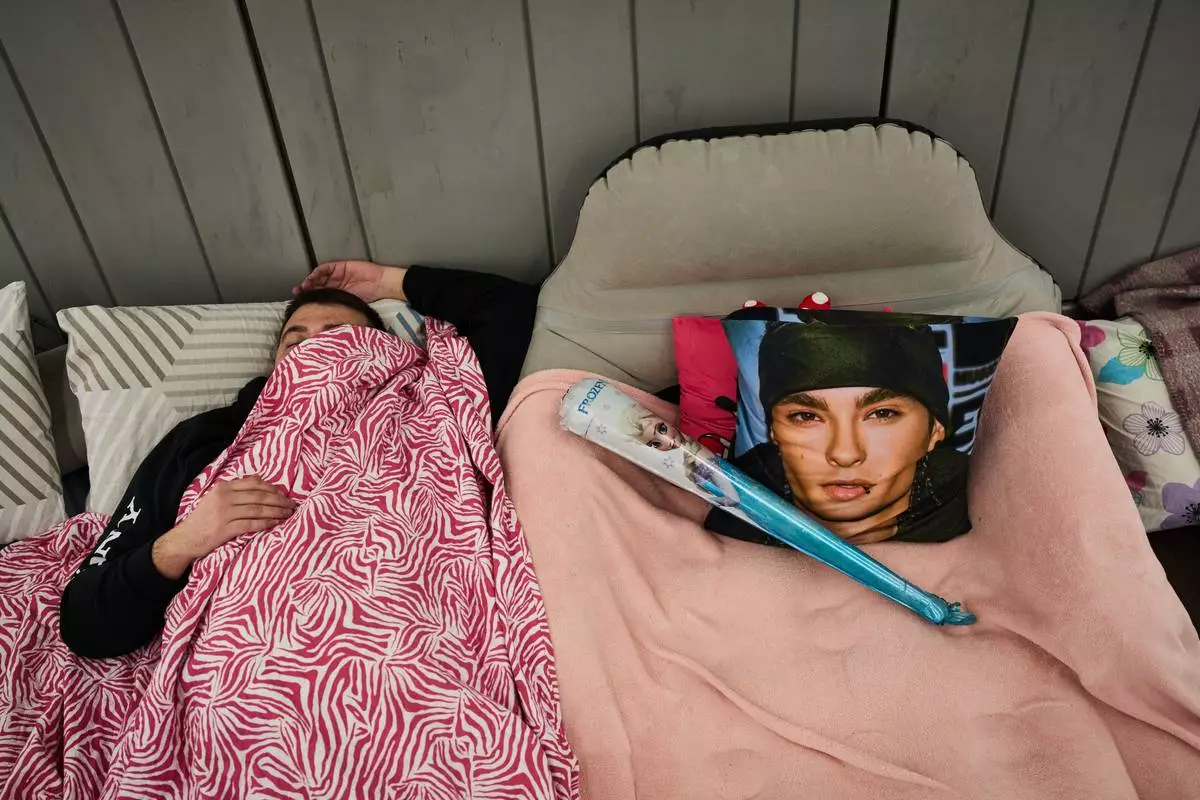
A man takes shelter in an underground metro station as a precaution against possible Iranian missile attacks, in Ramat Gan, Israel Monday, March 2, 2026. (AP Photo/Oded Balilty)
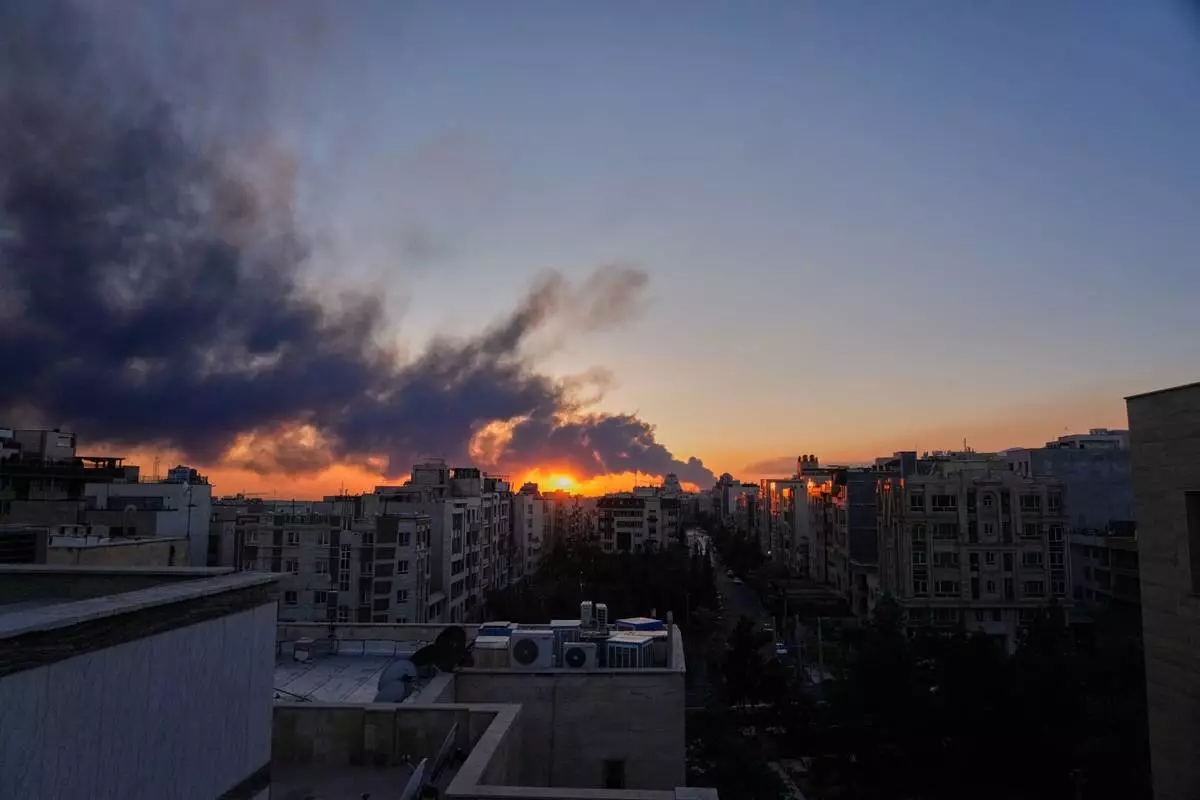
The sun sets behind a plume of smoke rising after a U.S.–Israeli military strike in Tehran, Iran, Tuesday, March 3, 2026. (AP Photo/Vahid Salemi)
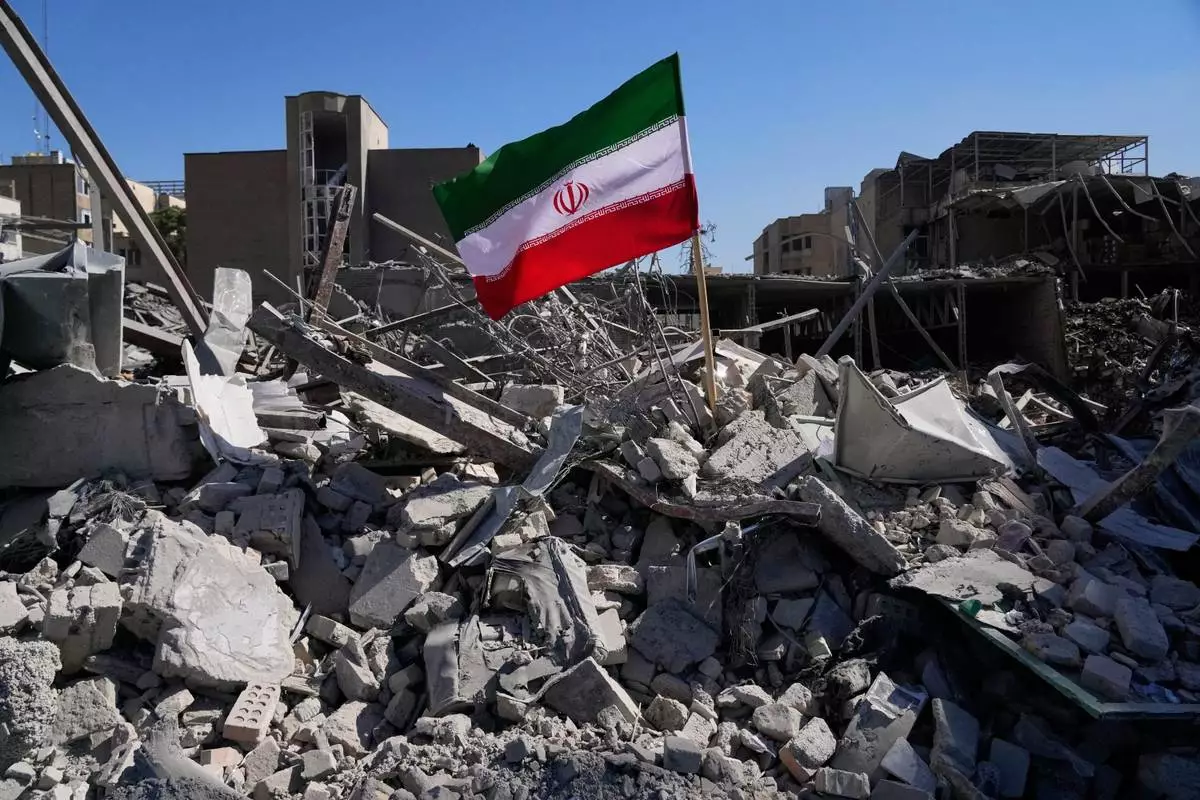
An Iranian flag is placed among the ruins of a police station struck Monday during the U.S.–Israeli military campaign in Tehran, Iran, Tuesday, March 3, 2026. (AP Photo/Vahid Salemi)
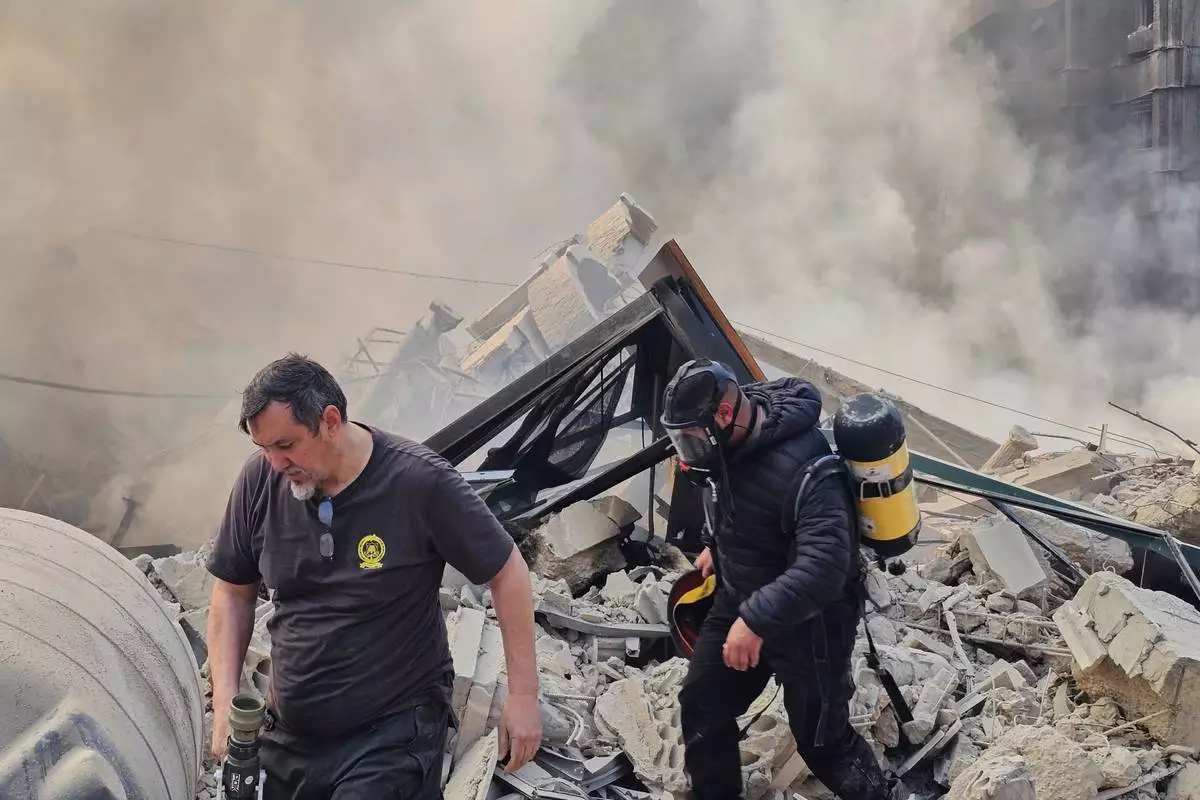
Firefighters inspect the rubble as smoke rises from a building hit by an Israeli airstrike in Dahiyeh, a southern suburb of Beirut, Lebanon, Tuesday, March 3, 2026. (AP Photo/Hassan Ammar)
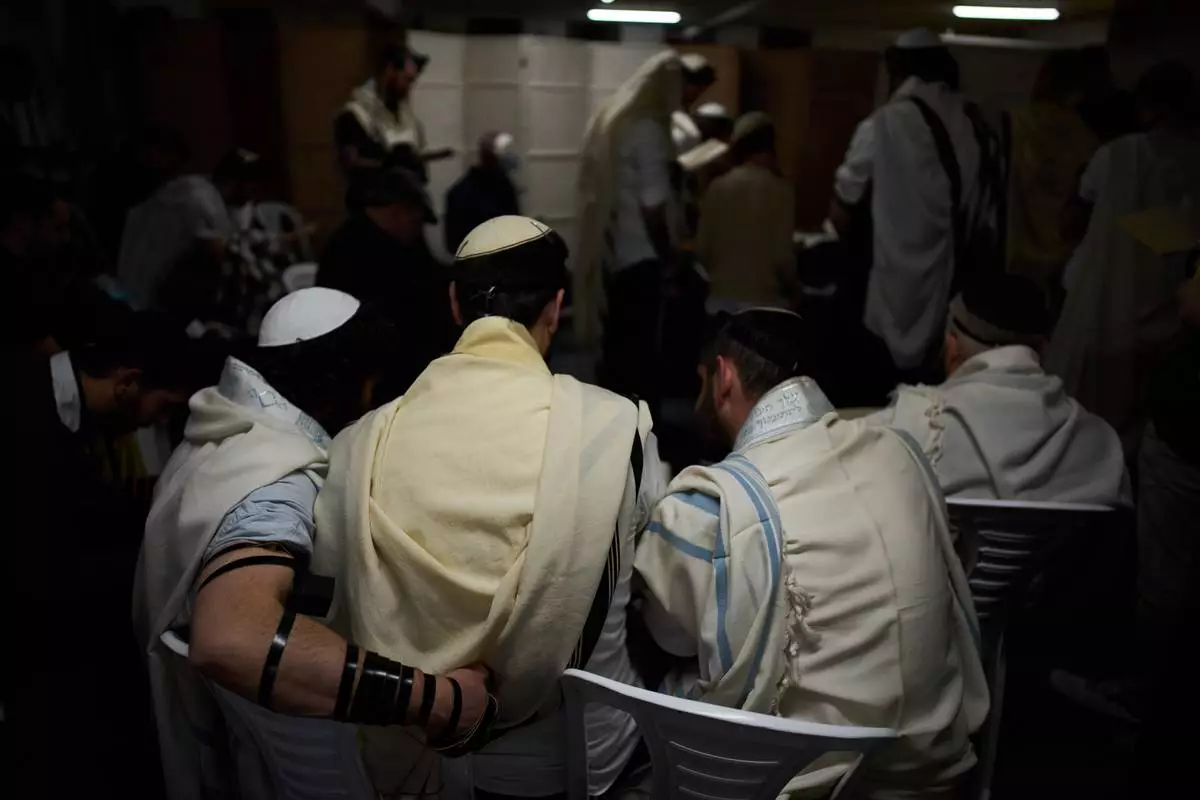
Jewish men covered in prayer shawls pray in an underground parking garage as a precaution against possible Iranian missile attacks, in Tel Aviv, Israel, Tuesday, March 3, 2026. (AP Photo/Oded Balilty)
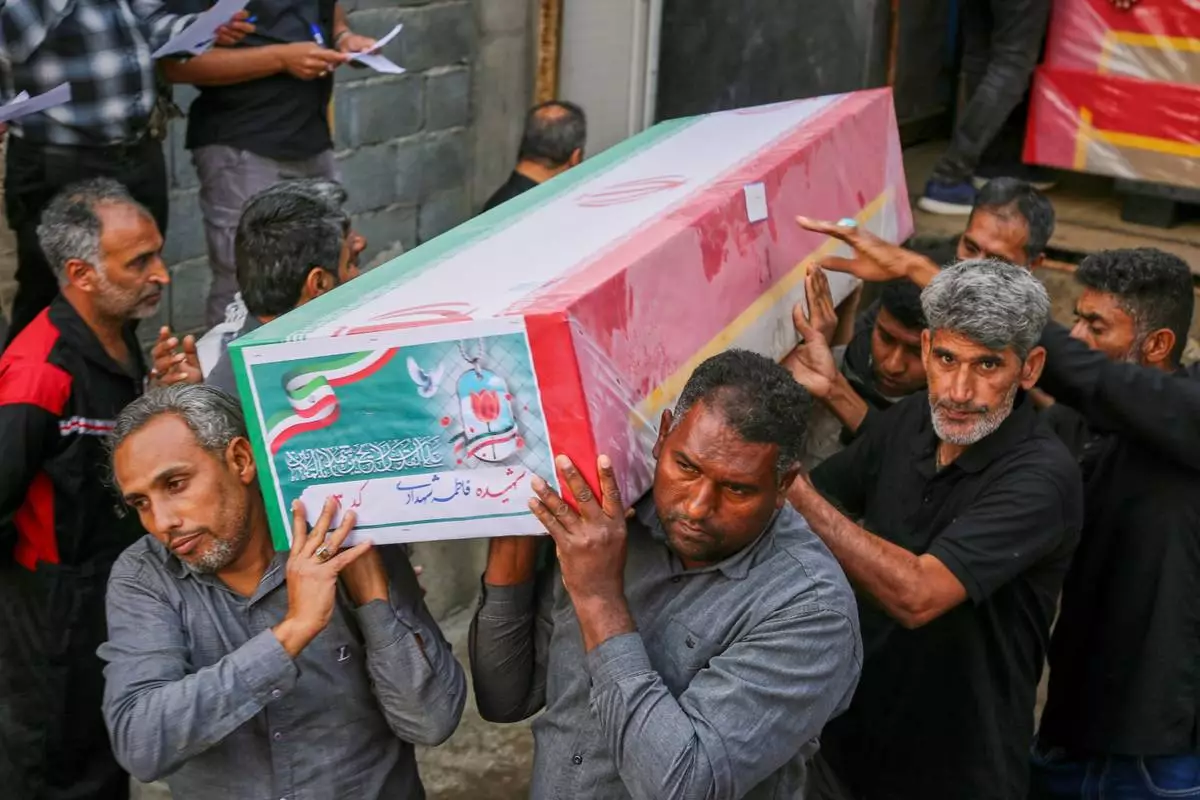
A coffin is carried during the funeral of mostly children killed in what Iranian officials said was an Israeli-U.S. strike Feb. 28 at a girls' elementary school in Minab, Iran, Tuesday, March 3, 2026. (Abbas Zakeri/Mehr News Agency via AP)
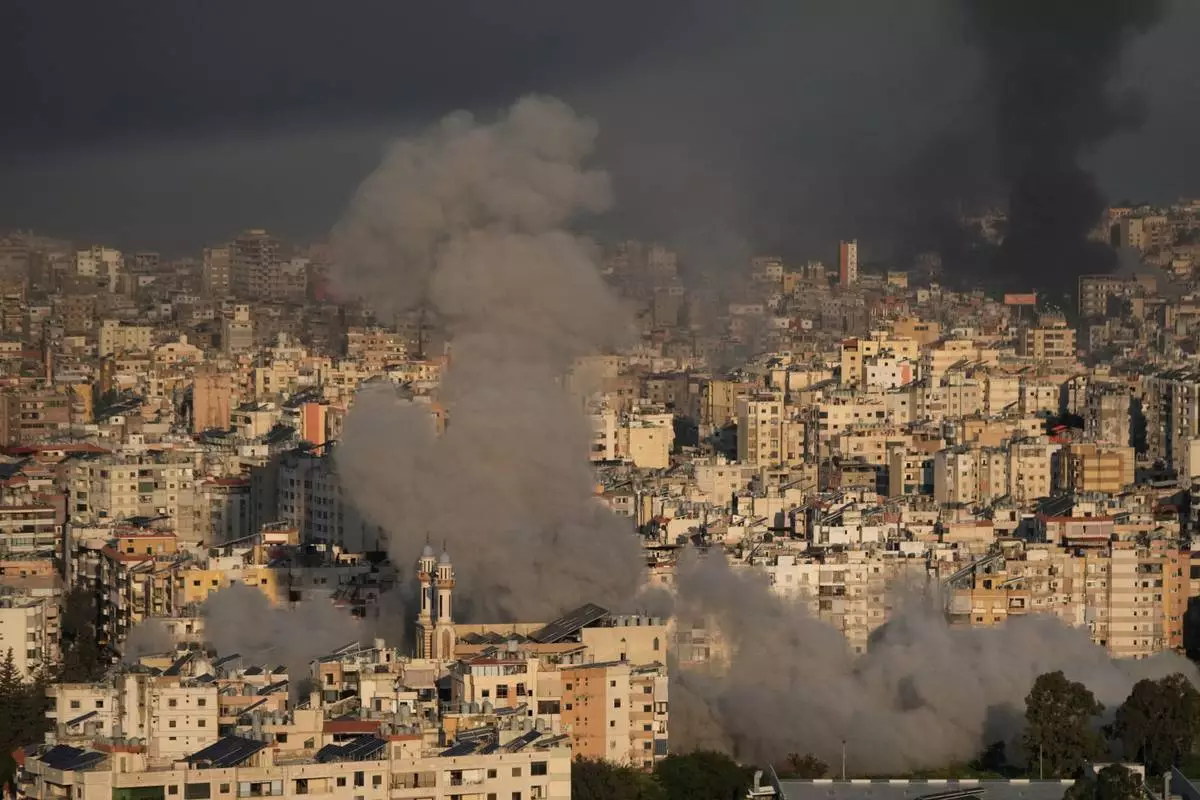
Smoke rises from Israeli airstrikes in Dahiyeh, a southern suburb of Beirut, Lebanon, Tuesday, March 3, 2026. (AP Photo/Hussein Malla)
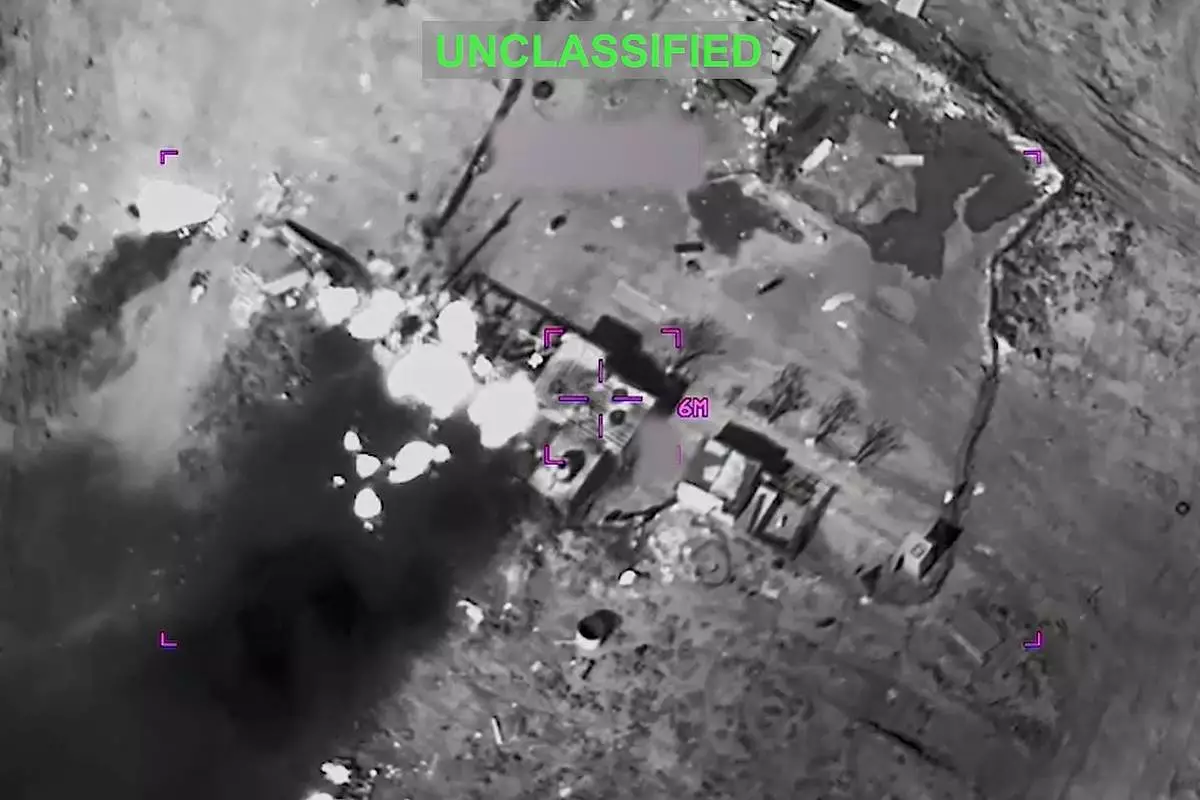
This partially redacted image from video provided by U.S. Central Command shows a complex of structures in Iran being struck by missiles fired by U.S. forces on Sunday, March 1, 2026. (U.S. Central Command via AP)
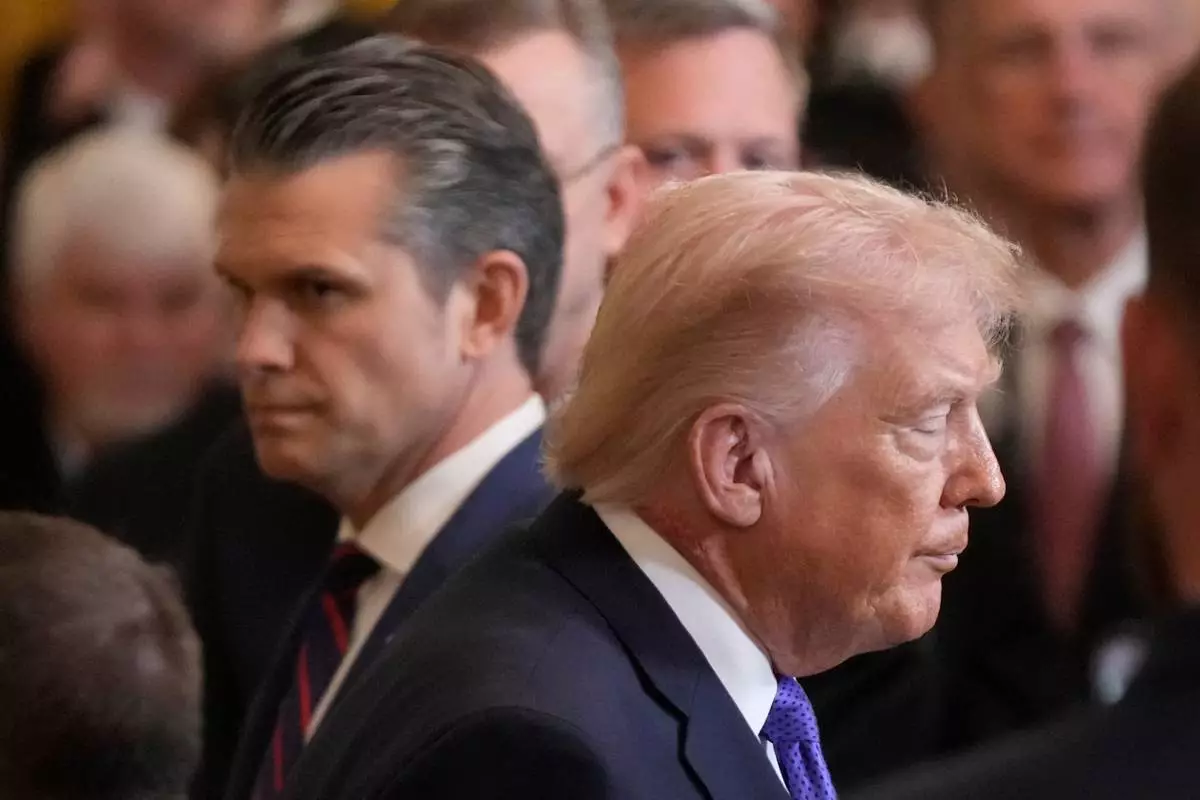
President Donald Trump walks past Defense Secretary Pete Hegseth as he exist the East Room of the White House following the Medal of Honor ceremony, Monday, March 2, 2026, in Washington. (AP Photo/Mark Schiefelbein)
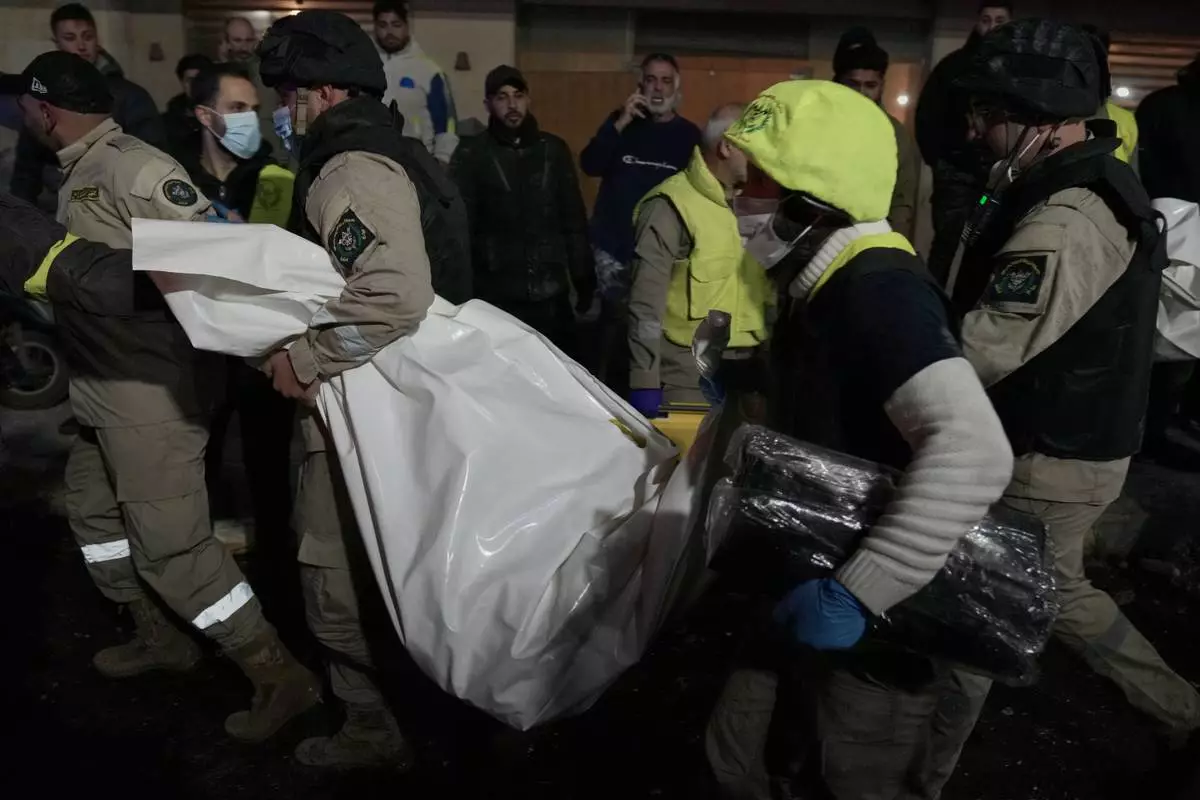
Rescue workers carry a dead body in a plastic bag from a building that was hit by Israeli strike, in Jnah neighborhood, south of Beirut, Lebanon, Monday, March 2, 2026. (AP Photo/Hussein Malla)
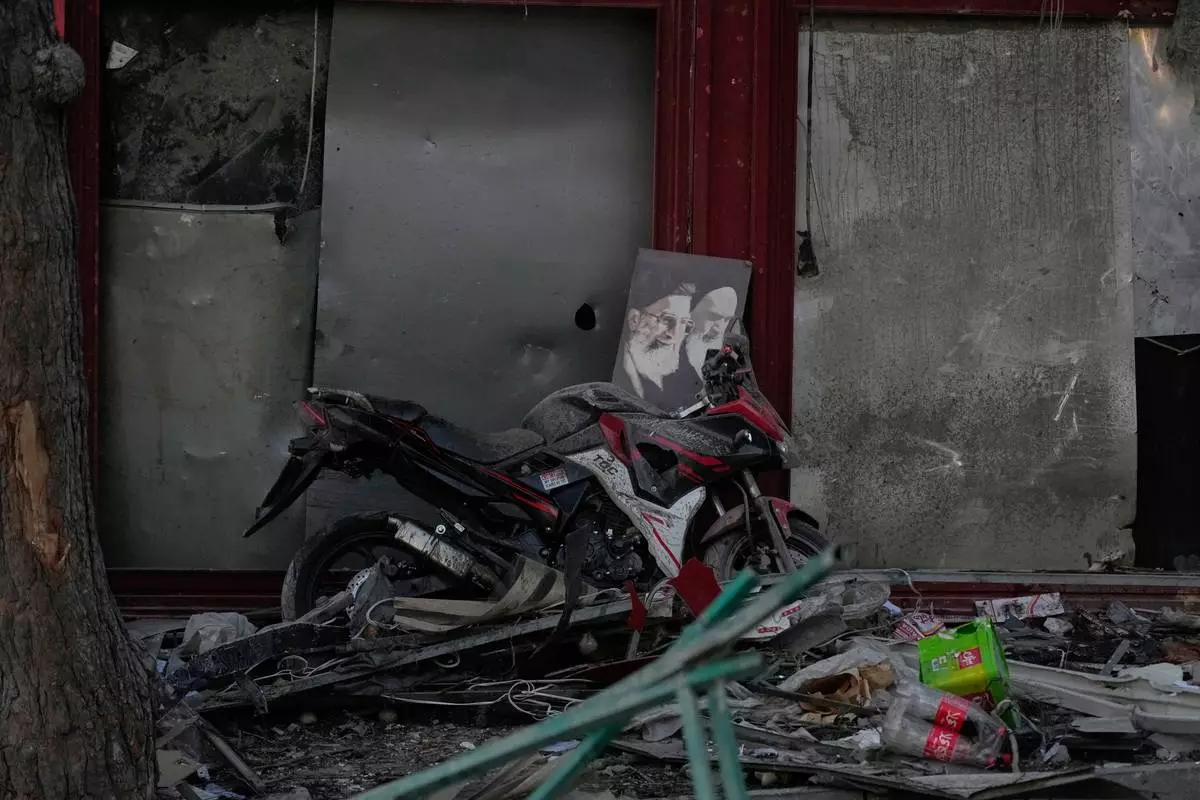
A poster of the late Supreme Leader Ayatollah Ali Khamenei, who was killed during the ongoing joint U.S.-Israeli military campaign, and the late Iranian Revolutionary founder Ayatollah Khomeini, right, lays on a motorcycle amid debris left by a strike in Tehran, Iran, Monday, March 2, 2026. (AP Photo/Vahid Salemi)
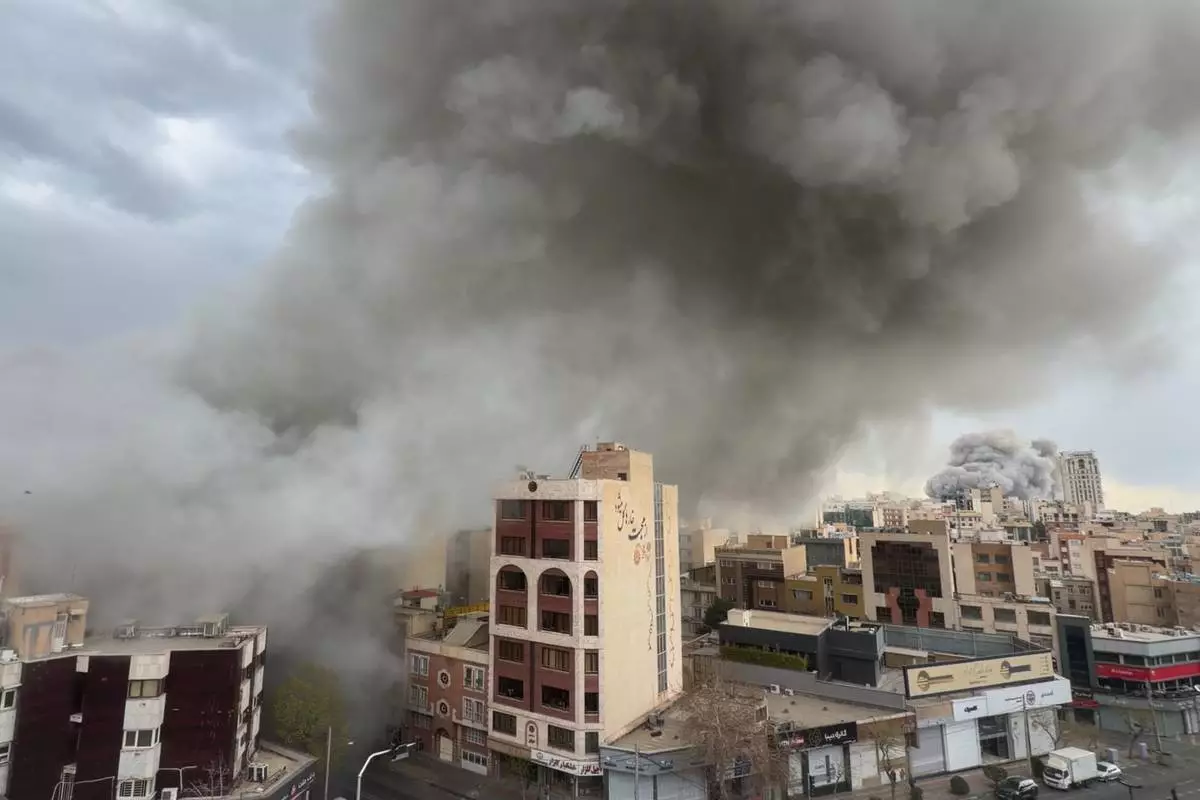
Plumes of smoke from two simultaneous strikes rise over Tehran, Iran, Monday, March 2, 2026. (AP Photo/Mohsen Ganji)