STARKE, Fla. (AP) — A man convicted of fatally shooting a police officer with his own service weapon during a traffic stop is set to be executed Tuesday evening in Florida.
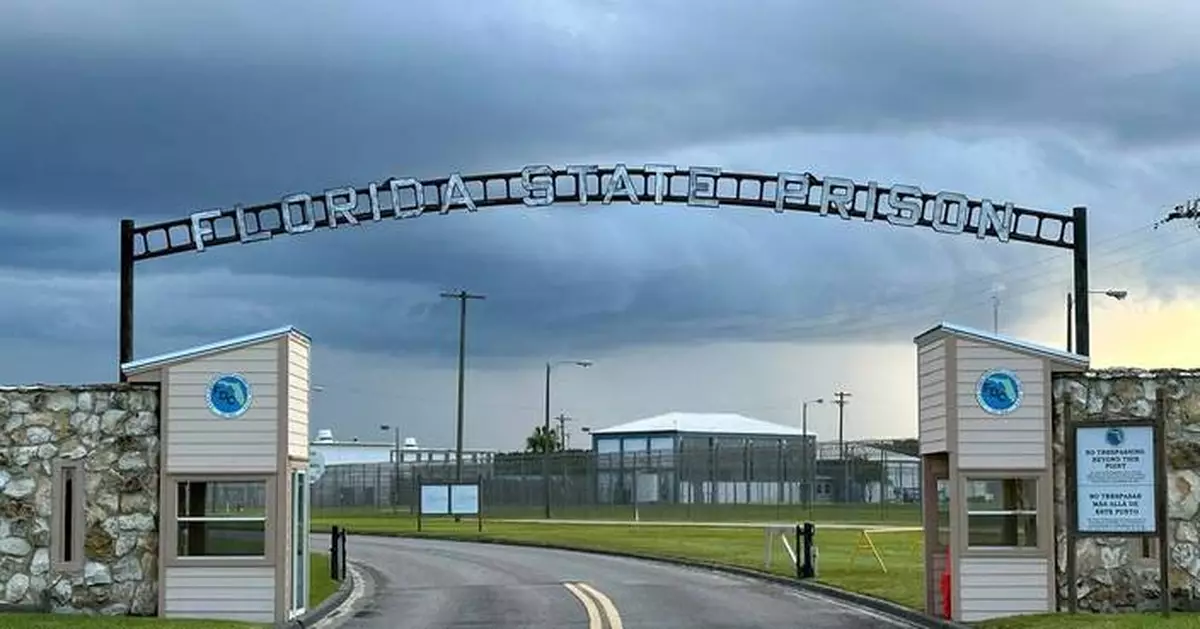
Billy Leon Kearse, 53, is scheduled to receive a three-drug injection starting at 6 p.m. at Florida State Prison near Starke. Kearse was initially sentenced to death in 1991 after being convicted of first-degree murder and robbery with a firearm.
The Florida Supreme Court found that the trial court failed to give jurors certain information about aggravating circumstances and ordered a new sentencing. Kearse was resentenced to death in 1997.
This is Florida’s third execution scheduled for 2026, following a record 19 executions last year. Republican Gov. Ron DeSantis oversaw more executions in a single year in 2025 than any other Florida governor since the death penalty was reinstated in 1976. The highest number before then was eight executions in both 1984 and 2014, under former governors Bob Graham and Rick Scott, respectively.
According to court records, Fort Pierce Police Officer Danny Parrish pulled over Kearse for driving the wrong way on a one-way street in January 1991. When Kearse couldn’t produce a valid driver’s license, Parrish ordered Kearse out of his vehicle and attempted to handcuff him.
A struggle ensued, and Kearse grabbed Parrish’s firearm, prosecutors said. Kearse fired 14 times, striking the officer nine times in the body and four times in his body armor. A nearby taxi driver heard the shots and used Parrish’s radio to call for help.
Parrish was rushed to a nearby hospital, where he died from the gunshot wounds, officials said. Meanwhile, police used license plate information that Parrish had called in before approaching Kearse to identify the attacker’s vehicle and home address, where Kearse was arrested.
Last week, the Florida Supreme Court denied appeals filed by Kearse. His attorneys had argued that he was unconstitutionally deprived of a fair penalty phase and that his intellectual disability makes his execution unconstitutional.
Final appeals were pending Tuesday before the U.S. Supreme Court.
A total of 47 people were executed in the U.S. in 2025. Florida led the way with a flurry of death warrants signed by DeSantis, far outpacing Alabama, South Carolina and Texas which each held five executions.
Besides the two Florida executions this year, Texas and Oklahoma have each executed one person so far.
Two more Florida executions have already been scheduled for this month. Michael Lee King, 54, is scheduled to die on March 17, and the execution of James Aren Duckett, 68, is set for March 31.
All Florida executions are carried out via lethal injection using a sedative, a paralytic and a drug that stops the heart, according to the Department of Corrections.
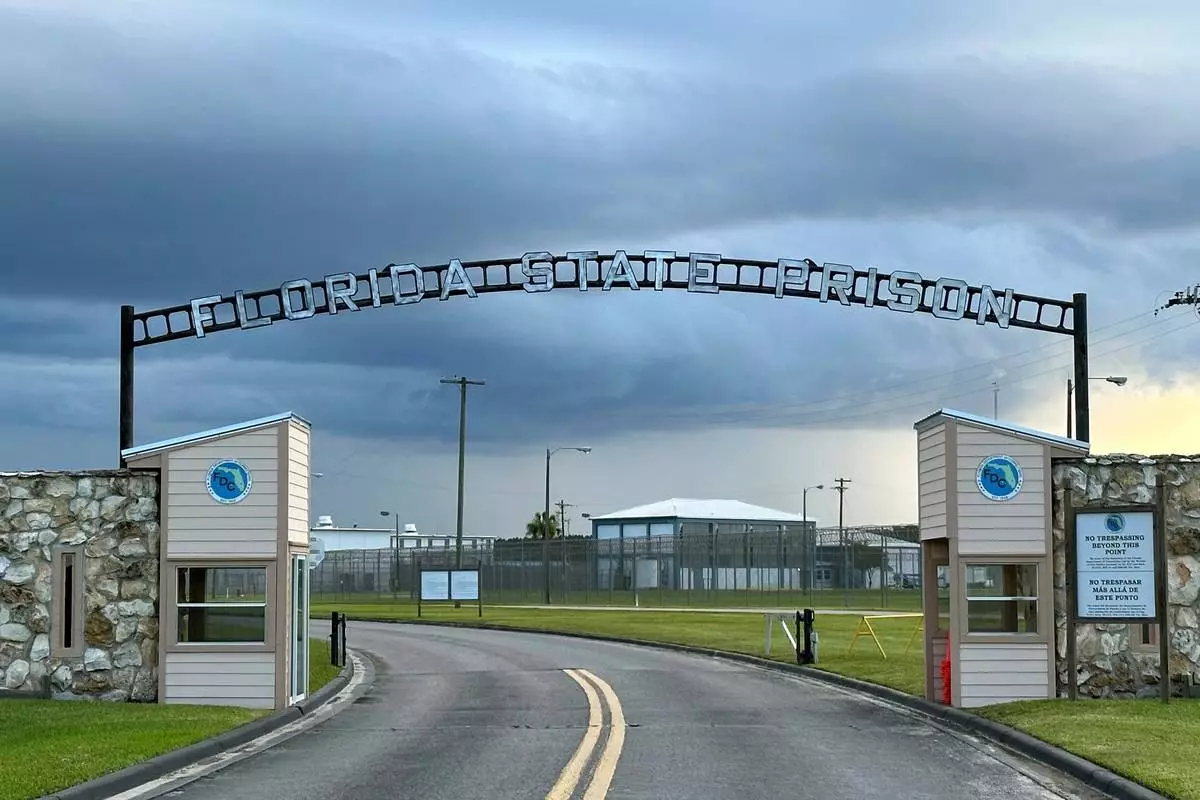
FILE - Clouds hover over the entrance of the Florida State Prison in Starke, Fla., Aug. 3, 2023. (AP Photo/Curt Anderson, File)
As the war in the Middle East intensifies, U.S. President Donald Trump said that the U.S. has “the capability to go far longer" than its projected four-to-five-week time frame for its military operations against Iran.
Across Tehran, the sound of explosions rang out through the night and into the early morning hours Tuesday, as the U.S. and Israel have continued to pound Iran since killing its Supreme Leader Ayatollah Ali Khamenei on Saturday.
Tehran and its allies have hit back against Israel, neighboring Gulf states, and targets critical to the world’s production of oil and natural gas.
The intensity of the attacks and the lack of any apparent exit plan set the stage for a prolonged conflict with far-reaching consequences. Israel and the U.S. have given conflicting answers about what exactly the war’s objectives are or what the endgame might be.
Israeli Prime Minister Benjamin Netanyahu late Monday defended the decision to go to war, contending in an interview on Fox News Channel’s "Hannity" that Iran was rebuilding “new sites, new places” that would make “their ballistic missile program and their atomic bomb program immune within months,” without providing evidence.
Satellite photos analyzed by The Associated Press showed limited activity at two nuclear sites in Iran before the war, with analysts saying it was likely Tehran was trying to assess damage from American strikes in June and possibly salvage what remained there.
Here is the latest:
U.S. President Donald Trump says America has a “virtually unlimited supply” of munitions to use as the war with Iran rages.
Trump, writing on his Truth Social website, said: “The United States Munitions Stockpiles have, at the medium and upper medium grade, never been higher or better - As was stated to me today, we have a virtually unlimited supply of these weapons.”
He added: “Wars can be fought ‘forever,’ and very successfully, using just these supplies.”
He said “additional high grade weaponry” is “stored for us in outlying countries.”
Trump did not elaborate, but his post comes as analysts begin raising concerns about the number of munitions the U.S. has as the campaign continues — particularly air defense missiles.
Across Iran’s capital, the sound of explosions rang out throughout the night into the early morning hours.
Witnesses described hearing aircraft overhead as well.
It wasn’t immediately clear what had been hit.
Iranian state television early Tuesday read a statement from the country’s paramilitary Revolutionary Guard, saying that it launched a missile and drone attack targeting an air base in Bahrain.
Israeli airstrikes hit the Lebanese capital Tuesday morning.
The Israeli military said it was targeting “Hezbollah command centers and weapons storage facilities in Beirut.”
Hezbollah also said it launched drones targeting an Israeli air base.
The Israeli military said it downed two drones.
Tokyo has told Japanese shipowners to have their ships stay away from the Persian Gulf to ensure the safety of their crew members.
Chief Cabinet Secretary Minoru Kihara told reporters Tuesday that the Transport Ministry has notified the Japanese Shipowners’ Association to do the utmost to protect crews on board the ships in the region.
Kihara said those already in the Gulf are urged to lie at anchor where it is safe to do so.
On Monday, Japan’s Foreign Minister Toshimitsu Motegi met with Iranian ambassador to Japan Peiman Seadat and conveyed Japan’s consistent stance that Iran must stop attacks on neighboring countries and other actions destabilizing the region.
Motegi also noted the importance of ensuring safety in the Strait of Hormuz, which is key to Japan’s energy security.
Iran’s top diplomat early Tuesday sought to turn the tables on the United States, describing it as entering “a war of choice on behalf of Israel.”
After Trump urged Iranians to take over their government, Foreign Minister Abbas Araghchi made the same call to Americans.
“Shedding of both American and Iranian blood is thus on Israel Firsters,” Araghchi wrote on X. “American people deserve better and should take back their country.”
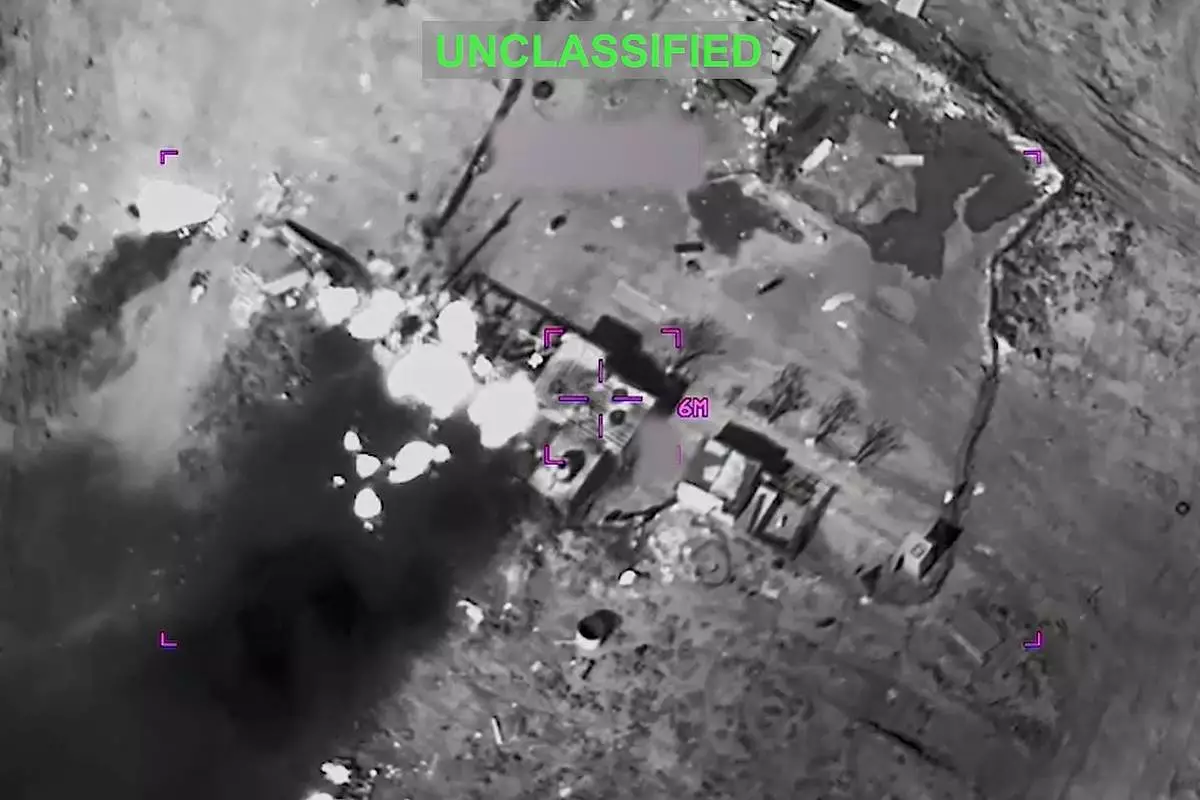
This partially redacted image from video provided by U.S. Central Command shows a complex of structures in Iran being struck by missiles fired by U.S. forces on Sunday, March 1, 2026. (U.S. Central Command via AP)
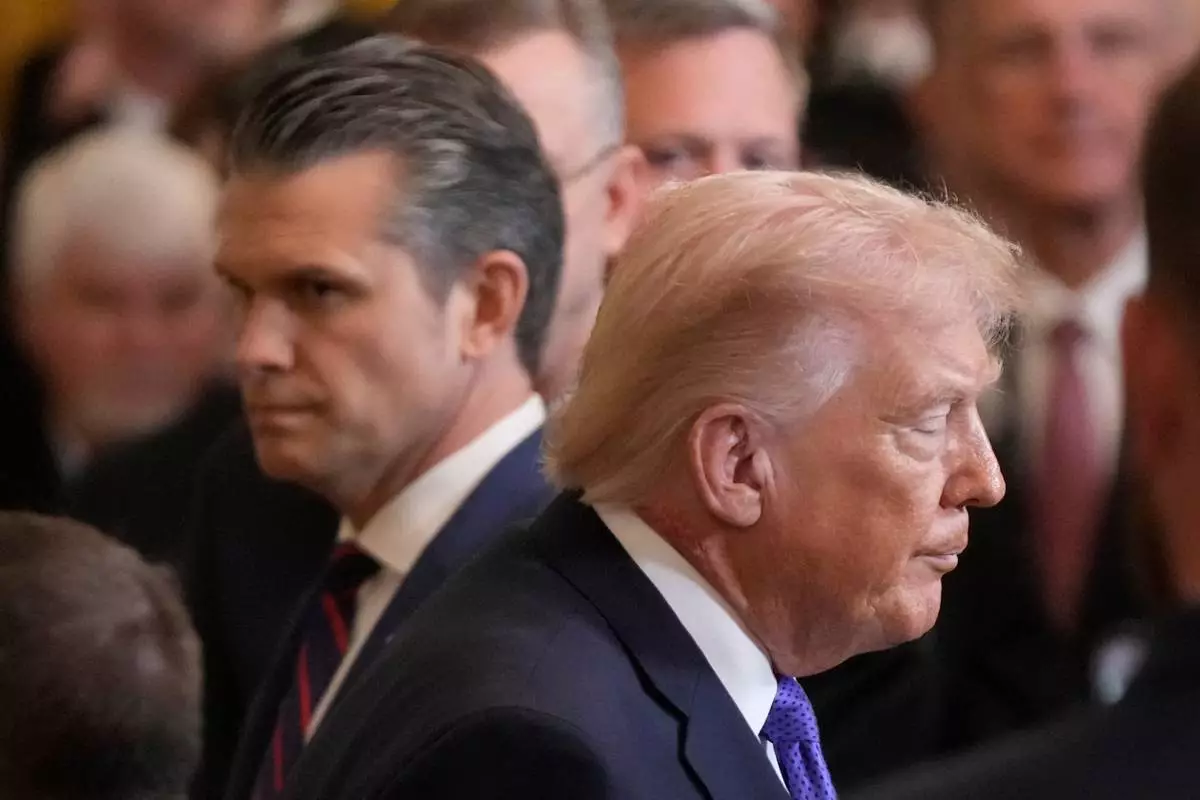
President Donald Trump walks past Defense Secretary Pete Hegseth as he exist the East Room of the White House following the Medal of Honor ceremony, Monday, March 2, 2026, in Washington. (AP Photo/Mark Schiefelbein)
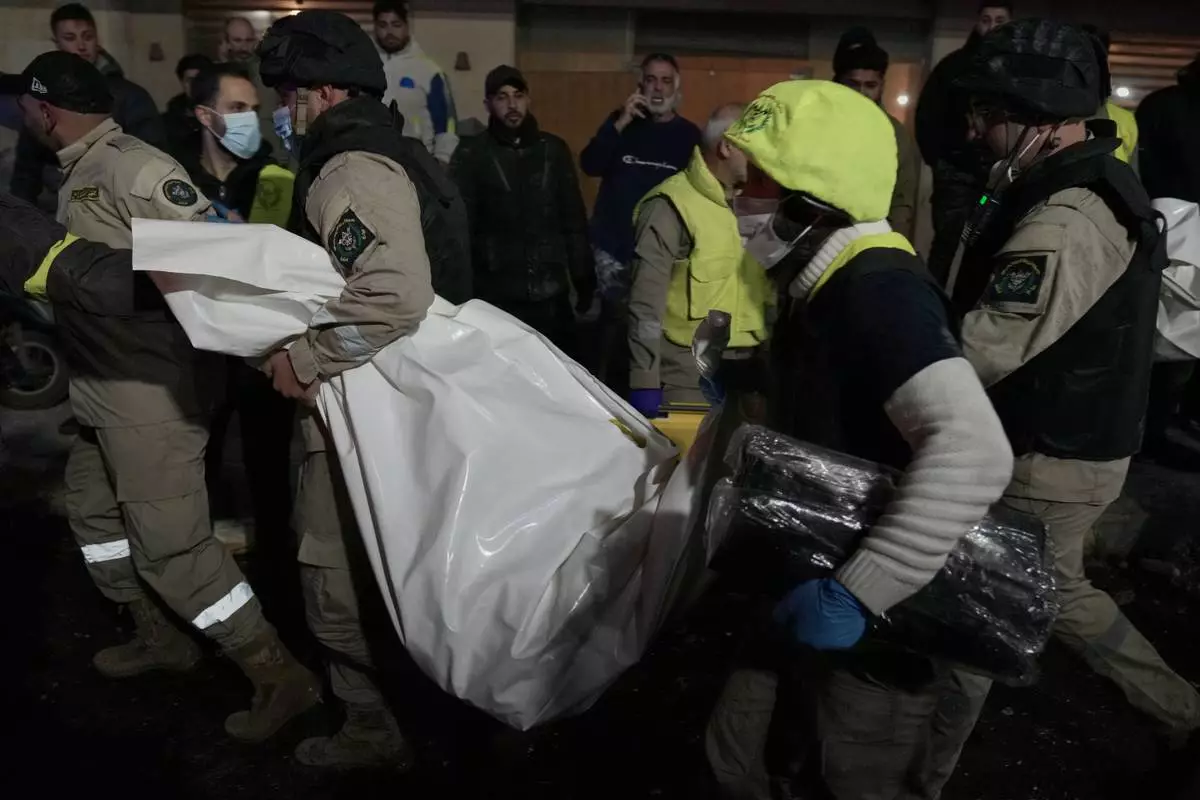
Rescue workers carry a dead body in a plastic bag from a building that was hit by Israeli strike, in Jnah neighborhood, south of Beirut, Lebanon, Monday, March 2, 2026. (AP Photo/Hussein Malla)
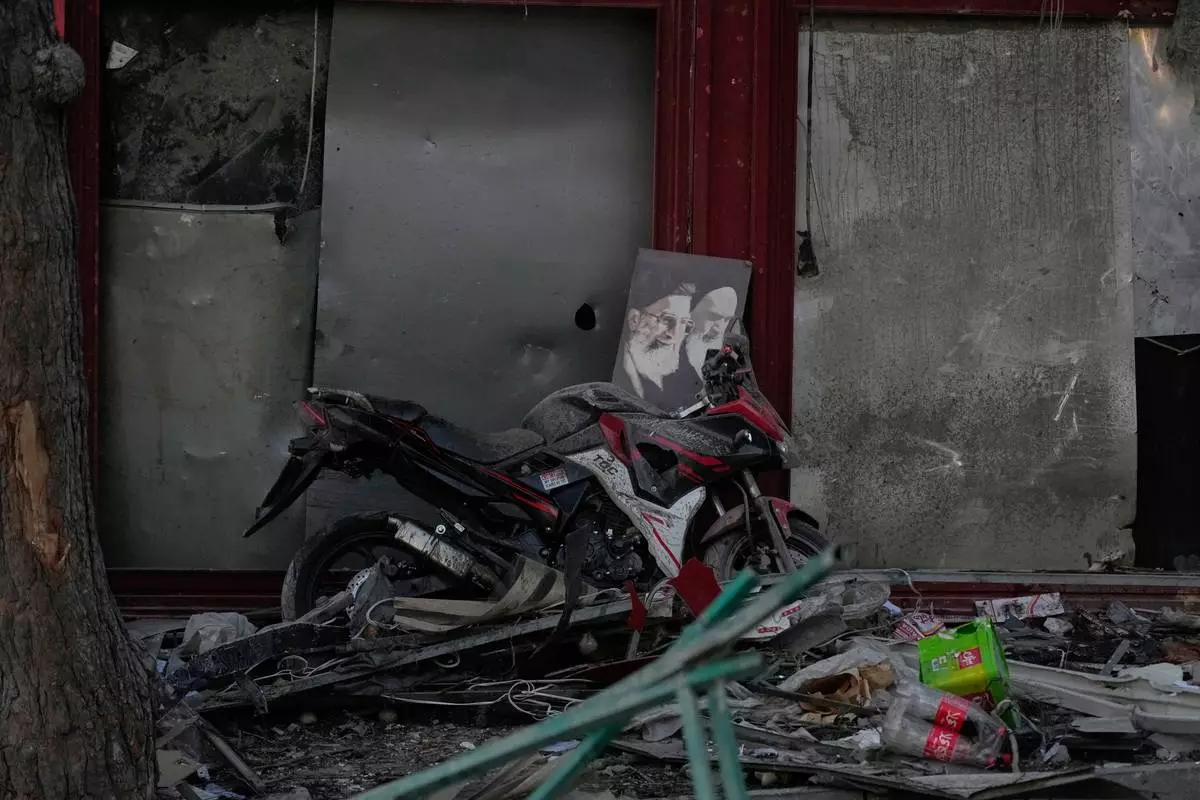
A poster of the late Supreme Leader Ayatollah Ali Khamenei, who was killed during the ongoing joint U.S.-Israeli military campaign, and the late Iranian Revolutionary founder Ayatollah Khomeini, right, lays on a motorcycle amid debris left by a strike in Tehran, Iran, Monday, March 2, 2026. (AP Photo/Vahid Salemi)
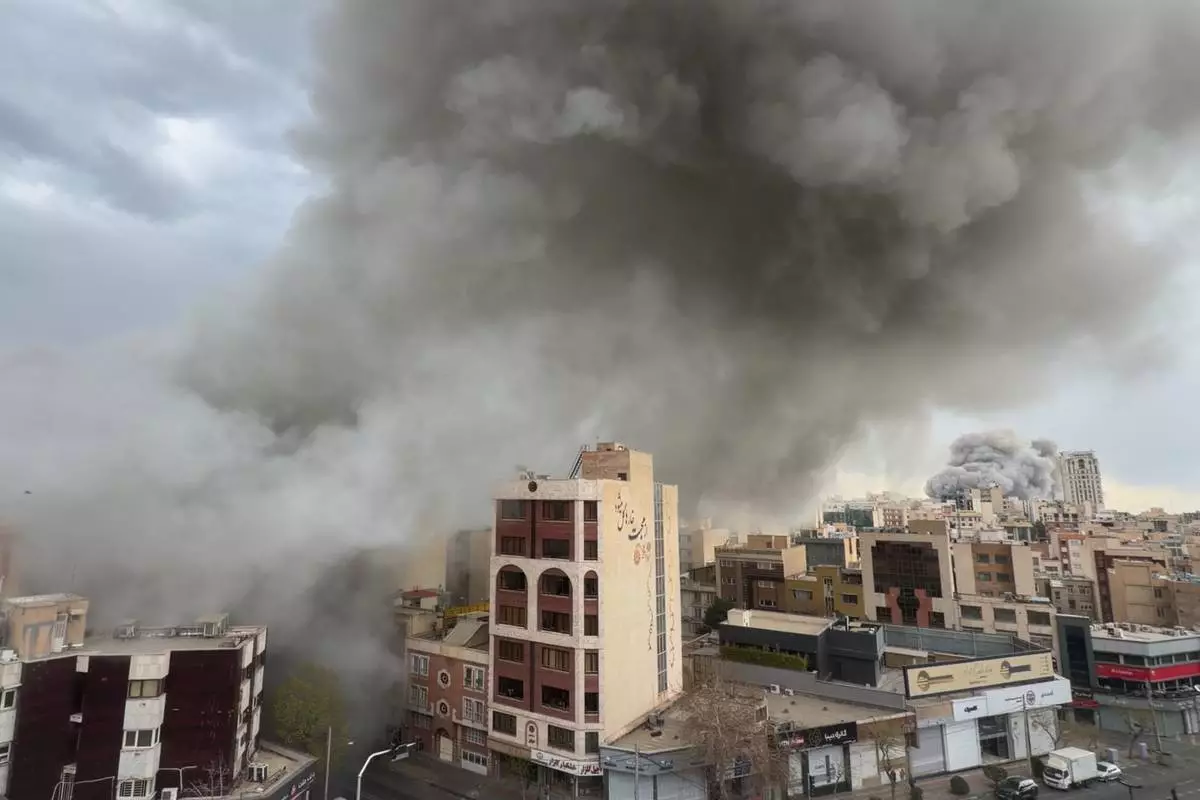
Plumes of smoke from two simultaneous strikes rise over Tehran, Iran, Monday, March 2, 2026. (AP Photo/Mohsen Ganji)